

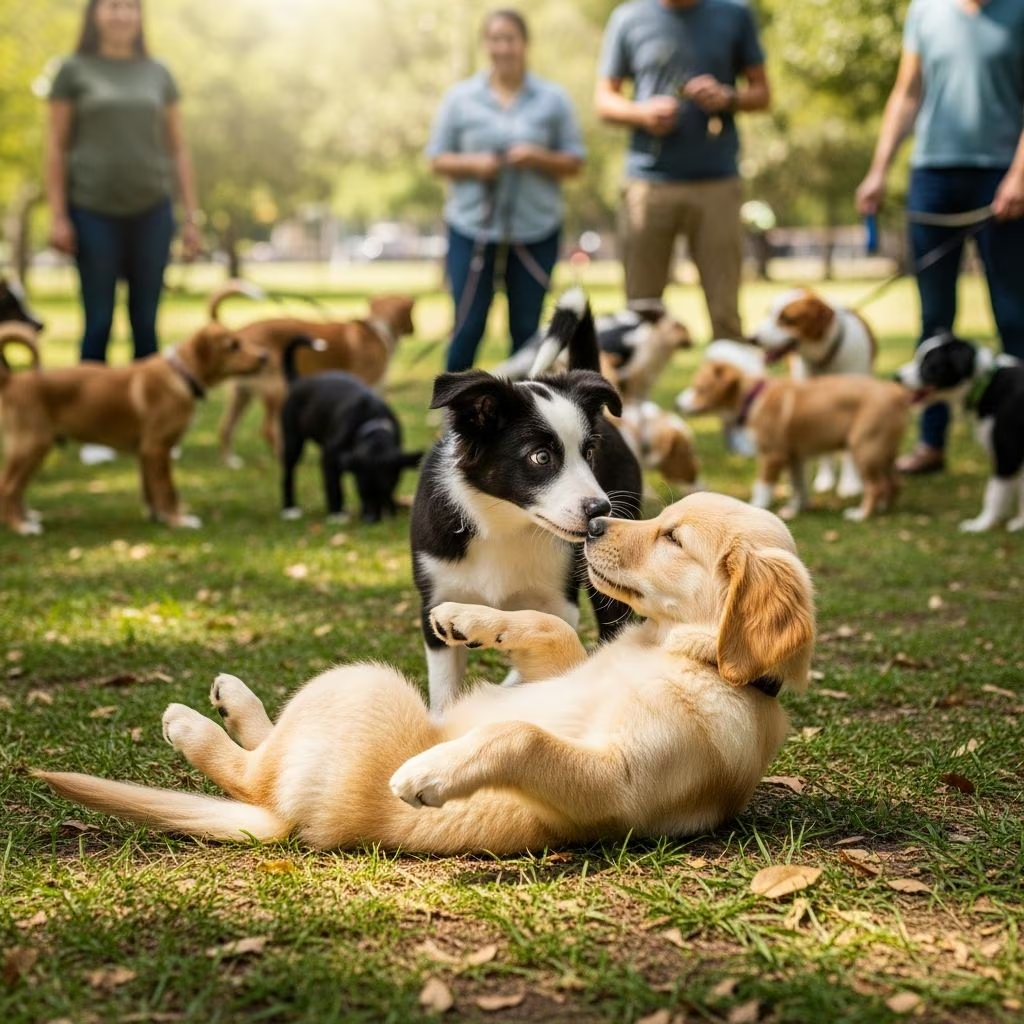
Early socialization forms the foundation for a puppy’s confident adulthood, but it requires careful management to avoid health hazards. Between 3 and 14 weeks, puppies experience a critical window where positive exposures to people, dogs, environments, and stimuli build resilience against fears and aggression. Experts agree that the behavioral advantages far surpass disease transmission risks when precautions like initial vaccinations are followed.
The Critical Socialization Window Explained
Puppies’ brains are highly plastic during their first few months, making this period ideal for forming positive associations. Incomplete exposure often leads to lifelong issues like fear-based aggression or anxiety in novel situations. Veterinary behaviorists emphasize that waiting for full vaccinations—typically until 16 weeks—means missing this window entirely, heightening relinquishment risks due to poor behavior.
- 3-8 weeks: Primary sensitivity to social stimuli; focus on gentle, controlled introductions.
- 8-14 weeks: Expansion to varied experiences; habituation to sounds, surfaces, and handling strengthens coping skills.
- Beyond 14 weeks: Reinforcement continues, but initial impressions are hardest to change.
Studies show unsocialized dogs face euthanasia or shelter surrender at rates far exceeding infection fatalities from measured outings.
Health Risks of Public Exposure
Young puppies carry maternal antibodies until about 12-16 weeks, but gaps exist before full vaccine efficacy. Core threats include parvovirus, distemper, and parasites from contaminated areas or unvaccinated dogs. However, data indicates low transmission in controlled settings post-first shots and deworming.
| Risk Factor | Prevalence | Mitigation |
|---|---|---|
| Parvovirus | High in dog parks | Avoid high-traffic areas; use sanitized venues |
| Distemper | Moderate | Initial DHPP vaccine at 6-8 weeks |
| Parasites | Common via feces | Fecal tests; deworming protocols |
| Behavioral injury | High in rough play | Supervised classes only |
Panel consensus from veterinarians: Disease odds are treatable and minimal compared to fear-aggression outcomes.
Proven Benefits of Early Outings
Socialization reduces hyperactivity, house soiling, and owner frustration—top relinquishment causes. Classes teach bite inhibition via play, human handling tolerance, and reward-based training. Owners gain realistic expectations, boosting retention rates.
- Positive human variety exposure prevents stranger fear.
- Controlled dog interactions build play etiquette.
- Novelty habituation (e.g., cars, umbrellas) fosters adaptability.
One study links class attendance to 50% lower surrender risk, as bonds strengthen and problems preempted.
Safe Socialization Strategies at Home
Before public ventures, maximize home-based learning. Invite vaccinated friends, expose to household noises, and handle gently for rewards.
- Daily 5-minute sessions with diverse guests (hats, beards, kids).
- Introduce textures: carpets, grates, slick floors.
- Play recordings of traffic, vacuums at low volumes, increasing gradually.
- Use treats for calm responses to novelties.
These low-risk steps build confidence without external threats.
Choosing and Preparing for Puppy Classes
Opt for vet-recommended programs requiring proof of first vaccines, fecal negatives, and clean facilities. Well-structured classes integrate play, training, and handling under expert supervision.
Key class features:
- Small groups (8-12 puppies).
- Positive reinforcement only.
- Off-leash play monitored for safety.
- Owner education on body language.
Pre-class: Consult your vet on local disease rates; start after 7-8 week vaccines.
Public Outings: Low-Risk Adventures
Venture out selectively: Carry puppies in arms or strollers through pet-safe zones like quiet streets or stores allowing dogs. Avoid dog parks until fully vaccinated.
- Week 8+: Brief walks in low-dog areas.
- Supervised meets: With known healthy adults.
- Urban exposure: Elevator rides, escalators from a distance first.
Keep sessions short (under 10 minutes), end on highs, pair with treats.
Common Mistakes and How to Avoid Them
Forcing interactions or overlooking stress signals (yawning, lip-licking) can sensitize puppies negatively. Overly protective isolation breeds phobias.
| Mistake | Consequence | Fix |
|---|---|---|
| Ignoring vaccination timeline | Infection exposure | Follow vet schedule precisely |
| Unsupervised dog play | Fear or injury | Choose vetted classes |
| Prolonged scary events | Phobia formation | Brief, positive only |
| Skipping variety | Narrow comfort zone | Diverse daily exposures |
Monitor puppy body language; retreat if overwhelmed.
Long-Term Maintenance for Lasting Confidence
Socialization isn’t one-and-done. Monthly novel experiences through adolescence (up to 2 years) solidify gains. Enroll in advanced obedience, agility, or therapy dog prep.
Track progress with a socialization log:
- People types met.
- Environments visited.
- Reactions noted (calm/excited/fearful).
Frequently Asked Questions (FAQs)
Can I take my 6-week-old puppy outside?
Limit to carrier-based, no-dog-contact outings after vet approval. Home socialization suffices initially.
What if my puppy shows fear?
Don’t comfort or punish; distract with treats and remove gently. Retry shorter sessions later.
Are puppy classes worth the cost?
Absolutely—benefits include lower vet bills from prevented behaviors and higher retention.
How many exposures does my puppy need?
Hundreds of varied types by 16 weeks; quality over quantity.
Is socialization different for breeds?
Core principles apply universally, but high-drive breeds may need more structured outlets.
Building a Confident Future Companion
Proactive owners who navigate early risks create adaptable dogs thriving in modern life. Vet guidance tailors plans to your puppy’s needs, ensuring joy for years.
References
- Early puppy socialization classes: Weighing the risks vs. benefits — dvm360. 2023. https://www.dvm360.com/view/early-puppy-socialization-classes-weighing-risks-vs-benefits
- Puppy Socialization Risks and Rewards — Fear Free Happy Homes. 2023. https://www.fearfreehappyhomes.com/puppy-socialization-risks-and-rewards/
- Puppy Behavior and Training – Socialization and Fear Prevention — VCA Animal Hospitals. 2024. https://vcahospitals.com/know-your-pet/puppy-behavior-and-training—socialization-and-fear-prevention
- Puppy Socialization 101 Series | Part 1 — Mississippi State University Extension. 2023. https://blogs.extension.msstate.edu/theriskproject/puppy-socialization-101-part-1/
- Risks and Benefits of Early Socialization for Puppies — Catch Dog Trainers (PDF). 2011. https://catchdogtrainers.com/wp-content/uploads/2011/12/Risks-and-Benefits-of-Early-Socialization-for-Puppies.pdf
- Balancing puppy socialization with infectious disease prevention — Ohio State University College of Veterinary Medicine (PDF). 2023. https://vet.osu.edu/sites/default/files/documents/balancing-puppy-socialization-with-infectious-disease-prevention.pdf
- Puppy parties and beyond: the role of early age socialization — PMC (NCBI). 2018. https://pmc.ncbi.nlm.nih.gov/articles/PMC6067676/



