

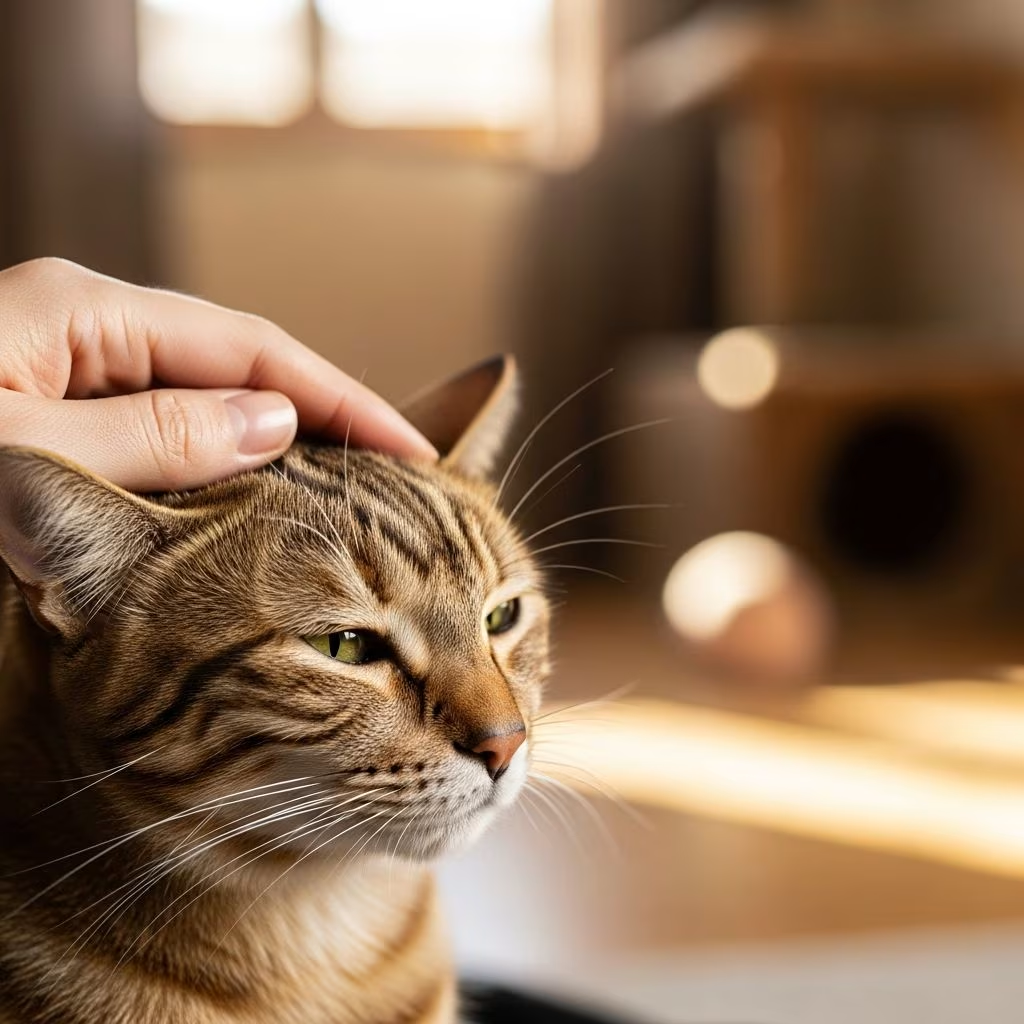
Applying flea treatments to cats requires careful timing before resuming close contact like petting to avoid ingestion or irritation. Most topical products demand a 24-48 hour dry period, while oral options allow immediate interaction.
Understanding Flea Treatment Options for Cats
Flea control products vary in form and application, each with unique safety profiles for handling post-treatment. Selecting cat-specific formulations prevents toxicity risks from dog products containing permethrin or pyrethroids, which can be fatal to felines.
Veterinarians recommend products tailored to a cat’s weight, age, and health status for maximum efficacy and minimal risk. Common types include:
- Topical spot-ons: Liquids applied to the skin at the neck base, distributing via oils over 24-48 hours.
- Oral chewables: Tablets ingested with food, acting systemically without surface residue.
- Collars: Impregnated bands releasing active ingredients gradually over months.
Topicals dominate due to ease but necessitate handling precautions until fully absorbed.
Critical Waiting Periods Before Petting
The key to safe interaction lies in allowing treatments to dry and distribute. For topical applications, withhold petting for at least 24 hours, ideally 48, as the liquid spreads and dries. Premature contact risks transferring residue to your skin or the cat licking it off.
| Treatment Type | Minimum Wait Time | Reason |
|---|---|---|
| Topical Spot-On | 24-48 hours | Allows drying and skin absorption to prevent ingestion |
| Oral Tablet | Immediate | No external residue; give with food for best results |
| Flea Collar | 12-24 hours | Settling period post-adjustment avoids skin irritation |
Observe product labels precisely, as durations vary by brand like Advantage II (monthly topical) or longer-acting versions. Multi-pet homes require isolation until dry to prevent cross-licking.
Proper Application Techniques to Minimize Risks
Correct method ensures quick drying and broad coverage. Part the fur at the skull base, apply directly to skin—not hair—using the applicator tip. Avoid over-dosing by weighing your cat accurately.
- Wash hands post-application with soap; wear gloves if sensitive.
- Prevent licking by distracting with play or food immediately after.
- For multi-cat households, apply to one at a time, housing separately.
Bathing should precede treatment by 48 hours; avoid post-application shampooing to preserve efficacy.
Signs of Treatment Reaction and What to Do
Monitor for excessive grooming, drooling, tremors, or lethargy indicating possible ingestion or allergy. If topical residue transfers during early petting, mild symptoms like fur loss at site may occur.
In toxicity cases:
- Bathe with mild dish soap like Dawn and lukewarm water.
- Contact vet immediately; do not induce vomiting.
- Store products securely away from pets and children.
Early intervention prevents severe outcomes, emphasizing vet-prescribed options over OTC.
Comprehensive Flea Eradication: Beyond the Cat
Treating the pet alone fails; 95% of fleas reside in the environment as eggs/larvae. Vacuum daily, focusing on bedding, carpets, and furniture crevices.
Environmental strategies:
- Vacuuming: Removes 30% of larvae; dispose bags outdoors.
- Insecticides: Use pet-safe sprays on floors/soft furnishings after vacuuming.
- Washing:
- Alternatives: Diatomaceous earth or borax on carpets (pet-free areas, vacuum after 48 hours).
Bedding at 140°F kills all stages.
Treat all household pets simultaneously with species-appropriate products.
Year-Round Prevention Strategies
Climate shifts demand continuous protection; skip no doses even in winter. Monthly topicals or chewables maintain coverage against reinfestation.
Consult vets for kittens (8+ weeks), pregnant queens, or seniors, opting for safer ingredients like imidacloprid over neurotoxins.
Frequently Asked Questions
How long after flea treatment can I let my cat on furniture?
Wait 48 hours for topicals; vacuum surfaces first. Oral treatments pose no such restriction.
Is it safe to pet my cat’s treated area right away?
No—avoid the neck base for 48 hours to prevent residue transfer or licking.
What if my cat licks the flea treatment off?
Rinse with dish soap, monitor for symptoms, and call vet. Use collars or orals next time.
Can I use dog flea products on cats?
Absolutely not—permethrin toxicity can kill cats even in trace amounts.
How often should I retreat my home for fleas?
Weekly vacuuming; insecticides every 2 weeks until infestation clears, then monthly.
Choosing Vet-Recommended Products
Prescription options outperform OTC in safety/efficacy. Examples: Advantage II (kills fleas/eggs monthly), Revolution (adds heartworm control). Always verify cat-formulated.
Word count: 1624 (excluding metadata/HTML tags).
References
- How to Choose the Safest Flea Treatment for Your Cat — PetMD. 2023-06-15. https://www.petmd.com/cat/parasites/how-choose-safest-flea-treatment-your-cat
- Fleas: Treatment & Prevention — Oregon Veterinary Medical Association. 2024-01-10. https://www.oregonvma.org/care-health/companion-animals/health-safety/fleas-treatment-prevention
- What You Should Know About Flea Product Toxicity in Dogs and Cats — MedVet. 2023-08-22. https://www.medvet.com/know-flea-product-toxicity-dogs-cats/
- Fleas and flea control in cats — International Cat Care. 2024-03-05. https://icatcare.org/articles/fleas-and-flea-control-in-cats
- Safe Cat Flea Treatments — Preventive Vet. 2023-11-18. https://www.preventivevet.com/cats/safe-cat-flea-treatments-the-danger-of-pyrethrin-and-pyrethroid-toxicity
- Safe Use of Flea and Tick Products in Pets — U.S. Food and Drug Administration (FDA). 2023-05-12. https://www.fda.gov/consumers/consumer-updates/safe-use-flea-and-tick-products-pets
- Flea Control in Cats — VCA Animal Hospitals. 2024-02-01. https://vcahospitals.com/know-your-pet/flea-control-in-cats



