

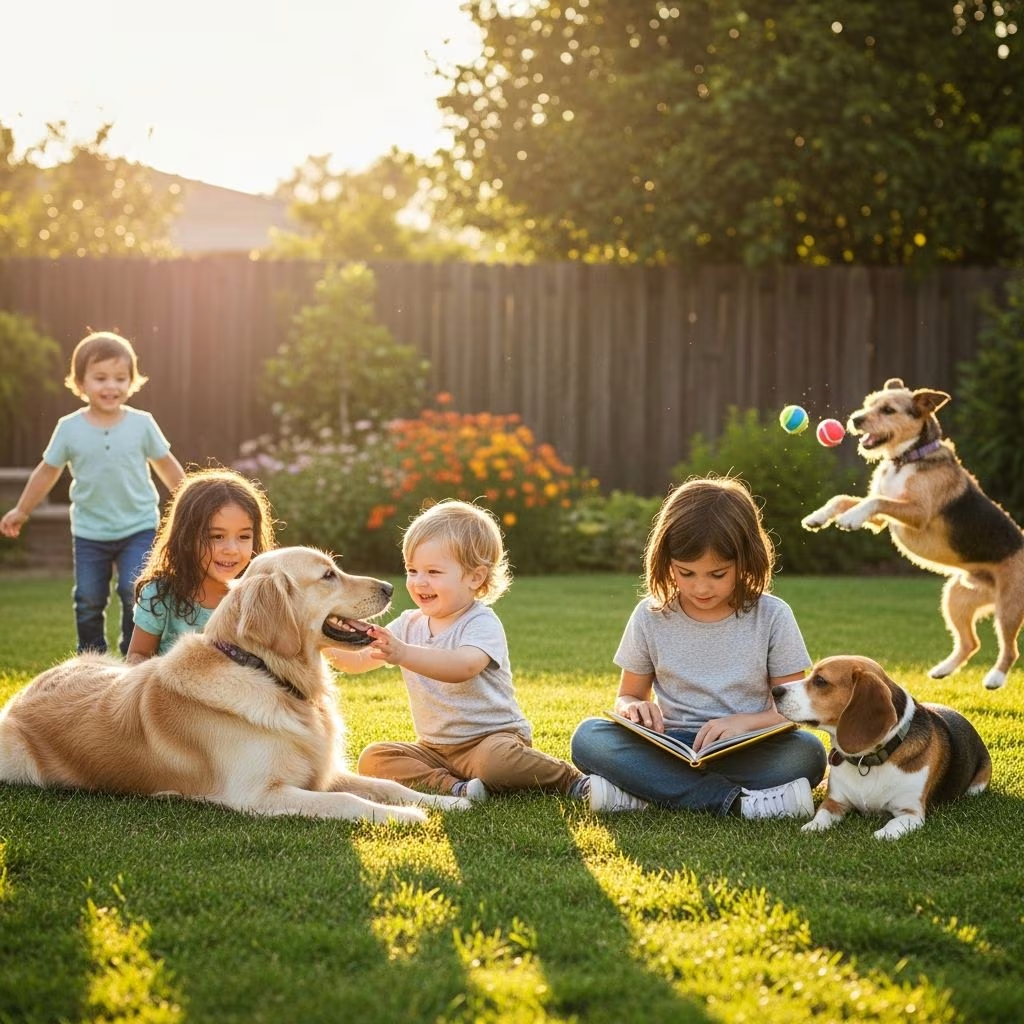
Bringing dogs into a home with children offers joy, companionship, and valuable life lessons, but it also introduces potential risks like bites. Each year, thousands of children experience dog bites, with the youngest ages 1 to 5 facing the highest vulnerability due to their unpredictable movements and proximity to a dog’s level.Education is key: teaching kids to understand dog signals and interact appropriately can dramatically lower injury risks, as demonstrated by school-based programs that cut bite severity.
Why Children Are at Greater Risk from Dog Bites
Young children often misinterpret a dog’s boundaries because their behaviors—such as sudden grabs, loud noises, or face proximity—can seem threatening to canines. Toddlers explore with hands and mouths, climbing or leaning close to dogs, which positions their head and neck in harm’s way.Pit bulls may cause more severe wounds, while breeds like German Shepherds account for higher bite volumes, though individual dog history trumps breed every time.
Even family pets bite when stressed. Dogs communicate discomfort through subtle cues that kids miss, leading to escalations. A 2013-2018 study of nearly 1,000 pediatric cases confirmed these patterns, urging proactive safety training.
Mastering Dog Body Language: The First Line of Defense
Dogs ‘speak’ through posture, eyes, ears, tail, and mouth. Teaching children these signs builds respect and prevents misunderstandings.
- Relaxed Dog: Loose body, soft eyes, ears neutral, tail wagging gently, mouth slightly open with relaxed lips.
- Stressed Signals: Stiff body, averted gaze, ears back or flat, tail tucked or rigid, lips curled showing teeth, yawning excessively, or lip-licking.
- Warning Signs: Growling, stiffening, freezing, raised hackles (fur along back), intense stare, or air-snapping.
Practice with pictures or videos: ‘What does this dog feel?’ Kids learn to back away from yellow or red zone signals, respecting the animal’s space.
Core Rules for Safe Interactions with Dogs
Instill these non-negotiable habits through games, stories, and role-play to make safety second nature.
| Scenario | Do This | Never Do This |
|---|---|---|
| Meeting a New Dog | Ask owner’s permission first. Let dog sniff closed fist at waist level, held still. Pet chest or side if allowed. | Run up, stare in eyes, pat head from above, hug without invite. |
| Family Dog at Home | Knock before entering dog’s space. Move slowly, speak softly. Give space during rest or meals. | Pull tail/ears, climb on dog, squeeze tight, disturb while eating/sleeping. |
| If Dog Growls | Freeze, avoid eye contact, back away slowly without turning back. | Run, scream, punish, or try to touch. |
These rules align with expert guidelines: always supervise under-12s with dogs, using gates for separation when needed.
If a Dog Bite Happens: What to Do Immediately
Bites range from nips to deep punctures. Stay calm: Wash with soap/water, apply pressure to stop bleeding, seek medical care promptly—especially for faces, hands, or if infection signs appear. Report to animal control if from a stray. Teaching kids a ‘turtle pose’ (curl up, hands over neck/ears) protects during attacks.
Building a Dog-Safe Home Environment
Prevention starts with setup:
- Use baby gates to create dog-free zones for kids’ play/naps.
- Provide dog beds/crates as personal retreats—teach ‘Go to your spot.’
- Exercise dogs daily to reduce frustration buildup.
- Fed meals in quiet areas; no kid interruptions.
Model calm leadership: Reward gentle petting, ignore jumping. Consistent routines signal safety to both kids and dogs.
Age-Appropriate Training Strategies
For Toddlers (Ages 1-3)
Use simple commands like ‘Gentle hands.’ Supervise 100%, redirect grabs to toys. Puppets or stuffed animals mimic dog cues.
For Preschoolers (Ages 4-6)
Introduce ‘traffic light’ system: Green (pet OK), Yellow (watch), Red (stop). Practice sniffing hands on family dog.
For School-Age Kids (7+)
Discuss real scenarios, quiz on body language. Assign ‘dog helper’ roles like filling water bowls to build bonds.
The Power of Early Puppy Socialization
Puppies socialized before 12 weeks adapt better to kids. Enroll in positive-reinforcement classes from 8 weeks post-vaccines. Expose gradually to noises, touches, kids’ movements—never force fearful pups. Well-socialized dogs view children as non-threats.
Evidence from Real-World Programs
Austrian primary school initiative (2008+) taught permission-asking, slow movements, protective postures. It slashed bite severity population-wide, as kids shared lessons with siblings/friends. U.S. hospitals echo: Educated children suffer fewer severe injuries.
Common Myths Busted
- Myth: Any dog bite means rehoming. Often, training fixes triggers like resource guarding.
- Myth: Licking wounds is OK. Dog saliva harbors bacteria; clean properly.
- Myth: Kids outgrow risky behavior. Proactive teaching prevents habits.
National Dog Bite Prevention Week (April) amplifies these messages.
FAQs: Dog Safety for Families
How can I tell if my dog is about to bite?
Look for stiffness, growls, lip licks, or escapes. Intervene early by removing the dog calmly.
Is it safe to have a dog with a newborn?
Yes, with prep: Acclimate dog to baby cries/scents pre-arrival, strict supervision, gradual intros.
What if my child was bitten by a neighbor’s dog?
Wash wound, get medical eval, notify owner/authorities for rabies check.
Can games like fetch prevent bites?
Yes—channel energy positively, strengthening trust without rough play.
Should I get breed-specific insurance?
No; focus on behavior. Any dog can bite if unmanaged.
Resources for Ongoing Learning
Books, apps, and local classes reinforce lessons. Host family ‘dog safety nights’ with quizzes and demos for fun retention.
References
- Child safety programs for primary school children decrease severity of dog bite injuries — Schwebel et al., PMC/NCBI. 2022. https://pmc.ncbi.nlm.nih.gov/articles/PMC8821379/
- Prevent a Dog From Biting Children — Best Friends Animal Society. 2023. https://bestfriends.org/pet-care-resources/how-prevent-dog-biting-children
- Dog Bite Prevention — ASPCA. 2024. https://www.aspca.org/pet-care/dog-care/dog-bite-prevention
- How to protect your kids from dog bites — CHOC Health. 2023. https://health.choc.org/how-to-protect-your-kids-from-dog-bites/
- Children’s Resources: Dog Bite Prevention — Animal Medical Center New York. 2021. https://www.amcny.org/wp-content/uploads/2021/04/Bite-Prevention-V1.pdf
- Dog Bite Safety Tips — Children’s Hospital Pittsburgh. 2024. https://www.chp.edu/injury-prevention/safety/home-and-yard/dog-bites
- Dog Bite Prevention for Children — Virginia Department of Health. 2020. https://www.vdh.virginia.gov/content/uploads/sites/65/2020/10/Dog-Bite-Prevention-ENG.pdf
(Word count: 1678)



