

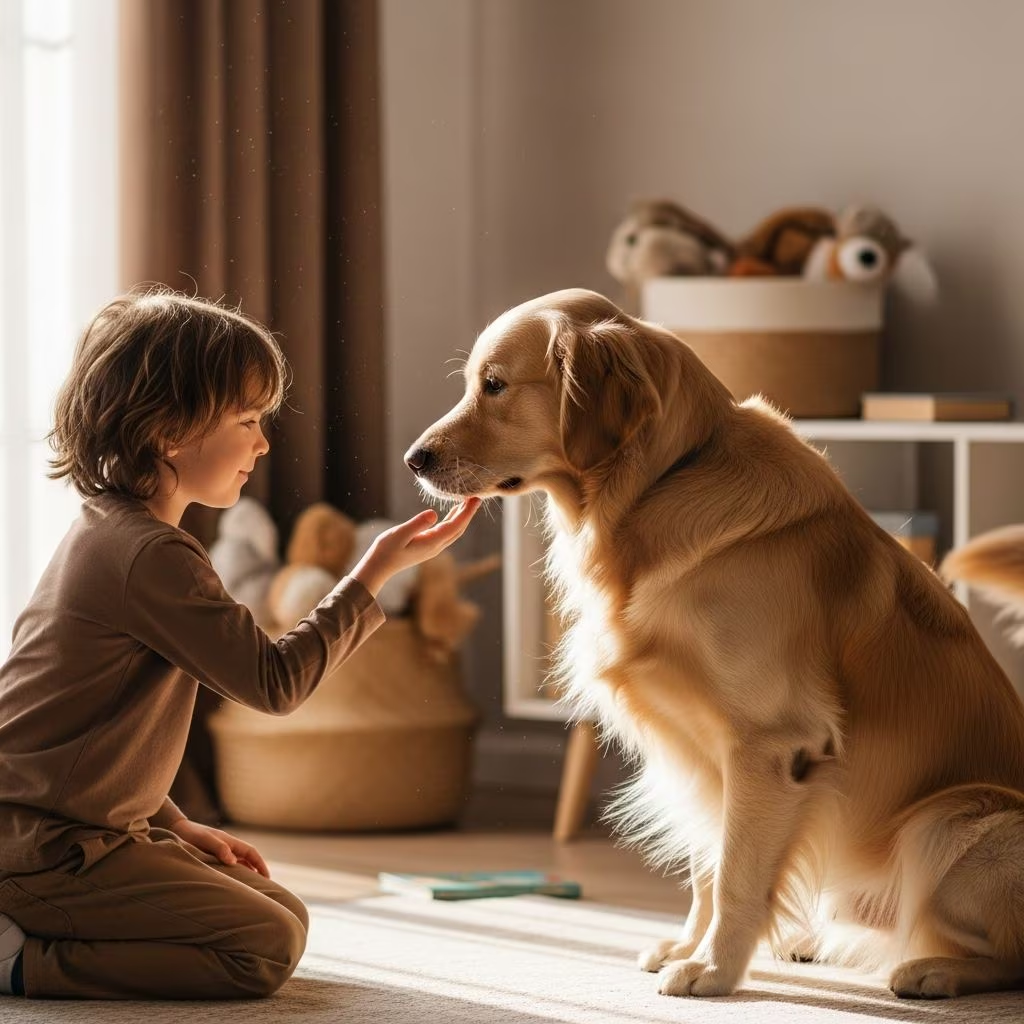
Bringing dogs and children together in a household creates joyful bonds but demands careful management to avoid mishaps. With proper preparation, education, and ongoing vigilance, families can enjoy peaceful coexistence. This guide outlines practical steps to safeguard both parties, drawing on expert-recommended practices for training, communication, and daily routines.
Understanding Canine Communication Basics
Dogs express discomfort through subtle signals that children often miss. Recognizing these cues prevents escalations. Key indicators include lip licking, yawning, whale eye (whites visible around eyes), stiffening, or turning away. Teaching kids to spot these helps them respond appropriately by giving space.
- Lip licking or yawning: Often signals anxiety rather than hunger or tiredness.
- Whale eye or stiff posture: Indicates tension; intervene immediately.
- Tail position: Low or tucked tails show fear, not wagging which means happiness.
Practice sessions where adults model identifying these signs during calm interactions build awareness early.
Establishing Secure Household Zones
Dedicated retreats for dogs reduce stress from constant child energy. Use baby gates or crates to form ‘no-kid zones’ where dogs recharge undisturbed. Inform children that entering these areas uninvited is off-limits, fostering respect for boundaries.
| Zone Type | Purpose | Setup Tips |
|---|---|---|
| Rest Crate | Sleep and solitude | Covered with blanket, placed in quiet corner |
| Exercise Pen | Play without pursuit | Equipped with toys, water, away from high-traffic |
| Meal Area | Eating undisturbed | Elevated stand or gated off during feeds |
Supervise transitions in and out of zones to reinforce rules. If a dog seeks refuge frequently, provide more downtime.
Training Dogs for Child-Friendly Responses
Positive reinforcement shapes dogs to handle kid chaos gracefully. Core commands like ‘stop,’ ‘retreat,’ ‘sit,’ and ‘stay’ create reliable safety nets. Begin in low-distraction settings with treats and hand signals for clarity.
- Teach ‘stop’: Open palm halt, reward compliance.
- Build ‘retreat’: Lure backward steps, increase distance over sessions.
- Proof with distractions: Introduce toys, noises, then supervised kids.
Short, fun sessions (5-10 minutes) daily ensure retention. Pair with child-involved practice for association.
Guiding Children in Respectful Interactions
Age-appropriate lessons empower kids to engage safely. Start with demonstrations: Extend closed fist for sniffing, pet chest not head, use soft voices. Role-play scenarios to ingrain habits.
- Avoid hugs, face-staring, or grabbing—dogs perceive as threats.
- No disturbing eaters, sleepers, or toy possessors.
- Hands off tails, ears, paws to prevent pain-triggered reactions.
For school-age kids, involve in training: They give commands, reward successes, strengthening bonds.
Age-Tailored Safety Protocols
Strategies vary by child development stage for optimal protection.
Infants and Babies
Never floor-place babies near dogs; use elevated playpens. Zero unsupervised time—crate dog if stepping away. Position adult as barrier during any contact.
Toddlers (1-3 Years)
Maintain hand-on-child supervision. Guide ‘gentle pets’ hand-over-hand. Halt at stress signs; brief encounters only. Teach ‘quiet hands, soft voice’ repeatedly.
Preschoolers (4-6 Years)
Introduce body language spotting. Structured play like fetch (no mouth-grabbing). Rules: Ask permission, let dog approach first.
School-Age and Older
Delegate supervised feeding, walking. Discuss responsibility; they report issues. Games exclude chase or wrestle.
Structured Activities to Build Positive Ties
Controlled fun reinforces good behavior. Schedule 10-minute sessions: Toss treats for sits, parallel play with toys. Fetch builds teamwork—teach ‘drop it’ to avoid tugs.
Daily dog exercise via walks prevents pent-up energy. Tired dogs tolerate kids better; hire walkers if needed.
Navigating Unfamiliar Dogs
Public encounters require caution. Always seek owner okay first. ‘Be a Tree’ protocol: Still, arms folded, eyes down if approached. No running—triggers chase. If knocked down, curl protectively.
- Stand behind barriers like trees if possible.
- Quiet voice, no waving or yelling.
- Back away slowly post-threat.
Daily Routines for Lasting Harmony
Consistency prevents lapses. Family meetings review rules weekly. Track progress: Note calm interactions for praise. Adjust based on dog’s retreat frequency or kid compliance.
Enroll in group classes for real-world practice. Professional trainers assess dynamics, tailor plans.
Frequently Asked Questions
Can any dog live safely with kids?
Most can with training, but assess history. Rescue histories aid evaluation; avoid known aggressive breeds without expert help.
How long until unsupervised play?
Rarely advisable; lifelong supervision recommended, especially under 12.
What if my dog growls at kids?
Separate immediately, consult trainer. Growling warns—ignore risks bites.
Best toys for joint play?
Durable fetch balls, puzzle feeders. No shared chew toys to avoid guarding.
Signs to rehome?
Persistent fear aggression despite interventions warrants professional eval; safety first.
Long-Term Benefits of Proactive Measures
Families investing in these habits report stronger attachments, fewer vet visits from stress injuries. Kids gain empathy, responsibility; dogs enjoy secure lives. Commit to evolution as children grow—teens need refreshed rules.
Expand education via books, videos on dog signals. Community programs offer hands-on learning.
References
- The Ultimate Guide To Dog-Child Safety: Building Trust And Understanding — Dog Trainers Milwaukee. 2023-01-15. https://dogtrainersmilwaukee.com/the-ultimate-guide-to-dog-child-safety-building-trust-and-understanding/
- Kids and Dogs: Our Safety Guide — Pediatrics West. 2024-05-20. https://www.pediatricswest.org/parent-resources/blog/kids-and-dogs-our-safety-guide/
- Children and Dogs – How to Keep Interactions Safe — Maddie’s Fund. 2023-11-10. https://www.maddiesfund.org/children-and-dogs-how-to-keep-interactions-safe.htm
- 10 Tips for Keeping Your Children Safe When You Have Pets — Lake Hamilton Animal Hospital. 2022-08-05. https://lakehamiltonanimalhospital.com/10-tips-for-keeping-your-children-safe-when-you-have-pets/
- Safety Around Dogs Parent Guide — American Kennel Club (AKC). 2021-07-01. https://www.akc.org/wp-content/uploads/2021/07/Safety-Around-Dogs-Parent-Guide-1.pdf
- Children & Dogs – Keeping Interactions Safe — Houston Animal Services. 2023-03-12. https://www.houstontx.gov/barc/Resource%20Hand%20Outs/Children%20&%20Dogs%20-%20Keeping%20Interactions%20Safe.pdf



