

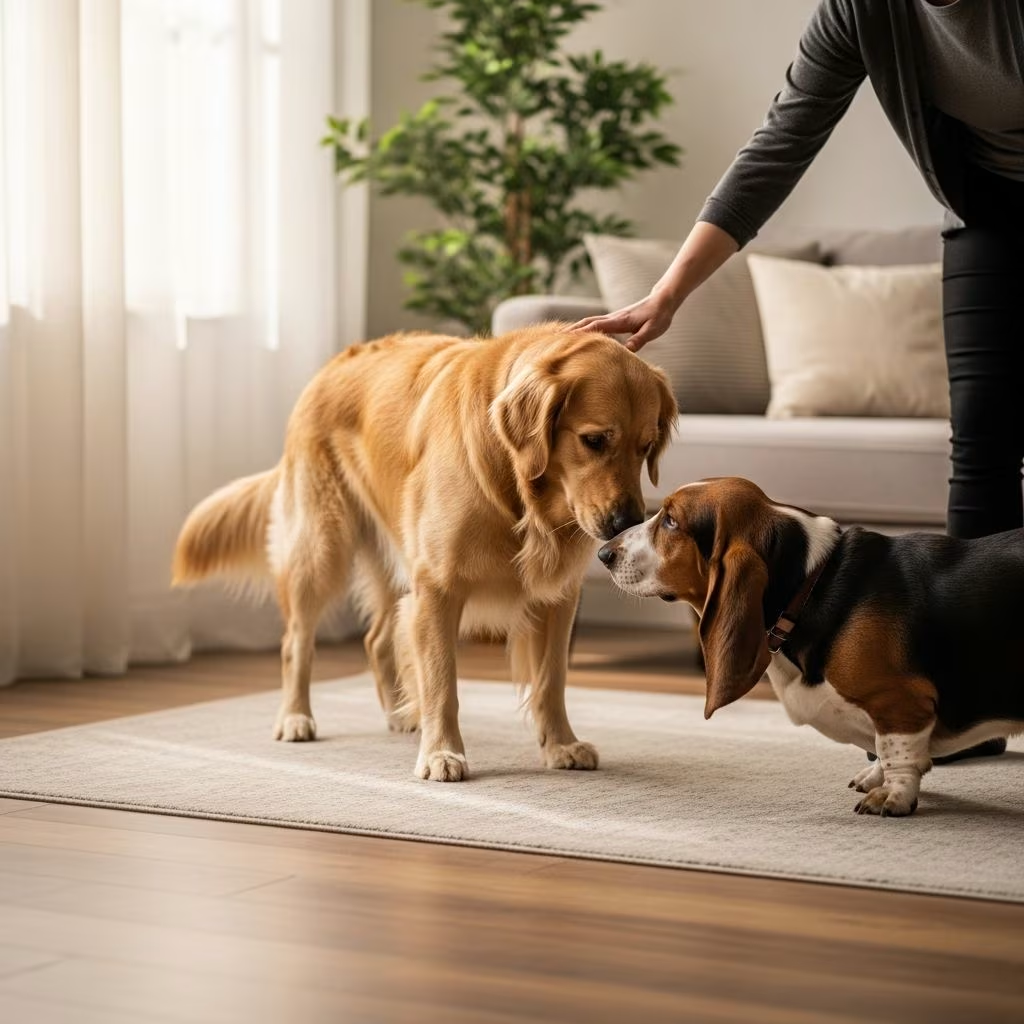
Bringing a new dog into a home with an existing canine resident can be thrilling yet challenging. Proper introductions minimize stress, prevent fights, and lay the foundation for a harmonious multi-dog household. This guide outlines a structured approach based on animal behavior principles, emphasizing patience, observation, and controlled interactions.
Why Careful Introductions Matter
Dogs are territorial by nature. A sudden meeting in familiar territory can trigger defensiveness, leading to growling, snapping, or worse. Statistics from animal shelters show that improper introductions contribute to many returns of adopted dogs. By following a deliberate process, you increase success rates dramatically, fostering mutual respect over time.
Preparation Before the Big Day
Success starts well before the dogs meet. Preparation creates a low-stress environment and equips you to manage outcomes.
- Assess Personalities: Evaluate your resident dog’s temperament. Is it dominant, playful, or shy? Match this with the new dog’s profile from the shelter or breeder.
- Clear the Space: Remove toys, bones, food bowls, and bedding. These high-value items spark resource guarding.
- Set Up Safe Zones: Designate crates, baby gates, or separate rooms as ‘success stations’ for breaks and decompression.
- Gather Supplies: Leashes, treats, water spray bottles, and calming aids like pheromone diffusers.
- Exercise First: Tire out both dogs with walks or play to promote calmer demeanors.
These steps reduce arousal levels, making initial encounters more predictable.
Selecting the Perfect Meeting Spot
Neutral territory is non-negotiable. Your home or yard feels like an invasion to the resident dog. Opt for a park, quiet field, or even a shelter play area unfamiliar to both.
| Factor | Ideal Choice | Avoid |
|---|---|---|
| Location Type | Unfamiliar park or open field | Home yard or usual walking paths |
| Space | Wide open with room to maneuver | Confined or fenced ‘home turf’ |
| Supervision | Two handlers per dog | Solo management |
Enlist a helper to manage leashes, ensuring safety.
Step-by-Step Neutral Ground Protocol
Begin with parallel walks, not face-to-face greetings. This builds positive associations gradually.
- Parallel Walking: Start 10-20 feet apart. Walk in the same direction, rewarding calm behavior with treats and praise.
- Gradual Closure: If relaxed, narrow the gap slowly. Watch for stress signals like stiff tails or lip licking.
- Controlled Sniff: Allow 3-5 seconds of nose-to-nose contact. Keep leashes loose; tension frustrates dogs. Then separate with upbeat calls and rewards.
- Repeat Cycles: Do short sessions, interspersing with breaks. Aim for tolerance, not instant friendship.
Body language is your roadmap. Positive signs include play bows (front down, rear up), loose wagging tails, and relaxed ears. Halt if you see whale-eye (whites showing), raised hackles, or intense staring.
Transitioning to the Home Environment
Once neutral meets go smoothly, shift indoors thoughtfully. Rush this, and territorial instincts flare.
- Backyard Buffer: Use a neutral yard first. Drop leashes when ignoring each other, intervening only if needed.
- New Dog First: Let the newcomer explore indoors alone. This reduces the resident dog’s sense of intrusion.
- Room Reunion: Choose a spacious room. Enter on leashes, drop when disinterested, and monitor.
- Rotate and Rest: Use ‘crate, gate, tether, rotate’—alternate access to prevent constant tension.
Expect corrections like growls; they’re communication, not failure, if they de-escalate.
Decoding Canine Communication
Understanding signals prevents escalation. Misreading them dooms introductions.
| Positive Signals | Warning Signs | Action |
|---|---|---|
| Play bow, big tail wag | Stiff posture, growling | Interrupt positively |
| Soft eyes, open mouth | Teeth bared, lunging | Separate immediately |
| Sniffing curiously | Prolonged stare, hackles up | Reward calm, redirect |
Stay calm—your tension transfers via leash. Breathe deeply and use happy tones.
Daily Management in Multi-Dog Homes
Introductions span days or weeks. Consistent routines build trust.
- Separate Feeding: Different rooms, pick up bowls post-meal to avoid guarding.
- Individual Play: No shared fetch until resource tolerance is proven.
- Personal Items: Separate beds, bowls, toys—introduce shared ones gradually.
- Supervised Only: Never leave unsupervised for 3-4 weeks minimum.
- Training Parallels: Train together on basic cues like sit-stay for cooperative vibes.
Monitor dynamics: playful pairs thrive; mismatched energies need more separation.
Handling Multiple Resident Dogs
With several dogs, introduce singly to avoid ganging up.
- Meet the calmest resident first.
- Success with one? Proceed to next.
- Group sessions only after all pairwise meets succeed.
Use barriers for controlled group exposures.
Common Pitfalls and Fixes
Avoid these errors for smoother sailing.
- Rushing Home Meets: Fix: Extend neutral sessions.
- Tight Leashes: Fix: Practice loose-lead walking.
- Ignoring Warnings: Fix: Learn signals via videos or classes.
- Unequal Attention: Fix: Balance affection to curb jealousy.
If aggression persists, consult a certified trainer.
Long-Term Success Strategies
Beyond intros, nurture bonds.
- Joint exercise builds teamwork.
- Positive reinforcement for polite interactions.
- Regular vet checks rule out pain triggers.
Patience pays: full comfort takes months.
Frequently Asked Questions
How long until dogs get along?
Weeks to months. Force nothing; let bonds form naturally.
What if my dog is reactive?
Proceed slower, use muzzles if advised, seek professional help.
Can puppies meet adults safely?
Yes, but supervise closely—adults may correct roughly.
Same-sex intros riskier?
Sometimes, due to dominance, but individuals vary.
Unneutered dogs?
Heightens tension; consider timing with spay/neuter.
Final Thoughts
Thoughtful introductions transform potential chaos into companionship. Observe, manage, and celebrate progress for a joyful pack life.
References
- Introducing a New Dog to your Dog at Home — Dogs Playing for Life. 2023. https://dogsplayingforlife.com/introducing-new-dog-dog-home/
- Introducing Your New Dog to Your Dogs — Maddie’s Fund. 2024. https://www.maddiesfund.org/introducing-your-new-dog-to-your-dogs.htm
- Introducing Dogs at Home: The Complete Guide — San Diego Humane Society. 2023. https://sdhumane.org/resources/introducing-dogs-at-home-complete/
- Dog-to-Dog Introductions — Wisconsin Humane Society. 2024. https://www.wihumane.org/dog-to-dog-intros
- How to successfully introduce two dogs — Animal Humane Society. 2023. https://www.animalhumanesociety.org/resource/how-successfully-introduce-two-dogs



