

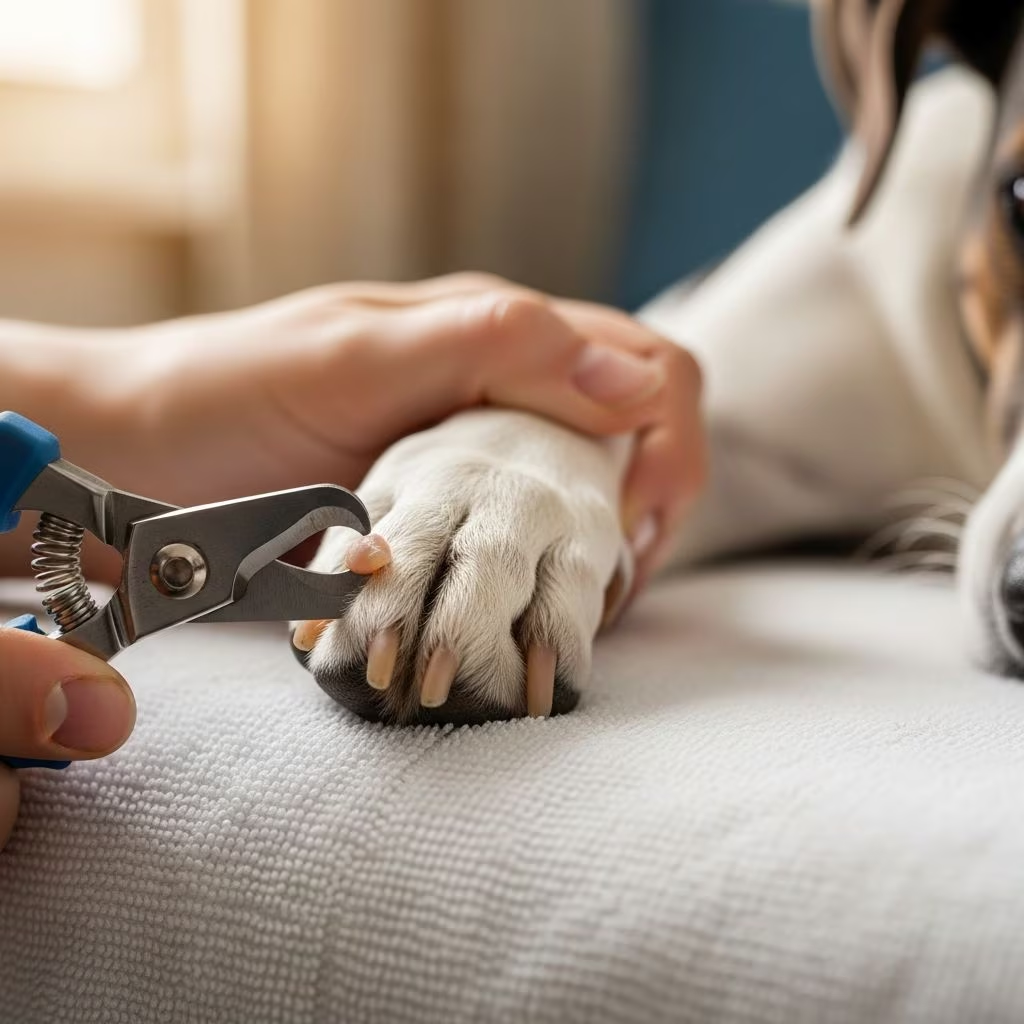
Regular nail maintenance is vital for your dog’s comfort, mobility, and joint health. Overgrown nails can cause pain, alter gait, and lead to injuries, but with the right approach, you can perform trims confidently at home.
Why Proper Nail Length Matters for Dogs
Dogs’ nails naturally wear down on rough surfaces like pavement, but indoor pets or those on soft ground often need frequent trims every 3-4 weeks. Long nails force unnatural weight distribution, stressing joints and potentially causing arthritis or slipped discs over time. Shortening them to just touch the floor promotes better traction without risking slips.
Healthy nails curve slightly downward and don’t click loudly on floors. Dewclaws, the inner ‘thumb’ nails, grow faster and require special attention to prevent curling into the paw.
Selecting the Best Tools for the Job
Invest in quality equipment designed for dogs, as human clippers crush rather than cut cleanly.
- Scissor-style clippers: Precise for visibility, ideal for beginners.
- Guillotine-style: Effective for thick nails, but practice control.
- Nail grinders (e.g., Dremel): Safer for nervous dogs, filing gradually without sudden cuts.
Always have styptic powder, cornstarch, or flour ready to staunch bleeding if you nick the quick. Sharp blades ensure clean cuts; dull ones tear the nail.
Understanding Nail Anatomy to Avoid Injury
The nail consists of a hard outer shell protecting the quick—a core of blood vessels and nerves. In light nails, it’s visible as a pink line; in dark ones, it’s hidden, requiring caution.
| Nail Type | Quick Indicators | Trimming Strategy |
|---|---|---|
| Light/Transparent | Pink area visible | Cut 2-3mm ahead of pink |
| Dark/Black | Gray oval or black dot in center | Tiny cuts (1mm), stop at moisture or dot |
| Dewclaw | Often curves back | Trim frequently, small amounts |
Avoid cutting into the quick, which causes sharp pain and profuse bleeding. For black nails, use light-colored siblings as a guide.
Step-by-Step Trimming Process
- Prepare your dog: Choose a quiet time post-walk or mealtime when relaxed. Acclimate young pups early with treats.
- Position comfortably: Sit dog between legs or on side. Gently squeeze paw pad to extend nail.
- Inspect each nail: Note length, quick hints, splits.
- Make initial cuts: Hold clipper perpendicular, snip 1-2mm tips. For grinders, introduce speed gradually.
- Check progress: Look for gray-white center; stop before pink/black dot.
- Shape if desired: Angle cuts top/bottom for smoothness.
- Repeat per paw: Alternate paws to maintain calm.
Weekly micro-trims (1mm) are better than monthly big cuts. Don’t forget rear dewclaws if present.
Handling Fearful or Resistant Dogs
Many dogs associate trims with pain from past experiences. Build tolerance through desensitization.
- Touch paws daily, rewarding calm with high-value treats.
- Present tools without using; pair with play.
- Trim one nail per session initially, progressing slowly.
- Watch body language: lip licking, yawning, paw pulls signal stress—pause immediately.
For severe aversion, use distractions like peanut butter on a lick mat or two-person teams. Grinders often succeed where clippers fail.
First Aid for Common Mishaps
Accidents occur; stay composed.
- Quick cut: Apply styptic powder firmly for 1-2 minutes. Cornstarch or flour clots blood.
- Excessive bleed: Pressure with wet cotton ball, then powder.
- Cracked nail: Trim loose parts, monitor for infection.
Bleeding usually stops quickly; reassure your dog to rebuild trust.
Routine Maintenance and Schedules
Tailor frequency by lifestyle:
- Active/outdoor dogs: 4-6 weeks.
- Indoor/soft surface: 2-3 weeks.
Combine with paw checks for foreign objects, pad cracks. File rough edges post-trim for comfort.
Alternatives: Professional Grooming
If home trims overwhelm, vets/groomers use restraints/sedation if needed. Costs vary, but teach pros your dog’s quirks for consistency. Hybrid: trim most at home, pro-finish curves.
Frequently Asked Questions
How often should I trim my dog’s nails?
Every 3-4 weeks, or when they click on floors. Adjust for activity level.
What if my dog has very dark nails?
Take tiny 1mm cuts, checking cross-section each time. Use grinder for safety.
Is it okay to trim while the dog sleeps?
Possible for cooperative dogs, but risks startling. Better awake and conditioned.
Can overgrown nails cause permanent damage?
Yes, leading to splayed feet, joint pain. Early intervention prevents issues.
What tools do vets recommend?
Scissor clippers for precision, grinders for filing.
Advanced Techniques for Confident Trimmers
Once proficient, bevel edges: one cut above quick, one below for rounded tips. Test nail tap: healthy nails ‘tap’ dully; quick-near feel spongy.
For multi-dog homes, vary methods per personality. Track sessions in a journal for patterns.
References
- Pain Free Dog Nail Trimming: A Complete Guide — West Concord Animal Clinic. 2023. https://westconcordanimalclinic.net/dog-nail-trimming-a-complete-guide/
- The Nail Trimming Guide for Dogs who HATE IT! — McCann Dog Training (YouTube). 2022. https://www.youtube.com/watch?v=hQuM-HzCnAI
- How to Clip Dog Nails — Dr. Chuck Books. 2024. https://drchuckbooks.com/pet-information-sheets/how-to-clip-dog-nails
- Nailed It! 5 Tips for Stress-Free Dog Nail Trims — PetMD. 2025. https://www.petmd.com/dog/grooming/nailed-it-5-tips-stress-free-dog-nail-trims
- ASPCA Grooming 101 – Trimming Nails for Dogs — ASPCA (YouTube). 2023. https://www.youtube.com/watch?v=sccDR8n3yOY



