
Safe Dog Lifting Techniques
Master essential methods to lift and carry dogs of all sizes without risking injury to pets or yourself.
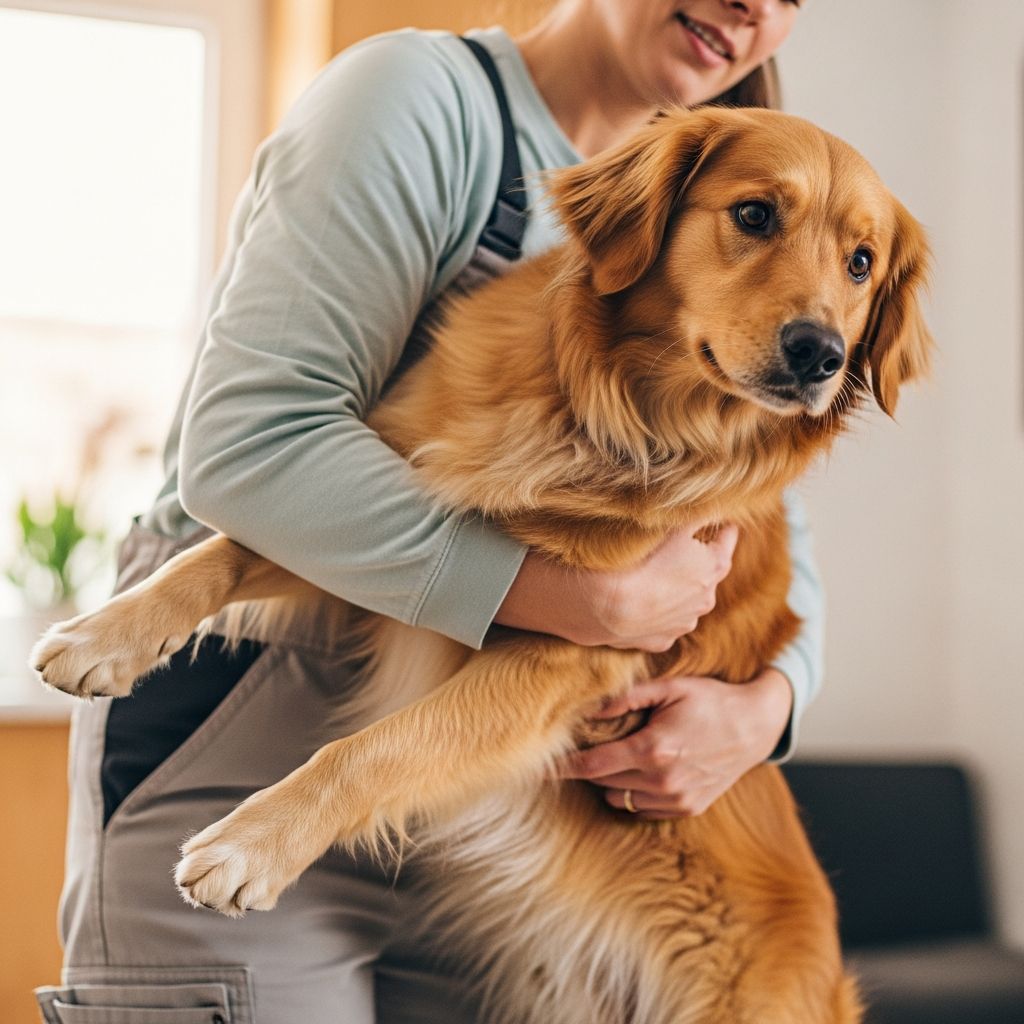
Properly lifting and carrying dogs is crucial for preventing injuries to their joints, spine, and muscles, as well as protecting the handler’s back. Incorrect methods can lead to pain, discomfort, or long-term damage, especially in larger breeds or seniors. This guide outlines size-appropriate techniques, safety precautions, and supportive tools drawn from veterinary recommendations.
Understanding the Risks of Improper Lifting
Dogs rely on their skeletons and muscles for stability, and lifting them without adequate support can strain the neck, back, or hips. For instance, grabbing under the armpits compresses nerves and causes shoulder pain, while pulling by the collar risks choking or neck trauma. Veterinary experts emphasize supporting the chest and hindquarters evenly to distribute weight.
Handlers face risks too: bending at the waist instead of using leg strength leads to back strain, particularly with dogs over 40 pounds. High-risk scenarios include lifting from floor level or handling fractious animals without aids.
Core Principles for All Lifts
- Approach from the side, not head-on, to avoid startling the dog.
- Use a verbal cue like “up” to prepare them.
- Bend at the knees, engage your core, and lift with legs, not back.
- Keep the dog close to your body for stability.
- Never lift by scruff, tail, collar, or armpits.
These basics apply universally, with adjustments for size and condition.
Lifting Techniques by Dog Size
Tailor your method to the dog’s weight and build for optimal safety.
Small Dogs (Under 20 lbs)
For tiny companions, slide one hand under the chest between front legs and scoop the rear with the other, cradling against your chest. Alternatively, support the chest fully with both hands and lift smoothly. This prevents dangling legs and provides security.
Medium Dogs (20-50 lbs)
Position beside the dog. Place one arm under the chest ahead of rear legs, the other behind the hindquarters or over the back. Draw close and stand using leg power. The “chest cradle” minimizes wiggling.
Large Dogs (Over 50 lbs)
Solo lifts are challenging; one arm between front legs under chest, the other before hind legs, keeping the dog tight to your torso. For safety, enlist help: front handler supports chest, rear supports belly and pelvis. Squat together, lift in sync.
| Dog Size | Technique | Key Support Areas |
|---|---|---|
| Small | Chest scoop + rear tuck | Chest, rear legs |
| Medium | Side hug with arms under chest/hind | Chest, hindquarters |
| Large | Two-person coordinated lift | Chest/belly, pelvic region |
Special Considerations for Vulnerable Dogs
Senior or Arthritic Dogs
Joints stiffen with age, so ramps or steps outperform lifting. Custom ramps fit cars or furniture, reducing jump impacts that exacerbate arthritis.
Injured or Fractious Dogs
For wounds, let injured limbs dangle without support to avoid worsening damage. Use a towel sling under the abdomen with a slip leash for control on fractious pets, hoisting to tables safely. Work on elevated surfaces when possible.
Puppies
Gently cradle with hands under chest and belly, supporting fully to protect developing bones.
Essential Tools and Aids
- Ramps and Steps: Ideal for vehicles, beds; adjustable heights prevent jumps.
- Lift Harnesses/Slings: Distribute weight evenly for heavies.
- Stretchers/Boards: Emergency transport for immobile dogs.
- Hydraulic Lifts/Gurneys: Vet settings for heavy patients.
Non-slip rugs under furniture aid safe landings for jumpers.
Preventing Furniture-Related Injuries
Repetitive jumps wear joints; train “wait” cues or use steps/ramps. Clear landing zones and secure furniture bases reduce slips.
Reading Dog Body Language
Watch for tension: stiffening, lip licking, or avoidance signals discomfort. Pause and adjust if pain is evident, especially in those with health issues.
Frequently Asked Questions
Can I lift my 60-lb dog alone?
Possible with proper form, but two-person lifts are safer to avoid strain.
What’s best for car entry?
Staged lifts: front paws in first, then rear, or ramps.
How to handle a wiggly dog?
Secure close to chest; use towel slings for control.
Are pet stairs effective?
Yes, for seniors; choose grippy surfaces matching heights.
When to see a vet for lifting issues?
If dog yelps, limps post-lift, or resists movement.
Long-Term Joint Health Tips
Beyond lifting, maintain weight, provide joint supplements if vet-approved, and encourage low-impact exercise. Regular checks catch issues early.
References
- How to Safely Lift Your Dog and Protect Their Joints — Vetnique Labs. 2023. https://vetnique.com/blogs/vets-corner/how-to-safely-lift-your-dog
- How to safely lift fractious dogs — dvm360. 2022. https://www.dvm360.com/view/how-safely-lift-fractious-dogs
- How to Safely Lift Large Dogs: Tips, Techniques & Tools — Southeast Veterinary Neurology (YouTube). 2023. https://www.youtube.com/watch?v=Lk00PsF0jAM
- What’s the Best Way to Pick Up and Hold a Dog? — GoodRx. 2024. https://www.goodrx.com/pet-health/dog/how-to-pick-up-a-dog
- Safe Lifting and Back Protection — CVMA Watchdog (PDF). 2016. https://cvma-watchdog.net/wp-content/uploads/2016/06/Safe_Lifting_Back_Protection.pdf
- Lifting and Transporting Pets — WM Referrals (PDF). 2020. https://www.wm-referrals.com/images/content/factsheets/lifting-and-transporting-pets.pdf
- HOW TO Pick Up a Puppy Properly — YouTube Short. 2023. https://www.youtube.com/shorts/6jtg-3FN6FE
Similar Articles








Read full bio of Sneha Tete




