

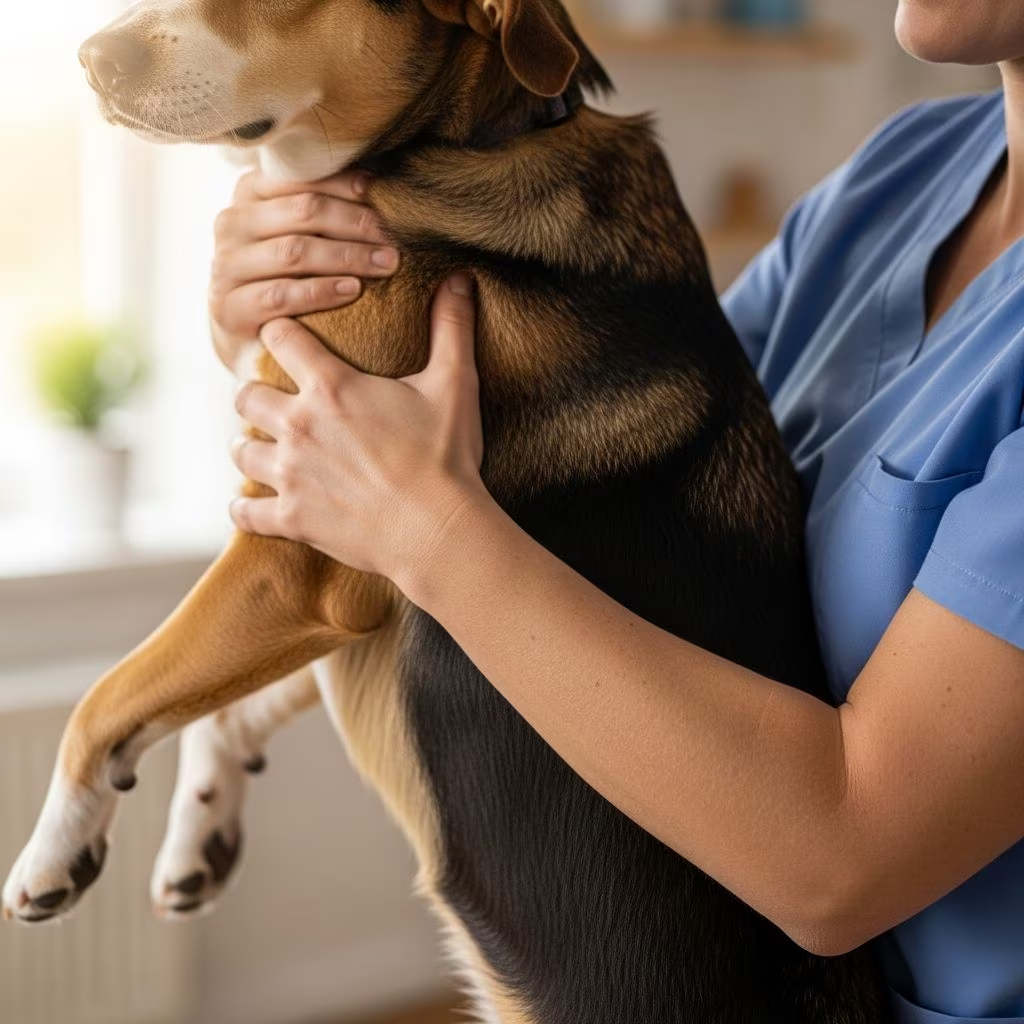
Properly lifting your dog is crucial for preventing injuries to both your pet and yourself. Incorrect methods can strain joints, exacerbate arthritis, or cause back problems in handlers. This guide provides step-by-step techniques based on dog size, training tips for acceptance, mobility aids, and safety measures for everyday scenarios like car access or vet visits.
Why Proper Lifting Matters for Your Dog’s Health
Dogs rely on their musculoskeletal system for mobility, and improper lifting can lead to sprains, dislocations, or worsened conditions like hip dysplasia. Veterinary experts emphasize supporting the body evenly to distribute weight and avoid pressure on vulnerable areas such as the abdomen or legs. For owners, using legs instead of the back reduces personal injury risk, especially with heavier breeds.
Common situations requiring lifts include helping seniors onto furniture, assisting with car entry, or positioning for grooming. Always assess your dog’s weight, age, and any medical issues first. Dogs over 40-50 pounds often need assistance or alternatives to solo lifts.
Essential Principles Before Any Lift
- Prepare your dog: Use a calm verbal cue like “up” to avoid startling them.
- Check your form: Bend at the knees, keep back straight, engage core muscles.
- Support key areas: Chest, abdomen, and hindquarters—not legs or neck.
- Know limits: If unsure, get help or use ramps/steps.
These basics apply universally, drawing from veterinary neurology and practice guidelines.
Lifting Techniques by Dog Size
Tailor your approach to your dog’s build for optimal safety. Below are proven methods refined by vets and trainers.
Small Dogs (Under 20 lbs)
For lightweight pups, one arm under the chest between front legs works best. Tuck the hind end against your body for stability as you rise. This keeps the spine neutral and prevents dangling legs. Practice by first placing hands along the sides, offering treats to build comfort.
Medium Dogs (20-50 lbs)
Position one arm behind the hind legs and the other around the chest ahead of the rear legs. Pull the dog close to your torso before standing. Squat low, lift with legs, and avoid twisting. This two-point support mimics natural carrying.
Large Dogs (Over 50 lbs)
Solo lifts risk injury; enlist a partner. Front handler supports chest between front limbs; rear supports under belly/pelvis. Both squat, engage cores, and lift simultaneously while keeping the dog near the body. For emergencies, use a towel sling under the abdomen with a leash for control.
| Dog Size | Technique | Key Support Points | Helper Needed? |
|---|---|---|---|
| Small | Arm under chest, tuck rear | Chest, body contact | No |
| Medium | Arms at chest and hind legs | Chest, hindquarters | Optional |
| Large | Two-person: chest/belly | Chest, abdomen/pelvis | Yes |
Special Considerations for Vulnerable Dogs
Senior or Arthritic Dogs
Aging joints demand minimal stress. Ramps or pet steps are ideal for cars, beds, or vet tables, reducing jump impacts that accelerate wear. Custom builds fit specific needs, like vehicle heights.
Injured or Fractious Dogs
Let injured limbs dangle without support to avoid further damage. For wounds, position away from your body. Use slings or boards for transport, lowering slowly. fractious dogs benefit from table work over floor lifts, using leashes and towels.
Training Your Dog for Handling and Ramps
Desensitize dogs to touch with progressive steps: start with spine contact, move to under ribs/chest, add pressure, then lifts—all paired with treats. This builds trust for vet exams or grooming.
Ramp Training Steps
- Place treats on ramp base to encourage approach.
- Create a treat trail up the surface.
- Smear peanut butter for hesitant paws.
- Practice fluency, add cue like “ramp up.”
- Use in real scenarios: car, furniture.
Patient, positive reinforcement yields quick results, even for nervous dogs.
Tools and Aids for Easier Lifting
- Ramps and Steps: Adjustable for cars/furniture; non-slip surfaces prevent slips.
- Lift Harnesses/Slings: Distribute weight evenly; great for rehab.
- Stretchers/Boards: Emergency transport for heavy or injured pets.
- Hydraulic Lifts/Gurneys: Vet-recommended for practices.
For cars, staged lifts—front legs first, then rear—halve the load. Secure non-slip rugs under furniture for safe jumps if needed.
Preventing Injuries in Daily Routines
Minimize jumps by training “wait and lift” or providing steps. Clear landing zones around furniture. For persistent jumpers, rugs with grip backing stabilize surfaces. Regular vet checks catch joint issues early.
Owners should strength train: core exercises enhance lift capacity. If pain occurs post-lift, consult a vet—could signal underlying issues.
Frequently Asked Questions (FAQs)
Can I lift my dog by the collar or legs?
No. This pressures neck/joints, risking injury. Always use body support.
What’s the max weight I should lift alone?
40-50 lbs max; heavier needs help or aids.
How do I lift a puppy safely?
One hand under chest, other supporting rear; cradle gently against you.
Are ramps better than steps?
Depends: ramps for longer inclines like SUVs; steps for furniture.
What if my dog resists lifts?
Desensitize with treats progressively; use ramps as alternative.
Quick Safety Checklist
- Verbal cue given?
- Back straight, knees bent?
- Dog close to body?
- Weight evenly supported?
- Ramp/step available if needed?
References
- How to Safely Lift Your Dog and Protect Their Joints — Vetnique Labs. 2023. https://vetnique.com/blogs/vets-corner/how-to-safely-lift-your-dog
- Lifting Your Dog — Whole Dog Journal. 2023. https://www.whole-dog-journal.com/care/lifting-your-dog/
- How to safely lift fractious dogs — dvm360. 2022-10-12. https://www.dvm360.com/view/how-safely-lift-fractious-dogs
- How to Safely Lift Large Dogs: Tips, Techniques & Tools — Southeast Veterinary Neurology (YouTube). 2023. https://www.youtube.com/watch?v=Lk00PsF0jAM
- Safe Lifting and Back Protection — CVMA Watchdog. 2016-06. https://cvma-watchdog.net/wp-content/uploads/2016/06/Safe_Lifting_Back_Protection.pdf
- Lifting and Transporting Pets — WM Referrals. 2023. https://www.wm-referrals.com/images/content/factsheets/lifting-and-transporting-pets.pdf
- HOW TO Pick Up a Puppy Properly — YouTube Shorts. 2023. https://www.youtube.com/shorts/6jtg-3FN6FE



