Safe Dog Bathing Alternatives Without Shampoo
Discover effective household substitutes for dog shampoo that keep your pup clean, healthy, and comfortable during unexpected baths.
When your dog’s coat gets muddy or smelly but the shampoo bottle is empty, panic isn’t necessary. Household staples can step in as temporary cleaning solutions, provided you use them correctly to protect your pet’s sensitive skin. Dogs have a skin pH around 6.5, different from humans’ 5.5, so harsh products can cause dryness or irritation. This article details proven substitutes, their applications, benefits, and limitations to help you maintain your dog’s hygiene safely.
Why Dog-Specific Products Matter and When to Improvise
Dog shampoos are formulated with a neutral pH, mild detergents, and coat conditioners to preserve natural oils that protect against infections. Human products often strip these oils, leading to flaky skin or allergies. However, in emergencies—like after a skunk encounter or oil spill—gentle alternatives work if diluted and rinsed well. Always patch-test on a small area first and consult a vet for pups, seniors, or those with skin conditions.
Natural Dry Cleaning Methods for Quick Refreshers
Dry shampoos avoid water, ideal for frequent light cleanups or water-shy dogs. They absorb oils and odors without wetting the coat.
- Cornstarch: Sprinkle liberally on the coat, massage in, and brush out. It mattifies greasy fur and neutralizes smells, best for short-haired breeds.
- Baking Soda: Similar application; its alkaline nature deodorizes effectively but use sparingly to avoid dryness.
These methods suit spot treatments between baths but won’t remove dirt clumps.
| Method | Best For | Pros | Cons |
|---|---|---|---|
| Cornstarch | Oil absorption, short coats | Cheap, mess-free if brushed well | Visible residue on long fur |
| Baking Soda | Odor control | Antibacterial, easy to find | Potentially drying if overused |
Moisturizing Oils and Balms for Skin Relief
For dry, itchy skin rather than dirt removal, emollients hydrate without suds.
Coconut Oil Applications
Virgin coconut oil’s lauric acid fights bacteria and fungi. Warm a teaspoon, rub into affected areas, leave 10-15 minutes, then wipe with a damp cloth. It conditions paws, ears, and hotspots but can feel greasy—avoid heavy application on fluffy breeds.
Aloe Vera Gel for Soothing
Pure aloe (no additives) cools inflammation. Apply thinly post-bath or on rashes; it hydrates without greasiness. Combine with glycerin for a DIY spray: mix 1 part aloe, 2 parts water, spritz and air-dry.
Caution: Never ingest oils; they may cause digestive upset if licked excessively.
Vinegar-Based Rinses for Deodorizing and pH Balance
Diluted vinegars restore skin acidity, repel fleas, and banish odors without residue.
- Apple Cider Vinegar (ACV): Mix 1:1 with water. Pour over wet coat after rinsing soap, or use as a spray. Its malic acid fights yeast and itch; weekly use prevents hot spots.
- White Vinegar: Stronger odor-fighter; same dilution. Avoid open wounds as it stings.
- Lemon Juice Rinse: 1 part juice to 3 parts water for flea deterrence and shine. Rinse immediately to prevent eye irritation.
Pros include antifungal properties and low cost; cons are temporary smell and unsuitability for broken skin.
Gentle Wet Wash Pastes from Kitchen Staples
These create mild suds for actual cleaning when water is involved.
Oatmeal Paste
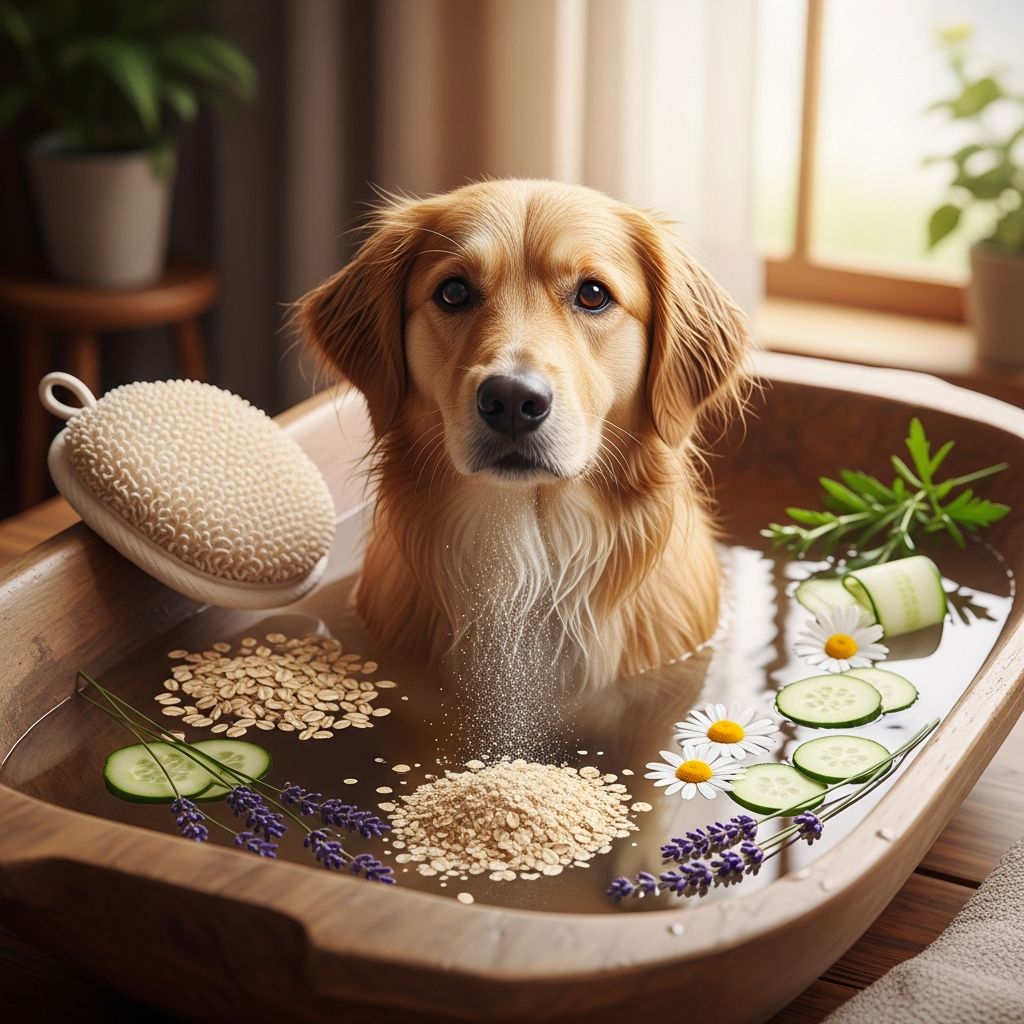
Grind plain oats into powder, mix with warm water to form a paste. Massage into damp fur, let sit 5 minutes, rinse. Colloidal oatmeal soothes allergies and cleans lightly, mimicking medicated shampoos.
Baking Soda Paste
Combine 3 parts soda with 1 part water. Scrub gently, rinse thoroughly. Excellent for grease but follow with conditioner like oil to prevent dryness.
Frequency: Monthly max for pastes, as they lack preservatives.
Commercial Household Substitutes: Proceed with Care
Some human products are gentler than others for one-off use.
- Baby Shampoo: Tear-free, pH closer to dogs’. Dilute 1:3, use once, rinse doubly well. Avoid scented versions.
- Dawn Dish Soap: Legendary for oil removal (e.g., wildlife rescues). Dilute heavily (1 tsp per cup water), limit to greasy messes, follow with moisturizer.
- Castile Soap: Plant-based, dilute 1:10. Biodegradable and mild but can dry skin.
Never use: Body washes, bar soaps, or perfumed detergents—they disrupt skin barrier.
| Substitute | Safe For | Dilution Ratio | Frequency |
|---|---|---|---|
| Baby Shampoo | Sensitive skin emergencies | 1:3 | One-time |
| Dawn Dish Soap | Greas/oil | 1 tsp/cup | Emergency only |
| Castile Soap | General clean | 1:10 | Rare |
DIY Shampoo Recipes for Frequent Use
Blend safe ingredients for reusable batches.
- Basic Oatmeal Shampoo: 1 cup ground oats, 1/4 cup baby shampoo, 2 cups water. Blend, strain, store refrigerated up to 1 week.
- Vinegar-Glycerin Mix: 1 quart water, 1 cup ACV, 1/3 cup glycerin, 2 tbsp aloe, 1 cup castile soap. Shake in bottle, apply diluted.
- Herbal Flea Rinse: Steep rosemary/chamomile tea, cool, add 1/4 cup ACV. No-rinse deodorizer.
Test small batches; shelf life is short without preservatives.
Spot Cleaning and Maintenance Tips
For non-full baths:
- Baby Wipes: Unscented, alcohol-free for paws and rear. Biodegradable pet wipes preferred.
- Brushing: Removes 80% of loose dirt; use slicker or rubber brush weekly.
- Dry-Off Towels: Microfiber absorbs moisture post-rinse, preventing mildew smells.
Risks, Precautions, and When to See a Vet
Overuse of any substitute risks imbalance: dryness from soda, allergies from fragrances. Watch for redness, excessive scratching, or lethargy. Breeds like Bulldogs (skin folds) or Huskies (double coats) need extra care. Puppies under 8 weeks and nursing mothers require vet-approved products only. If skin issues persist, professional grooming or medicated baths are best.
Frequently Asked Questions (FAQs)
Is human shampoo ever okay for dogs?
Rarely; baby shampoo once is tolerable, but dog pH mismatch causes long-term harm.
Can I use Dawn on my dog regularly?
No—it’s degreasing power dries skin. Reserve for spills.
How often should I bathe my dog without shampoo?
Every 4-6 weeks max; more invites oil overproduction.
Does apple cider vinegar kill fleas?
It repels, not kills; use with combing for control.
Are cornstarch and baking soda safe to ingest if licked?
Minimal amounts yes, but prevent by distracting post-application.
References
- Dog Shampoo Alternatives: Safe and Effective Options — Basepaws. 2023. https://basepaws.com/blog/no-dog-shampoo-what-can-you-use-instead
- Dog Shampoo Alternatives and Bathing Solutions — Honest Paws. 2024. https://www.honestpaws.com/blogs/pet-grooming/dog-shampoo-alternatives-and-bathing-solutions
- Dog Shampoo Substitutes: What to Do When You’re Out — Pride + Groom. 2023. https://prideandgroom.com/blogs/dog-grooming-tips-blog/dog-shampoo-substitutes-what-to-do-when-youre-out-of-dog-shampoo
- The Best Dog Shampoo Substitutes — Pride + Groom. 2024. https://prideandgroom.com/blogs/news/the-best-dog-shampoo-substitutes
- No Dog Shampoo, What Can I Use? — Cooper and Gracie. 2023. https://www.cooperandgracie.com/blogs/infos/no-dog-shampoo-what-can-i-use
Similar Articles








Read full bio of Sneha Tete