

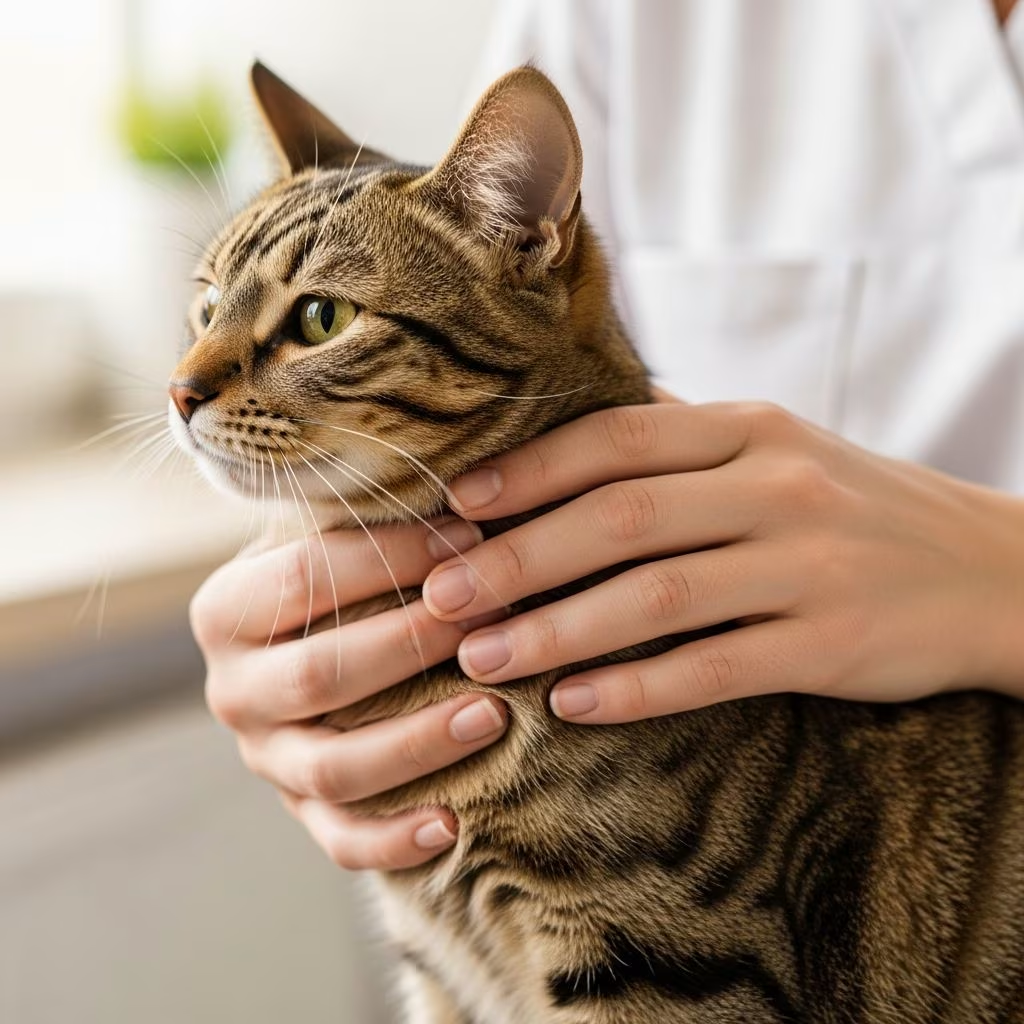
Properly handling your cat strengthens the bond between you while preventing discomfort or injury. Cats, as both predators and prey in their natural instincts, require specific support during lifts to feel secure. This guide outlines essential methods drawn from veterinary and animal welfare expertise, focusing on even weight distribution and respect for individual preferences.
Understanding Feline Comfort in Handling
Cats thrive on predictability and control. When lifted incorrectly, they experience vulnerability, leading to stress responses like clawing or fleeing. Key principles include using both hands for full body support, avoiding sudden motions, and observing signals such as tail flicking or ear flattening, which indicate unease. Veterinary professionals emphasize that adult cats differ from kittens; methods suitable for mothers carrying young do not translate to human interactions with grown felines.
Essential Preparation Before Lifting
Approach calmly to build trust. Position yourself sideways to the cat at ground level, extending a fist for scent familiarization. This reduces perceived threat. Assess the environment: ensure a quiet space free from loud noises or other pets. For unfamiliar cats, spend time petting gently first to gauge readiness.
- Observe relaxed posture: upright ears, slow blinks, loose tail.
- Avoid direct stares, which mimic predatory stares.
- Let the cat initiate contact if possible.
Step-by-Step Lifting Method
Follow this sequence for optimal safety:
- Crouch Beside the Cat: Align your body parallel to theirs, lowering slowly to eye level without looming.
- Support the Chest: Slide one hand palm-up under the chest, fingers behind the front legs for stability.
- Secure the Rear: Place the other hand or forearm under the hindquarters, creating a natural cradle to prevent leg dangling.
- Lift Smoothly: Rise gradually, keeping the cat close to your body for balance and warmth.
- Hold Securely: Tuck them against your chest, allowing front paws to rest on your shoulder or arm.
This two-handed approach distributes weight evenly, mimicking secure natural positions.
Adapting Techniques for Different Cat Sizes
Not all cats are the same; tailor your method accordingly.
| Cat Type | Key Adjustments | Support Focus |
|---|---|---|
| Kittens | Gentle scooping with one hand under belly | Full body in palm |
| Adult Average | Standard chest-rear support | Even distribution |
| Large/Heavy | Stronger rear arm hold, feet against forearm | Hindquarters emphasis |
| Senior | Minimal pressure, short durations | Avoid joints |
For heavier cats, reinforce hind support to counterbalance their mass. Seniors benefit from arthritis-aware gentleness, often preferring seated holds.
Recognizing and Responding to Body Language
Cats communicate volumes non-verbally. Positive signs include purring, kneading, and head-butting. Warning cues demand immediate release:
- Stress Indicators: Dilated pupils, flattened ears, thrashing tail, hissing.
- Discomfort: Tense muscles, skin rippling, attempts to escape.
- Action: Lower slowly to the ground, never drop.
Regular observation hones your ability to predict preferences, fostering positive associations through brief, rewarding sessions.
Common Handling Pitfalls to Avoid
Even well-meaning owners err in ways that erode trust. Steer clear of these:
- Lifting solely by neck scruff: Painful for adults, reserved for maternal kitten transport.
- Permitting dangling limbs: Triggers insecurity akin to falling.
- Belly-exposed holds: Exposes vulnerable underbelly.
- Obstructing vision: Cats need environmental awareness.
- Forcing reluctant cats: Builds aversion to handling.
Instead, prioritize consent-like checks via body language.
Special Scenarios: Children, Vet Visits, and Emergencies
Teaching Children Safely
Young kids under 8 should not lift independently due to strength and signal-reading limitations. Supervise floor-level interactions, demonstrating slow motions. Sitting holds reduce fall risks.
Veterinary or Carrier Assistance
For reluctant carriers, use towel-wrapping: Drape gently over the cat from behind, scoop securely, and place inside promptly. This calms via reduced visibility.
Calming Anxious Cats
In emergencies, prioritize restraint without harm. Professional holds like jaw scruff alternatives exist but require training.
Building Long-Term Handling Confidence
Consistency yields comfort. Start with short 10-20 second holds, pairing with treats or play. Gradually extend as trust grows. Some cats remain ground-preferring; respect this to avoid phobia development.
Daily gentle interactions enhance socialization, vital for multi-pet homes or travel needs.
Frequently Asked Questions
Can all cats learn to enjoy being held?
Preferences vary; many adapt with patient training, but independents may always resist prolonged lifts.
What if my cat struggles during holds?
Release immediately, analyze signals, and retry later with adjustments like firmer rear support.
Is scruffing ever appropriate?
Only for very young kittens by experts; never for adults due to pain and stress.
How often should I practice handling?
Brief daily sessions suffice, prioritizing quality over quantity.
What about declawed cats?
Standard techniques apply; they remain sensitive to improper support.
Advanced Tips from Veterinary Pros
Experts recommend chest-close positioning to leverage a cat’s natural leaning instinct. For mobility-impaired owners, seated lap transfers work well. Monitor for health issues like pain that alter tolerance.
References
- How to Hold a Cat Properly: Safe Techniques for Cats & Kittens — The Refined Feline. 2023. https://www.therefinedfeline.com/how-to-hold-a-cat-the-right-way/
- How to pick up a cat — Cats Protection. 2024-02-15. https://www.cats.org.uk/cats-blog/how-to-pick-up-a-cat
- How To Pick Up a Cat — PetMD. 2024. https://www.petmd.com/cat/general-health/how-to-pick-up-cat
- Humane Handling of Cats: How To Do 4 Safe & Effective Holds — ASPCA Pro. 2023-05-10. https://www.aspcapro.org/catholds
- How to Pet & Handle Cats – Cat Friendly Homes — Cat Friendly. 2024. https://catfriendly.com/be-a-cat-friendly-caregiver/best-ways-handle-pet-cats/



