Safe Bird Handling: Essential Techniques For Gentle Restraint
Master essential techniques for securely holding birds to ensure their safety, reduce stress, and prevent injuries during care or rescue.
Safe Bird Handling Guide
Properly handling birds is crucial for their well-being, whether dealing with pet parrots, backyard finches, or wildlife rescues. Incorrect methods can cause injuries, excessive stress, or respiratory issues, while correct techniques promote calm and quick recovery. This guide draws from established practices to outline effective strategies for all skill levels.
Understanding Bird Anatomy for Safe Contact
Birds possess delicate skeletal structures, lightweight bones prone to fractures, and a respiratory system vulnerable to compression. Their keel bone, or sternum, supports powerful flight muscles but leaves little room for body squeezing. Handling must prioritize gentle pressure distribution to avoid restricting airflow or damaging wings and legs.
Key anatomical considerations include:
- Hollow bones: Lightweight for flight but fragile; avoid twisting or bending limbs unnaturally.
- Wings and tail: Primary balance tools; secure them against the body without pulling feathers.
- Head and beak: Control first in aggressive species to protect handler and bird.
- Feet and talons: Sharp in raptors; use gloves and position away from face.
Recognizing these features allows handlers to apply restraint proportionally to size and temperament, from tiny songbirds to larger poultry.
Essential Principles of Gentle Restraint
Effective bird handling balances security with minimal stress. Core rules include using two hands for control, maintaining upright posture, and monitoring for distress signals like open-mouth breathing or gasping.
| Principle | Purpose | Application |
|---|---|---|
| Firm but gentle grip | Prevents escape without crushing | Palms over wings, fingers across chest |
| Control head first | Reduces pecking or biting | Thumb/index on neck for small birds |
| Minimize time handled | Lowers stress hormones | Handle only as needed for tasks |
| Darken environment | Calms via reduced visuals | Cover with cloth or place in box |
These principles apply universally, adapting to context like veterinary exams or transport.
Basic One-Handed Holding Techniques
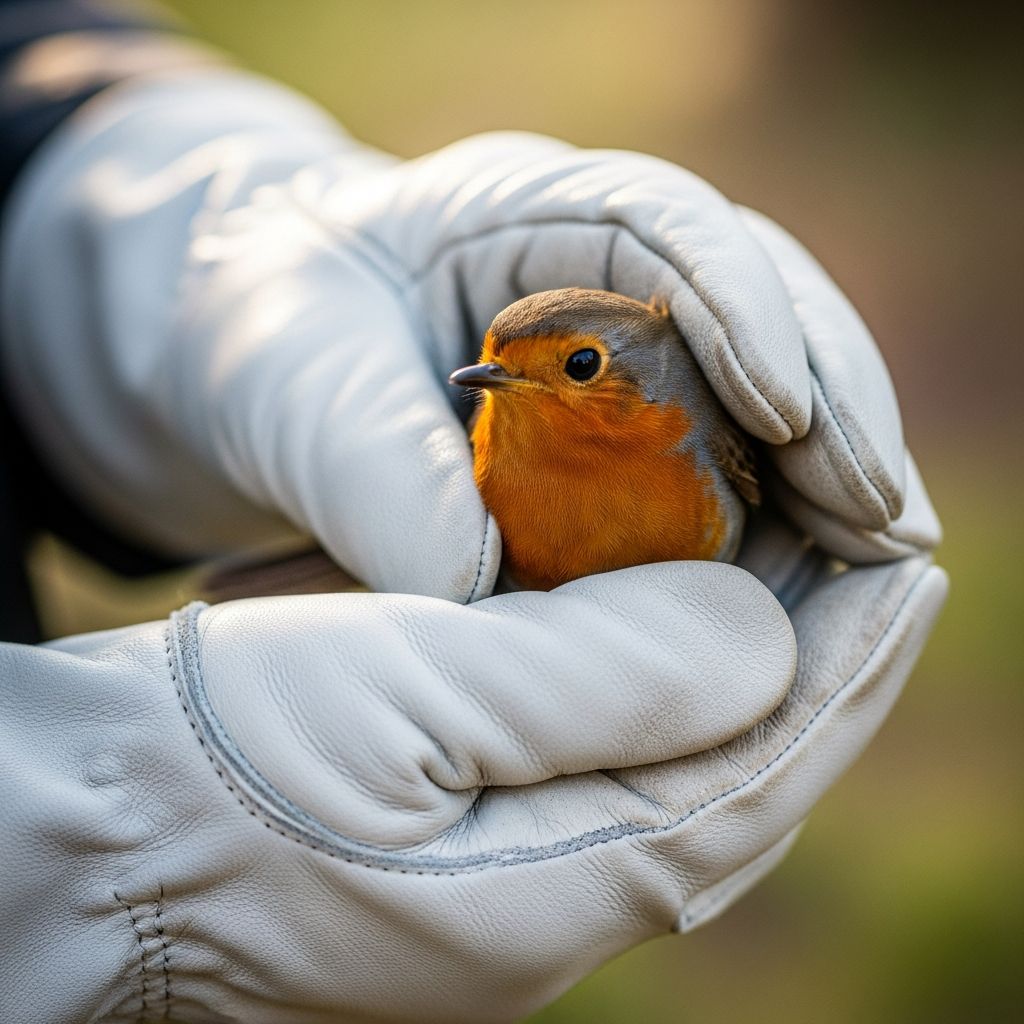
For small birds under 100g, such as finches or sparrows, a single hand suffices if executed precisely. The pistol grip positions thumb and index finger around the head and neck, with middle, ring, and pinky fingers cradling the body beneath folded wings.
Steps for pistol grip:
- Approach calmly from above or side.
- Cup hand gently over back, sliding fingers under body.
- Secure head between thumb and forefinger without squeezing throat.
- Hold tail between pinky and ring finger to stabilize.
This method supports respiration by keeping the chest uncompressed. For slightly larger passerines, extend fingers to envelop wings fully. Practice on stuffed models builds muscle memory without risking live birds.
Two-Handed Grips for Medium and Large Birds
Species like pigeons, doves, or cockatiels require bilateral support to distribute weight evenly. The standard two-handed hold places palms on either side, thumbs along the back at shoulder level (scapulae), and fingers wrapping under the breast.
Variations include:
- Vertical hold: Ideal for weighing or ringing; bird faces downward, tail between thumb/index.
- Supine hold: Belly-up on table for exams; thumbs on breast, fingers around back and legs.
- Raptor hold: One hand over eyes/head, other securing legs/wings; essential for talons.
For doves, grip shoulders firmly to minimize feather loss during stress responses. Always elevate birds to heart level, avoiding floor contact that heightens panic.
Advanced Restraint Methods for Challenging Cases
Aggressive or injured birds, such as raptors or herons, demand specialized tools. Hoods block vision, calming sharp-billed species, while towels provide soft barriers.
Chemical aids like light anesthesia suit prolonged procedures on large fowl, but only under veterinary supervision. Physical wraps in breathable cloth secure wings without constriction, particularly useful outdoors where escape risks rise.
For poultry in crates, extract singly head-first, securing wings immediately to prevent bruises or breaks. In rescues, toss towels swiftly then transfer to ventilated boxes lined with non-slip materials.
Recognizing and Mitigating Stress Indicators
Birds signal discomfort through subtle cues: fluffed feathers, rapid panting, dilated pupils, or cloacal relaxation. Hyperthermia risks escalate in warm conditions; mist with water or alcohol on feet aids cooling.
Preventive measures:
- Work in shaded, cool areas.
- Limit handling to under 5 minutes.
- Provide perches post-handling for recovery.
If distress appears, release immediately and observe from distance. Chronic stress alters behavior long-term, underscoring gentle practices.
Safety Measures for Handlers
Birds defend via beaks and talons; raptors especially pose risks. Wear leather gloves, safety glasses, and long sleeves. Approach from behind, never corners that provoke lunges.
In groups, designate roles: one restrains head, another legs. For pets, build trust via positive reinforcement—treats for stepping onto arms—reducing future resistance.
Training Pet Birds for Voluntary Handling
Companion birds thrive on desensitization. Introduce arms atop cages gradually, rewarding proximity with favorites. Progress to ‘step-up’ commands, petting only head/neck to avoid hormonal triggers.
Towel games foster familiarity: peekaboo or gentle swings condition birds positively. Patience yields trusting perches, minimizing forced holds.
Transport and Release Protocols
Post-handling, use carriers sized to prevent flapping: small for songbirds, larger for waterfowl. Line with towels, ventilate, and cover for darkness. Secure against shifts; transport quietly, avoiding heat/cold.
For releases, ensure fitness: alert posture, steady flight trials. Soft-release into aviaries precedes wild return, monitoring adaptation.
Frequently Asked Questions
How do I handle a scared pet bird?
Dim lights, speak softly, offer treats. Use towel if needed, but prioritize trust-building sessions.
What if a wild bird injures itself struggling?
Minimize time; cover head swiftly. Seek rehabber immediately; do not release injured birds.
Can I handle baby birds the same way?
Gentler grips; support fully to avoid falls. Nestlings need brooding warmth post-handling.
Is it safe to handle sick birds?
Wear PPE; isolate. Vet consultation first to avoid zoonotics.
How often should I handle my pet bird?
Daily short sessions build bonds; observe for aversion cues.
Common Mistakes to Avoid
- Squeezing chest: Impedes breathing.
- Grabbing by wings/tail: Causes tears.
- Prolonged exposure: Induces shock.
- Ignoring species traits: Raptors need jesses/hoods.
References
- Bird handling and ringing techniques — FAO. 2002. https://www.fao.org/4/a1521e/a1521e04.pdf
- Catching And Handling — Humane Slaughter Association. Accessed 2026. https://www.hsa.org.uk/catching-and-handling/catching-and-handling
- Safe Bird Rescue Tips and Handling Guide — Hunter Wildlife. Accessed 2026. https://www.hunterwildlife.org.au/our-work/species/birds/
- Bird Handling Techniques — Best Friends Animal Society. Accessed 2026. https://bestfriends.org/pet-care-resources/bird-handling-techniques-how-hold-bird
- Bird Handling Techniques for Beginner Bird Owners — Pet Assure. Accessed 2026. https://www.petassure.com/maxscorner/bird-handling-techniques-for-beginner-bird-owners/
- A Guide To Safely Catching Stray Birds — Open Sanctuary Project. Accessed 2026. https://opensanctuary.org/a-guide-to-safely-catching-stray-birds-for-your-animal-sanctuary-or-rescue-part-iv-capture-and-handling/
- Raptor handling tips — The Raptor Center, University of Minnesota. Accessed 2026. https://raptor.umn.edu/injured-bird/raptor-handling-tips
Similar Articles




Read full bio of medha deb