

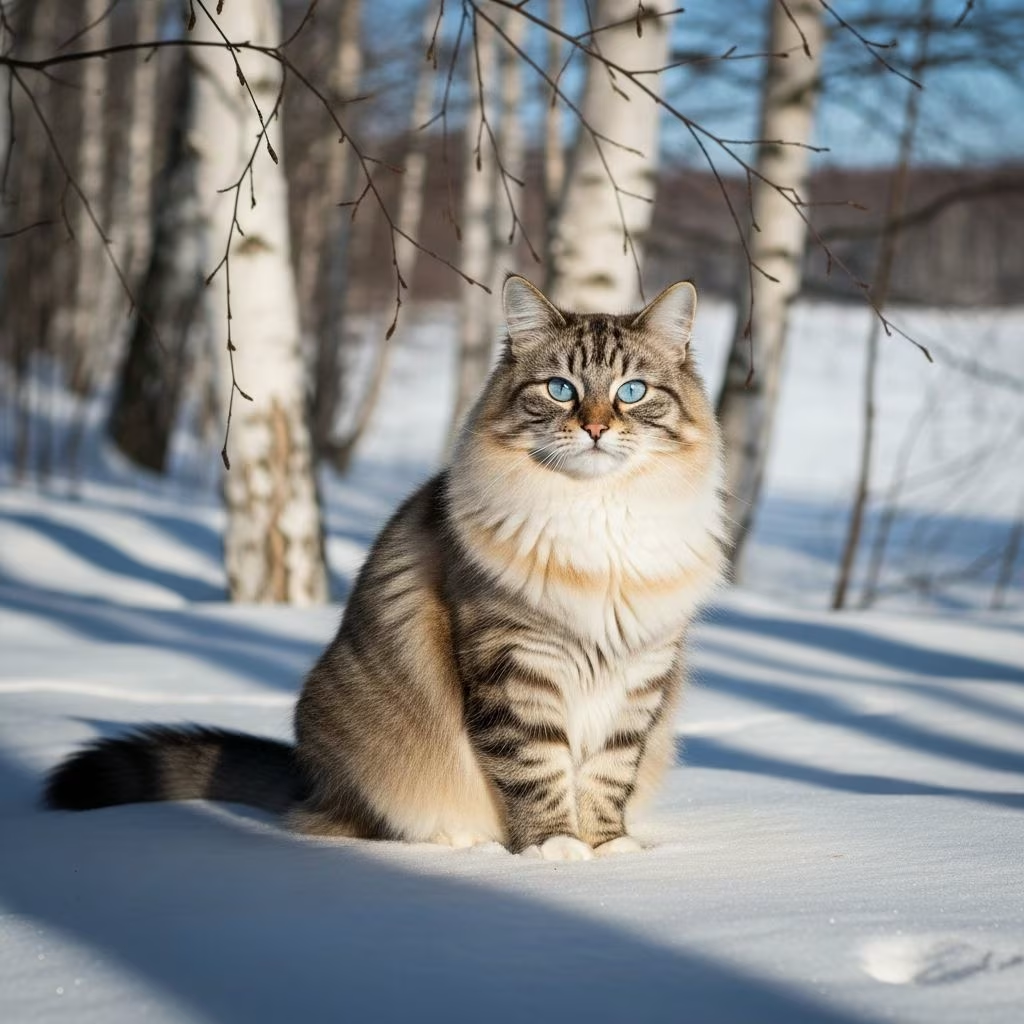
Russian cat breeds captivate enthusiasts with their striking appearances, resilient natures, and deep-rooted histories tied to Russia’s vast landscapes. From the icy north to subarctic forests, these felines have adapted uniquely, offering a range of personalities from playful to reserved. This guide delves into their origins, physical features, temperaments, and practical care tips to help you choose the right breed.
Historical Roots of Felines from Russia
The story of Russian cat breeds begins in harsh climates that shaped their survival traits. Many emerged naturally in northern regions, enduring cold winters and rugged terrains before selective breeding refined them into pedigreed varieties. Sailors and traders spread some breeds across Europe in the 19th century, leading to formalized shows and standards.
For instance, early records trace certain blue-coated cats to Arkhangelsk, a northern port, where they were prized for mousing on ships. By the late 1800s, they appeared in British cat exhibitions, evolving through crosses in England, Scandinavia, and later the U.S. Post-World War II breeding efforts revived dwindling populations, sometimes incorporating other lines to bolster numbers.
Spotlight on the Iconic Russian Blue
The Russian Blue stands as the most recognized Russian breed, celebrated for its shimmering pale blue-gray coat and vivid emerald eyes. This medium-sized cat features a muscular yet elegant frame, long legs, and a distinctive ‘smile’ from mouth shape. Their double-layered, short fur provides insulation, hinting at arctic origins just 150 miles from the Arctic Circle.
Physical Characteristics
- Coat: Dense, plush with silver-tipped guard hairs for a lustrous sheen; minimal shedding.
- Size: 8-10 inches tall, 7-12 pounds.
- Eyes: Bright green, almond-shaped.
- Build: Graceful, athletic with fine bones.
Genetic tests confirm their dilute black gene expression, ensuring solid blue kittens from pure lines, though historical Siamese crosses introduced rare color-point variants not accepted in registries.
Temperament and Lifestyle Fit
Russian Blues are intelligent, loyal companions who bond deeply with one person while remaining polite to others. They thrive on interactive play, leaping high and climbing adeptly, but mature slowly, retaining kitten-like energy until age 4. Quiet and low-maintenance, they suit apartments but dislike being left alone long, potentially turning mischievous from boredom.
Care and Health Considerations
Weekly brushing maintains their coat; they self-groom well. Provide climbing structures and puzzle toys. Generally healthy, they may face bladder issues or obesity if inactive. Feed high-protein diets suited to their active metabolism.
The Majestic Siberian Forest Cat
Siberians, Russia’s national cat, hail from subarctic woodlands, boasting waterproof triple coats that withstand extreme cold. These large, powerful cats embody wilderness grace, with rounded features and tufted ears reminiscent of wild lynxes.
Defining Traits
| Feature | Details |
|---|---|
| Height | 9-11 inches |
| Weight | 10-20 pounds (males larger) |
| Coat | Long, thick, water-repellent; all patterns |
| Colors | Varied, including pointed |
Surprisingly hypoallergenic due to low Fel d 1 protein, they appeal to allergy sufferers.
Personality Profile
Siberians are affectionate cuddlers who greet owners warmly, yet cautious with strangers. Highly playful and dog-like, they follow family members, enjoy water, and excel in agility. Their chirps and trills add charm; they adapt well to families with gentle children or other pets.
Grooming and Wellness
Brush 2-3 times weekly to manage undercoat; bathe if needed as they love water. Robust but prone to hypertrophic cardiomyopathy (HCM); screen breeders for genetic tests. Lifespan: 12-15 years with proper care.
Hairless Wonders: Donskoy and Peterbald
Russia pioneered hairless breeds like the Donskoy (Don Sphynx), born dominant hairless from a 1980s mutation in Rostov-on-Don. Warm to the touch, these medium cats have wrinkled skin, large ears, and whip-like tails.
- Temperament: Extroverted, people-oriented, dog-like loyalty.
- Care: Weekly baths to remove oils; sweaters in cold.
- Health: Prone to skin issues; average lifespan 12-15 years.
The Peterbald, a Siamese-Donskoy cross from 1994 St. Petersburg, offers elegant, slender bodies with velvety or bald coats. Intelligent and vocal, they demand attention and suit interactive homes.
Color Variations: Russian White and Black
Derived from Russian Blues crossed with white domestics, Russian Whites emerged in the 1960s UK via ship kittens, mirroring Blues in body but snowy white with blue or green eyes. Australian lines followed in the 1970s using Siberians. Russian Blacks share the type, solid ebony coats glowing under light. Both retain Blue athleticism and devotion, officially recognized after generations.
Other Notable Russian Breeds
- Ural Rex: Curly-coated from 1990s Urals; playful, medium-sized.
- Yemva Ragdoll: Relaxed, large like Ragdolls but Russian-developed.
- Kanaani: Wild-type from Bengal-Abyssinian mixes, forest-adapted.
These rarer gems highlight Russia’s breeding innovation.
Choosing Your Russian Breed Companion
Select based on lifestyle: Active singles favor Blues or Peterbalds; families with kids prefer Siberians. All demand enrichment to curb boredom. Reputable breeders provide health guarantees; rescues offer purebreds too.
Nutrition and Daily Routines
High-quality proteins support muscle tone; wet food aids hydration. Rotate toys, schedule play sessions. Annual vet checks monitor breed-specific risks like HCM in Siberians or dental health in Blues.
Common Myths Debunked
- Myth: All Russian cats are blue. Fact: Variations abound.
- Myth: Hairless means low-maintenance. Fact: Skin care intensifies.
- Myth: Siberians shed excessively. Fact: Regular grooming controls it.
Frequently Asked Questions (FAQs)
Are Russian Blue cats hypoallergenic?
Not fully, but low-shedding coats reduce allergens compared to longhairs.
How long do Siberian cats live?
Typically 12-18 years with genetic screening and care.
Do Donskoy cats get cold easily?
Yes; provide warmth in cooler climates.
Can Russian Whites breed with Blues?
Yes, but offspring vary; registries prefer pure lines.
What’s the best food for active Russian breeds?
Grain-free, high-protein kibble or raw diets mimicking natural prey.
Training Tips for Russian Cats
Leverage their smarts: Clicker training for tricks, litter training is innate. Socialize early for stranger comfort, especially reserved types like Siberians.
References
- Russian Blue – Wikipedia — Wikipedia. 2023-10-01. https://en.wikipedia.org/wiki/Russian_Blue
- Russian Blue Cat Facts: History, Personality, Health & More – RAWZ — RAWZ Natural Pet Food. 2024-05-15. https://rawznaturalpetfood.com/russian-blue-cats/
- 27 Facts About Russian White Cats! | FELIWAY Cat Experts — FELIWAY. 2023-08-20. https://www.feliway.co.uk/blogs/news/27-facts-about-russian-white-cats
- 10 Russian Cat Breeds: An Overview (With Info & Pictures) – Catster — Catster. 2024-11-12. https://www.catster.com/cat-breeds/russian-cat-breeds/
- Russian Blue – Cat breed genetic test – Koko Genetics — Koko Genetics. 2024-02-28. https://www.kokogenetics.com/en/results/cat-dna-test-breed/russian-blue
- Russian Blue – The Cat Fanciers’ Association — CFA. 2024-09-10. https://cfa.org/breed/russian-blue/



