

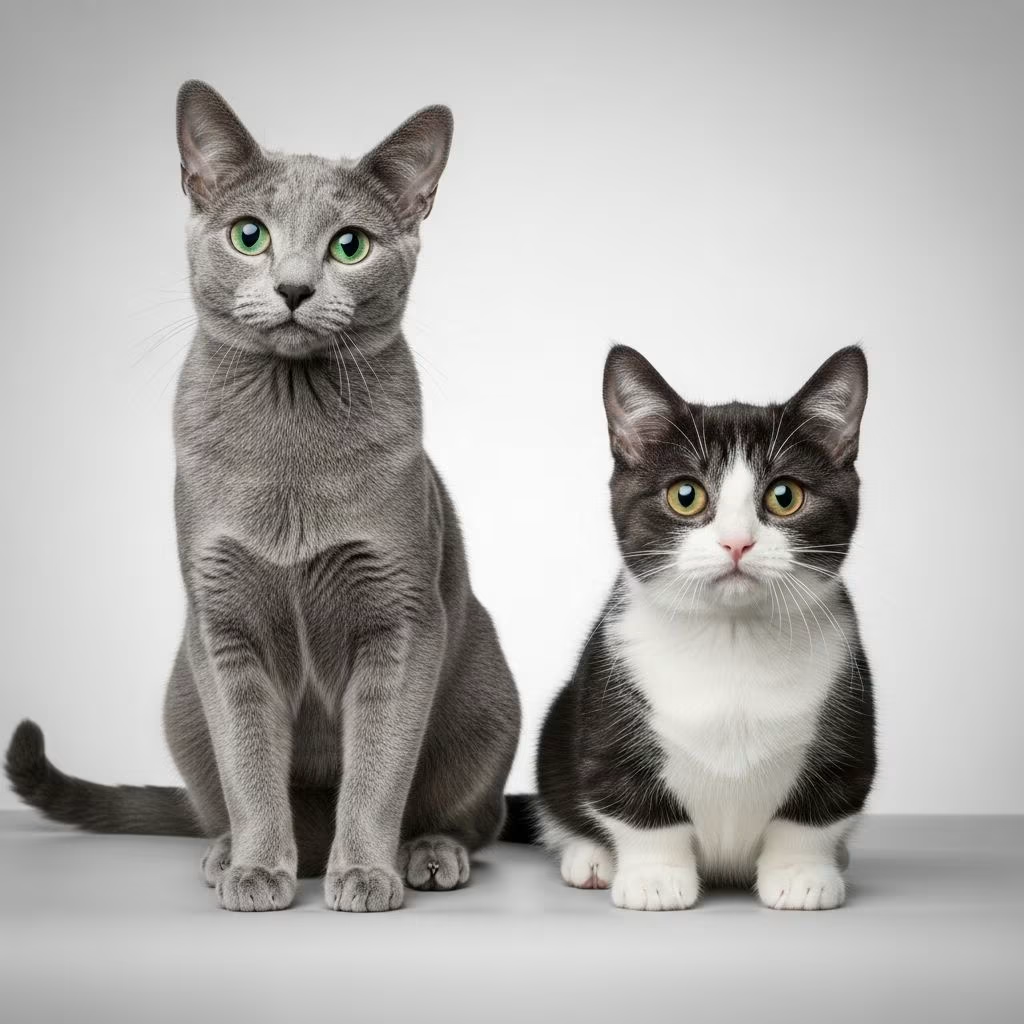
Choosing between a Russian Blue and a Munchkin cat involves weighing their distinct physical features, temperaments, care requirements, and lifestyle compatibility. Both breeds offer unique appeal—the Russian Blue with its shimmering blue coat and reserved elegance, and the Munchkin with its playful short legs and endearing curiosity. This guide breaks down key differences to help you decide.
Origins and Historical Background
The Russian Blue traces its roots to the Archangel Isles of Russia, where it developed a dense, protective coat suited to harsh climates. Sailors brought these cats to Europe in the 19th century, and by the early 1900s, they were standardized as a breed with their signature blue-gray fur and green eyes. Their history emphasizes resilience and natural selection for intelligence and hunting prowess.
In contrast, the Munchkin emerged more recently in the 1980s in Louisiana, USA, from a spontaneous genetic mutation causing short legs. Discovered by breeder Sandra Hochenedel, the breed gained recognition through careful crossing to maintain health while preserving the short-limbed trait. Unlike the ancient lineage of the Russian Blue, Munchkins represent modern selective breeding focused on novelty and playfulness.
Physical Appearance and Size
Russian Blues present a picture of refined athleticism. They feature a long, lithe body with fine bones yet firm musculature, a wedge-shaped head, large flared ears, and vivid green eyes. Their short, plush double coat in bright blue with silver tipping creates a shimmering effect, while paw pads are lavender-pink. Adults weigh 8-15 pounds, with males larger, and stand medium height on long, lean legs.
Munchkins, meanwhile, captivate with their short legs, which give them a low-slung, ferret-like stance without affecting agility. They come in various coat lengths and colors, from shorthair to longhair, with bodies resembling mixed-breed domestic cats—medium-sized, weighing 6-9 pounds. Their heads are rounded, eyes large and expressive, emphasizing a perpetual kittenish charm.
| Feature | Russian Blue | Munchkin |
|---|---|---|
| Body Type | Long, muscular, elegant | Compact, short-legged |
| Coat | Short, dense blue with silver tips | Variable length/color |
| Weight | 8-15 lbs | 6-9 lbs |
| Eyes | Vivid green | Varied, large |
Temperament and Personality Traits
Russian Blues are intelligent, loyal companions who bond deeply, often with one person. They appear aloof initially but reveal playfulness, enjoying fetch and interactive toys into adulthood. Quiet and observant, they vocalize softly with owners, sense emotions, and prefer calm settings over chaotic homes. Great with respectful children and pets, they thrive on routine and may hide from strangers.
- Highly trainable and clever
- Affectionate yet independent
- Low-maintenance emotionally
Munchkins exude boundless energy and sociability. Their short legs don’t hinder jumping or speed; they’re agile climbers and explorers. Friendly with everyone—kids, dogs, strangers—they’re less reserved, chirping and trilling to communicate. Playful lifelong, they suit active families but may be too boisterous for timid owners.
- Outgoing and adaptable
- High energy, loves play
- People-oriented
Health and Lifespan Considerations
Russian Blues enjoy robust health, with an average lifespan of 12-15 years, some exceeding 25. They’re naturally low-shedding with few breed-specific issues, though obesity watchfulness is advised due to their indoor preferences. Regular vet checks ensure dental health, as their dense coat hides no major genetic woes.
Munchkins face more scrutiny due to their short-leg gene, linked to lordosis (spinal curvature) and pectus excavatum in some lines. Ethical breeders screen rigorously; well-bred Munchkins live 12-15 years without mobility issues. They’re prone to standard cat ailments like obesity from overfeeding, given their playful but grounded nature.
Grooming and Daily Care Needs
The Russian Blue’s plush coat requires weekly brushing to maintain shine and reduce minimal shedding. Their fastidious grooming keeps them clean; bathe rarely. Dental care, nail trims, and ear checks suffice. They adapt to indoor life with scratching posts and toys.
Munchkins vary by coat type: shorthairs need minimal brushing, longhairs more frequent. Their low stature makes litter access easy but demands clean boxes to prevent infections. Exercise via play prevents weight gain; provide ramps for higher spots.
| Care Aspect | Russian Blue | Munchkin |
|---|---|---|
| Grooming Frequency | Weekly brush | 1-2x/week (varies) |
| Shedding | Low | Low-moderate |
| Exercise Needs | Moderate play | High play/chasing |
Living Environment and Suitability
Russian Blues flourish in quiet apartments or homes with patient owners. They handle solitude well but crave evening interaction. Not ideal for rowdy families, they prefer adults or gentle kids. Indoor-only suits their sensitivity; a window perch for bird-watching delights them.
Munchkins adapt broadly—from bustling families to singles. Their size fits small spaces, and they’re dog-friendly. Outdoor access risks due to low height; enrich indoors with tunnels and levels. Excellent first-cat choices for interactive households.
Exercise, Training, and Enrichment
Train Russian Blues with puzzle feeders and fetch; their smarts shine in tricks. Daily 15-20 minute sessions prevent boredom. Vertical spaces and quiet toys match their graceful leaps.
Munchkins demand chase toys, balls, and agility courses. Their curiosity drives endless play; interactive lasers or wands keep them fit. Short legs enhance ground games like soccer with crinkly balls.
Nutrition and Feeding Guidelines
Both breeds need high-quality, protein-rich food portioned to prevent obesity—Russian Blues 1/4-1/2 cup daily, Munchkins similar adjusted for activity. Wet food aids hydration; monitor treats. Russian Blues favor routine meals; Munchkins gobble enthusiastically.
Cost of Ownership
Kittens cost $800-$2,000 for either, plus annual vet ($200-500), food ($300-600), and supplies. Russian Blues may need fewer toys; Munchkins benefit from adaptive furniture. Longevity offsets initial outlay.
Pros and Cons Summary
| Breed | Pros | Cons |
|---|---|---|
| Russian Blue | Loyal, low-shed, intelligent | Shy with strangers, routine-bound |
| Munchkin | Sociable, playful, adaptable | Potential health screening needs, high energy |
Frequently Asked Questions (FAQs)
Which is better for apartments: Russian Blue or Munchkin?
Russian Blues excel in quiet apartments due to low noise and independence; Munchkins work if you provide ample play.
Are Munchkins in pain from short legs?
Reputable lines show no pain; the trait is like human dwarfism—mobility is normal with health testing.
Do Russian Blues get along with dogs?
Yes, if introduced slowly; their calm nature aids harmony.
How active are these breeds as seniors?
Both retain playfulness; Russian Blues mellow gracefully, Munchkins stay bouncy.
What’s the best family cat between them?
Munchkins for lively homes; Russian Blues for calmer setups.
References
- Russian Blue Cat Breed Information — Purina UK. 2023-01-15. https://www.purina.co.uk/find-a-pet/cat-breeds/russian-blue
- What to Know About a Russian Blue Cat — WebMD. 2024-05-10. https://www.webmd.com/pets/cats/what-to-know-about-russian-blue-cat
- Fun Facts About Russian Blue Cats — ASPCA Pet Health Insurance. 2023-11-20. https://www.aspcapetinsurance.com/resources/russian-blue-cat-facts/
- The Russian Blue Cat Breed — Hill’s Pet Nutrition. 2024-02-28. https://www.hillspet.com/cat-care/cat-breeds/russian-blue
- Russian Blue — Cat Fanciers’ Association. 2023-09-01. https://cfa.org/breed/russian-blue/
- Russian Blue — Wikipedia (for general breed context, primary sources preferred). 2026-01-20. https://en.wikipedia.org/wiki/Russian_Blue



