
Ruminant Digestive Pharmacology: Practical Guide For Vets
Exploring pharmacological strategies to optimize ruminant digestion, manage disorders, and enhance livestock health through targeted therapeutics.
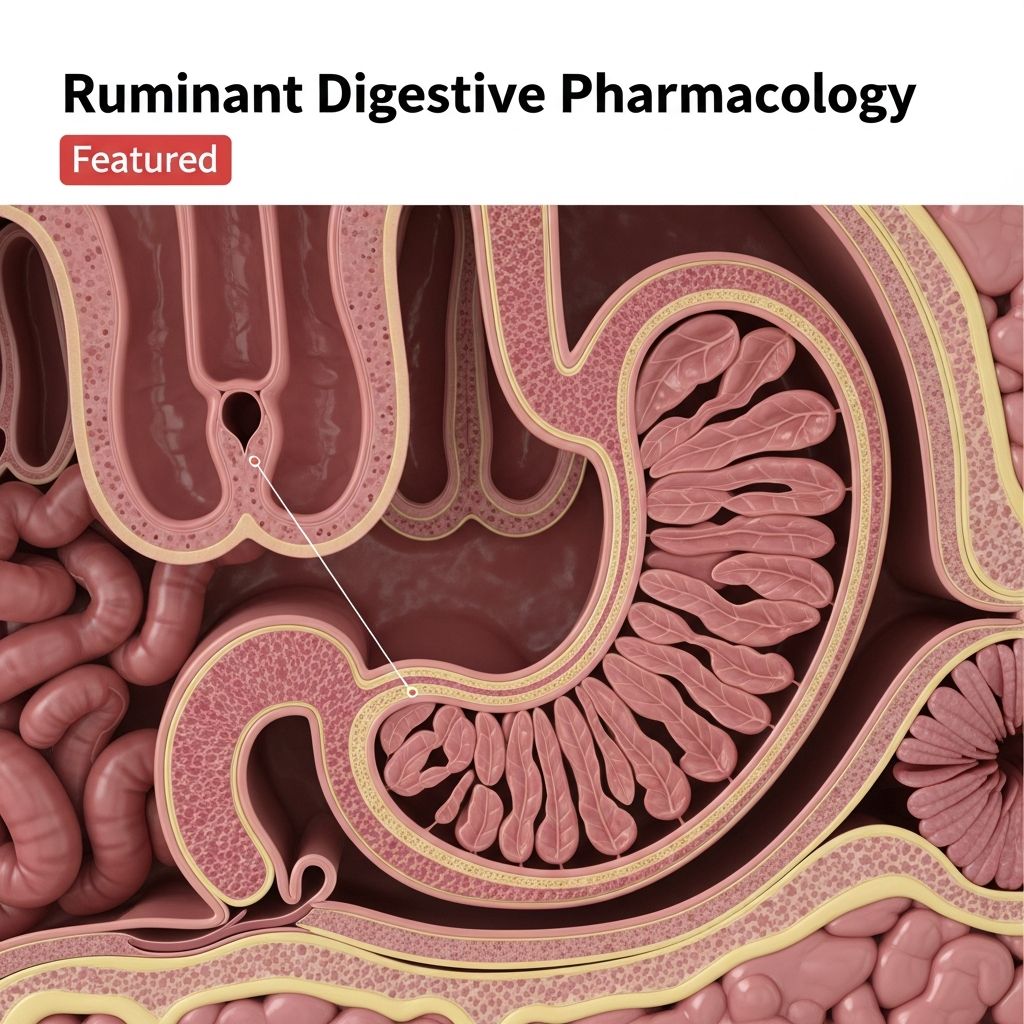
The digestive system of ruminants like cattle, sheep, and goats is a marvel of evolutionary adaptation, enabling them to extract maximum nutrition from fibrous plant material. This complex system relies on microbial fermentation in specialized stomach compartments, making it susceptible to disruptions that require targeted pharmacological interventions. Understanding these dynamics is crucial for veterinarians and farmers aiming to safeguard animal health and productivity.
Overview of Ruminant Gastrointestinal Anatomy
Ruminants possess a multipartite stomach divided into four key chambers: the rumen, reticulum, omasum, and abomasum. The rumen, the largest compartment, serves as a fermentation vat where microbes break down cellulose into volatile fatty acids (VFAs), providing up to 70% of the animal’s energy needs. The reticulum, with its honeycomb lining, traps foreign objects and aids in rumination by coordinating with the rumen to form the reticulorumen complex.
Following fermentation, digesta moves to the omasum, which absorbs water, electrolytes, and residual VFAs while reducing particle size through its leafy folds. The abomasum acts as the true stomach, secreting hydrochloric acid and enzymes for protein digestion, akin to monogastric animals. Beyond the stomach, the small intestine—duodenum, jejunum, and ileum—handles enzymatic breakdown and nutrient absorption via villi, while the large intestine ferments remaining fiber and reabsorbs water.
- Rumen: Fermentation site, 60-80% of stomach volume in adults.
- Reticulum: Sorts digesta, prevents hardware disease.
- Omasum: Water absorption, pH regulation.
- Abomasum: Acidic digestion, microbial protein breakdown.
Microbial Ecosystem and Its Pharmacological Implications
The rumen hosts billions of bacteria, protozoa, and fungi that ferment feed into VFAs (acetate, propionate, butyrate), microbial protein, and gases. Saliva, produced at high volumes (up to 200 liters/day in cows), buffers the rumen pH (5.5-7.0) and supplies nitrogen. Disruptions like acidosis from high-grain diets shift microbial populations, reducing fiber digestion and causing laminitis.
Pharmacotherapeutics target this ecosystem. Ionophores such as monensin selectively inhibit gram-positive bacteria, reducing lactate producers and stabilizing rumen pH. These are commonly added to feed for dairy cattle to prevent subacute ruminal acidosis (SARA). Probiotics, or direct-fed microbials, introduce beneficial strains like Lactobacillus to restore balance post-antibiotic use.
Common Digestive Disorders in Ruminants
Ruminants face unique challenges: frothy bloat from legume overconsumption traps gas in the rumen; grain overload leads to acidosis; displaced abomasum (DA) twists the organ, impairing outflow. Hardware disease occurs when sharp objects lodge in the reticulum, perforating tissues. Hypocalcemia in periparturient cows weakens rumen motility, exacerbating DA.
| Disorder | Causes | Symptoms | Prevalence |
|---|---|---|---|
| Frothy Bloat | Legume-rich forage | Distended left flank, dyspnea | High in alfalfa-fed cattle |
| Ruminal Acidosis | Excess grain | Diarrhea, laminitis, reduced feed intake | Common in feedlots |
| Abomasal Displacement | High concentrate, calving stress | Decreased milk, ketosis signs | 5% dairy cows |
| Hardware Disease | Ingestion of metal | Sparse manure, pericarditis | Prevalent in grazing herds |
Pharmacological Management of Forestomach Atony
Rumen motility is driven by reticular contractions (1-2/min) that mix contents and eructate gas. Atony, or hypomotility, results from toxins, endotoxemia, or hypocalcemia, leading to stasis and bloat. Treatments focus on prokinetic agents. Metoclopramide and erythromycin stimulate smooth muscle via motilin receptors, enhancing contractions. Oral magnesium sulfate or calcium borogluconate restores electrolyte balance and motility.
In severe cases, transfaunation—transferring rumen fluid from healthy donors—reintroduces microbes, often combined with laxatives like dioctyl sodium sulfosuccinate to evacuate toxins.
Therapeutics for Ruminal Tympany (Bloat)
Bloat types include free-gas (eructation failure) and frothy (stable foam). For frothy bloat, antifoaming agents like poloxalene (Bloat Guard) or mineral oil disrupt foam stability when dosed preemptively or via trocar. Dimethicone-based gels provide rapid relief by breaking foam bubbles. For free-gas, trocharization relieves pressure, followed by motility stimulants.
Preventive strategies include ionophores and gradual diet adaptation, reducing legume intake.
Addressing Abomasal and Intestinal Issues
Abomasal ulcers, common in veal calves and high-producing dairy cows, cause melena and perforation risk. Sucralfate coats ulcers, while proton-pump inhibitors like omeprazole reduce acid secretion, though off-label in ruminants. For displaced abomasum, surgical correction is standard, but rolling and tocolytics (e.g., isoflupredone) attempt repositioning pre-surgery.
Diarrhea from coccidiosis or enteritis responds to fluid therapy, electrolytes, and antimicrobials like tulathromycin, judiciously used to preserve rumen microbes.
Nutritional Pharmacology and Feed Additives
Systemic pharmacotherapeutics extend to feed additives enhancing digestion. Buffers like sodium bicarbonate neutralize acid during grain feeding. Yucca schidigera extracts reduce ammonia, improving nitrogen efficiency. Flavomycin (flavophospholipol) promotes propionate production, boosting energy yield.
Yeast products (e.g., Saccharomyces cerevisiae) stabilize rumen pH by scavenging oxygen and stimulating fibrolytic bacteria.
Developmental Considerations in Young Ruminants
Newborn ruminants have a functional esophageal groove, bypassing the rumen to direct milk to the abomasum. Post-weaning, solid feed stimulates rumen papillae growth via VFA exposure. Pharmacological support includes probiotics to colonize the rumen and coccidiostats like decoquinate for preventing neonatal diarrhea.
Diagnostic Approaches Guiding Therapy
Effective pharmacotherapy relies on diagnostics: rumenocentesis assesses pH (<5.5 indicates acidosis); magnet retrieval for hardware; ultrasound for DA. Fecal occult blood tests abomasal ulcers. These inform targeted interventions over empirical treatments.
Future Directions in Ruminant Therapeutics
Emerging therapies include prebiotics fostering beneficial microbes and bacteriophages targeting pathogens like Fusobacterium in liver abscesses. Precision feeding with rumen boluses monitoring pH real-time promises optimized dosing.
Frequently Asked Questions (FAQs)
What is the primary energy source for ruminants?
Volatile fatty acids produced by rumen microbial fermentation.
How do ionophores like monensin work?
They alter microbial populations to favor propionate producers, preventing acidosis.
Can bloat be prevented pharmacologically?
Yes, poloxalene in feed prevents frothy bloat by reducing foam stability.
What causes abomasal displacement?
High-grain diets, hypocalcemia, and periparturient stress in dairy cows.
Is antibiotic use safe for rumen health?
Use sparingly; prefer narrow-spectrum to avoid dysbiosis.
References
- Understanding The Ruminant Digestive System — Horizon Veterinary. 2022-06-15. https://www.horizonvetbrighton.com/site/blog/2022/06/15/understanding-the-ruminant-digestive-system
- The Ruminant Digestive System — LSU AgCenter. 2023. https://www.lsuagcenter.com/articles/page1728411297432
- The ruminant digestive system — University of Minnesota Extension. 2021. https://extension.umn.edu/dairy-nutrition/ruminant-digestive-system
- Ruminants: A Digestive Powerhouse — SDSU Extension. N/A. https://extension.sdstate.edu/ruminants-digestive-powerhouse
- The Ruminant Digestive System – Pharmacology — Merck Veterinary Manual. N/A. https://www.merckvetmanual.com/pharmacology/systemic-pharmacotherapeutics-of-the-digestive-system/the-ruminant-digestive-system
Similar Articles








Read full bio of medha deb


