
Ruminal Parakeratosis in Cattle and Sheep
Understanding the causes, pathology, and management of rumen papillae damage in livestock
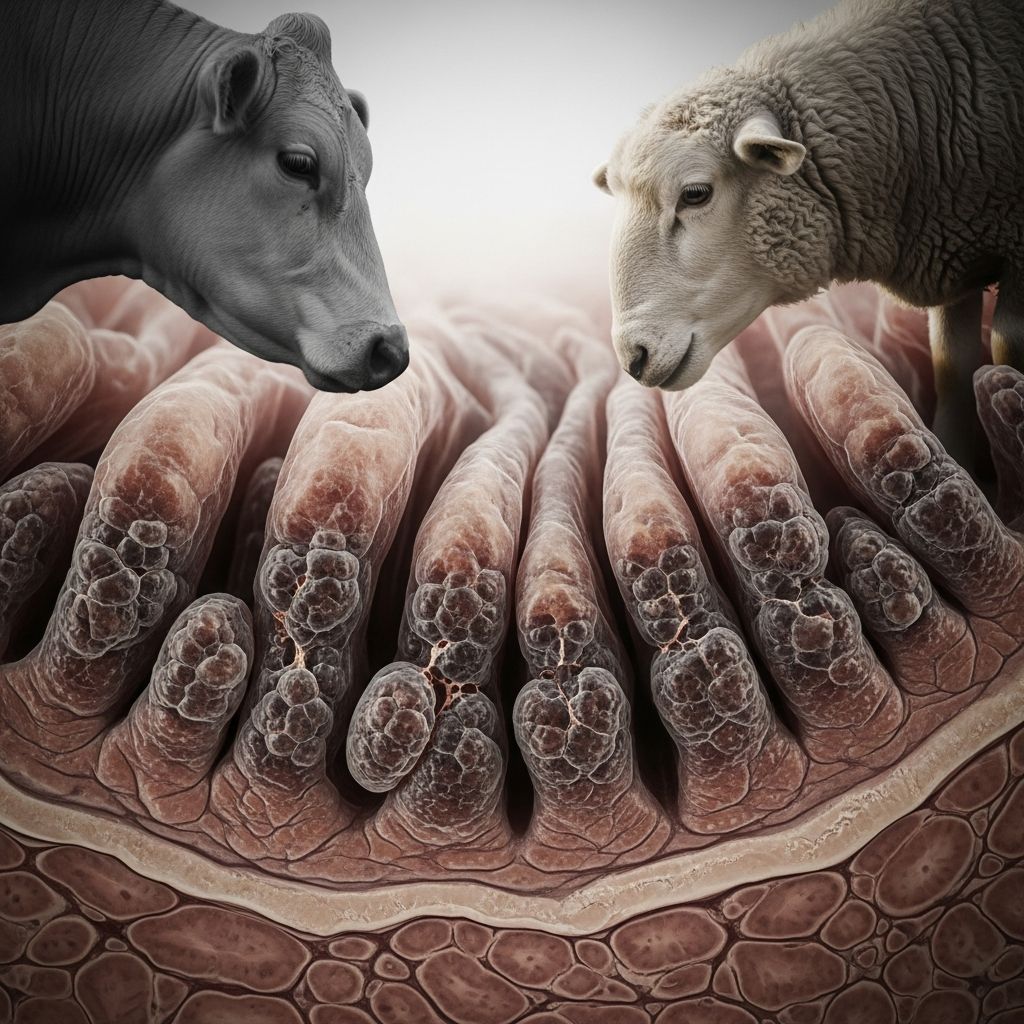
Ruminal parakeratosis represents a significant metabolic and nutritional challenge in modern livestock production systems, particularly affecting cattle and sheep during intensive finishing programs. This forestomach condition involves pathological changes to the rumen’s papillary structure, leading to reduced nutrient absorption and compromised animal productivity. Understanding the underlying mechanisms, contributing factors, and management strategies is essential for veterinarians and livestock producers seeking to optimize herd health and economic returns.
Defining Ruminal Parakeratosis and Its Significance
Ruminal parakeratosis is fundamentally characterized by abnormal keratinization and physical enlargement of the ruminal papillae—the finger-like projections that line the rumen wall and function as the primary absorption surface for volatile fatty acids (VFAs) and other nutrients. Rather than maintaining their normal structure and flexibility, affected papillae become hardened and thickened through excessive epithelial proliferation. Multiple adjacent papillae frequently adhere together, forming clusters or bundles that trap feed particles and bacterial colonies within the abnormal tissue architecture.
The prevalence of this condition can reach concerning levels in affected production units, with some herds experiencing incidence rates approaching 40% during high-risk feeding periods. Despite its relatively common occurrence in intensive production systems, the economic impact often goes underrecognized because affected animals may continue to eat and gain weight, albeit at reduced efficiency. The condition primarily affects animals during their finishing phase when energy-dense rations are employed to accelerate growth and market readiness.
Dietary Factors and Risk Categories
High-Concentrate Ration Systems
The most significant risk factor for developing parakeratosis involves feeding high-concentrate rations, particularly during the intensive finishing period common in beef and sheep production. Concentrate-heavy diets, formulated to maximize energy intake and feed conversion efficiency, create the ruminal conditions that predispose to papillary damage. The shift from forage-based to grain-based diets fundamentally alters ruminal fermentation patterns and fluid chemistry in ways that promote keratinization.
Specific Feed Processing Methods
Not all grain-based feeds carry equal risk. The physical processing of cereal grains significantly influences parakeratosis development. Finely ground grain concentrates present greater risk than whole or coarsely processed grains. When grains are hammer-milled into fine particles, the increased surface area available for microbial fermentation accelerates VFA production and ruminal pH decline. In contrast, animals fed unprocessed whole grains maintain higher ruminal pH values and different VFA profiles that do not typically trigger papillary damage, despite achieving equivalent weight gains.
Heat-treated alfalfa pellets, while often included in rations to provide fiber and improve handling characteristics, have also been implicated in parakeratosis development. The pelleting process and thermal treatment may alter feed digestibility patterns in ways that contribute to the condition.
Inadequate Forage and Specialized Feeding Conditions
Young, developing calves fed exclusively finely ground grain-based concentrates without supplemental forage show particular susceptibility to parakeratosis prior to weaning. The absence of fibrous material to stimulate normal ruminal motility and maintain buffering capacity compounds the risk created by concentrate-only feeding. Additionally, calves experiencing prolonged ruminal acidosis from milk accumulation—a condition known colloquially as “ruminal drinking”—develop parakeratosis secondary to the acidic environment created by fermentation of accumulated milk.
Pathophysiological Mechanisms Underlying Papillae Damage
pH Decline and Volatile Fatty Acid Accumulation
The primary pathological driver of parakeratosis involves the lowered pH and increased concentration of volatile fatty acids in ruminal fluid. When fermentable carbohydrates overwhelm the rumen’s buffering capacity, microbial fermentation produces excessive quantities of short-chain fatty acids—particularly propionic and butyric acid—while simultaneously consuming buffering compounds. The resulting acidic environment creates chemical irritation of the ruminal mucosa.
The specific composition of VFAs matters considerably. Animals fed unprocessed whole grains maintain ruminal VFA profiles dominated by acetic acid, which produces less severe epithelial damage than the longer-chain fatty acids (propionic and butyric) generated from rapidly fermented fine grain particles. The ruminal pH in affected animals may decline sufficiently to create conditions resembling acute or subacute ruminal acidosis, characterized by pH values approaching 5.5 or lower.
Epithelial Proliferation and Hyperkeratosis
In response to the irritating acidic environment, the ruminal epithelium undergoes adaptive hyperplasia, increasing papillary height and surface area in an attempt to maximize VFA absorption. However, this adaptive response becomes pathological when epithelial proliferation becomes excessive and keratinization occurs abnormally. Affected papillae accumulate excessive layers of keratinized epithelial cells, creating a thickened, hardened barrier that ironically reduces absorption efficiency despite the increased tissue mass.
Histopathological examination reveals that parakeratotic papillae contain abnormal amounts of keratin and often harbor intraepithelial pustules, further compromising epithelial integrity and barrier function. The abnormal epithelium, laden with embedded food particles and bacteria, becomes increasingly dysfunctional for nutrient transport despite occupying greater physical volume.
Clinical Manifestations and Production Impacts
Observable and Measurable Signs
Clinical signs of ruminal parakeratosis frequently prove nonspecific and challenging to diagnose without direct visualization of affected tissue. Affected animals commonly exhibit reduced feed intake, which may appear gradual and subtle in group settings. Production performance declines across multiple metrics: weight gain rates diminish, feed conversion ratios deteriorate, and overall productivity per animal decreases despite continued feed consumption.
Beyond primary production parameters, animals with parakeratosis face increased susceptibility to secondary conditions. Laminitis—inflammation of the hoof structures—develops with increased frequency, reflecting the systemic inflammatory consequences of ruminal acidosis and endotoxin translocation. Liver abscesses, often preceded by ruminal epithelial damage permitting bacterial translocation, represent another common complication. Gastrointestinal dysfunction manifests as diarrhea and altered fecal consistency.
Necropsy and Physical Findings
Post-mortem examination reveals characteristic lesions that confirm diagnosis. In cattle, the dorsal ruminal sac frequently displays multiple foci of parakeratosis, with individual affected areas measuring approximately 2-3 square centimeters. The papillae appear abnormally enlarged, hardened, and frequently adherent to adjacent papillae. In sheep, abnormal papillae may be visible and even palpable through the intact rumen wall. The tissue abnormalities make preparation of commercial tripe products difficult, as the keratinized papillae resist normal cleaning procedures.
Factors Notably Absent from Disease Etiology
Several factors previously suspected of contributing to parakeratosis have been experimentally investigated and largely excluded from the primary causal pathway. Antimicrobial feed additives do not appear to play a significant role in parakeratosis development. Similarly, supplementation with protein concentrates has not been demonstrated to cause or substantially increase parakeratosis risk. This distinction matters for producers considering dietary modifications, as removing effective production tools based on unfounded associations would be counterproductive.
Complications and Secondary Disease Development
Immunosuppression and Systemic Inflammation
The ruminal and systemic consequences of parakeratosis extend beyond localized tissue damage. Compromised ruminal epithelial integrity permits translocation of bacterial lipopolysaccharides (endotoxins) into circulation, triggering systemic inflammatory responses. This endotoxemia and associated inflammation alter immune cell populations and diminish the animal’s capacity to respond effectively to secondary infectious challenges. White blood cell counts and their response patterns become abnormal, leaving affected animals more vulnerable to respiratory infections, intestinal pathogens, and other opportunistic organisms.
Absorption Impairment and Nutritional Consequences
The pathological epithelium fundamentally compromises the rumen’s primary function: absorption of volatile fatty acids and other fermentation products. The abnormal keratinized tissue creates a barrier less permeable than healthy epithelium, reducing VFA absorption efficiency. Paradoxically, animals may consume adequate or even excessive feed energy while absorbing a smaller proportion of available nutrients. The rumen’s reduced capacity for absorption means more undigested material passes to the lower digestive tract, potentially contributing to diarrhea and further metabolic stress.
Chronic Sequelae and Long-Term Effects
Animals recovering from acute parakeratosis may experience chronic complications. Impaired ruminal motility can lead to recurrent bloat (tympany), requiring intervention and creating ongoing production losses. The intestinal epithelium may atrophy in response to prolonged malabsorption, and brush border enzyme activity decreases, perpetuating digestive dysfunction even if ruminal conditions improve.
Prevention and Management Strategies
Dietary Approach and Grain Processing
The most effective prevention strategy involves modifying dietary composition and feed processing methods. Rather than processing grains into fine particles, producers should consider coarser grinding or feeding whole grains when feasible. Although weight gain rates may not differ significantly between fine and coarse grain preparations, the parakeratosis risk decreases substantially with unprocessed feeds.
Incorporating adequate forage at every production stage, even during intensive finishing, helps maintain ruminal pH, supports normal motility, and provides buffering capacity. Complete elimination of forage in favor of concentrate-only feeding maximizes acidosis risk and should be avoided whenever economically feasible.
Dietary Supplementation and Feed Additives
Nutritional deficiencies in vitamin A and zinc have been speculated to contribute to parakeratosis risk independent of acidosis. While evidence remains limited, ensuring adequate micronutrient status through balanced formulation may provide modest protective effects. Buffering agents that help maintain ruminal pH within normal ranges can reduce the chemical irritation driving epithelial damage.
Therapeutic Approaches for Affected Animals
Once parakeratosis develops, treatment options prove limited. Addressing underlying ruminal acidosis through dietary modification, feed intake restriction, or antimicrobial therapy may prevent progression but cannot reverse established epithelial damage. The prognosis for clinically affected animals remains guarded, as the histological lesions require considerable time to remodel and resorb.
Practical Recommendations for Livestock Producers
- Implement gradual dietary transitions when introducing concentrate-heavy rations, allowing ruminal microbiota and epithelium to adapt progressively
- Monitor rumen health indicators such as feed intake patterns, fecal consistency, and animal appearance during intensive feeding periods
- Maintain minimum forage inclusion rates even in finishing rations to support ruminal pH buffering and normal motility
- Use coarse grain processing methods or whole grain feeding when production performance permits, to reduce parakeratosis risk
- Ensure balanced micronutrient supplementation, particularly vitamin A and zinc, throughout the production cycle
- Reduce stress factors such as transport, regrouping, and management changes that may precipitate ruminal drinking in calves
- Establish baseline ruminal health assessments in slaughter animals to identify subclinical parakeratosis trends within herds
Frequently Asked Questions
How can producers differentiate parakeratosis from other rumen conditions?
Definitive diagnosis requires post-mortem examination or rumenoscopy to visualize the characteristic hardened, enlarged papillae. Clinical signs alone—reduced feed intake, poor growth, and secondary complications like laminitis—overlap with multiple conditions, making field diagnosis challenging without tissue confirmation.
Does parakeratosis cause permanent damage to the rumen?
Ruminal epithelium possesses regenerative capacity, and with dietary modification and time, abnormal tissue can remodel toward more normal architecture. However, recovery may require weeks to months, and severely affected animals may experience lasting reductions in absorptive capacity.
Can parakeratosis be treated after diagnosis?
Treatment focuses on managing underlying acidosis through dietary changes and, in severe cases, antimicrobial or buffer supplementation. The lesions themselves cannot be directly reversed once established, making prevention substantially more valuable than treatment from both animal welfare and economic perspectives.
Why do unprocessed whole grains prevent parakeratosis better than ground grains?
Whole grains ferment more slowly in the rumen, producing lower peak concentrations of volatile fatty acids and maintaining higher pH. The VFA profile also differs, with greater proportions of acetic acid relative to the more irritating propionic and butyric acids generated from fine grain fermentation.
Conclusion and Future Perspectives
Ruminal parakeratosis continues to challenge livestock producers implementing modern, intensive finishing systems. The condition’s multifactorial nature—involving diet composition, feed processing, stress factors, and individual animal physiology—necessitates comprehensive preventive approaches rather than single-factor interventions. As production systems evolve and economic pressures intensify, producers must balance productivity gains achievable through high-concentrate feeding against the health and absorption efficiency costs imposed by parakeratosis. Continued attention to ruminal health, combined with thoughtful dietary management and processing decisions, represents the most practical pathway toward maintaining both animal welfare and economic viability in livestock operations.
References
- Ruminal Parakeratosis in Cattle and Sheep — Merck Veterinary Manual. Accessed February 2026. https://www.merckvetmanual.com/digestive-system/diseases-of-the-ruminant-forestomach/ruminal-parakeratosis-in-cattle-and-sheep
- Ruminal Parakeratosis – What Does the Rumen Tell Us? — Chemuniqué, co-authored by Prof. L Prozesky. Accessed February 2026. https://www.chemunique.co.za/ruminant/ruminal-parakeratosis-what-does-the-rumen-tell-us/
- Ruminal Acidosis — Farm Health Online, Sheep Diseases Section. Accessed February 2026. https://www.farmhealthonline.com/US/disease-management/sheep-diseases/ruminal-acidosis/
- Pathology of Ruminal Acidosis in Cattle — Sage Journals. Accessed February 2026. https://journals.sagepub.com/doi/abs/10.1177/03009858251339889
- Reticuloruminal Milk Accumulation (“Ruminal Drinking”) in Calves — Merck Veterinary Manual. Accessed February 2026. https://www.merckvetmanual.com/digestive-system/diseases-of-the-ruminant-forestomach/reticuloruminal-milk-accumulation-ruminal-drinking-in-calves
Similar Articles








Read full bio of Sneha Tete


