
Rumen Flukes in Livestock: A Comprehensive Guide
Understanding paramphistomes: lifecycle, impacts on ruminants, diagnosis, and control strategies for healthier herds.
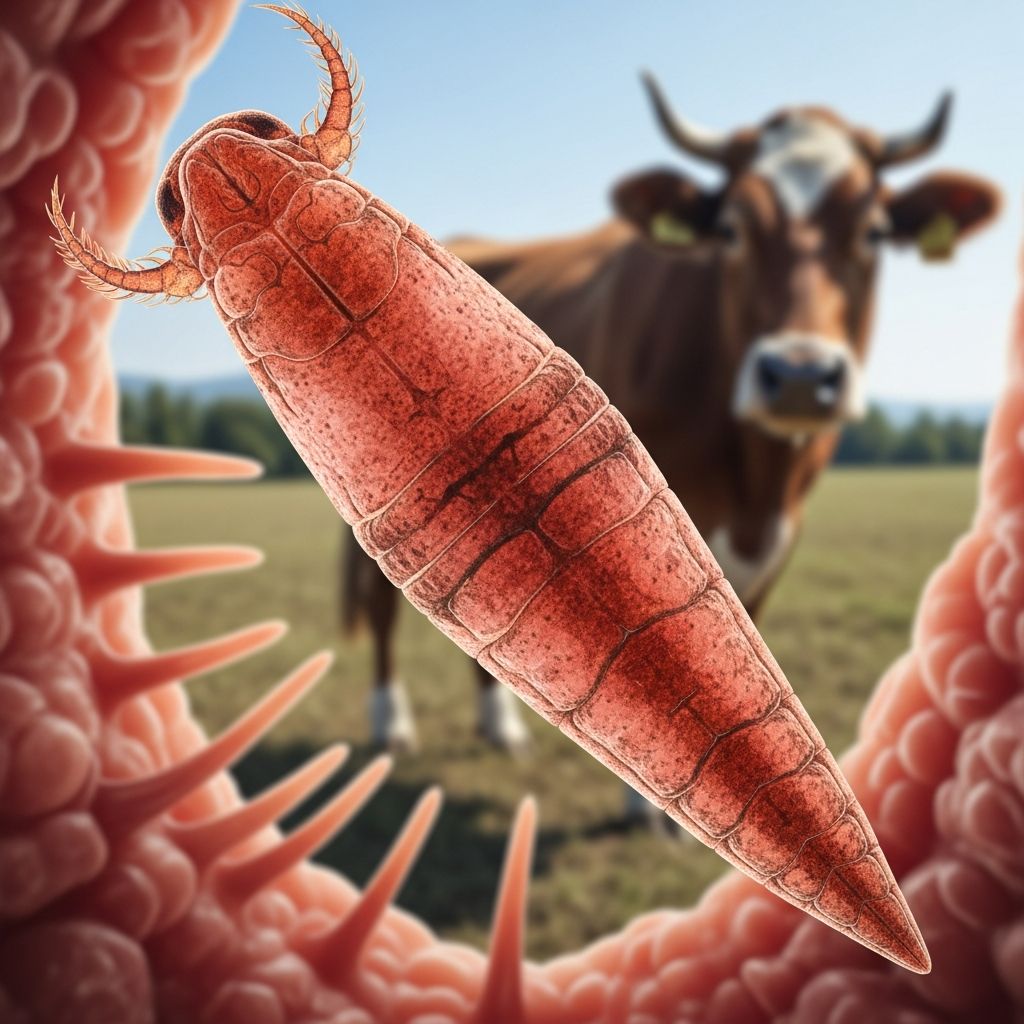
Rumen flukes, commonly known as paramphistomes, represent a significant parasitic challenge for ruminant animals worldwide. These trematodes primarily affect cattle, sheep, and goats, leading to substantial health issues and economic losses in livestock production. Unlike many other parasites, the damage from paramphistomes is predominantly caused by their immature stages rather than adults, which attach harmlessly to the rumen lining.
Biological Characteristics of Rumen Flukes
Paramphistomes belong to the family Paramphistomidae within the class Trematoda. Adult worms exhibit a distinctive pear-shaped body, often pink or red, measuring up to 15 mm in length. They possess a large posterior sucker that secures them to the rumen or reticulum walls. Immature forms, however, are smaller, typically 1-3 mm long, and reside temporarily in the small intestine.
Key genera include Paramphistomum, Calicophoron, and Cotylophoron, which are hermaphroditic, containing both male and female reproductive organs in their posterior body region. The tegument, or outer covering, is highly folded and equipped with sensory papillae, aiding in host attachment and environmental sensing.
- Pear-shaped morphology with anterior oral sucker and oversized ventral posterior sucker.
- Coloration: Pink to red in adults due to vascular associations.
- Size variation: Adults up to 15 mm; juveniles much smaller.
Complex Lifecycle Involving Multiple Hosts
The lifecycle of rumen flukes is indirect, requiring water, snails, and vegetation as intermediaries. Eggs, large and operculated, are excreted in host feces. In aquatic environments, they hatch into ciliated miracidia within days, which seek out and penetrate specific snail intermediate hosts, such as planorbid or bulinid species.
Inside the snail, miracidia transform through sporocysts and rediae stages, ultimately producing cercariae. These free-swimming larvae exit the snail, attach to aquatic plants, and encyst as metacercariae—the infective stage for ruminants. Grazing animals ingest these cysts, where excystation occurs in the duodenum. Immature flukes burrow into the intestinal mucosa for 3-6 weeks before migrating via the reticulum to the rumen, maturing and producing eggs 7-14 weeks post-infection.
| Stage | Location | Duration/Notes |
|---|---|---|
| Egg | Feces → Water | Operculated, hatches to miracidium. |
| Miracidium | Water → Snail | Ciliated, infects snail host. |
| Cercaria | Snail → Vegetation | Encysts as metacercaria. |
| Immature Fluke | Duodenum/Ileum | Pathogenic, 3-6 weeks. |
| Adult Fluke | Rumen/Retiulum | Non-pathogenic, egg production. |
This cycle thrives in wet, snail-populated areas like swamps, irrigation channels, and dam edges, explaining seasonal peaks in infections.
Pathophysiology and Disease Manifestations
Adult paramphistomes rarely induce clinical disease, even in high burdens, as they feed on rumen contents without deep tissue invasion. Conversely, immature flukes cause severe enteritis by burrowing into the duodenal and ileal mucosa using their posterior suckers. This leads to inflammation, necrosis, hemorrhage, and mucosal sloughing.
Affected ruminants display anorexia, excessive thirst (polydipsia), weakness, rapid weight loss, and profuse, watery diarrhea often containing blood or mucus. Mortality can reach 80-90% in heavy infections, particularly in young calves, though sheep and goats remain vulnerable lifelong. Secondary issues include anemia, dehydration, and reduced productivity.
- Primary damage site: Small intestine mucosa.
- Symptom onset: 3-6 weeks post-ingestion.
- High-risk groups: Young cattle, all ages in sheep/goats.
Pathological findings include hyperemia, congestion, hemorrhage, and eosinophilic infiltration in intestinal tissues. No significant rumen changes occur from adults.
Global Distribution and Epidemiological Patterns
Paramphistomes infect ruminants worldwide, with prevalence tied to snail habitats in tropical and temperate wet regions. Surveys show higher rates in summer and rainy seasons due to increased snail activity. For instance, in Iranian abattoirs, small intestinal infestations reached 6.7% in sheep during July-August.
In Australia, infections are common but clinical disease is rare except in heavy burdens. India reports devastating outbreaks with high mortality. Factors like host nutrition, immunity, and parasite load influence severity. Sex and age show minimal impact on susceptibility.
Diagnostic Approaches for Accurate Detection
Diagnosis relies on fecal examination for operculated eggs, though acute cases may lack them due to immature flukes. Direct microscopic inspection of fluid feces can reveal live juveniles. Necropsy confirms attachments in rumen/reticulum and intestinal lesions. Fecal sedimentation or flotation techniques aid egg detection; eggs are large, clear, and distinctive.
Advanced molecular methods, like PCR, enable species identification from eggs or adults, crucial for epidemiological studies. Coproantigen tests are emerging for early detection before patency.
- Fecal egg count: Sedimentation preferred over flotation.
- Post-mortem: Intestinal sampling for immatures.
- Molecular tools: For genus/species confirmation.
Management and Therapeutic Interventions
Control focuses on reducing pasture contamination and snail populations. Anthelmintics like oxyclozanide or bithionol target immatures effectively during the 3-6 week window. Treatments are most beneficial pre-patent phase. Avoid broad-spectrum use to prevent resistance.
Environmental measures include draining wet areas, using molluscicides, and rotating pastures. Strategic deworming in high-risk seasons enhances efficacy.
Preventive Strategies for Sustainable Control
Integrated parasite management (IPM) combines sanitation, grazing alternation, and snail control. Fencing off snail habitats and promoting drylot systems minimize exposure. Nutritional bolstering improves host resilience. Regular monitoring via fecal exams guides interventions.
Vaccines are absent, but breeding resistant stock shows promise. Farmer education on wet-season risks is vital.
Economic Implications for Livestock Producers
Paramphistomosis causes productivity losses via growth retardation, milk yield drops, and mortality. Heavy infections inflate treatment costs and cull rates, impacting profitability especially in endemic areas.
Research Frontiers and Future Directions
Ongoing studies explore molecular diagnostics, anthelmintic resistance, and climate change effects on snail distributions. Universal PCR assays aid surveillance.
Frequently Asked Questions (FAQs)
What animals are most affected by rumen flukes?
Primarily cattle, sheep, and goats, with young cattle highly susceptible to severe disease.
How can I prevent rumen fluke infections?
Avoid grazing wet, snail-infested pastures; use targeted anthelmintics and environmental controls.
Do adult flukes cause symptoms?
No, adults in the rumen are generally harmless; immatures in the intestine are pathogenic.
When is paramphistomosis most common?
During rainy/summer seasons when snail populations peak.
Can rumen flukes be diagnosed via blood tests?
Not typically; fecal exams and necropsy are standard. Emerging serological tests under research.
References
- Paramphistomes in Ruminants — Merck Veterinary Manual. 2023. https://www.merckvetmanual.com/digestive-system/fluke-infections-in-ruminants/paramphistomes-in-ruminants
- Paramphistomum — Wikipedia (informed by primary sources). 2023. https://en.wikipedia.org/wiki/Paramphistomum
- Prevalence and pathological study of Paramphistomum infection — PMC/NCBI. 2015-02-25. https://pmc.ncbi.nlm.nih.gov/articles/PMC4328005/
- Stomach fluke (paramphistomes) in ruminants — The Cattle Site. 2010. https://www.thecattlesite.com/articles/835/stomach-fluke-paramphistomes-in-ruminants
- A Universal Approach to Molecular Identification of Rumen Fluke — Frontiers in Veterinary Science. 2021-01-18. https://www.frontiersin.org/journals/veterinary-science/articles/10.3389/fvets.2020.605259/full
- Abattoir‐Based Prevalence and Histopathological Analysis — PMC/NCBI. 2024. https://pmc.ncbi.nlm.nih.gov/articles/PMC12617353/
Similar Articles








Read full bio of Sneha Tete


