

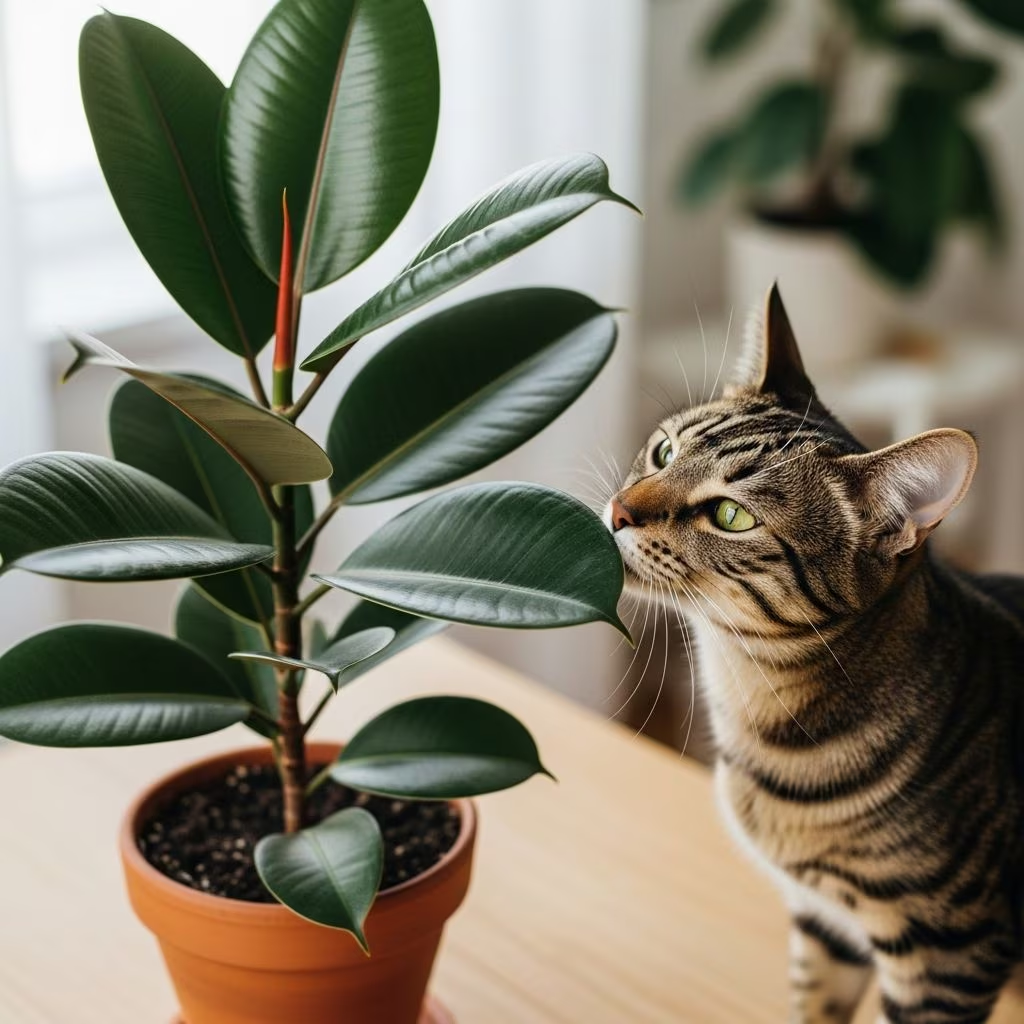
Houseplants add beauty and freshness to homes, but many pose hidden risks to curious cats. Rubber plants, known scientifically as Ficus elastica, top the list of concerns for pet owners due to their toxic sap. This milky substance, present throughout the plant, triggers irritation and digestive issues in felines upon contact or ingestion.
Originating from Southeast Asia, these glossy-leaved plants thrive indoors, making them a favorite. However, their appeal fades when cats nibble leaves or stems, releasing harmful compounds like ficin and ficusin. These enzymes irritate oral tissues and the gastrointestinal system, leading to discomfort that demands quick response.
The Science Behind Rubber Plant Toxins
Rubber plants produce latex sap as a defense mechanism against herbivores. In cats, this sap disrupts normal bodily functions because felines lack enzymes to break it down effectively. The University of California classifies them in toxicity class 4 for humans, indicating mild effects like dermatitis, but cats experience amplified reactions due to their sensitive physiology.
Key toxic elements include:
- Proteolytic enzymes: Ficin breaks down proteins, causing mouth and throat inflammation.
- Psoralens: Photosensitizing agents that may lead to skin reactions under light exposure.
- Latex irritants: Trigger hypersalivation and mucosal swelling.
Unlike deadly poisons, rubber plant toxins rarely cause fatality, but they account for significant exposure cases. Data from 2020–2024 shows 1,247 incidents with Ficus elastica, outpacing relatives like Ficus benjamina.
Recognizing Symptoms of Exposure
Cats often show signs within hours of chewing plant parts. Early detection prevents escalation. Common indicators include:
- Excessive drooling from oral pain.
- Pawing at the mouth or face.
- Vomiting or retching.
- Reduced appetite or refusal to eat.
- Lethargy and depression.
Severer cases may involve diarrhea, skin redness, or breathing difficulties. European studies highlight Ficus species as frequent culprits in cat poisonings, with gastrointestinal upset predominant.
| Plant Species | Cat Exposures (2020–2024) | Top Symptoms | Hospitalization Rate | Self-Recovery Rate |
|---|---|---|---|---|
| Ficus elastica | 1,247 | Drooling, vomiting | 18% | 67% |
| Ficus benjamina | 983 | Vomiting, lethargy | 22% | 59% |
| Ficus lyrata | 632 | Oral irritation | 15% | 71% |
This table illustrates Ficus elastica‘s prevalence, yet high recovery rates underscore treatability with prompt care.
Immediate Steps for Suspected Ingestion
Act swiftly if you witness or suspect contact:
- Wipe the mouth: Use a damp cloth to remove sap gently; avoid inducing vomiting, as it worsens irritation.
- Call professionals: Contact your vet or ASPCA Poison Control at (888) 426-4435 with details on amount ingested and symptoms.
- Monitor vital signs: Track eating, energy, and elimination over 24 hours.
- Seek treatment: Vets may administer fluids, anti-emetics, or protectants.
Merck Veterinary Manual notes supportive care suffices for most cases, focusing on hydration and symptom relief.
Why Cats Target Houseplants
Felines chew plants for fiber, curiosity, or nausea relief. Rubber plants’ dangling leaves invite play. Preventive awareness reduces risks in multi-pet homes.
Safe Alternatives to Rubber Plants
Opt for non-toxic greenery to maintain aesthetics without worry:
- Spider Plant (Chlorophytum comosum): Air-purifying, resilient, and safe per ASPCA lists.
- Parlor Palm (Chamaedorea elegans): Elegant fronds, tolerates low light.
- Boston Fern (Nephrolepis exaltata): Lush and humidity-loving.
- Calathea varieties: Patterned leaves, pet-friendly.
- Peperomia obtusifolia (American Rubber Plant): Non-toxic mimic, unlike true ficus.
These options provide similar visual appeal minus toxicity.
Prevention Strategies for Cat Owners
Proactive measures safeguard both plants and pets:
- Hang plants from high shelves or use ceiling mounts.
- Employ deterrent sprays with citrus or bitter apple scents.
- Provide cat grass or catnip toys as diversions.
- Train with positive reinforcement to avoid plants.
- Opt for artificial replicas if live plants prove challenging.
Regular pruning minimizes tempting fallen debris.
Long-Term Health Impacts and Myths
Most cats recover fully without lasting damage, but repeated exposures risk chronic irritation. Debunked myths include ‘small bites are harmless’—even minimal sap triggers reactions. Another: rubber plants are ‘mildly toxic only for dogs’—cats suffer similarly or worse.
Studies confirm ficus exposures lead to hypersalivation and weakness, occasionally mydriasis.
FAQs on Rubber Plants and Feline Safety
Are all Ficus species equally dangerous for cats?
Yes, most Ficus like elastica, benjamina, and lyrata contain irritating sap. Exposure data ranks them high in cat incidents.
How much plant material is needed to cause harm?
A single leaf or drop of sap suffices due to concentrated toxins. No safe threshold exists.
Can sap cause issues without ingestion?
Absolutely; skin contact leads to dermatitis, redness, or swelling on paws and face.
Is the American rubber plant safe?
Yes, Peperomia obtusifolia lacks ficus toxins and is ASPCA-approved.
What if symptoms appear days later?
Rare, but monitor; ficus rarely causes delayed renal issues unlike lilies. Consult vet immediately.
Expert Insights from Veterinary Toxicology
Veterinarians emphasize education: ‘Rubber trees mildly toxify via upset stomach and vomiting, but vigilance prevents escalation,’ notes Autumn Hilliard-Knapp. Italian surveys list Ficus among top cat poisons.
Integrating safe habits ensures harmonious homes.
References
- Is Rubber Plant Toxic to Cats? Vet-Approved Safety Guide — Plantin Alibaba. 2024. https://plantin.alibaba.com/plant-wiki/is-rubber-plant-toxic-to-cats
- Are Rubber Plants Toxic to Cats? Keeping Your Cat Safe — Hepper. 2024. https://articles.hepper.com/are-rubber-plants-toxic-to-cats/
- Are rubber trees toxic to cats? The experts weigh in — Homes & Gardens. 2024. https://www.homesandgardens.com/gardens/are-rubber-trees-toxic-to-cats
- Houseplants and Ornamentals Toxic to Animals — Merck Veterinary Manual. 2023-10-17. https://www.merckvetmanual.com/toxicology/poisonous-plants/houseplants-and-ornamentals-toxic-to-animals
- Indoor Companion Animal Poisoning by Plants in Europe — PMC (NCBI). 2020-08-28. https://pmc.ncbi.nlm.nih.gov/articles/PMC7427442/
- Toxic and Non-toxic Plants: Rhynchophorum — ASPCA. 2024. https://www.aspca.org/pet-care/aspca-poison-control/toxic-and-non-toxic-plants/rhynchophorum



