

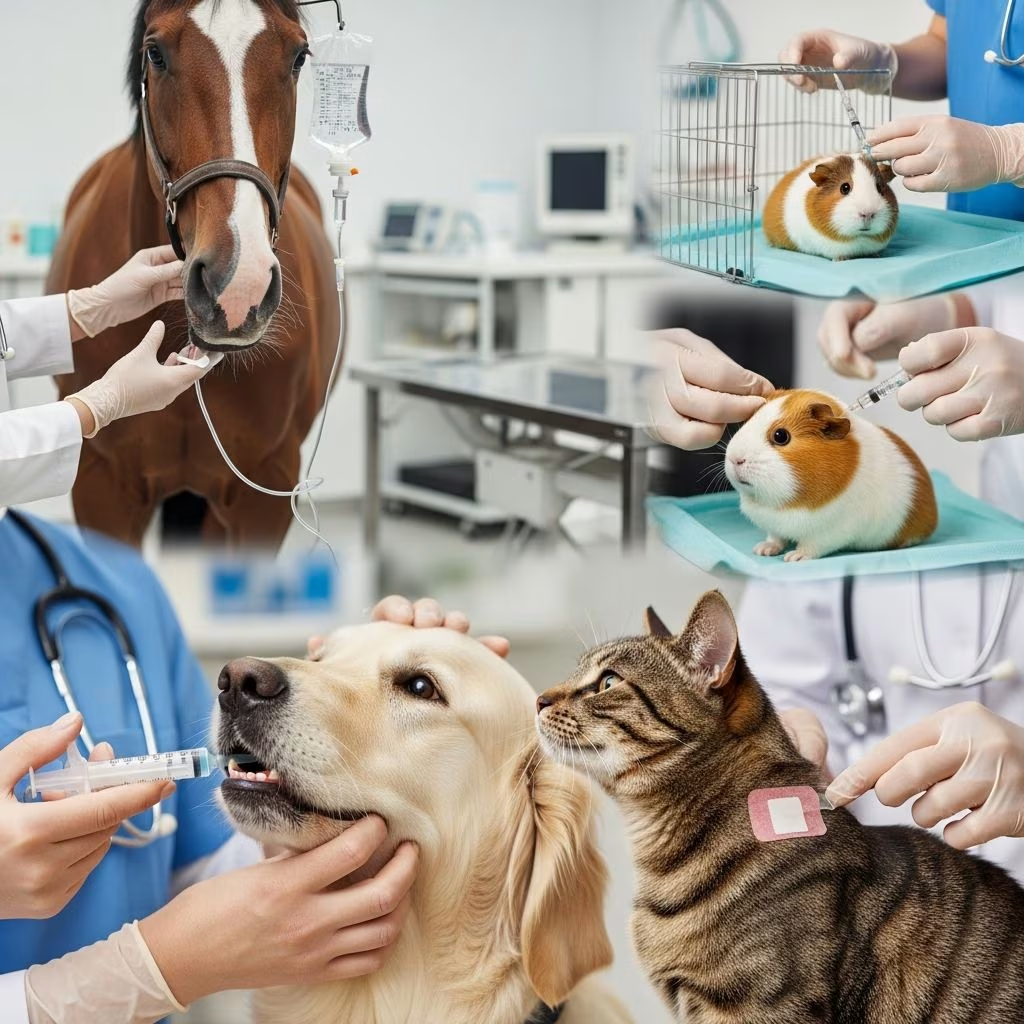
Veterinary pharmacology relies on precise selection of drug delivery methods to ensure efficacy, safety, and animal welfare. Administering medications involves choosing between oral, parenteral, topical, and other routes based on species, condition, and drug properties. This article examines these approaches, highlighting dosage forms, techniques, and considerations for optimal outcomes.
Fundamentals of Medication Delivery Systems
Effective drug administration begins with understanding bioavailability—the fraction of the dose reaching systemic circulation. Routes bypass barriers like the gastrointestinal tract or skin to varying degrees. Factors influencing choice include absorption speed, onset of action, duration, and patient compliance. For instance, emergency treatments demand rapid routes like intravenous, while chronic conditions may favor sustained-release forms.
In practice, dosage regimens specify dose amount, frequency, duration, and method. Veterinary professionals must tailor these to animal size, age, health status, and metabolism differences across species such as dogs, cats, horses, cattle, and laboratory animals.
Oral Administration: Versatile and Non-Invasive
The oral route suits many species due to its simplicity and lack of need for specialized equipment. Drugs enter via the mouth, traveling through the digestive system for absorption primarily in the small intestine. This method works well for tablets, capsules, liquids, and feed additives in companion animals and livestock.
- Tablets and capsules: Ideal for dogs and cats; flavored or chewable versions enhance acceptance.
- Liquids and suspensions: Preferred for neonates, horses via nasogastric tubes, or cattle boluses.
- Pastes and granules: Used in horses (syringe-applied) and pigs/poultry (mixed in feed).
Challenges include variable absorption due to food, vomiting risk, or first-pass metabolism in the liver, reducing drug potency. For food animals, premixes ensure uniform distribution in rations.
Specialized Oral Techniques
Gavage feeding delivers solutions directly into the stomach using tubes, beneficial for anorexic patients or precise dosing in research settings. Voluntary intake via medicated feed maintains normal behavior but requires palatability testing to avoid refusal.
Parenteral Routes: Direct and Rapid Systemic Access
Parenteral methods deliver drugs outside the gut, offering faster absorption. Common in hospitals for injections into tissues or vessels. These require sterile techniques to prevent infections.
| Route | Description | Common Sites | Applications |
|---|---|---|---|
| Intravenous (IV) | Bolus or infusion into veins | Jugular, cephalic, saphenous | Emergencies, anesthesia |
| Intramuscular (IM) | Deep into muscle | Gluteal, quadriceps, epaxial | Vaccines, antibiotics |
| Subcutaneous (SC) | Under skin, tenting technique | Neck, scruff, ribs | Fluids, insulin, vaccines |
IV provides immediate effect, bypassing absorption barriers, ideal for fluids or unstable drugs. IM suits larger animals with ample muscle; avoid high-value carcass areas like hips in cattle. SC is slower but less invasive, using 0.5-1 inch needles for loose skin areas.
Injection Best Practices
- Use sterile, single-use needles; aspirate to confirm placement.
- Rotate sites for multiples, spacing 4 inches apart.
- For small animals, prefer neck over hindquarters to preserve meat quality.
Intradermal and intraosseous routes serve niche needs like allergy testing or emergencies without venous access.
Topical and Transdermal Applications: External Delivery
Topical forms treat localized issues or enable systemic absorption through skin. Dusting powders, creams, ointments, sprays, and pour-ons target skin, eyes, or wounds.
- Semisolids (gels, pastes): For ear mites or pinnal application in cats.
- Liquids (emulsions, concentrates): Pour-ons for parasites in livestock.
- Patches: Sustained release without needles.
Transdermal gels absorb via pinnae or skin, convenient for chronic therapies like feline hyperthyroidism. Factors like skin thickness and hair coat affect efficacy; occlusion enhances penetration.
Specialized and Alternative Routes
Beyond basics, veterinary care employs targeted methods. Intramammary infusions treat udder infections in dairy cows via teat canal. Intranasal or intratracheal deliver to respiratory tract, often under sedation for even distribution in research.
Vaginal devices like CIDRs or sponges release hormones for estrus synchronization, retained by expansion against walls. Rectal enemas or suppositories offer GI bypass for species intolerant to orals.
Inhalation and Intrapulmonary Methods
Inhalers or nebulizers target lungs for respiratory drugs. Intratracheal instillation provides localized exposure but unevenly; inhalation ensures broader coverage.
Species-Specific Considerations
Dogs and cats favor oral tablets or SC injections. Horses use pastes and nasogastric dosing. Ruminants rely on boluses, drenches, and pour-ons. Laboratory animals may need gavage or IP for studies, minimizing stress with anesthesia.
Age matters: neonates absorb better via oral solutions; geriatrics prefer non-invasive topicals.
Challenges and Safety Protocols
Adverse effects include injection-site abscesses (from dull needles), anaphylaxis, or tissue damage. Always calculate doses per weight, monitor for reactions, and train on techniques. Regulatory guidelines emphasize withdrawal times for food animals.
FAQ
What is the fastest drug administration route?
Intravenous (IV) provides immediate bloodstream access.
Can subcutaneous injections be used interchangeably with intramuscular?
No; SC is slower-absorbing, suitable for depot effects, while IM is for quicker muscle uptake.
Are transdermal patches safe for all pets?
Best for compliant patients; avoid cutting patches, and cover unused areas.
How to prevent injection site reactions?
Use sharp sterile needles, aspirate, and rotate sites.
What oral forms are used in livestock?
Boluses, drenches, premixes for cattle/pigs.
References
- Best-practice medicine use – the five Rs — AHDB. 2023. https://ahdb.org.uk/knowledge-library/best-practice-medicine-five-rs
- Routes of Administration and Dosage Forms in Animals: A Complete Guide — Wedgewood Pharmacy. 2024. https://www.wedgewood.com/blog/routes-of-administration-and-dosage-forms-in-animals-a-complete-guide/
- The Journey of an Animal Drug through the Approval Process — FDA. 2025-02-01. https://www.fda.gov/animal-veterinary/animal-health-literacy/idea-marketplace-journey-animal-drug-through-approval-process
- Administration of Substances to Laboratory Animals: Routes — PMC (NCBI). 2011-10-01. https://pmc.ncbi.nlm.nih.gov/articles/PMC3189662/
- Routes of Administration and Dosage Forms of Drugs — Merck Veterinary Manual. 2025. https://www.merckvetmanual.com/pharmacology/pharmacology-introduction/routes-of-administration-and-dosage-forms-of-drugs
- IACUC Routes of Administration Guidelines — University of Minnesota Research. 2024. https://research.umn.edu/units/rar/guidelines/routes-administration
- Giving medication to animals by injection — Ontario.ca (Government of Ontario). 2023-06-15. http://www.ontario.ca/page/giving-medication-animals-injection



