

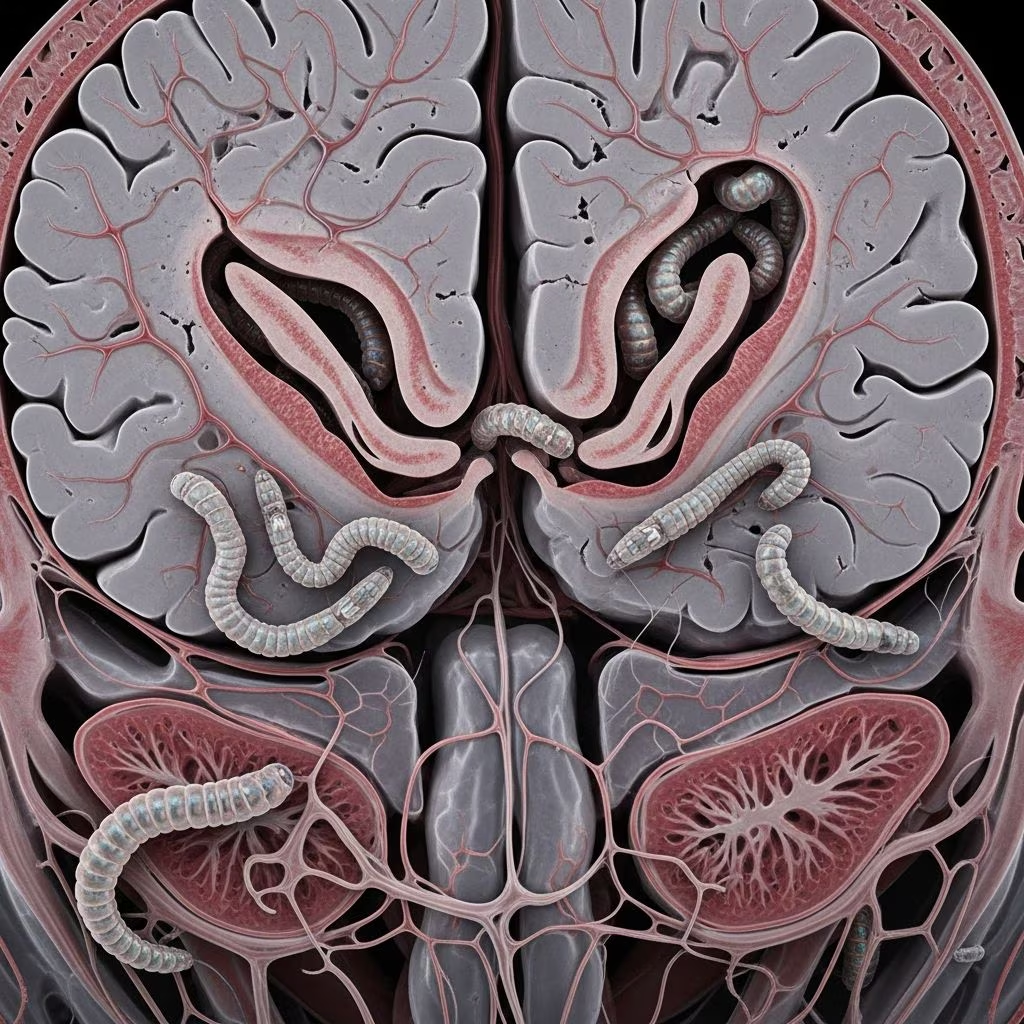
Parasitic nematodes, commonly known as roundworms, represent a significant threat to animal health when they target the central nervous system (CNS). These worms, through larval migration or adult invasion, trigger severe neurological disruptions in various species, from wildlife to livestock. Understanding their biology, transmission routes, clinical manifestations, and control options is crucial for veterinarians, farmers, and wildlife managers.
The Hidden Danger of Larval Migration in the CNS
Nematode larvae often embark on aberrant journeys through neural tissues, leading to inflammation, tissue destruction, and functional deficits. This migration disrupts normal brain and spinal cord activities, manifesting as coordination loss, weakness, and sensory impairments. Species-specific adaptations determine host susceptibility, with some animals serving as dead-end hosts where parasites thrive destructively.
Key Parasites and Their Impact on Different Hosts
Several nematodes stand out for their neurotropism. Below, we delve into prominent examples, outlining their life cycles and pathological effects.
Raccoon Roundworm: A North American Menace
The raccoon ascarid, prevalent across North America, primarily resides in the raccoon’s intestine but poses grave risks to paratenic hosts. Over 90 species, including rodents, birds, and domesticated animals, can harbor its larvae. Ingesting contaminated raccoon feces introduces eggs that hatch and penetrate the gut wall, directing larvae toward the CNS.
In vulnerable hosts like squirrels or companion animals, larvae induce neural larva migrans, characterized by eosinophilic track formation and granulomas. Clinical outcomes range from subtle behavioral changes to fatal encephalitis. Human cases, especially in children, highlight its zoonotic potential, often linked to pica behavior near raccoon latrines.
Deer Meningeal Worm: Threat to Exotic Ruminants
This meningeal parasite cycles through white-tailed deer, its definitive host, with minimal harm. Snails and slugs act as intermediate hosts, harboring infective larvae. Aberrant hosts such as llamas, alpacas, moose, and elk suffer when ingesting these snails on pasture.
Larvae traverse neural parenchyma, eliciting hemorrhage, eosinophilic meningitis, and malacia. Affected animals exhibit rear limb paresis progressing to recumbency, ataxia, head pressing, torticollis, and blindness. Diagnosis relies on CSF analysis showing eosinophilia (>17% in endemic areas strongly implicates this worm) or postmortem worm detection in meninges or parenchyma.
Asian Setaria: Equine and Caprine Invader
Native to Asia, this peritoneal nematode of cattle uses mosquitoes to disseminate microfilariae. In unnatural hosts like horses, goats, and sheep, migrating larvae breach the CNS blood barrier, causing focal demyelination and axonal damage. Signs include lumbar paresis, facial droop, ataxia, and circling, mirroring cerebrospinal nematodiasis.
Lesions feature malacic foci across gray and white matter, underscoring the worm’s destructive path. Preventive measures center on insect control in endemic regions.
Rat Lungworm in Canines: Neural Angiostrongylosis
Dogs contract this via ingesting mollusks or paratenic hosts like frogs. Though sexual maturity eludes the worm in canines, larvae wreak havoc in meninges and parenchyma, provoking vasculitis and necrosis. Symptoms mimic meningoencephalitis: hyperesthesia, neck pain, proprioceptive deficits, and seizures.
Histopathology reveals eosinophilic infiltrates, hemorrhage, and neuronal loss, emphasizing rapid intervention needs.
Clinical Signs Across Affected Species
Neurological deficits vary by lesion site but commonly include:
- Ataxia and proprioceptive loss
- Paresis or paralysis, often hindlimb-predominant
- Cranial nerve dysfunction (ptosis, mydriasis, nystagmus)
- Behavioral alterations (circling, head tilt, aggression)
- Sensory deficits (hyperesthesia, blindness)
In ruminants, progression culminates in recumbency; equines show lumbar rigidity. Early detection hinges on regional epidemiology and CSF cytology.
Diagnostic Approaches for CNS Nematodosis
| Method | Description | Advantages | Limitations |
|---|---|---|---|
| CSF Analysis | Cytology for eosinophils, protein elevation | Non-invasive, supportive in endemic areas | Non-specific; requires lumbar puncture |
| Serology/PCR | Antibody or DNA detection | Specific for some species | Limited commercial availability |
| Necropsy | Gross tracts, histology, worm recovery | Definitive | Postmortem only |
| Imaging | MRI/CT for lesions (e.g., ring-enhancing) | Visualizes migration paths | Costly, less accessible in vet practice |
Integrating history (exposure risk), neurology, and ancillary tests refines antemortem diagnosis.
Treatment Challenges and Protocols
Anthelmintics like fenbendazole or ivermectin target migrating larvae, but efficacy wanes post-damage. Adjuncts include anti-inflammatories (dexamethasone) and supportive care. Outcomes improve with early therapy, though severe cases often prove fatal. Research underscores anthelmintic timing critical for larval clearance.
Prevention Strategies in Veterinary Practice
Mitigating exposure is paramount:
- Wildlife Management: Discourage raccoon habitation near farms; deworm deer populations where feasible.
- Pasture Hygiene: Mollusk control via metaldehyde baits (cautiously); rotate grazing.
- Insect Barriers: Mosquito netting, repellents in Setaria zones.
- Quarantine: New camelids from endemic areas; monitor CSF.
Vaccination research lags, but awareness drives proactive surveillance.
Emerging Research on Nematode Neurobiology
Studies mapping nematode neural circuits reveal evolutionary insights applicable to host-parasite dynamics. Simple worm brains, with conserved neurons, inform targeting strategies for nematicides sparing non-targets.
Frequently Asked Questions (FAQs)
What animals are most at risk from CNS nematodes?
Exotic ruminants (llamas, alpacas), equines in Asia, dogs via mollusks, and wildlife like moose face highest risks.
Can these parasites affect humans?
Yes, raccoon roundworm and rat lungworm cause neural larva migrans, especially in children or immunocompromised individuals.
How do I know if my animal has a brain worm infection?
Look for progressive ataxia, paresis, and CSF eosinophilia; consult a vet for confirmatory tests.
Are there effective treatments?
Early anthelmintic administration combined with steroids offers best prognosis; delays reduce success.
How can I prevent these infections on my farm?
Control intermediate hosts (snails, mosquitoes), avoid raccoon feces, and implement routine deworming.
Global Perspectives and Zoonotic Concerns
Climate shifts expand vector ranges, heightening CNS nematodosis incidence. Globalization facilitates transport hosts, as seen in rising canine cases. Prompt recognition curtails morbidity, per peer-reviewed analyses.
References
- Nematodes Causing CNS Disease in Animals — Merck Veterinary Manual. 2023. https://www.merckvetmanual.com/nervous-system/central-nervous-system-diseases-caused-by-helminths-and-arthropods/nematodes-causing-cns-disease-in-animals
- Neuroparasitic Infections: Nematodes — PMC / National Library of Medicine. 2009-04-01. https://pmc.ncbi.nlm.nih.gov/articles/PMC2678030/
- Brainworm (P. tenuis) — Cornell Wildlife Health Lab (.edu). 2023. https://cwhl.vet.cornell.edu/resource/brainworm-p-tenuis
- Mapping the brain of a nematode worm — University of Leeds (.ac.uk). 2020. https://www.leeds.ac.uk/news-science/news/article/4775/mapping-the-brain-of-a-nematode-worm
- Closer look reveals nematode nervous systems differ — EurekAlert! / University of Illinois. 2019. https://www.eurekalert.org/news-releases/840526



