

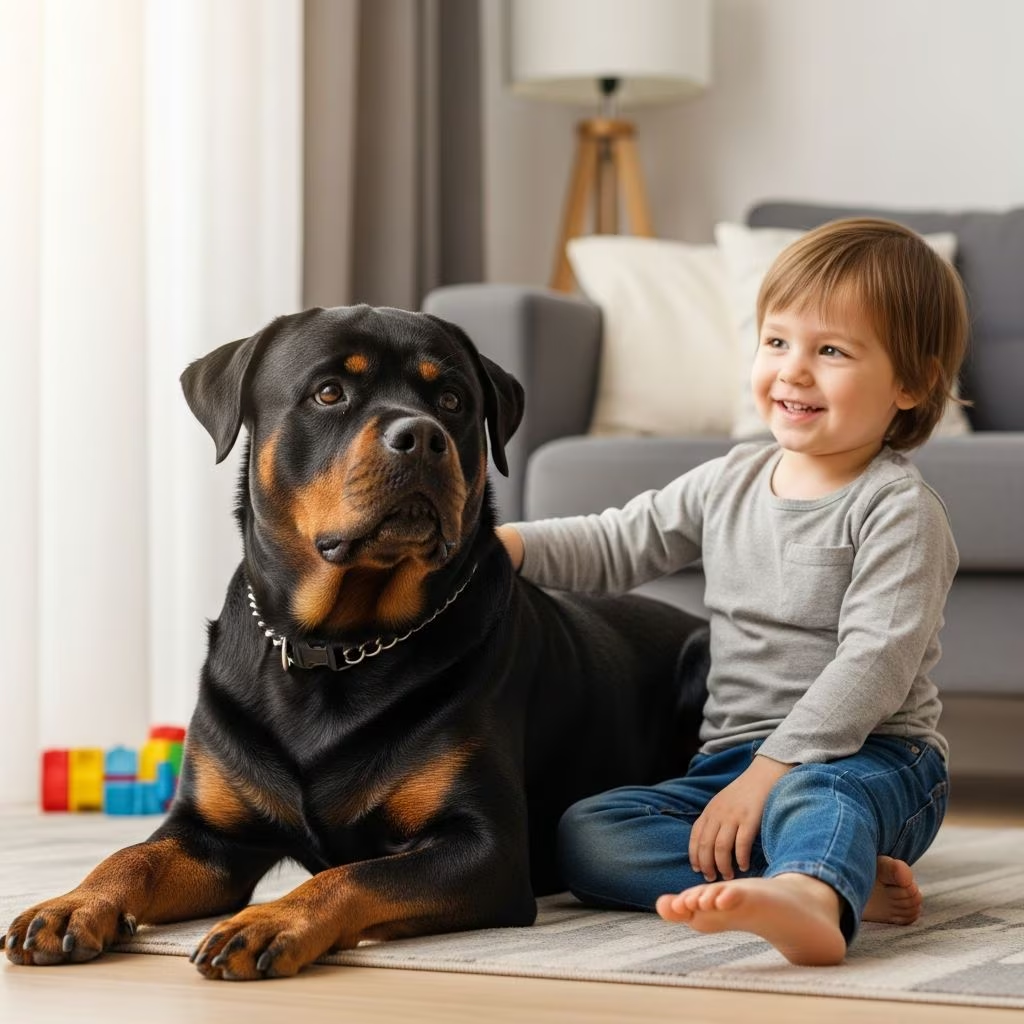
Rottweilers can form strong bonds with children when raised with proper socialization and training, though their size and protective instincts require careful management to ensure safety.
Understanding the Core Traits of Rottweilers
Rottweilers possess a distinctive temperament marked by confidence and strength awareness, making them less prone to fear common stressors like loud noises. Their gentle disposition often emerges in familiar settings, where they seek affection and play, countering widespread perceptions of aggression.
These dogs exhibit bravery without undue nervousness, maintaining composure in challenging situations. Despite their muscular build, well-bred Rottweilers display loyalty and a desire for closeness with family members.
Historical Roots Influencing Modern Behavior
Originating as working dogs for herding and guarding in Germany, Rottweilers developed a natural instinct to control and protect, which shapes their interactions today. This heritage contributes to their alertness and territorial awareness, particularly toward unfamiliar people.
Traditionally used by butchers to drive cattle and haul loads, their robust physique and mental acuity made them versatile laborers, traits that persist in their need for purposeful activity.
Protective Instincts: A Double-Edged Sword
Rottweilers prioritize family defense, assessing threats before reacting, which makes them exceptional watchdogs. They remain cautious with strangers, potentially growling or barking until trust is established.
This vigilance can benefit households but demands supervision around children, as misread cues might lead to overprotectiveness. Proper assessment of situations prevents unnecessary confrontations.
Size and Strength Considerations for Family Life
Weighing up to 130 pounds, Rottweilers’ power poses accidental injury risks during enthusiastic play with young kids. Their boisterous energy suits older children better, while toddlers require constant oversight.
| Factor | Impact on Kids | Mitigation |
|---|---|---|
| Body Size | Can knock over small children | Teach gentle play commands |
| Play Style | High energy, roughhousing | Supervised interactions only |
| Strength | Powerful jaws and pull | Early leash training |
Socialization: The Foundation for Child-Friendly Rotties
Early exposure to diverse environments, people, and animals molds a Rottweiler’s personality, reducing wariness toward strangers. Puppies introduced to children during sensitive periods develop positive associations.
Owners should enroll in puppy classes and facilitate controlled playdates to build tolerance and friendliness. Neglect in this area amplifies guarding tendencies.
Training Essentials for Harmonious Homes
Obedience training harnesses their intelligence, curbing dominance and ensuring responsiveness. Positive reinforcement methods foster calm behavior over punishment, which can heighten anxiety.
- Basic commands: Sit, stay, leave it – vital for safety around kids.
- Impulse control: Prevents jumping or pulling on children.
- Desensitization: To children’s noises, movements, and handling.
Professional trainers prove invaluable for novices, addressing breed-specific challenges like independence.
Male vs. Female Rottweilers Around Children
Males often retain playful puppy traits longer, displaying more mischief and protectiveness, while females mature quicker with milder temperaments. Both sexes benefit from training, but females may adapt easier to multi-child homes.
| Gender | Temperament Traits | Suitability with Kids |
|---|---|---|
| Male | Boisterous, dominant, highly protective | Good with firm training; monitor play |
| Female | Docile, friendly, quicker to mature | Often gentler; still needs supervision |
Individual variation trumps gender; evaluate each dog’s background.
Daily Exercise and Mental Stimulation Needs
Active working heritage demands 1-2 hours of daily exercise, including walks, runs, and games to prevent boredom-induced mischief. Mental puzzles and jobs like fetching toys keep them engaged.
In families with children, integrate kids into routines for bonding, such as joint walks, enhancing mutual respect. Insufficient activity leads to destructive behaviors.
Health Factors Affecting Behavior with Kids
Common issues like hip dysplasia can cause pain, potentially altering temperament and increasing irritability. Regular vet checks ensure physical comfort, supporting stable interactions.
Obesity from inactivity exacerbates joint problems, so balanced nutrition and monitoring remain key.
Realistic Expectations: Myths vs. Facts
Myth: All Rottweilers are inherently vicious. Fact: Aggression stems from poor upbringing, not breed. Studies show average owner-directed behavior but higher stranger wariness.
- Average in bites toward familiars.
- Stronger territorial responses.
Success Stories and Cautionary Tales
Many families report Rottweilers as devoted child guardians, lying protectively nearby during play. Conversely, unsupervised interactions with untrainable dogs highlight risks.
Success hinges on commitment to lifelong training and boundaries.
Choosing the Right Rottweiler for Your Family
Seek breeders emphasizing health testing and temperament evaluation; avoid shy or overly aggressive pups. Rescue dogs warrant trial periods with children.
Prioritize lines with proven family compatibility.
Practical Tips for Introducing Rottweilers to Kids
- Gradual introductions in neutral spaces.
- Teach children respectful petting rules.
- Never leave unsupervised, especially with infants.
- Use baby gates for safe separation.
- Reward calm behaviors lavishly.
Legal and Insurance Considerations
Some areas classify Rottweilers as restricted breeds, requiring liability insurance. Research local laws before adoption.
FAQs
Are Rottweilers safe around babies?
With rigorous training and supervision, yes; their size necessitates extra caution.
How do I train my Rottweiler to be gentle with kids?
Start puppyhood with positive reinforcement and child exposure.
Can Rottweilers live with toddlers?
Possible but challenging; older children are ideal matches.
Do female Rottweilers get along better with children?
Often more docile, yet training overrides gender.
What if my Rottweiler shows aggression toward kids?
Consult a professional trainer immediately.
References
- Rottweiler Temperament & Personality Traits — ElleVet Sciences. 2023. https://www.ellevetsciences.com/pet-care/rottweiler-temperament/
- Rottweiler — Wikipedia. 2023-10-01. https://en.wikipedia.org/wiki/Rottweiler
- Rottweiler Dog Breed Guide — Pawlicy Advisor. 2024. https://www.pawlicy.com/blog/rottweiler-dog-breed/
- Rottweiler Temperament: A Dog Owners’ Guide — PetScreening. 2024. https://www.petscreening.com/blog/rottweiler-temperament-a-dog-owners-guide
- Owning a Rottweiler — American Rottweiler Club. 2023. https://www.amrottclub.org/about-the-rottweiler/owning-a-rottweiler/
- Rottweiler Breed Standards — The Kennel Club. 2024-01-15. https://www.royalkennelclub.com/breed-standards/working/rottweiler/
- Rottweiler Dog Breed Information — American Kennel Club. 2025. https://www.akc.org/dog-breeds/rottweiler/



