

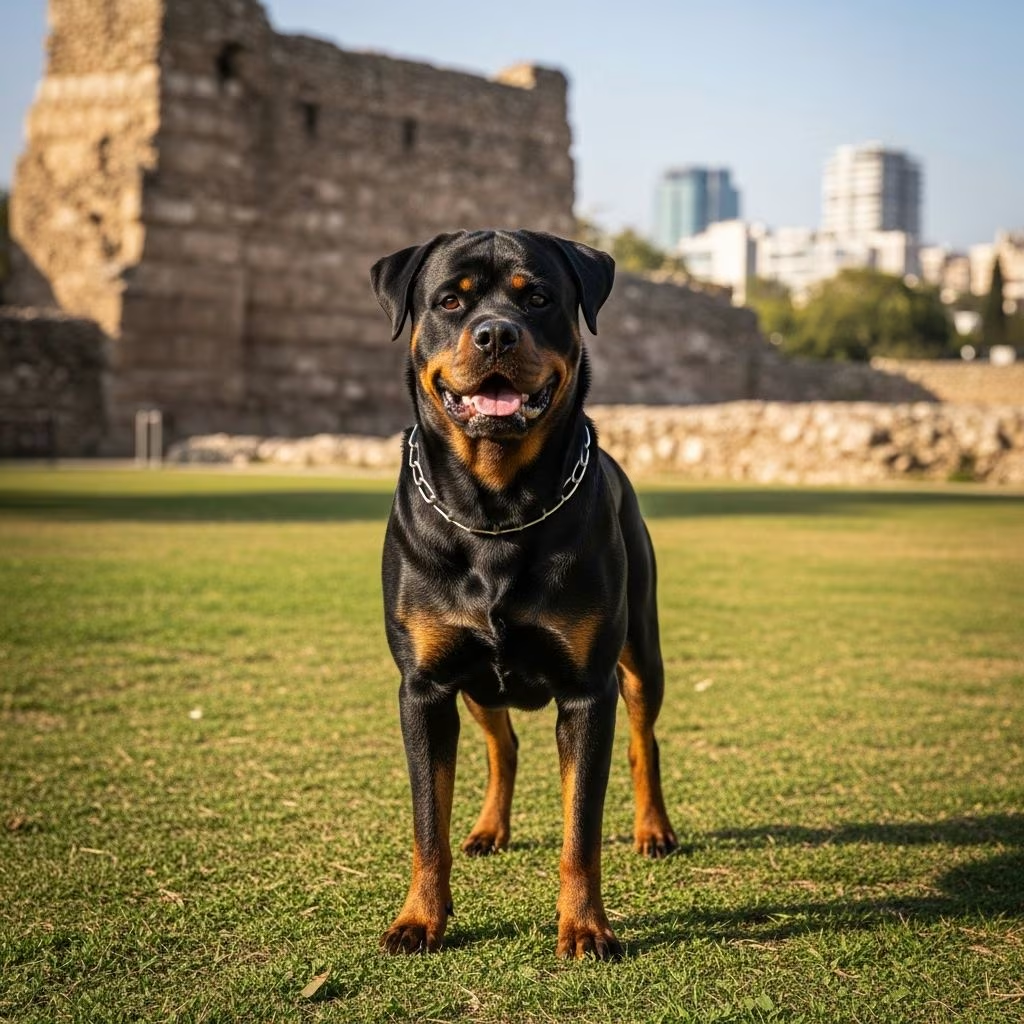
Rottweilers have captivated dog enthusiasts for centuries, earning their reputation as one of the most impressive and misunderstood dog breeds in the world. These muscular, confident canines with their striking black coats and distinctive mahogany markings represent a fascinating blend of ancient heritage and modern versatility. While many people recognize Rottweilers for their imposing physical presence, few understand the depth of their history, intelligence, and unwavering loyalty that has made them invaluable across multiple roles throughout the ages.
Ancient Origins: The Roman Connection
The story of the Rottweiler extends back more than 2,000 years to the heart of the Roman Empire. When Roman legions marched across Europe with massive herds of cattle intended to feed soldiers and support military expeditions, they required dogs of exceptional strength and reliability to manage these livestock. The Romans employed mastiff-type dogs—powerful, intelligent animals with steady temperaments—to drive cattle, protect herds from predators, and guard both animals and soldiers along treacherous routes. These ancient working dogs became the foundational ancestors of what we recognize today as the modern Rottweiler breed.
The transformative moment in Rottweiler history occurred when Roman forces settled in the southern German region, particularly around the town of Rottweil. When the Roman armies eventually withdrew from the region during the second century CE, many of these mastiff-type dogs remained behind. Through natural interbreeding with local herding dogs native to the area, a distinct breed gradually developed, combining the strength and working ability of Roman mastiffs with characteristics suited to the local environment and needs.
Medieval Evolution: The Butcher’s Dog Legacy
By the Middle Ages, the town of Rottweil had transformed into a bustling center for livestock trading and commerce. Local butchers and cattle traders recognized the immense value of these powerful dogs, which had descended from Roman ancestry. These skilled working animals became essential to the daily operations of medieval commerce, performing multiple critical functions simultaneously.
The breed’s role during this period included herding livestock through markets, protecting valuable merchandise from theft, and pulling heavy carts laden with meat to market locations. Perhaps most notably, after successful cattle transactions, drovers—men responsible for moving livestock—would place money purses around the dogs’ necks for safekeeping. A potential thief would think twice before approaching a proud, protective dog wearing a heavy purse. This practice gave rise to the breed’s most famous historical designation: the “Rottweiler Metzgerhund,” or “Butcher’s Dog of Rottweil”.
During this era, the breed was also refined through selective crosses with other developing mountain dog breeds native to Switzerland and surrounding regions. These genetic introductions from breeds such as the Greater Swiss Mountain Dog, Bernese Mountain Dog, and Entlebucher Mountain Dog contributed to the breed’s versatility and enhanced working capabilities.
Industrial Transformation and Near Extinction
The nineteenth century brought technological revolution that nearly destroyed the Rottweiler breed entirely. The rise of railroad transportation fundamentally altered the economic landscape, making the traditional practice of driving cattle long distances to market obsolete. As industrial methods replaced manual livestock herding, demand for working Rottweilers collapsed. The breed that had served humanity for nearly two millennia faced extinction as fewer breeders saw economic value in maintaining the bloodline.
By 1882, the situation had become dire—only a single Rottweiler appeared at a dog show in Heilbronn, Germany, representing the breed’s near-total disappearance. However, dedicated fanciers who recognized the exceptional working abilities and inherent qualities of the remaining scattered Rottweilers throughout Europe committed themselves to preservation efforts. Their determination to save the breed proved crucial in preventing its complete loss to history.
Modern Renaissance: From Working Dog to Multi-Purpose Companion
The twentieth century witnessed a remarkable revival of the Rottweiler breed, as people recognized that these intelligent, courageous dogs could adapt to entirely new roles beyond their traditional pastoral functions. Police and military organizations discovered that Rottweilers possessed the intelligence, obedience, and courage necessary for law enforcement and military service. Their natural protective instincts, combined with their ability to learn complex commands, made them ideal candidates for these demanding positions.
The formal recognition of Rottweilers in the United States marked a significant milestone in the breed’s modern history. In 1930, a German immigrant named Otto Denny bred the first Rottweiler litter in America. Initially, these puppies were registered with German-based breed clubs, as the American Kennel Club had not yet established formal recognition. However, by 1931, the AKC added a Rottweiler to its official stud book, and the breed became a member of the Working Group. The establishment of an official breed standard in 1935, followed by revisions in 1971 and 1990, provided clear guidelines for breed characteristics and temperament.
Physical Characteristics: Form Follows Function
Every aspect of a Rottweiler’s physical structure reflects its historical purpose as a working dog designed to control livestock and protect property. The breed exhibits a robust, compact frame combined with impressive muscularity—substantial enough to command respect, yet agile enough to respond quickly to changing circumstances. A Rottweiler’s broad head and powerful jaws represent direct inheritance from its mastiff ancestors, designed for gripping and controlling livestock while maintaining control under pressure.
The breed’s striking coloring—black coat with mahogany or rust-colored markings ranging in intensity—provides distinctive visual recognition while the muscular frame conveys the strength and confidence central to the breed’s identity. Rottweilers are classified as medium-to-large or large dogs, with males typically ranging from 80 to 135 pounds and standing 24 to 27 inches at the shoulder. Females are proportionally smaller, typically weighing 80 to 100 pounds and standing 22 to 25 inches tall.
Temperament: Balancing Strength with Steady Character
Perhaps the most misunderstood aspect of Rottweiler breed character is the relationship between their formidable physical capabilities and their actual temperament. The breed was specifically developed to perform complex, sometimes dangerous tasks related to controlling livestock while remaining responsive to human direction. This historical requirement created dogs that needed to be simultaneously strong, brave, intelligent, and highly biddable—responsive to commands even in chaotic situations.
Modern Rottweilers retain these ancestral temperament traits. They exhibit a confident, self-assured demeanor that reflects their heritage as respected working partners. The breed demonstrates genuine loyalty to family members, coupled with a natural protective instinct that activates when genuine threats are perceived. However, this protective nature differs fundamentally from aggression—a properly raised Rottweiler distinguishes between normal social situations and actual threats requiring protective response.
Rottweilers are remarkably intelligent dogs, capable of learning complex commands and adapting their behavior to different contexts. Many owners describe their Rottweilers as possessing a surprisingly goofy, playful nature when interacting with family members in safe environments. This combination of capability and gentleness—strength tempered with steadiness—defines the breed’s true character.
Modern Roles and Contemporary Applications
Today’s Rottweilers continue to expand their professional roles beyond their historical pastoral functions. Police departments and customs agencies employ Rottweilers for their intelligence, trainability, and natural alertness. Therapy dog programs have discovered that despite their imposing appearance, many Rottweilers excel at providing emotional support and comfort to vulnerable populations.
Perhaps most significantly, Rottweilers have become valued family companions and household protectors for families willing to invest in proper training and socialization. Their intelligence makes them responsive to training, their loyalty makes them devoted family members, and their protective instincts provide genuine security without the need for aggression training. Modern breed standards emphasize the importance of maintaining balance—substantial but not over-massive, powerful but agile, courageous but steady.
The Rottweiler’s Influence on Other Breeds
The Rottweiler’s genetic and temperamental influence extends beyond the breed itself. Rottweilers were instrumental in the development of the Doberman Pinscher breed, contributing genetic material and working dog characteristics that shaped this other respected working breed. This influence demonstrates the depth of genetic strength and desirable working characteristics contained within the Rottweiler bloodline.
Preservation and Breed Standards Today
Modern breed clubs and kennel organizations remain committed to preserving the Rottweiler’s balanced characteristics—honoring its working heritage while ensuring the breed thrives in contemporary roles. The emphasis on maintaining proper breed type ensures that Rottweilers continue to embody the qualities that made them invaluable for nearly two millennia: strength combined with intelligence, courage paired with steadiness, and protective instinct tempered with loyalty.
Key Rottweiler Characteristics at a Glance
| Characteristic | Description |
|---|---|
| Historical Origin | Roman mastiff-type dogs, refined in Rottweil, Germany |
| Primary Historical Function | Livestock herding, protection, and cart pulling |
| Size Classification | Medium-to-large to large working dog |
| Distinctive Appearance | Black coat with mahogany markings, muscular build |
| Core Temperament Traits | Intelligent, loyal, courageous, protective, steady |
| Modern Roles | Family companion, guard dog, police/military service, therapy work |
Frequently Asked Questions About Rottweilers
Are Rottweilers naturally aggressive? No. Rottweilers are naturally protective but not inherently aggressive. Aggression is not a breed characteristic and typically results from poor socialization, abuse, or irresponsible breeding practices. Properly raised Rottweilers are loyal, steady family companions.
How did Rottweilers get their name? The breed takes its name from Rottweil, a town in southern Germany where Roman mastiff-type dogs interbred with local dogs. The town’s name derives from its distinctive red roof tiles, visible in ancient Roman times.
What jobs do Rottweilers perform today? Modern Rottweilers work as police and military dogs, therapy dogs, family protectors, and beloved companions. Their intelligence and trainability make them suitable for various professional roles.
How long do Rottweilers typically live? Rottweilers generally have a lifespan of 8 to 11 years, though individual dogs vary based on genetics, health care, and lifestyle factors.
Do Rottweilers require specialized training? While Rottweilers are highly intelligent and trainable, they benefit from consistent, firm guidance and proper socialization from puppyhood. Their size and strength make professional training advisable for first-time owners.
References
- History of the Rottweiler — American Rottweiler Club. Accessed January 2026. https://www.amrottclub.org/history-of-the-rottweiler/
- Rottweiler History: From Working Dog to Sporting, Therapy Dog — American Kennel Club. https://www.akc.org/expert-advice/dog-breeds/rottweiler-history/
- The Rottweiler Breed Guide: Personality, History, Training, Food, and More — The Farmer’s Dog. https://www.thefarmersdog.com/digest/the-rottweiler-breed-guide-personality-history-training-food-and-more/
- Rottweiler Dog Breed Guide: Characteristics, History & Care — Pawlicy. https://www.pawlicy.com/blog/rottweiler-dog-breed/
- Rottweiler — Wikipedia. https://en.wikipedia.org/wiki/Rottweiler
- Rottweiler | Temperament, Lifespan & Size — Britannica. https://www.britannica.com/animal/Rottweiler
- Rottweiler Dog Breed — Hill’s Pet Nutrition. https://www.hillspet.com/dog-care/dog-breeds/rottweiler



