

The Roman Legacy: Tracing Ancestry Back Two Millennia
The Rottweiler’s story spans over 2,000 years, beginning with the Roman Empire’s expansion across Europe. As legions marched northward through the Alps toward what is now Switzerland, they brought with them sturdy mastiff-type dogs whose primary purpose was to drive and protect vast herds of cattle that sustained the military forces. These ancient working canines possessed the physical strength, intelligence, and steady temperament necessary to manage livestock across challenging terrain while safeguarding both animals and soldiers from threats.
The transformation from generic Roman drover dog to the distinctive breed we recognize today occurred when the empire’s armies established settlements in what is now southern Germany. The city of Rottweil, originally called Arae Flaviae by the Romans, became a significant center for livestock trade. When Roman forces eventually withdrew from the region in the second century, the dogs they left behind remained and interbred with local herding populations, creating a new and distinct type. Over generations, this natural crossing produced dogs with enhanced capabilities for regional work conditions, establishing the foundational characteristics of the modern Rottweiler.
Medieval Transformation: The Butcher’s Dogs of Rottweil
By the Middle Ages, the town of Rottweil had flourished into a bustling marketplace where livestock trading dominated commerce. Local butchers and cattle traders recognized the exceptional value of these powerful dogs and actively bred them for specific working roles. The breed earned the distinctive title “Rottweiler Metzgerhund,” or Butcher’s Dog of Rottweil, a name that reflected their primary occupations and regional identity.
During this era, Rottweilers performed multiple critical functions that shaped their modern temperament and physical structure:
- Livestock Herding and Droving: Moving cattle to market required dogs with sufficient strength to control large animals while maintaining agility and precision.
- Property Protection and Guarding: Rottweilers safeguarded butcher shops, homes, and businesses against theft and intrusion, establishing their reputation as reliable guardians.
- Money Transport Security: Butchers would place payment pouches around the dogs’ necks, trusting their protective instincts to deter potential robbers.
- Cart Pulling and Heavy Labor: These muscular dogs hauled meat-laden wagons to market, performing draught work that required both power and endurance.
These responsibilities directly cultivated the breed’s defining characteristics: remarkable strength, impressive stamina, natural protective instinct, quiet confidence, and unwavering loyalty to their handlers. Each function reinforced specific traits through selective breeding, ensuring that Rottweilers developed exactly the qualities needed for their demanding work.
Industrial Revolution: Adaptation and Near-Extinction
The nineteenth century brought dramatic changes to transportation and commerce through industrialization. As railways expanded across Europe, the need for droving cattle long distances to market diminished significantly. The commercial demand for Rottweilers plummeted, and the breed faced near-extinction. By 1882, only a single Rottweiler appeared at a dog show in Heilbronn, Germany, representing the breed’s stark decline.
However, the breed survived due to dedicated fanciers who recognized the exceptional qualities embedded in these dogs. Scattered throughout Europe, committed breeders worked to preserve Rottweilers despite reduced market demand. They understood that the intelligence, athleticism, and steadfast temperament that made these dogs valuable working partners could serve entirely new purposes in a modernizing world.
Modern Evolution: From Working Dogs to Multi-Purpose Companions
As traditional cattle-driving work disappeared, Rottweilers successfully transitioned into diverse roles that capitalized on their inherent strengths. Their versatility and intelligence proved invaluable in modern contexts:
- Police and Military Service: Rottweilers became valued assets for law enforcement and military organizations, recognized for their obedience, physical strength, and courage under demanding conditions.
- Search and Rescue Operations: Their steady temperament and reliable nature made them trusted companions in disaster zones and emergency situations.
- Service and Therapy Work: Despite their imposing appearance, Rottweilers developed reputations as gentle yet dependable service dogs, assisting individuals with disabilities and providing therapeutic companionship.
- Family Protection and Companionship: People eventually recognized these dogs’ capacity to be loyal household guardians with calm, self-assured temperaments suitable for family environments.
The breed’s formal recognition in North America came relatively recently. In 1930, a German immigrant named Otto Denny bred the first Rottweiler litter in the United States. By 1931, the American Kennel Club officially recognized the breed and classified it within the Working Group. The AKC published the initial breed standard in 1935, with subsequent revisions in 1971 and 1990 to reflect evolving breed ideals.
Physical Structure and Functional Design
Every aspect of a Rottweiler’s physical composition reflects its historical purpose as a powerful working dog. The breed exhibits a robust, compact, and muscular frame that enables both endurance and surprising agility. Their distinctive appearance includes a broad head and strong jaws, characteristics that reflect their heritage as protectors and working animals.
Rottweilers display striking visual characteristics that remain recognizable across individual dogs:
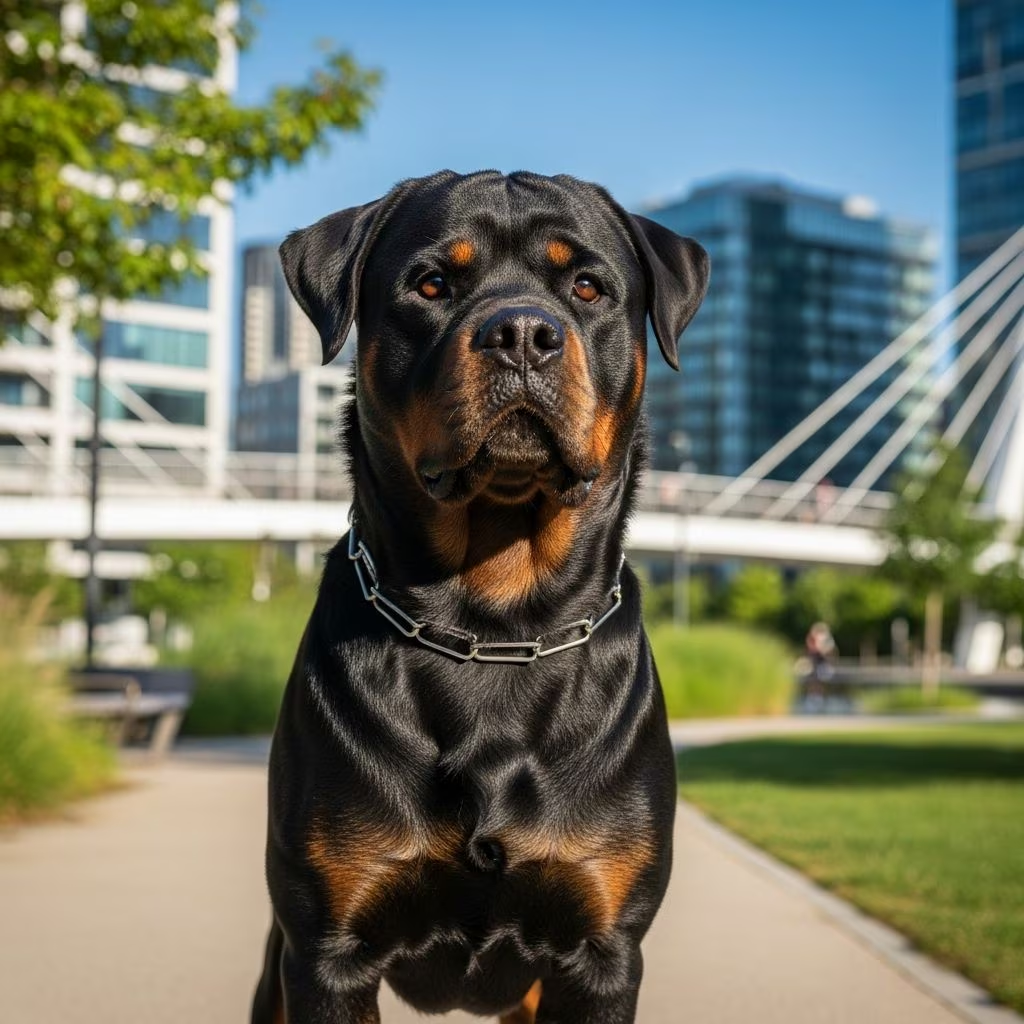
- Coat and Coloring: A shiny, medium-length black coat with distinctive tan or rust-colored markings on the face, chest, and legs. Most Rottweilers sport expressive tan “eyebrows” and matching muzzles that enhance their alert expression.
- Size Classification: Classified as medium-to-large or large breed dogs, Rottweilers present an imposing yet balanced silhouette.
- Physical Bearing: Their confident, self-assured stance communicates nobility and quiet authority, reflecting centuries of selective breeding for steadiness and reliability.
The American Rottweiler Club continues emphasizing balance in breed standards: dogs that are substantial without being overmassive, powerful yet agile, courageous but steady. This carefully maintained equilibrium ensures that modern Rottweilers honor their working heritage while thriving in contemporary roles.
Temperament and Personality Traits
Rottweilers possess complex personalities that often contradict public perception. Loyal, intelligent, and courageous, these dogs combine strength with surprising emotional sophistication. Their reputation for intimidation masks a fundamentally devoted nature and capacity for affection with trusted family members.
Contemporary Rottweiler owners frequently note several distinctive personality characteristics:
- Intelligent Problem-Solving: Rottweilers demonstrate cognitive abilities that enable them to understand established rules and assess situations strategically, sometimes “exploiting” household dynamics to their advantage.
- Situational Awareness: These dogs possess remarkable ability to evaluate contexts and respond appropriately—for example, waiting for traffic to pass rather than impulsively giving chase.
- Surprising Playfulness: Despite their imposing appearance, Rottweilers display a “goofy” side with family members, enjoying interactive games and demonstrating genuine affection.
- Protective Instinct: Their natural guarding inclinations emerge without extensive training, reflecting centuries of selective breeding for protection work.
- Trainability: Strong enough to follow established rules, Rottweilers respond well to clear guidance and consistent expectations from handlers.
Contemporary Roles and Capabilities
Modern Rottweilers excel in multiple specialized roles that leverage their physical and mental capabilities. The breed remains a true utility dog, demonstrating excellence across diverse disciplines:
- Obedience competitions and training
- Tracking and detection work
- Protection sports and security roles
- Carting and weight-pulling activities
- Herding trials and livestock work
- Therapy and emotional support functions
- Family protection and companionship
Today, Rottweilers rank as the eighth most popular breed in America, a testament to their successful transition from medieval working dogs to valued family members and professional service animals. Their continued popularity reflects growing appreciation for their balanced temperament, intelligence, and genuine devotion to their humans.
Historical Development and Breed Influences
The Rottweiler’s development involved complex breeding interactions with other emerging European breeds. Over centuries, Rottweilers were intentionally crossed with related working dogs including the Greater Swiss Mountain Dog, Bernese Mountain Dog, Entlebucher Mountain Dog, and Appenzeller Sennenhund. These strategic crosses aimed to refine specific working characteristics while maintaining the breed’s core strength and reliability.
Interestingly, Rottweilers themselves influenced other breed development. The modern Doberman Pinscher benefited significantly from Rottweiler genetics, incorporating qualities of strength and loyalty that enhanced the emerging Doberman type.
Understanding Misconceptions and Building Perspective
Rottweilers have unfortunately accumulated negative stereotypes that misrepresent their actual temperament and behavior. Much of this reputation stems from irresponsible ownership, lack of training, and misunderstanding of their protective nature rather than inherent aggression. When properly raised, trained, and socialized, Rottweilers demonstrate remarkable gentleness, particularly with children and family members.
The breed’s striking appearance—muscular build, dark coloring, and confident demeanor—contributes to fearful public perceptions. However, individuals who live with well-trained Rottweilers consistently report their surprising emotional sensitivity, affectionate nature, and reliability as family protectors.
Why Rottweilers Remain Relevant Today
The Rottweiler’s 2,000-year journey from Roman drover to modern companion demonstrates remarkable adaptability and enduring value. Their combination of physical capability, intelligence, and emotional connection with humans ensures relevance across generations and changing social contexts.
Whether serving as loyal family protectors, skilled therapy animals, or dedicated working partners, Rottweilers continue honoring their heritage while thriving in contemporary roles. Understanding their historical purpose and carefully cultivated traits provides essential context for appreciating this noble breed’s rightful place in both working and family environments.
References
- History of the Rottweiler — American Rottweiler Club. Accessed 2026-01-29. https://www.amrottclub.org/history-of-the-rottweiler/
- Rottweiler History: From Working Dog to Sporting, Therapy Dog — American Kennel Club (AKC). Accessed 2026-01-29. https://www.akc.org/expert-advice/dog-breeds/rottweiler-history/
- The Rottweiler Breed Guide: Personality, History, Training, Food and More — The Farmers Dog. Accessed 2026-01-29. https://www.thefarmersdog.com/digest/the-rottweiler-breed-guide-personality-history-training-food-and-more/
- Rottweiler — FCI Standard. Accessed 2026-01-29. https://en.wikipedia.org/wiki/Rottweiler
- Rottweiler Dog Breed — Hill’s Pet Nutrition. Accessed 2026-01-29. https://www.hillspet.com/dog-care/dog-breeds/rottweiler



