

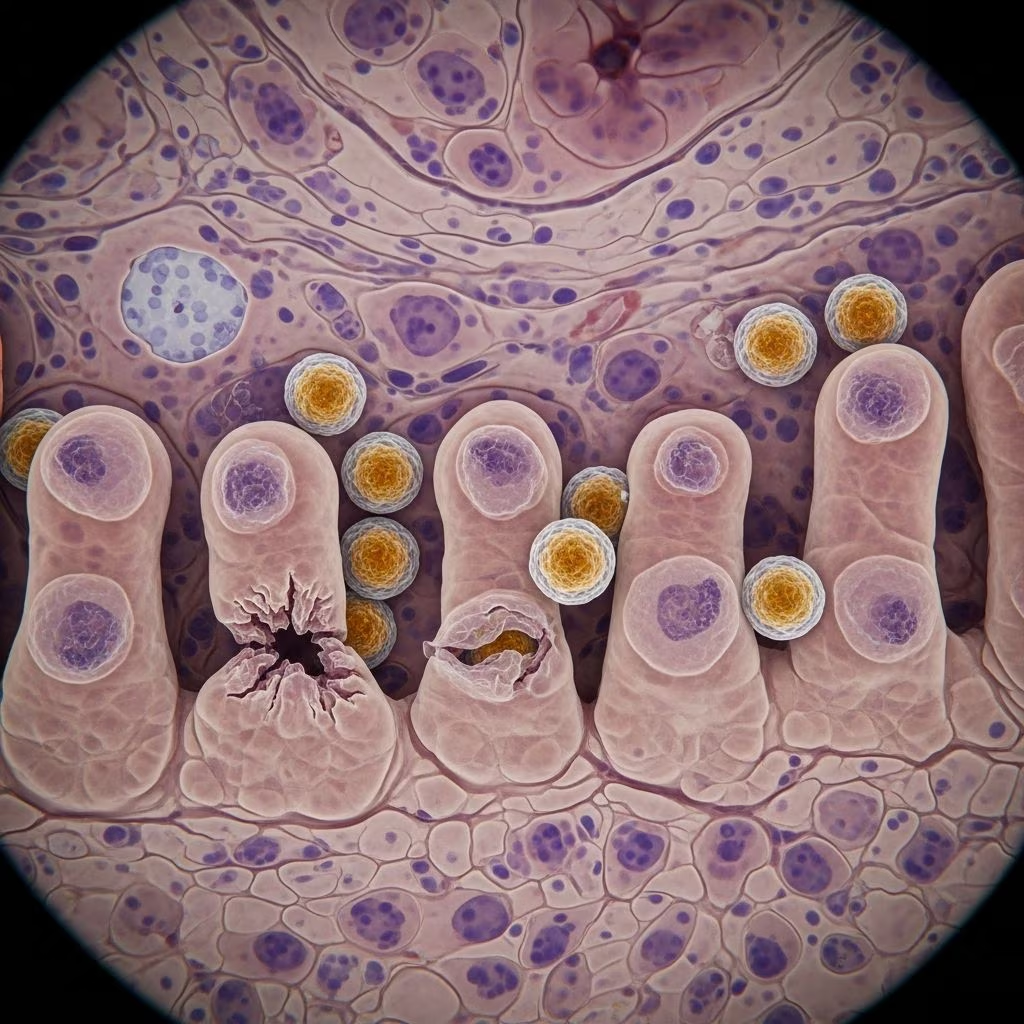
Rotaviral enteritis represents a significant challenge in swine production, primarily affecting neonatal and weaned piglets through severe diarrheal disease. This condition arises from infection by rotaviruses, which target the intestinal lining, leading to malabsorption and dehydration. Understanding its mechanisms and management is crucial for herd health.
Understanding the Viral Culprits
Rotaviruses belong to the Reoviridae family and are segmented double-stranded RNA viruses known for their wheel-like appearance under electron microscopy. In pigs, groups A, B, and C predominate, with group A being the most common worldwide. These pathogens infect villous enterocytes in the small intestine, particularly from the mid-jejunum to ileum, causing segmental lesions and villous atrophy.
The virus replicates within mature enterocytes at the villus tips, leading to cell lysis and subsequent loss of absorptive surface area. This triggers malabsorption of nutrients, osmotic diarrhea, and impaired digestion of milk or feed. Neonatal pigs lacking sufficient maternal antibodies are especially vulnerable, with infection onset as early as 12-48 hours post-birth.
- Group A: Most prevalent; associated with endemic diarrhea in herds.
- Group B and C: Less common but can cause severe outbreaks; lack commercial vaccines due to propagation challenges.
Recognizing Clinical Manifestations
Symptoms vary by age and immunity status. In colostrum-deprived neonates, profuse watery diarrhea appears within 12-48 hours, progressing to yellow or gray pasty feces. Affected piglets become dehydrated, gaunt, and rough-coated, though mortality remains low unless complicated by bacteria.
In endemic settings, diarrhea typically strikes pigs aged 5 days to 3 weeks or post-weaning. Nursing piglets show pasty, yellow-gray stools lasting 2-5 days, while weaners exhibit watery feces with undigested feed particles. Additional signs include sunken eyes, abdomen, wet perianal area, and lethargy.
| Age Group | Key Symptoms | Duration |
|---|---|---|
| Neonatal (<5 days) | Watery to pasty diarrhea, dehydration | 2-5 days |
| Nursing (5 days-3 weeks) | Pasty yellow/gray feces, gauntness | 3-4 days |
| Weaned | Watery with undigested feed, poor gain | 3-7 days |
Vomiting is rare compared to coronaviral infections like TGE or PED. Pigs often remain active initially but risk stunting if recovery is delayed.
Diagnostic Approaches
Diagnosis combines clinical history, gross pathology, and lab confirmation. Postmortem reveals thin, distended small intestines with undigested milk curds and villous blunting on histopathology.
Laboratory tests include PCR for viral detection (low Ct values indicate high load), ELISA for antigens/antibodies, and electron microscopy. Differential diagnoses encompass enterotoxigenic E. coli, Clostridium perfringens, PED, and TGE. Multiplex PCR panels aid in identifying co-infections, common in 20-50% of cases.
- Gross lesions: Segmental atrophy, fluid-filled loops.
- Histology: Villous shortening, crypt hyperplasia.
- Molecular: Group-specific genotyping.
Pathophysiology Deep Dive
Infection disrupts the intestinal epithelial barrier. Virus enters via fecal-oral route, binding sialic acid receptors on enterocytes. Replication peaks 24-48 hours post-infection, coinciding with peak diarrhea. Loss of lactase and other enzymes exacerbates lactose intolerance, worsening malabsorption.
Upper small intestine vulnerability impairs milk digestion, shunting undigested contents distally, fueling bacterial overgrowth. Immune response involves innate interferon pathways and adaptive IgA in milk, but heterologous strains evade cross-protection.
Supportive Treatment Strategies
No antiviral drugs exist; focus is supportive. Key interventions include:
- Hydration: Oral electrolytes with glucose/glycine to combat dehydration.
- Environment: Warm, dry, draft-free housing to minimize chilling and heat loss.
- Nutrition: Frequent small feedings; withdraw creep feed temporarily in scouring weaners.
- Antibiotics: For secondary bacterial invaders like E. coli, based on sensitivity testing.
Probiotics/yogurt show anecdotal benefits but lack robust evidence. Recovery restores villi in 7-10 days, but chilled pigs risk permanent growth lags.
Prevention Through Vaccination
Sow vaccination 3-5 weeks pre-farrowing boosts colostral/milk antibodies, delaying onset and reducing severity in group A cases. Commercial vaccines target serotypes but offer limited cross-protection.
Non-vaccine methods include feedback: controlled exposure of gilts/sows to infected feces to enhance lactogenic immunity. Biosecurity is paramount.
Biosecurity and Management Best Practices
Outbreaks thrive in poor hygiene. Implement all-in/all-out systems, rigorous cleaning/disinfection (e.g., repeated washes with approved virucides), and biosecure protocols like boot changes and traffic control.
| Risk Factor | Mitigation |
|---|---|
| Poor pen hygiene | All-in/all-out; disinfect thoroughly |
| Temperature swings | Stable warmth (28-32°C neonates) |
| Personnel movement | Dedicated boots, hand sanitation |
| Weaning stress | Older weaning age (>21 days) |
Adequate colostrum intake within hours of birth is non-negotiable. Ventilation minimizes ammonia, aiding recovery.
Herd-Level Control Programs
Integrated plans combine vaccination, feedback, and hygiene. Monitor via fecal shedding and serology. In persistent cases, segment barns and cull chronic shedders. Economic impacts include reduced gains and culls, underscoring prevention.
Frequently Asked Questions (FAQs)
What is the most common age for rotaviral diarrhea in pigs?
Primarily 5 days to 3 weeks in nursing pigs, or at weaning.
Can rotavirus be treated with antibiotics?
No, but they control secondary bacteria like E. coli.
Is there a vaccine for all rotavirus groups in pigs?
Only for group A; B and C lack commercial options.
How long does it take for piglets to recover?
Villi regenerate in 7-10 days with proper care.
What role does colostrum play?
Provides passive antibodies, protecting neonates.
Emerging Insights and Future Directions
Research explores multivalent vaccines and strain surveillance. Genomic sequencing tracks variants, informing tailored controls. Climate-controlled housing and precision feeding show promise in trials.
References
- Rotaviral Enteritis in Pigs — MSD Veterinary Manual. 2023. https://www.msdvetmanual.com/digestive-system/intestinal-diseases-in-pigs/rotaviral-enteritis-in-pigs
- Rotaviral Diarrhoea — NADIS. 2022. https://www.nadis.org.uk/disease-a-z/pigs/rotaviral-diarrhoea/
- Rotavirus infection (Rotavirus, rotavirosis) — Pig333. 2024. https://www.pig333.com/pig-diseases/rotavirus-infection_102
- Rotaviral Diarrhoea in Pigs — The Pig Site. 2023. https://www.thepigsite.com/articles/rotaviral-diarrhoea-in-pigs
- Persistence of clinical signs associated with rotavirus following an outbreak of PEDV — PMC (Peer-reviewed). 2016-05-01. https://pmc.ncbi.nlm.nih.gov/articles/PMC4866665/
- Porcine rotavirus continues to plague the global pig industry — Thermo Fisher Scientific. 2023. https://www.thermofisher.cn/blog/behindthebench/porcine-rotavirus-continues-to-plague-the-global-pig-industry/



