
Rose-Breasted Cockatoo Diet Guide: Complete Nutrition Tips
Complete nutritional guide for rose-breasted cockatoos: pellets, fruits, vegetables, and healthy feeding practices.
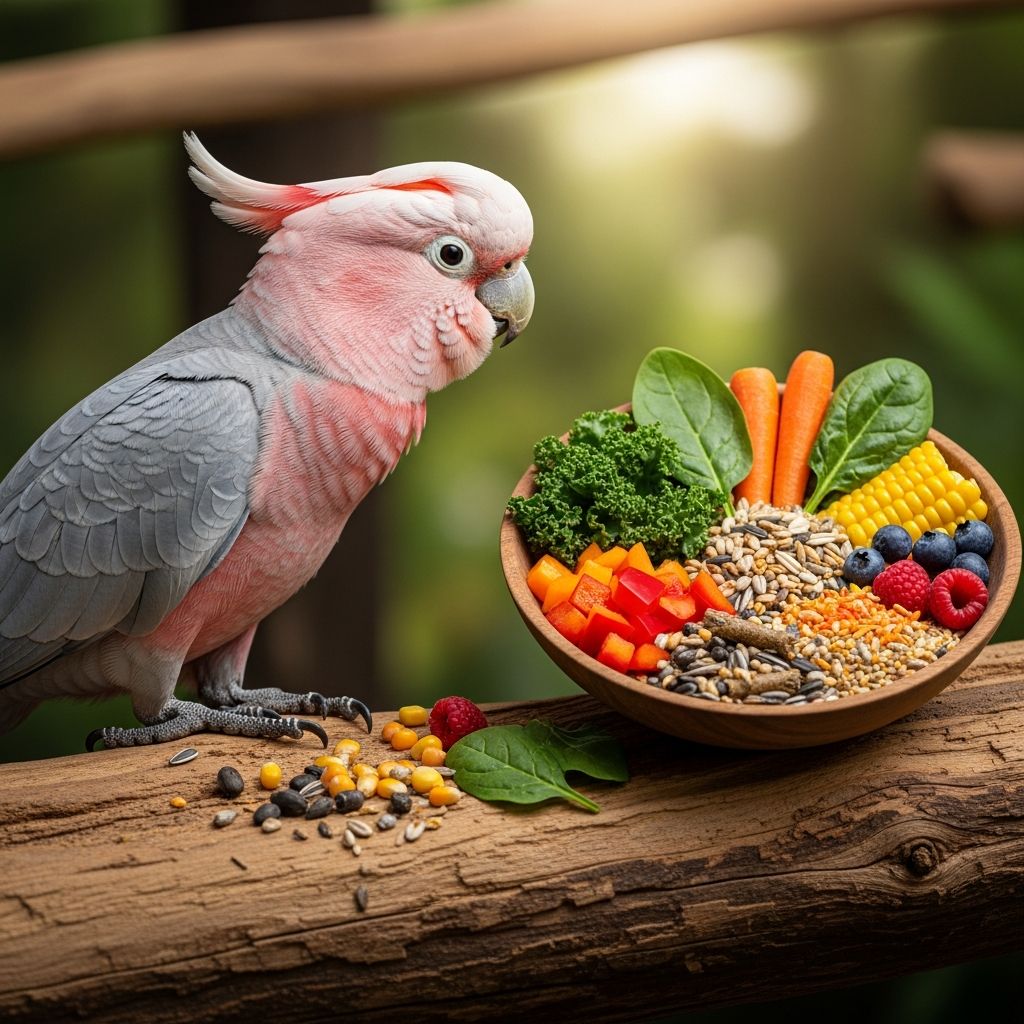
Rose-Breasted Cockatoo Diet Guide
Rose-breasted cockatoos, also known as Galahs, are magnificent birds that require a carefully planned diet to maintain optimal health and prevent common nutritional problems. These intelligent and social parrots have specific dietary needs that differ significantly from wild cockatoos due to their captive lifestyle. Understanding the proper nutrition for your rose-breasted cockatoo is essential for ensuring longevity, vibrant plumage, and behavioral health. A well-balanced diet prevents obesity, fatty liver disease, respiratory issues, and other serious health complications that commonly affect improperly fed cockatoos.
The Ideal Rose-Breasted Cockatoo Diet Composition
The foundation of a healthy rose-breasted cockatoo diet consists of three primary components that work together to provide complete nutrition. Each element plays a crucial role in maintaining your bird’s overall wellness and preventing nutritional deficiencies.
Pelleted Diet Foundation
Pelleted or extruded diets should form the cornerstone of your rose-breasted cockatoo’s daily nutrition, comprising approximately 75 to 80 percent of the total diet. High-quality pelleted foods are specifically formulated to provide balanced nutrition, including essential vitamins, minerals, and proteins that your bird needs for optimal health. Quality pelleted diet manufacturers include Harrison’s, Zupreme, Roudy Bush, and Lafeber, each offering nutritionally complete formulas designed for large parrots. These pelleted diets eliminate the nutritional imbalances found in seed-only diets and significantly reduce mess and waste in the cage.
Fresh Fruits and Vegetables
Fresh produce should comprise 20 to 25 percent of your rose-breasted cockatoo’s daily diet and should be offered fresh daily. These foods provide essential vitamins, minerals, fiber, and phytonutrients that pelleted diets alone cannot fully supply. When offering fruits and vegetables, wash them thoroughly, remove any pits, and cut them into bite-sized pieces that your bird can easily consume. Darker colored vegetables are generally more nutritious and should be prioritized in your bird’s diet. Remove any uneaten fresh food within 24 hours to prevent bacterial growth and spoilage.
Seeds and Treats
Seeds and treats should comprise no more than 5 percent of your rose-breasted cockatoo’s daily diet and should be offered only in small quantities as occasional rewards during training or interaction. While seeds are energy-dense and appealing to birds, they are often high in fat and low in essential nutrients when fed as a primary diet. Low-fat seeds such as millet, especially spray millet, make excellent treat foods and are preferred over high-fat options like sunflower and safflower seeds.
Recommended Foods for Rose-Breasted Cockatoos
Rose-breasted cockatoos enjoy a wide variety of healthy foods that provide nutritional diversity and enrichment. The following foods are safe and beneficial for regular inclusion in your bird’s diet:
Nutritious Vegetables
Vegetables should form a significant portion of the fresh food component of your cockatoo’s diet. Excellent vegetable choices include peas, corn, broccoli, celery leaves, capsicum, carrot, spinach, asparagus, bok choy, kale, and zucchini. These vegetables provide essential vitamins, minerals, and fiber. When preparing vegetables, always wash them thoroughly and cut them into appropriate bite-sized pieces. Vegetables can be offered raw or lightly cooked, depending on your bird’s preference.
Safe Fruits
Fruits provide natural sugars and essential nutrients, though they should be offered in moderation due to their sugar content. Safe fruits for rose-breasted cockatoos include apples, bananas, blueberries, cantaloupe, strawberries, and various other fruits commonly consumed by humans. Always remove pits from fruits before offering them to your bird, as many fruit pits contain toxic compounds. While citrus fruits are technically safe in very small amounts, they are often acidic and should be offered sparingly.
Protein Sources
In the wild, cockatoos consume insects as part of their natural diet, providing essential proteins and amino acids. To replicate this natural behavior, provide small portions of cooked egg, chicken, beans, legumes, chickpeas, kidney beans, and lentils. These protein sources support muscle development and maintenance, contributing to your bird’s overall health and vitality.
Additional Healthy Options
Sprouted seeds are excellent nutritional additions that provide concentrated proteins, vitamins, and minerals in an easily digestible form. You can sprout seeds yourself or purchase pre-made sprout mixes from grocery stores. Fresh grasses and native plants, particularly seed heads, provide natural foraging opportunities and nutritional variety. Flowers and branches from common native plants are also safe to offer, providing both nutrition and enrichment through natural chewing behaviors.
Foods to Avoid Completely
Certain foods are toxic to rose-breasted cockatoos and should never be offered under any circumstances. These prohibited foods can cause serious illness or death:
Toxic Foods
Never feed your rose-breasted cockatoo chocolate, caffeine, avocado, onion, rhubarb, alcohol, dairy products, or fruit with pits such as peaches, nectarines, and plums. Additionally, processed foods including cookies, crackers, and chips should be avoided, as should shelled peanuts that may contain alfatoxins on the shell. Iceberg lettuce, celery, and potato skins should also be avoided, as they either lack nutritional value or contain potentially harmful compounds like solanine in the case of potato skins.
Daily Feeding Guidelines and Portion Control
Proper portion control is critical for preventing obesity, a common health problem in captive rose-breasted cockatoos. The recommended daily feeding amount is approximately 1/4 cup of formulated pelleted diet combined with 1/4 cup of fresh fruits and vegetables. However, actual portions may vary based on individual bird size, activity level, age, and metabolism.
Monitoring Food Intake and Weight
Rose-breasted cockatoos are highly efficient at utilizing calories and are prone to weight gain when overfed. Monitor your bird’s food intake and body weight regularly to prevent obesity and its associated complications. Juvenile cockatoos are notoriously picky eaters and often don’t require much food to maintain themselves, while adults easily gain too much weight when portions are excessive. Overfeeding leads to obesity, pickiness, wastage, and food throwing behaviors. Weigh your bird regularly and maintain records to track any weight changes that might indicate dietary adjustments are needed.
Fresh Water
Fresh, clean water should be available to your rose-breasted cockatoo at all times. Change the water daily to ensure it remains clean and uncontaminated. Some birds prefer water in dishes, while others enjoy drinking from spray bottles or specialized water dispensers.
Nutritional Supplements
If your rose-breasted cockatoo is eating a balanced pelleted diet combined with fresh fruits and vegetables, vitamin supplements are generally not necessary. However, calcium supplementation is recommended and can be provided through cuttlebones or mineral blocks. Do not use gravel or grit as calcium sources, as these can cause dangerous crop impactions. For optimal calcium metabolism, your bird requires UVB exposure for at least 3 to 4 hours daily, whether through careful outdoor sun exposure or indoor UVB lighting systems.
Converting Your Cockatoo to a Pelleted Diet
If your rose-breasted cockatoo is currently eating a seed-based diet, transitioning to a pelleted diet requires patience and strategy. The conversion process should occur gradually while carefully monitoring food intake and overall health.
Conversion Strategies
Start by mixing pellets and seeds in a 50/50 ratio in the normal food bowl, providing only enough food for one to two days at a time. By limiting daily seed portions, your bird will become hungry enough to try the new pellets. Gradually reduce the amount of seed while increasing pellets over several weeks. Alternatively, try moistening pellets and rolling them in seed to create a hybrid food that encourages consumption. If your bird enjoys human food, try pretending to eat the pellets yourself, as many birds are influenced by their owner’s behavior and may find food more appealing when they see humans enjoying it. The conversion process requires patience, as it may take several weeks before your cockatoo willingly accepts pellets as a primary diet.
Special Dietary Considerations for Rose-Breasted Cockatoos
Rose-breasted cockatoos have unique characteristics that influence their dietary needs and feeding behavior. Understanding these special considerations ensures proper nutrition and prevents behavioral problems.
Natural Eating Behaviors
Cockatoos are naturally herbivores programmed to eat off the ground and sometimes high in canopies, looking for nuts and seeds. In the wild, they consume seeds, tubers, corms, fruit, flowers, and insects as they forage throughout their environment. Due to their social eating habits, it may be best to feed cockatoos when the household is nearby or eating together in the same room, as they are social birds that enjoy feeding alongside their flock.
Gorging Behavior
One behavior owners often notice is their cockatoo’s tendency to gorge themselves on particularly delicious foods or after coming from an avian rescue situation. This is completely natural behavior; in the wild, during times of plenty, cockatoos will eat for hours on the best food available and store it in their crop for digestion later. While this behavior is normal, monitoring portions in captivity is essential to prevent unhealthy weight gain.
Age-Related Nutritional Needs
Juvenile rose-breasted cockatoos have different nutritional requirements than adults. Young birds are notoriously picky eaters and often don’t need much food to maintain themselves, but as they mature, they easily gain too much weight. Try to ensure that the food your juvenile cockatoo eats is highly nutritious and avoid high-fat seeds. As your bird matures, adjust portions and monitor weight more closely to prevent obesity in adulthood.
Preventing Common Nutritional Problems
Nutrition is commonly neglected in pet birds, and rose-breasted cockatoos are particularly prone to obesity when fed an improper diet. A diet consisting primarily of dry seeds is extremely high in fat while being low in protein and essential vitamins and minerals. Cockatoos fed entirely on seed can develop multiple serious problems including poor feathering, respiratory disease, fatty liver, and diabetes. By following the recommended diet composition of 75-80 percent quality pellets, 20-25 percent fresh produce, and minimal treats, you can prevent these serious health complications and ensure your bird thrives.
Recommended Pelleted Diet Brands
Several high-quality pelleted diet options are specifically formulated for large parrots like rose-breasted cockatoos. These include Harrison’s, Zupreme, Roudy Bush, and Lafeber brands, all of which provide nutritionally complete formulas designed to meet the specific needs of large parrots. Each brand offers different formulations, so you may want to consult with your avian veterinarian about which option is best for your individual bird.
Frequently Asked Questions About Rose-Breasted Cockatoo Diet
Q: How much should I feed my rose-breasted cockatoo daily?
A: The recommended daily amount is approximately 1/4 cup of pelleted diet combined with 1/4 cup of fresh fruits and vegetables. However, portions may vary based on your individual bird’s size, activity level, age, and metabolism. Monitor your bird’s weight regularly and adjust portions accordingly.
Q: Can pelleted diet be used as the main diet for my cockatoo?
A: Yes, quality pelleted diets can be fed as the main diet since each bite contains balanced nutrition. However, it is still encouraged to continue offering vegetables and fruits to provide nutritional variety and enrichment.
Q: What percentage of my cockatoo’s diet should be pellets?
A: Pelleted diet should comprise 75 to 80 percent of your rose-breasted cockatoo’s total daily diet, with fresh produce making up 20 to 25 percent and treats comprising no more than 5 percent.
Q: How can I convert my seed-eating cockatoo to a pelleted diet?
A: Start by mixing pellets and seeds in equal portions, providing only enough food for one to two days. Gradually reduce seed amounts while increasing pellets over several weeks. Moisten pellets and roll them in seed, or try eating the pellets yourself to make them more appealing to your bird.
Q: Are vitamin supplements necessary for my cockatoo?
A: If your cockatoo is eating a balanced pelleted diet with fresh fruits and vegetables, vitamin supplements are not necessary. However, calcium supplementation through cuttlebones or mineral blocks is recommended, and UVB exposure for 3-4 hours daily is essential for proper calcium metabolism.
Q: Why is my cockatoo prone to obesity?
A: Rose-breasted cockatoos are highly efficient at utilizing calories, and adults easily gain weight when portions are excessive. Overfeeding, particularly with high-fat seeds, leads to obesity and serious health complications including fatty liver disease and diabetes.
References
- Choosing a Rose-Breasted Cockatoo — PetPlace.com. 2024. https://www.petplace.com/article/birds/general/choosing-a-rose-breasted-cockatoo
- Diet for Cockatoos — Melbourne Bird Veterinary Clinic. 2024. https://www.melbournebirdvet.com/post/diet-for-cockatoos
- Everything You Need to Know About Pet Cockatoos — Kaytee. 2024. https://www.kaytee.com/learn-care/pet-birds/everything-you-need-to-know-about-pet-cockatoos
- Cockatoo: Specialized Care for Avian & Exotic Pets — Buffalo Bird Nerd. 2024. https://www.buffalobirdnerd.com/storage/app/media/PSPCockatoos.pdf
- Cockatoo Care — Chicago Exotic Animal Hospital. 2024. http://www.exoticpetvet.com/cockatoo-care.html
Similar Articles








Read full bio of Sneha Tete


