

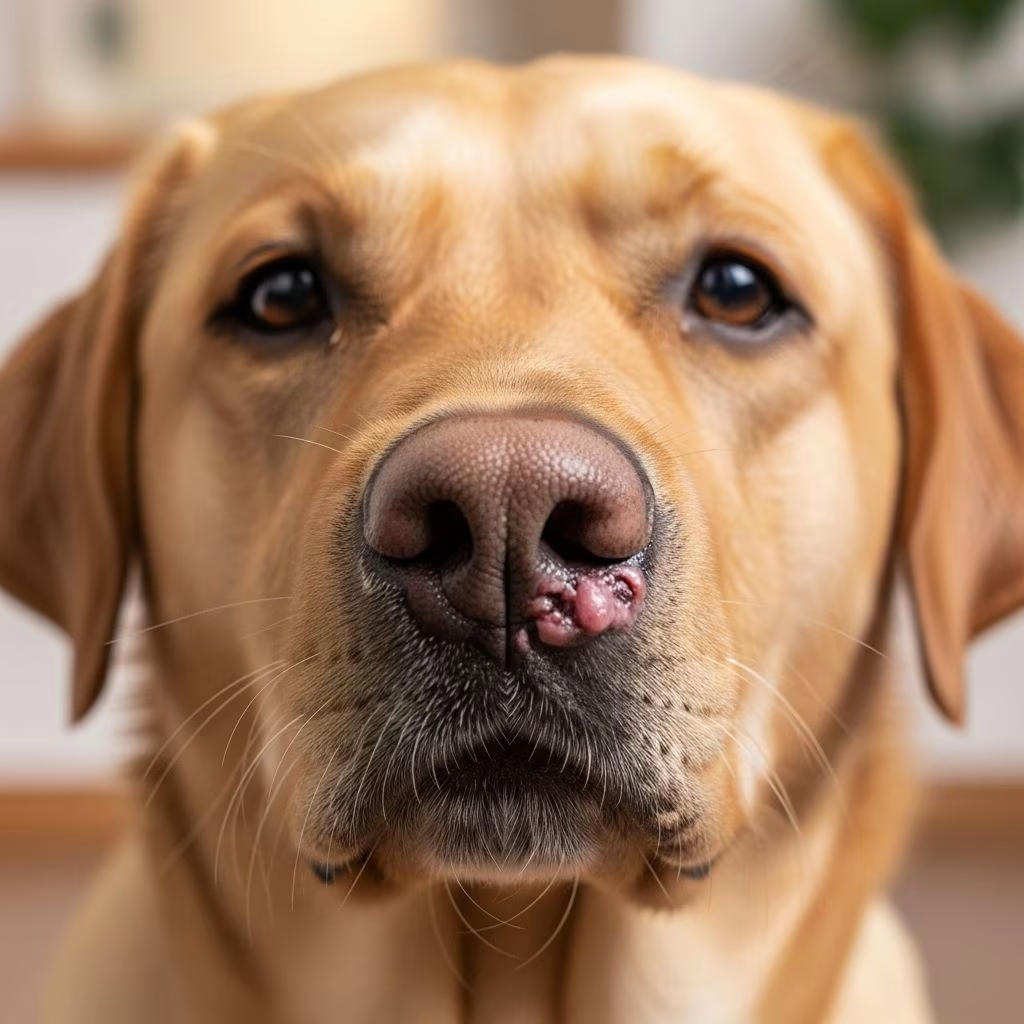
Rodent ulcers in dogs, often termed indolent ulcers or part of the eosinophilic granuloma complex, manifest as distinctive sores primarily on the upper lip. These non-contagious lesions stem from immune-mediated reactions, typically triggered by allergies, and require prompt veterinary intervention for resolution.
Recognizing the Early Warning Signs
Owners often spot the initial changes as subtle discolorations on their dog’s muzzle. The condition begins with a small, yellowish-pink area on the upper lip, progressing to a well-defined, red, glossy erosion that alters the lip’s normal contour. Unlike aggressive wounds, these ulcers seldom bleed or discharge fluid, and they remain relatively non-painful when touched, allowing dogs to eat without obvious distress.
- Initial yellowish-pink discoloration on the lip margin
- Progression to a sharp-edged, shiny red lesion
- Minimal oozing or crusting in early stages
- Potential distortion of lip shape in advanced cases
- Occasional secondary swelling from bacterial involvement
While lips are the prime location, similar plaques can appear on the tongue, gums, or inner mouth surfaces, complicating self-examination. Vigilance is key, as early detection prevents escalation.
Unraveling the Root Causes
Despite the name suggesting rodent involvement, these ulcers have no connection to pests. They arise from an overzealous immune response, where eosinophils—inflammatory cells—target the skin, forming granulomatous lesions. Allergies drive most cases, with culprits including flea bites, food proteins, or airborne irritants like pollen.
Hypersensitivity to flea saliva is a frequent instigator; even minimal infestations can provoke flares in sensitive breeds. Food trials often reveal reactions to beef, chicken, or grains, while environmental testing identifies grass or dust mite triggers. Less commonly, underlying issues like autoimmune disorders or parasites contribute.
| Common Triggers | Description | Prevalence |
|---|---|---|
| Flea Allergy | Saliva-induced dermatitis | High |
| Food Allergies | Protein intolerances | Moderate |
| Atopy (Environmental) | Pollen, mold exposure | Moderate |
| Other (Parasites, Autoimmune) | Rare systemic factors | Low |
Breeds such as Golden Retrievers and certain short-nosed varieties show predisposition, though any dog can develop them.
Accurate Diagnosis: Beyond Surface Appearance
Visual traits guide suspicion, but confirmation demands ruling out mimics like fungal infections, tumors, or trauma. Veterinarians perform fine-needle aspirates or full-thickness biopsies to examine cellular infiltrates, confirming eosinophilic activity.
Allergy workups follow: tick preventives are verified, hypoallergenic diets trialed for 8-12 weeks, and intradermal skin tests or blood panels assess atopy. Imaging or cultures exclude secondary infections. This systematic approach ensures targeted therapy.
Comprehensive Treatment Strategies
Management hinges on allergy control and lesion suppression. Corticosteroids—oral prednisone, injectable forms, or topical gels—dampen inflammation, yielding rapid shrinkage within days. Dosages taper to minimize side effects like thirst increase.
- Immunosuppressives: Prednisone (1-2 mg/kg daily initially)
- Antibiotics: For bacterial overgrowth, e.g., cephalexin
- Flea Control: Monthly topicals like fipronil
- Dietary Trials: Novel proteins such as kangaroo
Refractory cases may need cyclosporine or referral to dermatologists for immunotherapy. Supportive care includes e-collars to deter licking and medicated washes for hygiene. Healing timelines vary: superficial ulcers mend in 2-4 weeks, deeper ones longer with monitoring.
Preventing Recurrence: Long-Term Management
Success lies in trigger elimination. Strict flea protocols year-round prevent sensitization. Food allergy diets become lifelong for responders, while atopics benefit from allergen-specific shots or oclacitinib tablets. Regular vet check-ins track progress, adjusting protocols as needed.
Owners should log flare patterns—seasonal spikes suggest environmental causes—facilitating proactive tweaks. Nutritional support, like omega-3 supplements, bolsters skin barriers.
Prognosis and Expected Outcomes
With intervention, nearly all dogs achieve full resolution sans scarring. Prognosis excels when allergies are pinpointed; unmanaged cases cycle chronically, risking anemia from poor appetite or systemic spread. Pain is minimal, enhancing compliance.
Common Myths Debunked
Myth 1: Rodent ulcers spread via contact. Fact: Purely immune-driven, non-infectious.
Myth 2: Home remedies suffice. Fact: OTC topicals risk irritation; vet oversight essential.
Myth 3: Only old dogs affected. Fact: All ages, peaks in young adults.
Frequently Asked Questions
Are rodent ulcers cancerous?
No, they are benign inflammatory responses, distinguishable from squamous cell carcinoma via biopsy.
Can diet alone cure them?
Possibly if food-allergic, but confirm via strict trial excluding treats.
How long until improvement?
Steroids often shrink lesions in 3-7 days; full heal 2-6 weeks.
Will my dog need lifelong meds?
Many stabilize post-allergy ID; some require maintenance.
Is surgery ever required?
Rarely for persistent plaques; excision or debridement in select cases.
When to Seek Emergency Care
Rush to vet if ulcers swell dramatically, ulcerate deeply, or accompany fever/lethargy—signaling infection or complication. Baseline lesions warrant routine visits.
Empowering owners with knowledge fosters swift action, restoring comfort swiftly.
References
- Eosinophilic Granuloma Complex in Dogs — MSD Veterinary Manual. 2023. https://www.msdvetmanual.com/dog-owners/skin-disorders-of-dogs/eosinophilic-granuloma-complex-in-dogs
- Skin Ulcers in Dogs — PetMD. 2024-01-15. https://www.petmd.com/dog/conditions/skin/skin-ulcers-dogs
- Autoimmune Skin Lesions (Eosinophilic Granuloma Complex) in Dogs — Vetster. 2023. https://vetster.com/en/conditions/dog/autoimmune-skin-lesions-eosinophilic-granuloma-complex
- Eosinophilic Granuloma Complex in Dogs — Merck Veterinary Manual. 2023. https://www.merckvetmanual.com/dog-owners/skin-disorders-of-dogs/eosinophilic-granuloma-complex-in-dogs
- Rodent Ulcers in Dogs: Our Vet Explains Signs, Causes & Treatments — Dogster (Veterinary Review). 2024. https://www.dogster.com/ask-the-vet/rodent-ulcers-in-dogs
- Understanding Skin Ulcers in Pets — Tri-County Animal Hospital. 2023. https://tricountyah.com/pet-health/skin-ulcers/



