

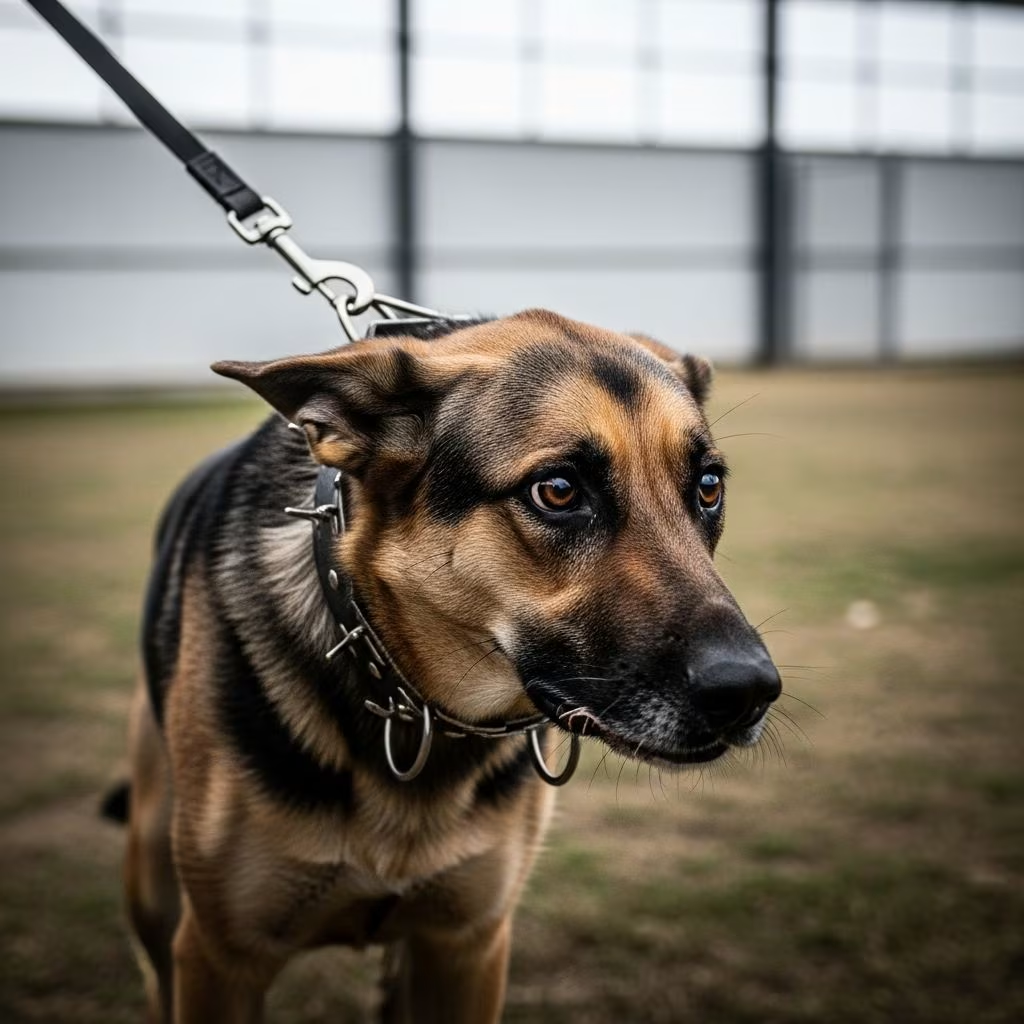
Negative reinforcement involves removing an unpleasant stimulus to increase desired behaviors in dogs, such as releasing leash pressure when the dog stops pulling. While it can technically shape behavior, scientific evidence highlights significant welfare risks, including heightened stress, fear, aggression, and impaired learning compared to positive reinforcement methods.
Understanding the Basics of Reinforcement in Canine Learning
At its core, dog training relies on operant conditioning principles developed by B.F. Skinner. Reinforcement strengthens behaviors, while punishment weakens them. Positive reinforcement adds something desirable, like treats or praise, after a good action. Negative reinforcement subtracts an aversive, such as collar pressure or noise, once the dog complies.
For example, in leash training, a trainer might apply steady pressure until the dog yields, then release it. The relief reinforces yielding. However, this requires first imposing discomfort, which can confuse dogs and elevate cortisol levels, the stress hormone.
Physiological and Behavioral Stress Indicators
Dogs under negative reinforcement show clear stress signals. Studies reveal they exhibit more lip licking, yawning, lowered body posture, and reduced eye contact with handlers during sessions. These are displacement behaviors signaling anxiety.
Chronic exposure risks immune suppression and behavioral shutdown, where dogs become apathetic or avoidant. Puppies and adolescents, in key developmental windows, suffer amplified effects, potentially stunting emotional resilience.
- Lip licking and yawning: Appeasement gestures under duress.
- Low posture and avoidance: Fear responses limiting engagement.
- Elevated cortisol: Leads to long-term health issues.
Links to Fear and Aggression Development
Aversive methods correlate strongly with fear-based aggression. Dogs may associate the handler or environment with pain relief, fostering defensive reactions like growling or biting. One study found dogs trained aversively were over twice as likely to show aggression toward strangers or family.
This stems from unpredictable application: inconsistent timing confuses dogs, prompting escape attempts that handlers misinterpret as defiance, escalating punishment cycles.
Comparing Effectiveness: Negative vs. Positive Reinforcement
| Training Method | Pros | Cons | Outcomes | Key Studies ||—————|——|——|———-|————-|| **Negative Reinforcement** | Quick initial compliance in low-distraction settings | Requires constant aversive application; suppresses creativity | Stress signs, fear/aggression risk, poor generalization | Dogs show less owner attention, more stress behaviors || **Positive Reinforcement** | Builds enthusiasm; enhances focus and problem-solving | Takes patience to shape behaviors | Durable learning, stronger handler bond, lower stress | Higher attention, eager responses, effective long-term |
Positive methods encourage behavioral experimentation, where dogs offer actions for rewards, boosting cognitive flexibility. Negative setups limit this, as dogs focus solely on averting discomfort.
Common Tools and Their Hidden Dangers
Tools like prong collars, shock collars, and choke chains epitomize negative reinforcement pitfalls. Shock collars deliver escalating stimuli until compliance, then cease—reinforcing via relief but traumatizing through trial-and-error pain.
- Prong/choke collars: Neck pressure causes pain, risking tracheal damage and fear.
- Shock collars: Electrical stimulation induces panic, increasing aggression odds.
- Leash jerks/squirt bottles: Create anxiety without clear learning cues.
Even “mild” versions, like verbal scolding, accumulate stress, eroding trust.
Developmental Vulnerabilities in Young Dogs
Puppies under 16 weeks and adolescents (6-18 months) have plastic brains highly susceptible to aversives. Stress disrupts neural pruning, impairing fear regulation centers like the amygdala. Fearful dogs or those in novel environments amplify risks, leading to lifelong phobias.
Long-Term Welfare Impacts
Beyond sessions, negative reinforcement fosters learned helplessness—dogs stop trying new behaviors, reducing adaptability. It weakens handler bonds, as dogs view owners as threat sources rather than allies.
Health-wise, persistent stress elevates risks for gastrointestinal issues, weakened immunity, and accelerated aging.
Shifting to Positive Reinforcement Paradigms
Modern protocols prioritize rewards: clicker training marks exact moments, paired with high-value treats. Shaping breaks complex behaviors into micro-steps, preventing overwhelm.
- Identify motivators: Food, toys, or play.
- Use markers for precision timing.
- Fade lures gradually for independence.
- Proof in distractions for reliability.
Evidence confirms these yield attentive, joyful dogs with robust generalization.
Case Studies and Real-World Evidence
In one experiment, negative reinforcement groups rarely checked handlers on-leash, signaling disconnection, versus positive groups’ eager gazes. Shelter programs switching to rewards report 40% faster adoptions due to improved temperaments.
Expert Guidelines from Veterinary Bodies
The Australian Veterinary Association warns against punishment/negative reinforcement due to stress proliferation, advocating reward-based solely. Oregon Humane echoes this, noting aggression spikes.
FAQs on Dog Training Methods
What exactly is negative reinforcement?
It strengthens behavior by removing an aversive stimulus, like leash slack after stopping pull.
Is negative reinforcement the same as punishment?
No—punishment adds aversives to suppress behavior; negative reinforcement removes them to encourage.
Can negative reinforcement ever be safe?
Only if imperceptibly mild and precisely timed, but evidence favors positives for welfare.
How do I switch my dog to positive training?
Consult certified trainers; start with foundation skills in quiet spaces using treats/praise.
Does my dog’s breed affect training choice?
All breeds benefit from positives; sensitive ones like herding breeds suffer most from aversives.
Building a Stress-Free Training Routine
Success demands management: short sessions (5-15 mins), end on wins, track progress. Combine with enrichment like puzzle toys to buffer stress.
Monitor body language: relaxed ears, soft eyes signal thriving. Persistent tension? Pause and reassess.
References
- What is Negative Reinforcement in Dog Training? — Companion Animal Psychology. 2018-05-28. https://www.companionanimalpsychology.com/2018/05/what-is-negative-reinforcement-in-dog.html
- Why negative reinforcement training is bad for dogs — Fetch Pet. Accessed 2026. https://www.fetchpet.com/the-dig/why-negative-reinforcement-training-is-bad-for-dogs
- Pitfalls of Negative Reinforcement — The Mannerly Dog. Accessed 2026. https://themannerlydog.com/pitfalls-of-negative-reinforcement/
- The use of punishment and negative reinforcement in dog training — Australian Veterinary Association. Accessed 2026. https://www.ava.com.au/policy-advocacy/policies/companion-animals-dog-behaviour/the-use-of-punishment-and-negative-reinforcement-in-dog-training/
- Adverse Effects of Punishment — Oregon Humane Society. Accessed 2026. https://www.oregonhumane.org/portland-training/adverse-effects-of-punishment/



