

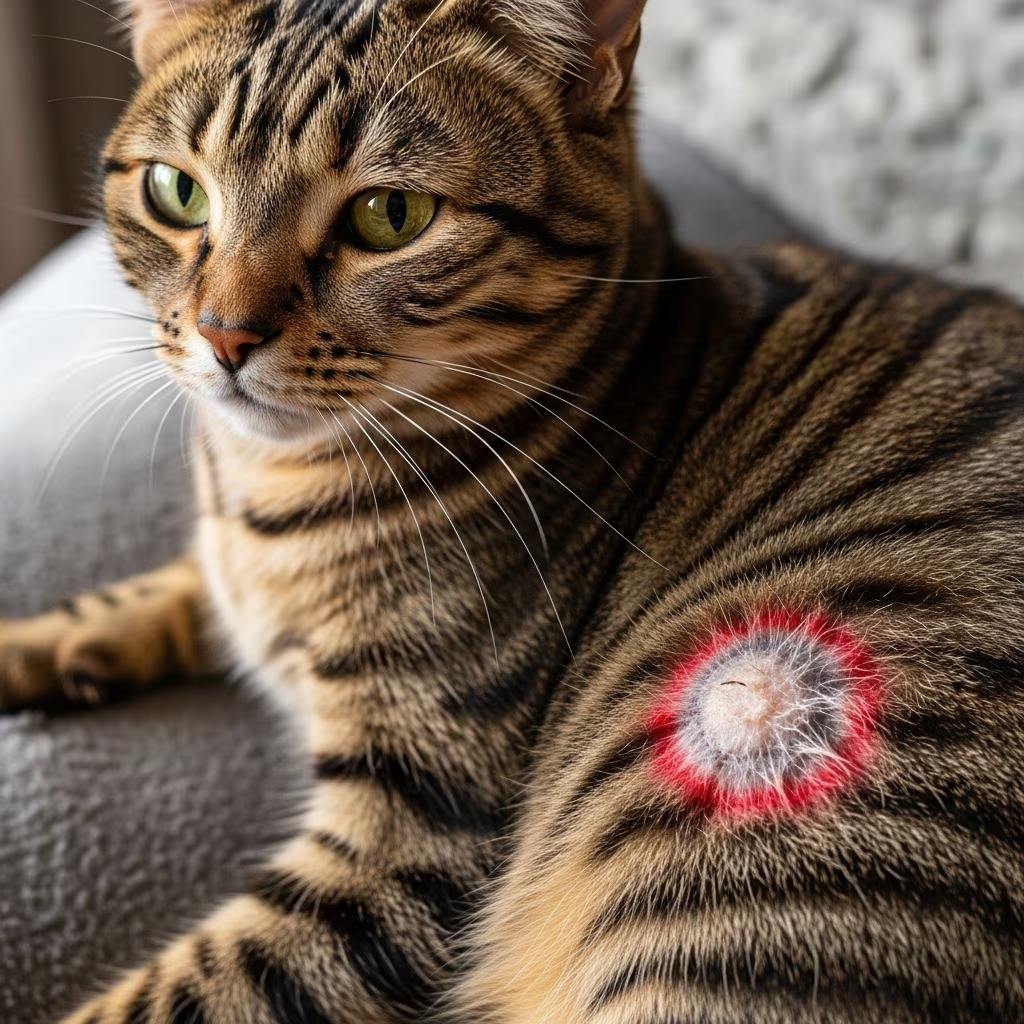
Ringworm represents a prevalent fungal infection affecting feline skin, fur, and nails, caused primarily by dermatophytes like Microsporum canis. Despite its name, this condition stems from fungi rather than parasites, spreading easily through direct contact or contaminated surroundings. Early detection and thorough management prove essential for cat health and household safety.
Understanding the Fungal Culprit Behind Ringworm
The primary pathogen, Microsporum canis, accounts for over 90% of cases in cats, thriving on keratin in hair, skin, and claws. Spores from infected hairs disperse into the environment, surviving up to 18-24 months on surfaces, fabrics, and dust. Transmission occurs via touch with affected animals, shared items like brushes or bedding, or indirect exposure to lingering spores. Young kittens under one year, longhaired breeds, and immunocompromised cats face heightened vulnerability due to immature immunity or fur that traps spores more readily.
Healthy adult cats often resist infection through robust skin barriers and immune responses, though breaks in skin from scratches accelerate invasion. In multi-pet homes or shelters, rapid spread demands isolation protocols upon suspicion.
Recognizing Early Warning Signs in Your Cat
Symptoms manifest variably, from subtle to pronounced. Common indicators include:
- Circular patches of hair loss, often with scaly, crusty edges resembling a ring.
- Thinning fur or broken, stubby hairs, particularly on the head, ears, paws, or tail.
- Red, inflamed, or grayish lesions on the face, chest, legs, or spine.
- Mild to moderate itchiness, though some cats show no discomfort.
- Thickened, scaly skin changes or altered fur coloration.
Lesions favor the face and extremities, expanding if untreated. Asymptomatic carriers shed spores without visible signs, complicating detection in group settings. Differentiate from flea allergies or mites via diagnostic tests, as appearances overlap.
Accurate Diagnosis: Beyond Visual Inspection
Visual cues alone mislead; confirm via fungal culture, the gold standard. Use a sterile toothbrush or mascara wand to comb the coat thoroughly—five strokes over lesions and full-body for non-lesioned cats. Incubate samples 10-14 days: untreated growth appears in under 10 days, treated slower. No growth at 14 days signals clearance. Wood’s lamp reveals glowing spores in some strains, but false negatives occur. Direct microscopy or PCR offer rapid alternatives, though cultures quantify infection load best.
| Method | Pros | Cons | Incubation |
|---|---|---|---|
| Fungal Culture | Quantitative, definitive | Time-consuming | 14 days |
| Wood’s Lamp | Quick screening | Strain-specific, false negatives | Immediate |
| Microscopy/PCR | Fast results | Less quantitative, costlier | Hours-Days |
Comprehensive Treatment Strategies for Success
Effective protocols blend systemic antifungals, topical therapies, and environmental decontamination. Single-lesion cases may resolve topically alone, but widespread or multi-cat infections require full-spectrum care lasting 4-12 weeks.
Systemic Medications: Targeting from Within
Oral itraconazole or terbinafine lead efficacy, administered daily for 4-8 weeks under veterinary guidance. Monitor liver function in prolonged use, especially for kittens or debilitated cats. These drugs halt fungal growth internally, complementing externals.
Topical Applications: Direct Assault on Lesions
Twice-weekly lime sulfur dips (1:16-1:32 dilution) excel due to residual sporicidal action, despite sulfur odor. Alternatives include miconazole-chlorhexidine shampoos or enilconazole rinses (0.2%). Clip fur minimally for severe cases, avoiding stress. Apply creams to isolated spots, but whole-body for generalized spread. Continue until two consecutive negative cultures.
Environmental Decontamination: Breaking the Cycle
Spores persist everywhere; daily spot-clean hair with wipes, deep-clean twice weekly. Protocols:
- Remove all items; vacuum fur.
- Scrub surfaces with detergent (e.g., dish soap).
- Disinfect with accelerated hydrogen peroxide (1:16) or bleach (1:10), dwell 10 minutes.
- Spray lime sulfur on fabrics; machine-wash hot (>140°F) with bleach.
- Discard porous non-washables.
In fosters, confine to bathrooms or crates for easier sanitation. Shelter staff rotate cats during cleans to minimize stress.
Special Considerations for Kittens and Multi-Cat Homes
Kittens under 4 months or heavy groomers in litters require immediate dipping upon exposure, even asymptomatic. Isolate positives to dedicated wards or fosters. In general populations, test suspects weekly; treat exposed high-risk cats prophylactically. Self-resolution occurs in mild adult cases within months, but proactive intervention prevents outbreaks.
Monitoring Progress and Confirming Cure
Weekly cultures from week 2-3 onward guide clearance. Criteria: two negatives—one at 14 days, one at 7 days—post-final topical. Daily checks discard positives early. Visible healing lags cultures; rely on labs. Recheck 2-4 weeks post-treatment to catch relapses.
Prevention Tactics for Feline Households
Avoid via hygiene: quarantine newcomers 2-4 weeks with cultures; disinfect grooming tools post-use. Breeds like Persians benefit from regular baths. No vaccines exist reliably. Educate multi-pet owners on spore risks from strays or outdoors.
Frequently Asked Questions
Is ringworm contagious to humans?
Yes, particularly immunocompromised or children; wash hands post-handling and disinfect home.
How long until ringworm clears in cats?
4-12 weeks with full protocol; monitor via cultures.
Can I treat ringworm at home without a vet?
No—diagnosis and meds require professional oversight to avoid resistance or toxicity.
Does shaving help ringworm treatment?
Yes, for longhairs or severe cases, but vet-directed to prevent stress.
What if my cat shows no symptoms but tests positive?
Treat as infected; carriers spread spores asymptomatically.
Potential Complications and When to Seek Urgent Care
Secondary bacterial infections from scratching warrant antibiotics. Persistent lesions despite treatment signal resistance or misdiagnosis. Kittens risk systemic spread; consult vets immediately for lethargy or fever.
References
- Ringworm Management Playbook — Best Friends Animal Society. 2023. https://bestfriends.org/network/resources-tools/ringworm-management-playbook
- Ringworm in Cats — VCA Animal Hospitals. 2024. https://vcahospitals.com/know-your-pet/ringworm-in-cats
- Ringworm Diagnosis and Treatment Guidelines — American Pets Alive!. 2018. https://americanpetsalive.org/uploads/resources/Ringworm-Diagnosis-and-Treatment-Protocols.pdf
- Ringworm in Cats — International Cat Care. 2023. https://icatcare.org/articles/ringworm-in-cats
- Ringworm in Cats — PetMD. 2024. https://www.petmd.com/cat/conditions/skin/ringworm-in-cats
- GUIDELINE for Dermatophytosis, ringworm in cats — ABCD cats & vets. 2022. https://www.abcdcatsvets.org/guideline-for-dermatophytosis-ringworm-in-cats/



