

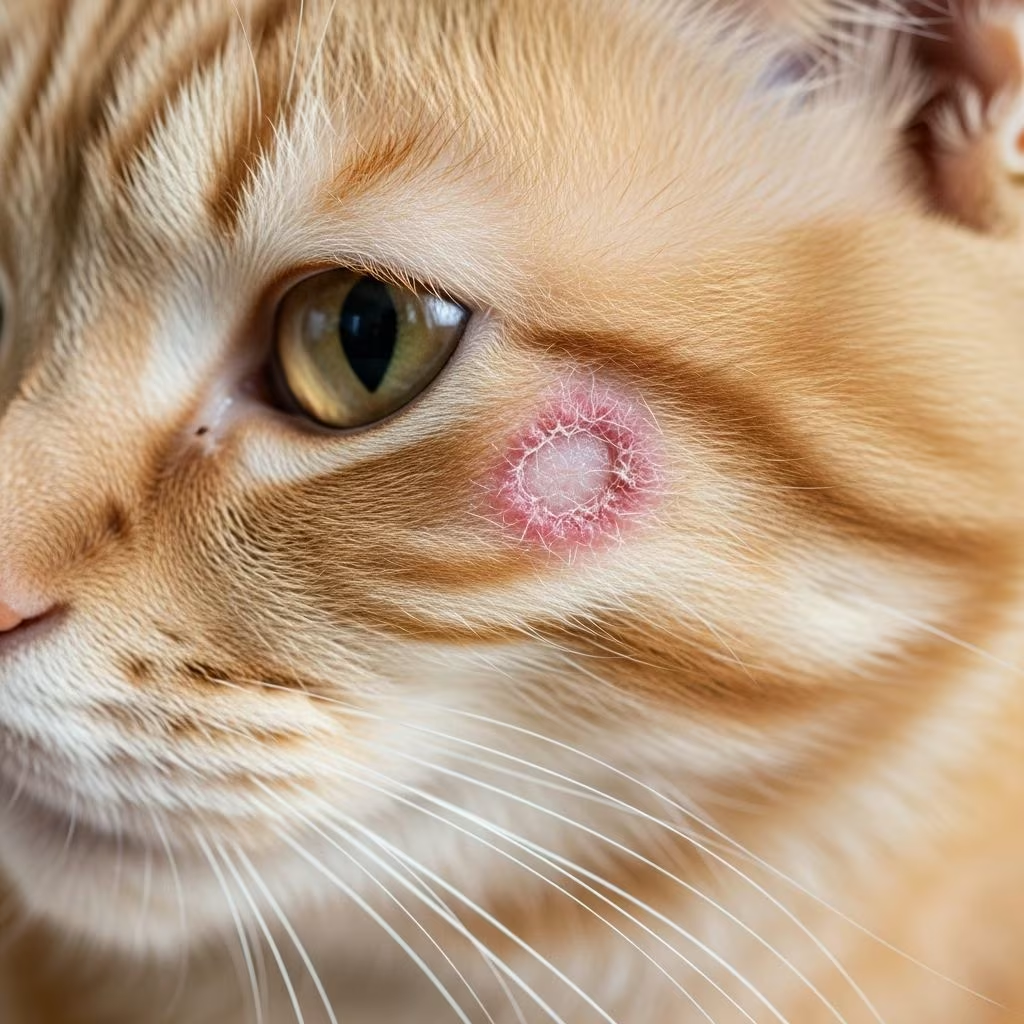
Ringworm, a highly contagious fungal infection affecting a cat’s skin, hair, and nails, requires prompt veterinary attention to prevent spread to other pets and humans. Despite its name, this condition is caused by dermatophytes, not worms, and can appear without the classic circular patches seen in people.
Understanding the Nature of Feline Ringworm
This infection thrives on keratin in skin, fur, and claws, leading to dermatophytosis in veterinary terms. Common culprits include Microsporum canis, which accounts for most cases in cats, along with Trichophyton and Microsporum gypseum species. Young kittens, long-haired breeds, and immunocompromised cats face higher risks due to immature or weakened defenses.
The fungus spreads via spores lingering in environments for up to 18 months, making contaminated spaces a persistent threat. Cats often pick it up from infected animals, soil, or fomites like grooming tools. Unlike bacterial issues, ringworm doesn’t always cause intense itching, allowing silent transmission.
Recognizing Early Warning Signs
Symptoms vary widely; some cats show no outward signs yet shed infectious spores. When visible, look for:
- Circular or irregular bald patches with broken hairs
- Red, inflamed, scaly, or crusty skin
- Dull, brittle, or easily plucked fur
- Mild alopecia on face, ears, limbs, or tail
- Rarely, thickened or ridged nails
These mimic allergies, mites, or bacterial infections, underscoring the need for professional diagnosis. Asymptomatic carriers pose risks to multi-pet homes or vulnerable owners like children and elderly.
Diagnostic Approaches for Confirmation
Veterinarians employ multiple tests for accuracy:
- Wood’s Lamp: UV light reveals apple-green fluorescence in 50-90% of M. canis cases, a quick screening tool.
- Fungal Culture: Gold standard; hair samples grow fungi in 7-21 days to identify species.
- Microscopy: Examines hairs for spores or hyphae.
- PCR Testing: Rapid DNA detection for quick results.
Early confirmation prevents mis-treatment and curbs outbreaks. Avoid self-diagnosis, as similar conditions demand different therapies.
Comprehensive Treatment Strategies
Successful management combines medical intervention, isolation, and decontamination. Treatment spans 4-8 weeks minimum, guided by follow-up cultures.
Topical Therapies
Direct applications target lesions:
- Lime sulfur dips (twice weekly): Kills spores, safe for kittens, though odorous and discoloring light fur.
- Miconazole/chlorhexidine shampoos: Bathe 2-3 times weekly.
- Enilconazole rinses: Effective for multi-cat settings.
- Clipping fur around lesions: Reduces spore load; full-body for severe cases.
Systemic Antifungals
Oral drugs eradicate deep infections:
| Medication | Typical Use | Duration |
|---|---|---|
| Itraconazole (Itrafungol) | First-line for most cases | 4-6 weeks minimum |
| Terbinafine (Lamisil) | Alternative, especially resistant strains | Similar to above |
| Fluconazole | For those intolerant to others | Vet-determined |
Monitor liver function in prolonged courses. Never use human meds without vet approval.
Combine systemic and topical for best outcomes, especially in catteries.
Environmental Decontamination Essentials
Spores persist on surfaces, demanding rigorous cleaning:
- Vacuum daily: Floors, furniture, curtains; dispose bags immediately.
- Wet-mop with disinfectant: Bleach (1:10 dilution), accelerated hydrogen peroxide, or enilconazole.
- Launder fabrics: Hot water, dry on high for bedding, toys.
- Discard irredeemables: Porous items like scratched furniture.
- Clean tools: Brushes, carriers with bleach or heat.
Repeat weekly until cultures clear. Multi-pet homes test/treat all contacts.
Isolation Protocols During Recovery
Quarantine infected cats in a single room with disposable litter, food bowls. Wear gloves, wash hands post-handling, launder clothes. Limit exposure to high-risk humans. Expect 2-3 weeks minimum isolation, longer for severe cases.
Prevention Tactics for Long-Term Protection
Minimize exposure:
- Keep cats indoors, away from strays/wildlife.
- Maintain flea control to prevent skin breaks.
- Quarantine new cats 2-4 weeks; vet-check first.
- Regular grooming, vacuuming to remove potential spores.
- Annual vet exams catch subclinical cases.
No vaccines exist; hygiene is key.
Risks to Humans and Other Animals
Zoophilic strains infect people, causing itchy rings, especially immunocompromised or with skin abrasions. Dogs, rabbits, livestock susceptible too. Prompt treatment halts zoonotic spread.
FAQs on Ringworm in Cats
Can ringworm resolve without treatment?
Immune systems may clear mild cases in months, but risks spread and complications. Vet treatment accelerates recovery safely.
Are home remedies effective?
No; oils, vinegars lack potency against dermatophytes. Vet-prescribed antifungals essential.
How long is a cat contagious?
Until two negative cultures 1-3 weeks apart; typically 3-6 weeks with treatment.
Does clipping all fur help?
Yes for generalized infections; aids topical access, reduces spores. Use vet-recommended clippers.
Can kittens safely receive treatment?
Yes; lime dips and certain orals safe from young age under supervision.
Monitoring Progress and Follow-Up
Schedule re-checks every 2-4 weeks with cultures. Premature stopping risks recurrence. Full resolution: no lesions, negative cultures, healthy coat regrowth.
References
- How to prevent and treat ringworm in cats — Vetster. 2023. https://vetster.com/en/wellness/how-to-prevent-and-treat-ringworm-in-cats
- Ringworm in Cats — PetMD. 2024. https://www.petmd.com/cat/conditions/skin/ringworm-in-cats
- Cat Ringworm: Signs, Spread, Diagnosis, Treatment — Best Friends Animal Society. 2023. https://bestfriends.org/pet-care-resources/cat-ringworm-signs-spread-diagnosis-treatment
- GUIDELINE for Dermatophytosis, ringworm in cats — ABCD cats & vets. 2022. https://www.abcdcatsvets.org/guideline-for-dermatophytosis-ringworm-in-cats/
- Ringworm in Cats — VCA Animal Hospitals. 2024. https://vcahospitals.com/know-your-pet/ringworm-in-cats
- Ringworm – signs, diagnosis and treatment — Vetwest Animal Hospitals. 2023. https://www.vetwest.com.au/pet-library/ringworm-signs-diagnosis-and-treatment/
- Ringworm in cats — Blue Cross. 2024. https://www.bluecross.org.uk/advice/cat/health-and-injuries/ringworm-in-cats



