

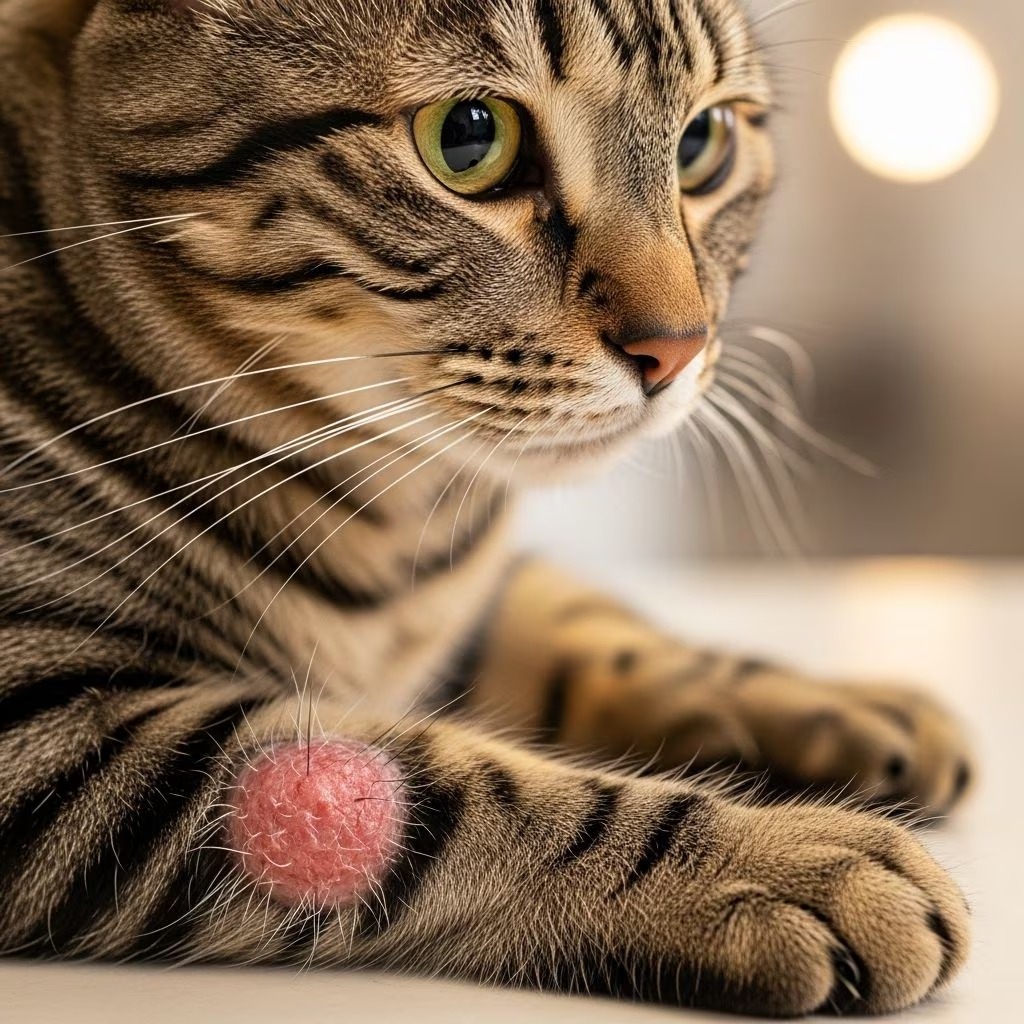
Ringworm, despite its name, is not caused by a worm but by dermatophyte fungi, primarily Microsporum canis, which infect the skin, hair, and nails of cats. This highly contagious condition affects cats worldwide, particularly young kittens, seniors, and those with compromised immunity, leading to uncomfortable skin changes and potential spread to humans and other animals.
Understanding the Nature of Feline Ringworm
Feline ringworm, or dermatophytosis, represents one of the most prevalent infectious skin diseases in cats. The fungi thrive in warm, moist environments and produce hardy spores that can survive in the surroundings for up to 18 months, facilitating easy transmission. Unlike bacterial infections, ringworm invades keratinized tissues, breaking down hair shafts and causing characteristic lesions.
Adult cats with robust immune systems often resist overt infection, but carriers can shed spores asymptomatically, posing risks in multi-pet homes or shelters. Zoonotic potential makes prompt management essential, as humans—especially children and immunocompromised individuals—can contract it through contact.
Recognizing Early Signs of Infection
Symptoms in cats vary widely, from subtle to dramatic, complicating self-diagnosis. Common indicators include:
- Circular patches of alopecia with broken, stubbly hairs around the edges
- Scaly, crusty, or inflamed skin, often with a reddened margin
- Hair thinning or loss on the head, ears, paws, or tail—the most frequent sites
- Excessive grooming, scratching, or dandruff-like flaking
- Nail bed involvement, leading to brittle, deformed claws
- In severe cases, widespread bumps or open sores (miliary dermatitis)
Lesions may start small (under 1 cm) but expand to 4-6 cm if untreated, particularly on the face and limbs in kittens. Some cats show no visible signs yet test positive, underscoring the need for diagnostic testing over symptom reliance.
Diagnostic Approaches for Accurate Confirmation
Veterinarians employ multiple tools to confirm ringworm, as clinical appearance alone can mimic allergies or mites. Key methods include:
- Wood’s Lamp Examination: Ultraviolet light reveals fluorescent glow in about 50-70% of M. canis cases, useful for initial screening but not definitive.
- Fungal Culture (DTM): Gold standard; hair samples cultured on dermatophyte test medium grow in 7-14 days, with color change indicating fungi. Brush entire coat for quantitative assessment.
- Microscopy and Biopsy: Direct exam of hairs or skin scrapes for spores; rarely needed but confirmatory.
In shelters, weekly cultures monitor treatment progress: untreated growth appears in ≤10 days; treated cats require 14-day incubation for negatives. Two consecutive negatives (14 days and 7 days) clear cats for release post-final topical treatment.
Effective Treatment Strategies
Successful resolution demands a multimodal approach: systemic antifungals, topical therapies, and rigorous environmental decontamination. Single-modality treatment prolongs contagion and risks recurrence.
| Treatment Type | Examples | Frequency | Notes |
|---|---|---|---|
| Oral Antifungals | Itraconazole, Terbinafine, Fluconazole | Daily, 4-8 weeks | Vet-prescribed; monitor liver function in long courses |
| Topical Dips/Shampoos | Lime sulfur (1:32-1:40 dilution), Enilconazole (Imaverol), Miconazole shampoo | Twice weekly | Full-body application; lime sulfur preferred for residual effect despite odor |
| Clipping/Shaving | N/A | Once, if widespread | Reduces spore load; disinfect clippers |
For lesions, apply ointments like miconazole to affected areas. Kittens over 8 weeks tolerate oral meds; weaned ones receive combined therapy. Treatment duration: 2-4 weeks minimum, guided by negative cultures.
Environmental Control and Decontamination Protocols
Spore persistence drives reinfection; daily cleaning is non-negotiable. Protocols include:
- Daily: Vacuum floors, vents, radiators; spot-clean with 1:50 Anigene or accelerated hydrogen peroxide. Dispose of vacuum bags as infectious waste.
- Twice Weekly: Deep clean with bleach (1:10) or accelerated peroxides on non-porous surfaces; discard porous items like bedding.
- Isolation: Confine infected cats to easy-clean areas (bathroom, crate); launder fabrics in hot water with bleach.
In fosters, bathroom setups simplify compliance. Spores survive 18+ months on fabrics, so thoroughness prevents outbreaks.
Handling Ringworm in Multi-Pet Households
One infected cat endangers all. Test and isolate suspects; asymptomatics may carry spores. Separate by room, use separate litter/tools. Treat positives aggressively while monitoring others via cultures. Human precautions: Wash hands, avoid face-touching, launder clothes. Shelters batch-treat via protocols like Best Friends’ playbook.
Prevention Tactics for Long-Term Protection
Proactive steps minimize risk:
- Regular vet check-ups for early detection
- Grooming tool hygiene: Clean/disinfect brushes weekly
- Quarantine new cats 2-3 weeks with cultures
- Boost immunity via balanced diet, stress reduction
- Avoid high-density exposures like unregulated catteries
In shelters, routine screening prevents epidemics. No vaccine exists widely, so hygiene reigns.
Contagion Duration and Recovery Expectations
Treated aggressively, cats cease shedding in 3 weeks; untreated, months. Full clearance: Two negative cultures post-treatment. Environment needs 1-2 months decontamination. Most recover fully without scarring if addressed promptly.
Frequently Asked Questions (FAQs)
Is ringworm in cats contagious to humans?
Yes, it’s zoonotic; handle with care, especially vulnerable individuals.
How long does ringworm treatment last in cats?
Typically 4-8 weeks, confirmed by cultures.
Can ringworm resolve without treatment?
Rarely in healthy adults; immunocompromised cats risk chronicity.
What’s the best home remedy for cat ringworm?
None reliable; vet intervention essential. Avoid over-the-counter without guidance.
Does shaving help ringworm in cats?
Yes, for widespread cases, but pair with meds and cleaning.
References
- Cats Protection’s guide to ringworm procedures — Cats Protection. Accessed 2026. https://www.cats.org.uk/media/10808/ringworm-procedure.pdf
- Ringworm Management Playbook — Best Friends Animal Society. Accessed 2026. https://bestfriends.org/network/resources-tools/ringworm-management-playbook
- Ringworm in cats: A comprehensive guide — Purely Pets Insurance. 2024-02-09. https://www.purelypetsinsurance.co.uk/blogs/ringworm-in-cats/
- Ringworm (Dermatophytosis) in Cats — Merck Veterinary Manual. Accessed 2026. https://www.merckvetmanual.com/cat-owners/skin-disorders-of-cats/ringworm-dermatophytosis-in-cats
- GUIDELINE for Dermatophytosis, ringworm in cats — ABCD cats & vets. Accessed 2026. https://www.abcdcatsvets.org/guideline-for-dermatophytosis-ringworm-in-cats/
- A Foster Parent’s Guide to Ringworm — Philly PAWS. 2019-07-09. https://phillypaws.org/wp-content/uploads/Foster-Parents-Guidelines-for-Treating-Ringworm-9-July-2019.pdf
- Ringworm and Pets — California Department of Public Health (.gov). Accessed 2026. https://www.cdph.ca.gov/Programs/CID/DCDC/Pages/Ringworm.aspx



