

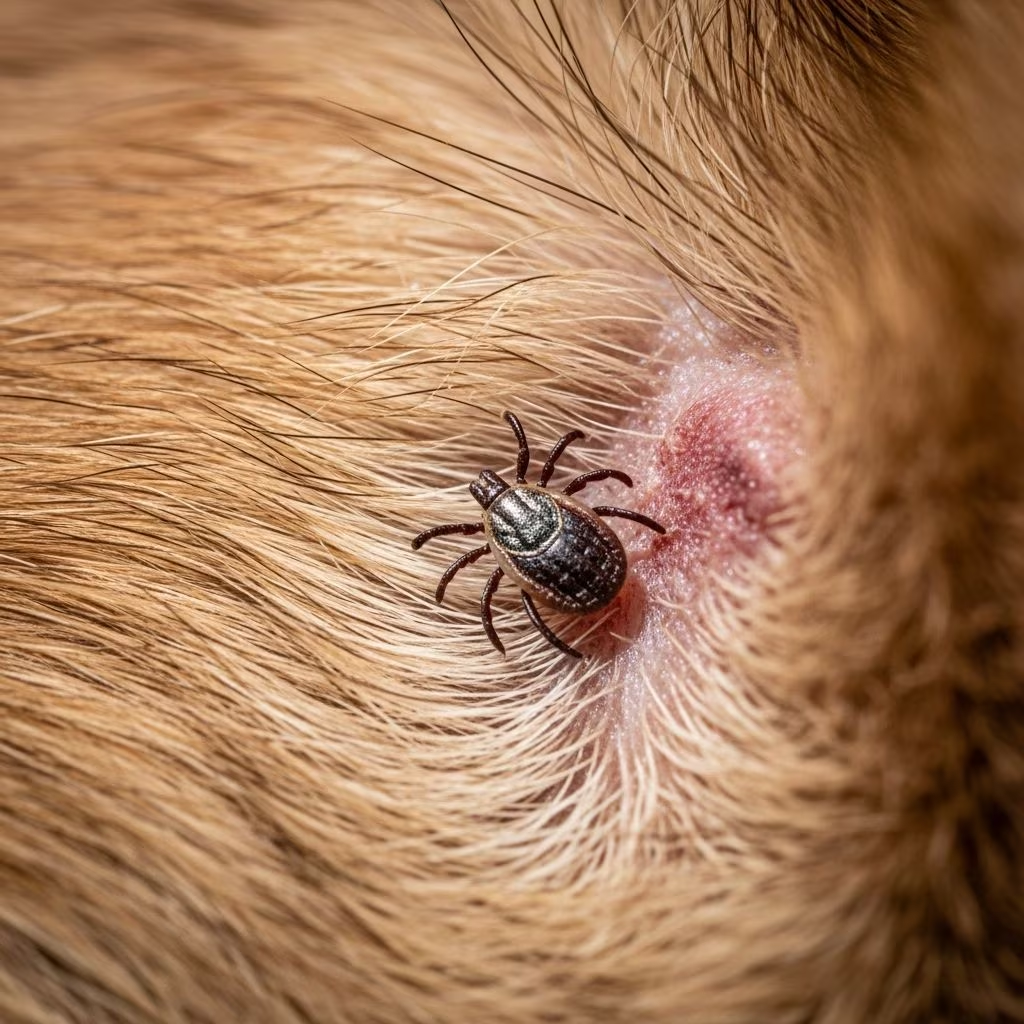
Rickettsial infections represent a serious threat to canine health, primarily transmitted through tick bites. These bacterial diseases, caused by pathogens in the Rickettsia genus, lead to vasculitis and systemic illness in affected dogs. Prompt recognition and intervention are crucial for positive outcomes.
Understanding Rickettsial Pathogens
Rickettsiae are obligate intracellular bacteria that target vascular endothelial cells, triggering widespread inflammation and vascular damage. The most notorious is Rickettsia rickettsii, responsible for Rocky Mountain spotted fever (RMSF), though novel species have emerged in recent years. These microbes multiply within host cells, evading immune detection until significant pathology develops.
In dogs, infection often follows exposure to infected ticks during warmer months. Geographic spread is expanding due to shifting tick populations, increasing risks beyond traditional areas.
Transmission Pathways and Risk Factors
Ticks serve as primary vectors, with species like the American dog tick and brown dog tick implicated in transmission. Dogs acquire the bacteria during feeding by infected arthropods. Unlike some pathogens, rickettsiae do not spread directly between dogs or from pets to humans via casual contact, though shared environments heighten exposure risks.
- Peak transmission occurs in spring and summer when tick activity surges.
- Dogs in endemic regions or those frequenting wooded areas face elevated risks.
- Uncontrolled outdoor access without preventatives amplifies vulnerability.
Recognizing Clinical Manifestations
Symptoms typically emerge 4-7 days post-exposure, starting with high fever (102°F-105°F). Lethargy, anorexia, and thrombocytopenia are common early indicators. Vasculitis leads to petechial hemorrhages on mucous membranes, scleral injection, and occasionally skin rashes.
Severe cases progress to polyarthritis, neurological deficits, or acral gangrene due to endothelial damage and disseminated intravascular coagulation (DIC). Novel rickettsial strains may present with recurrent fever, anemia, and joint inflammation, as seen in documented canine cases.
| Symptom | Frequency | Associated Pathology |
|---|---|---|
| Fever | Common (nearly all cases) | Systemic response |
| Thrombocytopenia | High | Vasculitis-induced |
| Petechiae/Ecchymoses | Moderate | Endothelial damage |
| Polyarthritis | Variable | Inflammatory spillover |
| Neurological signs | Less common | Meningitis/encephalitis |
Diagnostic Approaches
Diagnosis combines clinical suspicion with laboratory confirmation. Serological tests like indirect fluorescent antibody (IFA) and ELISA detect antibodies but cannot differentiate active from past infections. Acute samples may yield false negatives due to delayed seroconversion (3-5 weeks post-exposure).
Polymerase chain reaction (PCR) offers superior sensitivity for acute phases, targeting rickettsial DNA in blood during peak bacteremia. Paired sera showing four-fold titer rises confirm exposure. Negative PCR warrants repeat testing amid fluctuating pathogen loads.
- IFA/ELISA: Best for convalescent monitoring.
- PCR: Ideal for early, ill patients.
- Cytology: Reveals neutrophilic inflammation in joints.
Microscopy rarely detects organisms due to low circulating numbers, emphasizing molecular tools.
Treatment Protocols
Doxycycline remains the cornerstone therapy at 10 mg/kg once daily for 28 days, effective against all known canine rickettsioses. Initiation should not await confirmatory tests in severe cases to avert fatality.
Supportive care includes IV fluids for hypovolemia, transfusions for profound anemia/thrombocytopenia, and short-term corticosteroids (0.5-1 mg/kg/day for ≤7 days) for vasculitis mitigation. Monitoring resolves most abnormalities within weeks.
In complex cases with immune-mediated components, adjuncts like prednisone or cyclosporine aid recovery, though recrudescence risks persist.
Zoonotic Potential and Public Health
While primarily canine pathogens, some rickettsiae pose zoonotic risks. Humans contracting RMSF exhibit similar vasculitis, underscoring dogs as sentinels for emerging threats. Novel species cross-reacting with R. rickettsii may evade detection, broadening prevalence.
Preventive Strategies for Pet Owners
Year-round tick control is paramount. Topical acaricides (e.g., those containing fipronil or permethrin) and oral isoxazolines reduce infestation risks.
- Daily tick checks after outdoor activities.
- Avoidance of tick-heavy habitats.
- Vaccination not available; rely on preventatives.
Environmental management, like yard treatments, further minimizes exposure.
Prognosis and Long-Term Management
With timely doxycycline, prognosis excels; most dogs recover fully. Persistent antibody titers may linger lifelong, but negative post-treatment PCR signals clearance. Relapses occur rarely, often linked to immunosuppression.
Follow-up entails serial CBCs and clinical reassessments to detect complications like nephrotic syndrome.
FAQs
What are the first signs of rickettsial infection in dogs?
Fever, lethargy, and reduced platelets typically appear first, often after tick exposure.
Is doxycycline safe for all dogs?
Yes, at recommended doses; administer with food to avoid esophagitis.
Can my dog transmit rickettsia to me?
No direct transmission; risk stems from shared tick exposure.
How long does treatment last?
Minimum 28 days to prevent relapse.
Are there vaccines for RMSF?
No; prevention hinges on tick control.
Emerging Concerns and Research Directions
Recent reports highlight novel Rickettsia spp. in U.S. dogs, exhibiting RMSF-like illness across states. These pathogens, PCR-detectable yet serologically cross-reactive, suggest underdiagnosis. Ongoing studies probe vectors, reservoirs, and prevalence to inform surveillance.
Climate-driven tick range expansions necessitate heightened vigilance. Dogs’ roles as early detectors emphasize integrated human-animal health approaches.
References
- Novel Rickettsia Species Infecting Dogs, United States — CDC Emerging Infectious Diseases (PMC). 2020-11-01. https://pmc.ncbi.nlm.nih.gov/articles/PMC7706976/
- Tick-borne Rickettsial Infections of Dogs — Today’s Veterinary Practice. 2023-01-15. https://todaysveterinarypractice.com/parasitology/tick-borne-rickettsial-infections-of-dogs/
- Rocky Mountain Spotted Fever in Dogs — Merck Veterinary Manual. 2024-05-20. https://www.merckvetmanual.com/infectious-diseases/rickettsial-diseases-in-dogs/rocky-mountain-spotted-fever-in-dogs
- Rickettsial Diseases — CDC Yellow Book. 2024-07-01. https://www.cdc.gov/yellow-book/hcp/travel-associated-infections-diseases/rickettsial-diseases.html
- Rocky Mountain Spotted Fever in Dogs — VCA Animal Hospitals. 2023-11-10. https://vcahospitals.com/know-your-pet/rocky-mountain-spotted-fever-in-dogs



