

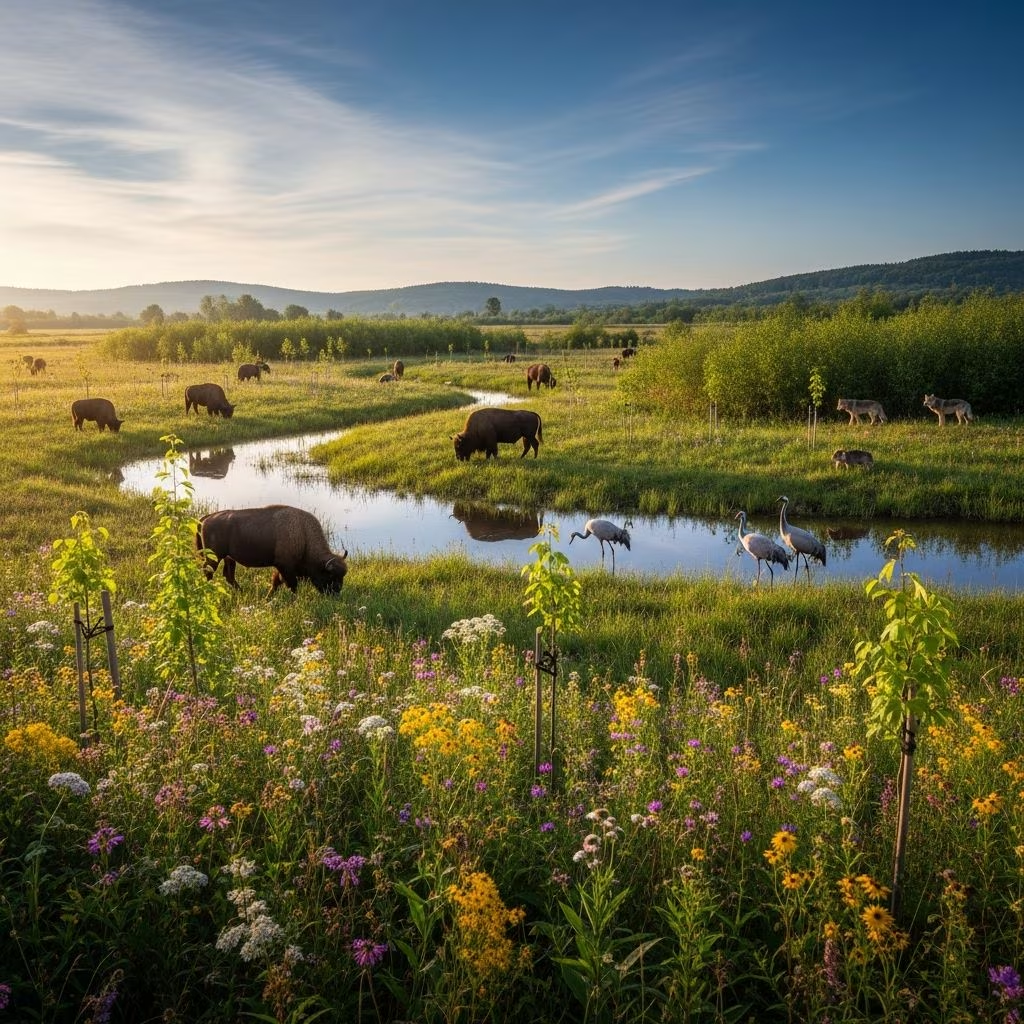
Rewilding represents a paradigm shift in conservation, emphasizing the restoration of self-regulating ecosystems through natural processes and key species reintroductions. This approach aims to create resilient landscapes capable of sustaining biodiversity without ongoing human intervention.
Understanding the Foundations of Rewilding
At its core, rewilding seeks to rebuild ecosystems disrupted by human activity by reinstating ecological dynamics that allow nature to self-sustain. Unlike static preservation efforts, it embraces dynamic change, including predation, herbivory, and natural disturbances like fires and floods.
Key elements include protecting expansive wilderness cores, establishing connectivity corridors, and prioritizing apex predators or keystone species that regulate entire food webs. This ‘4 Cs’ framework—Cores, Corridors, Carnivores, and Coexistence—guides comprehensive strategies to ensure long-term viability.
- Cores: Large protected areas serving as biodiversity reservoirs.
- Corridors: Linkages enabling species movement and genetic exchange.
- Carnivores/Keystone Species: Top predators or influencers that maintain balance.
- Coexistence: Integrating human activities harmoniously.
Core Principles Driving Rewilding Success
Rewilding adheres to established principles outlined by global experts, focusing on nature-led restoration. It prioritizes trophic interactions where wildlife drives ecosystem health through predation and competition.
Self-sustainability is paramount: rewilded areas should require minimal management, allowing processes like nutrient cycling, seed dispersal, and succession to operate freely. This demands ecological references from pre-disturbance states, acknowledging ecosystems’ constant evolution via allogenic (e.g., climate shifts) and autogenic (e.g., species interactions) factors.
| Principle | Description | Ecological Impact |
|---|---|---|
| Nature-Led Processes | Relies on biotic interactions over human control | Self-regulating populations and resilience |
| Full Food-Web Restoration | Reinstates all trophic levels | Balanced biodiversity and dynamics |
| Dynamic Change | Embraces temporal shifts | Adaptation to climate and disturbances |
| Connectivity | Facilitates movement and gene flow | Prevents fragmentation and inbreeding |
Rewilding Versus Traditional Conservation
Traditional conservation often maintains static habitats, protecting them from change to preserve current states. Rewilding, conversely, actively transitions degraded lands toward natural functionality, sometimes introducing missing elements.
Passive rewilding occurs through land abandonment, letting succession unfold naturally. Active rewilding involves deliberate actions like species translocation to restore lost processes, such as top-down trophic control where predators shape vegetation and prey dynamics.
- Conservation: Prevents decline, focuses on protection.
- Rewilding: Reverses degradation, promotes recovery and evolution.
This distinction highlights rewilding’s proactive stance, particularly in addressing extinction drivers like habitat loss and invasive species.
Real-World Impacts: Trophic Cascades and Ecosystem Renewal
Reintroducing keystone species triggers trophic cascades, profoundly altering ecosystems positively. Wolves in Yellowstone exemplify this: their return controlled elk populations, reducing overgrazing, reviving vegetation, and benefiting beavers, birds, and rivers.
Such cascades restore hydrological functions, soil health, and carbon sequestration, enhancing climate resilience. Rewilding mitigates biodiversity crises by fostering complexity, where diverse interactions buffer against perturbations.
Climate Resilience Through Rewilding
Rewilding bolsters ecosystems against climate extremes like droughts and floods. Restored landscapes with deep-rooted plants and healthy soils improve water retention and carbon storage.
By reinstating natural disturbances, rewilding builds adaptive capacity. For instance, large herbivores prevent fuel buildup, reducing wildfire intensity, while predators maintain balanced herbivory for resilient grasslands.
Global Case Studies in Rewilding
Yellowstone National Park, USA
The 1995 wolf reintroduction transformed Yellowstone, illustrating carnivore-driven recovery. Elk declines allowed willow and aspen regeneration, stabilizing riverbanks and boosting biodiversity.
European Rewilding Initiatives
Projects in Europe reintroduce bison, lynx, and beavers across connected landscapes, restoring wetlands and forests. Rewilding Europe spans millions of hectares, proving scalability.
Oceania and Beyond
In Australia, efforts focus on native predator reintroductions and invasive removal to revive grasslands. Pleistocene rewilding proxies, like introducing large grazers, test ancient dynamics in modern contexts.
Challenges and Strategies for Implementation
Rewilding faces hurdles like human-wildlife conflict, policy barriers, and funding. Coexistence models, such as eco-tourism and sustainable agriculture, mitigate risks.
Effective strategies include stakeholder engagement, scientific monitoring, and adaptive management. Legal frameworks, like U.S. conservation policies, increasingly incorporate rewilding.
- Address conflicts via non-lethal deterrents and compensation.
- Build corridors across private lands through incentives.
- Leverage technology for tracking and impact assessment.
The Human Dimension in Rewilding
Rewilding redefines human-nature bonds, promoting coexistence over domination. Cultural histories inform site-specific approaches, ensuring economic benefits like jobs in eco-guiding.
It fosters psychological well-being through wild connections, countering ‘extinction of experience.’
Future Prospects for Rewilding
As biodiversity declines accelerate, rewilding offers scalable solutions. Integrating it into policy—via protected areas expansion and restoration targets—could avert mass extinctions.
Innovations like proxy species for extinct megafauna expand possibilities, while global networks amplify impact.
Frequently Asked Questions (FAQs)
What is the main goal of rewilding?
The primary aim is restoring self-sustaining ecosystems with full trophic structures to combat biodiversity loss and enhance resilience.
How does rewilding differ from reforestation?
Rewilding holistically restores processes and species diversity, not just tree planting, allowing natural vegetation succession.
Is rewilding safe for nearby communities?
With proper planning, yes—coexistence strategies minimize conflicts while maximizing benefits like natural hazard buffering.
Can rewilding help with climate change?
Absolutely; it sequesters carbon, stabilizes soils, and builds adaptive landscapes against extreme weather.
Who can participate in rewilding efforts?
Landowners, governments, NGOs, and communities—through advocacy, volunteering, or policy support.
References
- Rewilding as a New Tool for U.S. Conservation Policy — Nicholas School of the Environment, Duke University. 2023. https://blogs.nicholas.duke.edu/env212/rewilding-as-a-new-tool-for-u-s-conservation-policy/
- What Is Rewilding? — Rewilding.org. Accessed 2026. https://rewilding.org/what-is-rewilding/
- Rewilding Principles — IUCN. 2022-10. https://iucn.org/sites/default/files/2022-10/principles_of_rewilding_cem_rtg.pdf
- What is rewilding and how is it relevant to climate change? — London School of Economics Grantham Research Institute. 2023. https://www.lse.ac.uk/granthaminstitute/explainers/what-is-rewilding-and-how-is-it-relevant-to-climate-change/
- Rewilding vs. Conservation — Mossy Earth. Accessed 2026. https://www.mossy.earth/rewilding-knowledge/rewilding-vs-conservation
- Rewilding: a requirement for a sustainable future — PMC / NIH. 2023. https://pmc.ncbi.nlm.nih.gov/articles/PMC10623769/
- What is rewilding? — Rewilding Europe. Accessed 2026. https://rewildingeurope.com/what-is-rewilding/



