

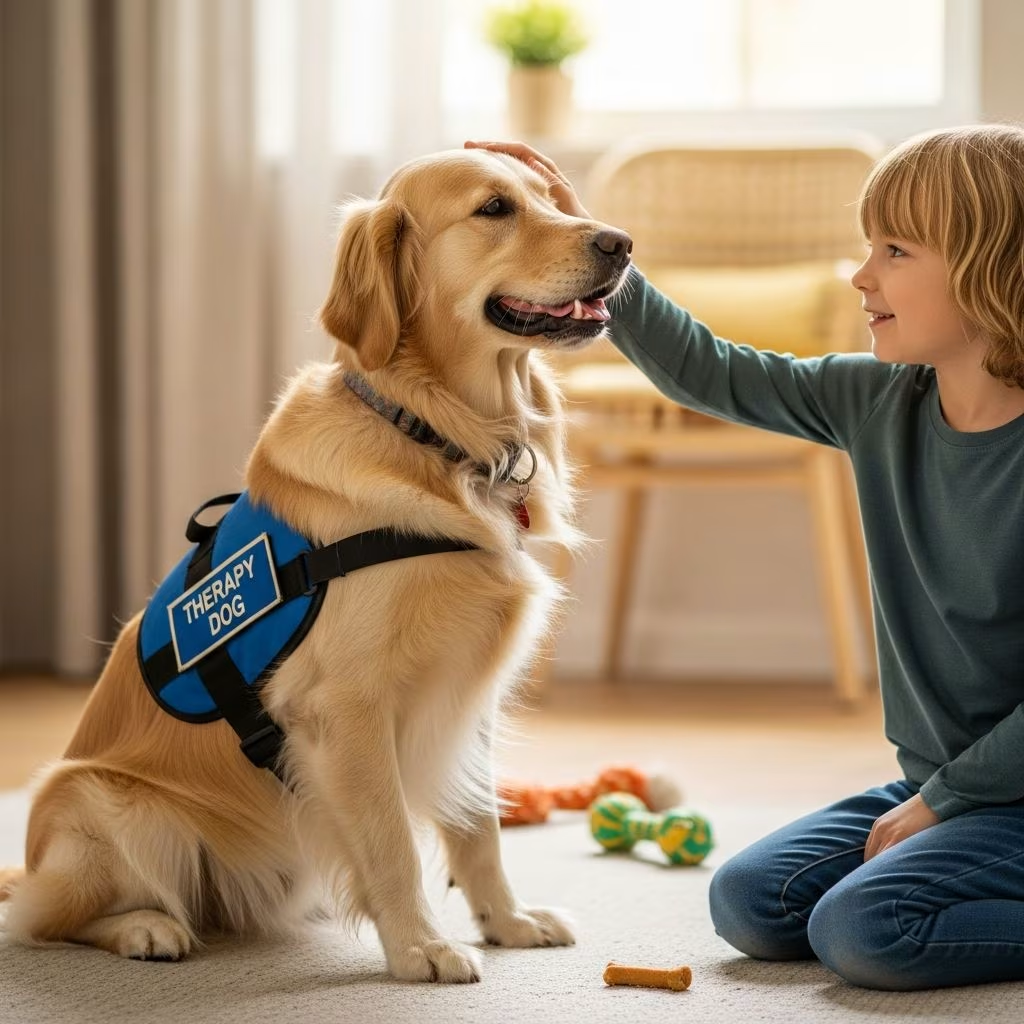
Many dog owners unintentionally hinder their pet’s progress by failing to properly acknowledge outstanding behavior. Instead of letting perfect responses fade into the background, proactive reinforcement ensures continued excellence and strengthens the human-canine bond. This approach, rooted in behavioral science, emphasizes celebrating success to foster enthusiasm for learning.
The Science Behind Rewarding Desired Behaviors
Positive reinforcement operates on operant conditioning principles, where adding a desirable stimulus immediately after a behavior increases its frequency. In dog training, this means providing treats, praise, or play right when your dog performs correctly, making the action more likely to repeat. Unlike punishment, which can create fear or confusion, rewards build confidence and motivation.
Research shows dogs trained with positive methods exhibit lower stress levels and higher obedience rates. For instance, behaviors like sitting on command become reliable because the dog associates them with pleasant outcomes, not avoidance of discomfort.
Common Mistakes That Undermine Good Performance
Owners often overlook flawless executions, assuming the dog ‘should’ comply without fanfare. This neglect can lead to extinction of the behavior, where the dog stops responding as eagerly. Another error is inconsistent responses, where family members vary in their reactions, confusing the pet.
- Inattention to perfection: Failing to mark and reward ideal sits or stays signals that consistency isn’t valued.
- Delayed feedback: Waiting too long after success weakens the link between action and reward.
- Mismatched rewards: Using low-value treats for high-effort behaviors reduces enthusiasm over time.
Building a Foundation with Consistent Rewards
Start training in low-distraction environments to solidify basics. Use a marker like a clicker or enthusiastic ‘yes!’ followed by a high-value reward. Sessions should last 5-10 minutes, ending on a high note to keep your dog eager for more.
Gradually introduce variability: reward every time initially, then intermittently to mimic real-life unpredictability. This schedule maintains engagement without constant treats.
| Training Stage | Reward Frequency | Example |
|---|---|---|
| Beginner | 100% (every success) | Treat for every ‘sit’ |
| Intermediate | 75% (most successes) | Praise + occasional treat |
| Advanced | Variable (random) | Jackpot for perfect recall |
Choosing the Right Rewards for Your Dog
Not all dogs value the same incentives. Food-motivated pups thrive on small, soft treats, while others prefer toys or affection. Observe what elicits the strongest response—tail wags, focused attention—and use it strategically.
Variety prevents boredom: rotate between verbal praise, petting, play, and edibles. High-value ‘jackpot’ rewards—extra special treats—for exceptional performance reinforce peak behavior.
Addressing Unwanted Behaviors Without Punishment
Instead of scolding, redirect with a command for a rewarded alternative. If jumping occurs, cue ‘sit’ and treat compliance. Ignoring demands while rewarding calm waiting teaches boundaries positively.
This method avoids shutdown, where fearful dogs become apathetic. Positive focus promotes problem-solving, as dogs experiment to earn rewards rather than freeze in anticipation of correction.
Real-World Applications: Everyday Scenarios
House Training Success
When your dog eliminates outside, immediately praise and treat. This pairs outdoor pottying with positivity, reducing accidents indoors.
Leash Walking Mastery
Reward loose-leash moments with pauses for sniffing or treats. Ignore pulling by stopping movement until the dog offers attention, then proceed with praise.
Recall in Distraction
Practice in safe areas: call your dog, reward return with play or food. Gradually add challenges like other dogs nearby to build reliability.
Family Involvement for Unified Training
Everyone must align on cues and rewards to avoid mixed signals. Hold a household meeting to agree on commands like ‘sit’ or ‘leave it,’ and demonstrate proper technique.
Children can participate with supervision, using praise over treats to teach responsibility. Consistency across the board accelerates learning and prevents frustration.
Overcoming Plateaus in Training Progress
If behaviors stall, reassess: increase reward value, shorten sessions, or return to basics. Track sessions in a journal to monitor improvements objectively.
Incorporate fun elements like agility games, where rewards follow successful obstacle navigation, reigniting motivation.
Long-Term Benefits of Reward-Focused Training
Dogs trained positively develop resilience, eagerly tackling new challenges. The bond deepens as owners become predictors of good things, not threats. Studies confirm reduced aggression and better adaptability in varied environments.
FAQs
What if my dog ignores rewards?
Ensure the reward is high-value and delivered instantly. Hunger boosts food appeal; test toys if treats fail.
Can I phase out treats entirely?
Yes, transition to life rewards like walks or play, using treats intermittently to maintain behavior.
Is positive training suitable for aggressive dogs?
Absolutely, but consult professionals. It reduces fear triggers, promoting calmer responses.
How long until results show?
Basics form in days with consistency; complex skills take weeks. Patience yields durable habits.
What about puppies vs. adults?
Both benefit equally. Puppies learn quickly; adults leverage experience for faster mastery.
Advanced Techniques for Expert Trainers
Shaping breaks complex behaviors into steps, rewarding approximations toward the goal. Capturing spontaneous good acts—like lying calmly—with immediate markers solidifies them.
Chain behaviors: reward the final step first (backwards chaining), then earlier ones, for sequences like ‘sit-stay-come.’
References
- The Power of Positive Reinforcement: 5 Effective Dog Training Tips — 3 Dog Ranch. 2023-05-15. https://www.3dogranchmt.com/post/positive-reinforcement-tips
- Puppy 101: Positive Reinforcement Dog Training — Small Door Veterinary. 2024-02-10. https://www.smalldoorvet.com/learning-center/puppies-kittens/positive-reinforcement-training
- How To Train a Dog With Positive Reinforcement — PetMD (written by Erika Lessa, CBST, CDBT, CDBC, CPDT-KA). 2023-11-20. https://www.petmd.com/dog/behavior/how-to-train-a-dog-with-positive-reinforcement
- Positive Reinforcement Dog Training: Understanding Operant Conditioning — American Kennel Club (AKC). 2024-01-05. https://www.akc.org/expert-advice/training/operant-conditioning-positive-reinforcement-dog-training/
- The Power of Positive Reinforcement: Training Your Pet with Kindness — WVC Vet. 2023-08-12. https://www.wvcvet.com/blog/the-power-of-positive-reinforcement-training-your-pet-with-kindness/



