

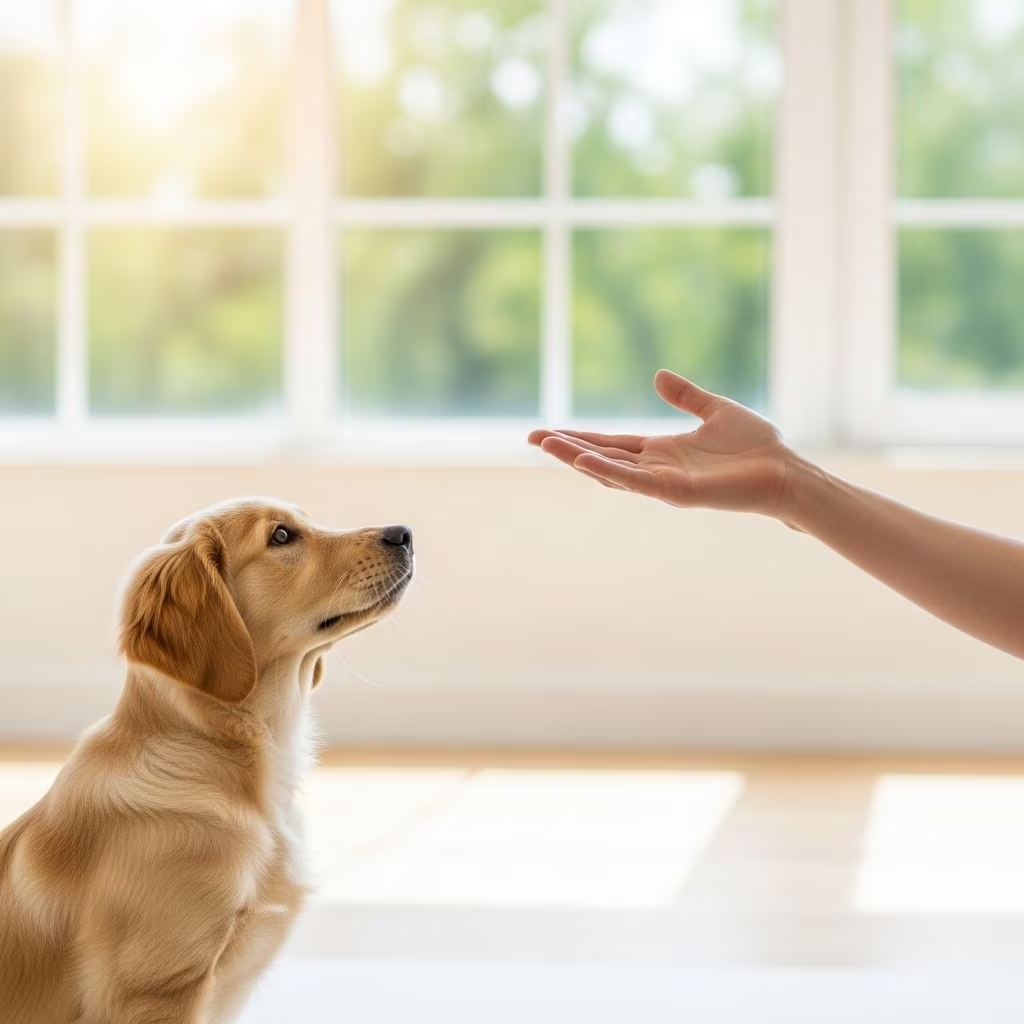
Positive reinforcement training builds desired behaviors by adding something appealing right after the action occurs, making the dog more likely to repeat it. While treats are common, you can achieve excellent results using non-food rewards like verbal praise, petting, toys, play, or access to fun activities.
Why Skip Treats in Dog Training?
Many dogs thrive without constant food lures, especially those not highly food-motivated or prone to weight gain. Non-treat methods prevent dependency on handouts, encourage natural engagement, and mimic real-world scenarios where food isn’t always available. This approach fosters enthusiasm for learning and deepens the handler-dog bond through mutual enjoyment.
Research shows dogs trained with varied rewards, including life-based ones, develop confidence and reduce fear responses compared to aversive techniques. Positive methods release dopamine in the dog’s brain, reinforcing behaviors neurochemically while prioritizing welfare.
Core Principles of Treat-Free Reinforcement
Success hinges on a few fundamentals, regardless of reward type:
- Timing: Deliver the reward within 1-2 seconds of the behavior to create a clear link.
- Consistency: Everyone in the household must use the same cues and responses to avoid confusion.
- Clarity: Pair simple commands with enthusiastic tones and markers like a clicker or “yes!”
- Variety: Rotate rewards to maintain interest and prevent predictability.
- Short Sessions: Limit to 5-10 minutes, ending on a high note for fun associations.
Powerful Non-Food Reward Options
Identify what motivates your dog uniquely—some love toys, others crave play or affection. Test options to build a reward menu.
| Reward Type | Examples | Best For |
|---|---|---|
| Verbal Praise | “Good dog!” in excited voice | Quick responses like sits |
| Physical Affection | Petting, belly rubs, ear scratches | Affectionate breeds |
| Toys & Games | Tug, fetch with favorite toy | High-energy dogs |
| Life Rewards | Door access, walks, off-leash time | Real-world behaviors |
| Play Interactions | Chase games, wrestling | Building focus |
Life rewards integrate training into daily routines, making obedience practical. For instance, opening the door after a sit teaches reliability without artificial incentives.
Building Basic Commands Without Treats
Teaching “Sit” with Praise and Play
Hold a toy above your dog’s nose, move it back until their bottom drops—then explode with praise and a quick tug game. Repeat in low-distraction areas, fading the lure over sessions. Dogs quickly associate the cue with fun outcomes.
“Stay” Using Freedom as Reward
Start with brief pauses: cue stay, step back one foot, return with petting if held. Gradually increase distance and duration, rewarding with release to play or a short walk. This builds impulse control naturally.
Recall Mastery Through Chase Games
Run backward calling your dog enthusiastically, rewarding arrivals with a toy toss or wrestle. Practice in enclosed spaces, using high-value play to outcompete distractions. Consistency turns recall into a joyful habit.
Advanced Techniques for Engagement
Once basics are solid, layer in complexity with shaping—reward approximations of the goal behavior, refining gradually. For “down,” praise slight head dips, then full lowers, finally settled positions with extended play.
Use a marker like a clicker paired with your primary reward to bridge timing gaps. Charge it first by clicking then immediately playing or praising repeatedly.
Overcoming Common Challenges
Dogs may ignore cues in distracting environments. Solution: Start training in quiet spots, proof by adding mild distractions, and use highest-value rewards like a favorite game there.
If motivation wanes, audit your rewards—switch to what the dog truly values, as they define reinforcement. For food-motivated dogs transitioning off treats, pair non-food rewards with tiny bits initially, then phase out food.
Family consistency prevents mixed signals. Hold a meeting to align on methods, ensuring no one undermines progress with punishment.
Benefits of Treat-Free Positive Training
- Healthier Dogs: Avoids excess calories and picky eating.
- Stronger Bonds: Focuses on interaction over transactions.
- Real-Life Proofing: Behaviors generalize without food prompts.
- Stress Reduction: Builds trust, minimizing anxiety or aggression risks.
- Fun for All: Turns sessions into play, boosting participation.
Sample Weekly Training Plan
| Day | Focus Skill | Reward Mix | Duration |
|---|---|---|---|
| Monday | Sit/Stay | Praise + Petting | 5 min x2 |
| Tuesday | Recall | Toy Toss | 7 min x2 |
| Wednesday | Down | Play Chase | 5 min x3 |
| Thursday | Review All | Life Reward (Walk) | 10 min |
| Friday | Loose Leash | Freedom to Sniff | 8 min |
| Weekend | Fun Proofing | Varied Games | 15 min |
Real-World Applications
Apply to jumping: Ignore unwanted leaps, reward four-on-floor with attention. For leash pulling, stop walking until slack, then proceed with praise—using the walk itself as reinforcement.
In multi-dog homes, train individually first to avoid competition, then group sessions with personal rewards.
FAQs
Can all dogs be trained without treats?
Yes, most respond well to tailored non-food motivators. Assess your dog’s preferences and adjust.
What if my dog loses interest?
Refresh with novel toys or games, ensure proper timing, and train when hungry or energetic.
How long until results show?
Basics in 1-2 weeks with daily practice; advanced skills in 4-6 weeks.
Is a clicker necessary?
No, but it sharpens precision as a secondary reinforcer when paired with rewards.
Does this work for reactive dogs?
Yes, it reduces stress triggers by emphasizing rewards over correction.
Long-Term Success Strategies
Phase to intermittent rewards once proficient, like slot machines, to maintain behaviors. Randomly reinforce in daily life to keep skills sharp. Track progress in a journal to measure improvements objectively.
Enroll in classes with certified positive trainers for guidance. Patience yields confident, eager dogs who view you as a source of joy.
References
- The Power of Positive Reinforcement: 5 Effective Dog Training Tips — 3 Dog Ranch. 2023. https://www.3dogranchmt.com/post/positive-reinforcement-tips
- How To Train a Dog With Positive Reinforcement — PetMD (Erika Lessa, CBST, CDBT, CDBC, CPDT-KA). 2023. https://www.petmd.com/dog/behavior/how-to-train-a-dog-with-positive-reinforcement
- Positive Reinforcement Dog Training: Understanding Operant Conditioning — American Kennel Club (AKC). 2024. https://www.akc.org/expert-advice/training/operant-conditioning-positive-reinforcement-dog-training/
- 6 Dos and Don’ts of Positive Reinforcement Dog Training — Ridgeside K9. 2023. https://ridgesidek9winchester.com/6-dos-and-donts-of-positive-reinforcement-dog-training/
- How to Reward Dogs With Positive Reinforcement Training — Humane World. 2024. https://www.humaneworld.org/en/resources/positive-reinforcement-training
- The Science Behind Positive Reinforcement Dog Training — Gingr App. 2023. https://www.gingrapp.com/blog/the-science-behind-positive-reinforcement-dog-training



