

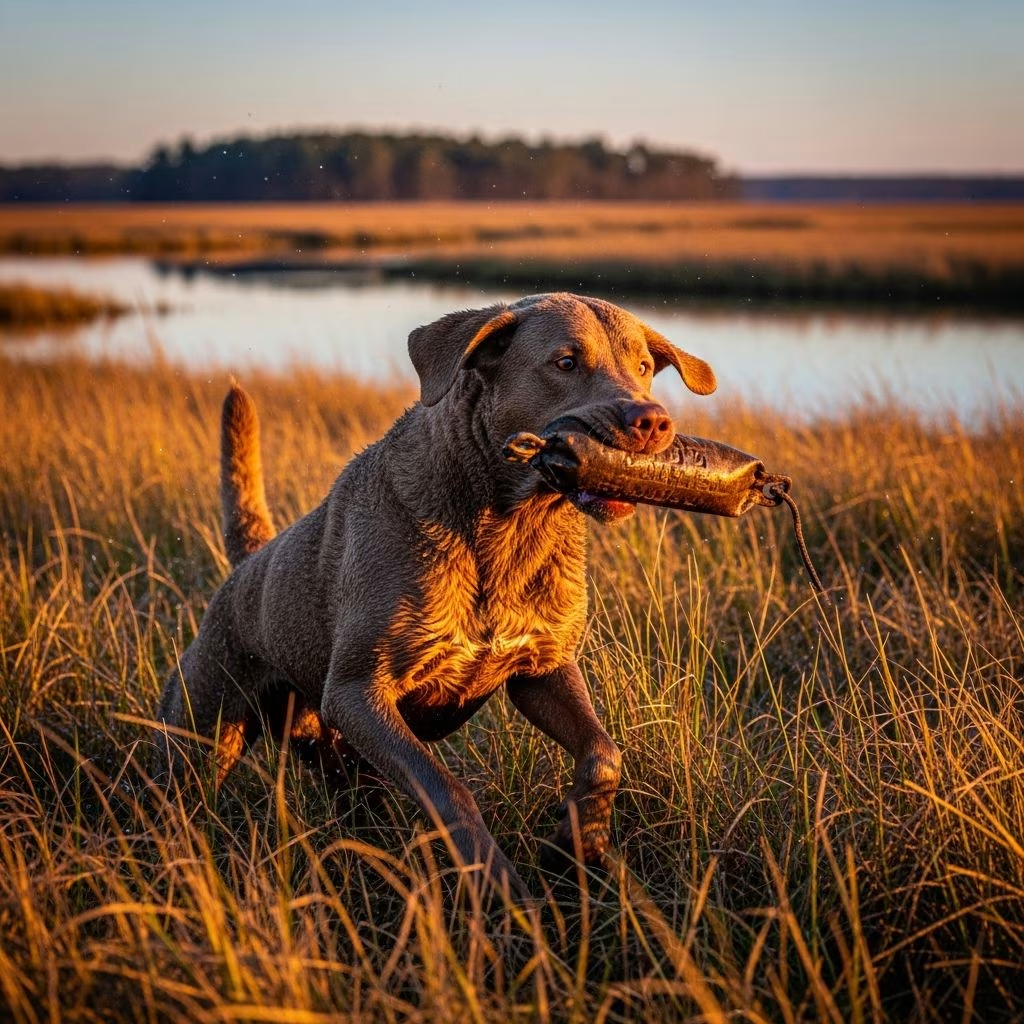
Positive reinforcement training revolutionizes how we prepare hunting dogs by focusing on rewards to encourage desired behaviors, fostering enthusiasm and reliability without relying on punishment or compulsion. This approach suits breeds like retrievers, pointers, and flushers, producing dogs that work joyfully in demanding field conditions.
Why Shift to Positive Methods in Hunting Training
Traditional hunting dog training often incorporates tools like shock collars and prong collars to enforce compliance, particularly for high-drive breeds. However, many owners and professionals observe that these aversive techniques can damage the vital bond between dog and handler, leading to stress or hesitation during hunts. Positive reinforcement, by contrast, leverages treats, toys, praise, or play to increase the frequency of wanted actions, making training sessions enjoyable and building long-term trust.
Experts note that hunting dogs trained positively exhibit greater eagerness and adaptability. For instance, using food or a favorite retrieve as a reward motivates dogs to repeat behaviors like marking falls or steady sits, essential for successful hunts. This method aligns with the LIMA principle—least invasive, minimally aversive—prioritizing welfare while achieving professional results.
Core Principles of Reward-Driven Gun Dog Development
Understanding operant conditioning forms the foundation. Positive reinforcement adds a pleasant stimulus after a behavior, boosting its recurrence. Negative reinforcement removes discomfort, but positives like a tossed bumper create intrinsic motivation.
- Timing is critical: Deliver rewards within seconds of the action to link them clearly.
- Variable scheduling: Mix reward frequency to mimic real hunts, preventing predictability.
- High-value motivators: Tailor rewards to the dog’s preferences, such as tennis balls for play-driven pups or venison treats for food lovers.
Start with basic obedience using these tenets. Teach ‘sit’ by luring with a treat, then mark with a clicker and reward. Progress to ‘stay’ by gradually increasing duration, rewarding calm focus amid distractions like birds or gunfire simulations.
Building Steadiness Without Force
Steadiness—holding position until released—is pivotal for safe, effective hunting. Force methods like ear pinches teach this coercively, but positive trainers achieve it through shaping and rewards. Begin in low-distraction settings: cue ‘sit,’ introduce a pigeon wing on a string, and reward immobility. Gradually add motion and distance, using a clicker for precision marking.
Progress to ‘whoa’ drills, where the dog stops on command during approaches. Reward with retrieves only after perfect holds. This builds patience, crucial for flushers awaiting the shot. UK Gundog Club tests emphasize this progression, proving positives yield steady dogs suitable for family and field.
| Training Stage | Positive Technique | Goal Behavior | Reward Type |
|---|---|---|---|
| Foundation | Lure and mark | Basic sit/stay | Treat or praise |
| Intermediate | Shaping with props | Steady to motion | Short retrieve |
| Advanced | Proofing with live birds | Hold through flush/shot | Full hunt simulation |
Mastering Retrieves with Enthusiasm
Retrieving comes naturally to many gun dogs, but refining it positively ensures reliability. Use bumpers scented with duck essence to spark interest. Reward delivery to hand with high-value items, fading treats as the behavior solidifies. For force-fetch equivalents, shape mouth holds by rewarding gentle grips, avoiding compulsion.
Introduce blinds (unseen falls) by building from marked retrieves. Use hand signals and praise for line accuracy, rewarding with play. Labs and other retrievers thrive here, as repeated bumpers become self-reinforcing, transitioning from food to the joy of the task itself.
Handling and Whistle Training Positively
Precise control in the field demands whistle and collar conditioning without aversives. Pair whistle blasts (one for sit, two for recall) with rewards from the start. For directional casts, use platforms: reward left/right sits with toys, then transfer to open ground.
Collar conditioning skips shocks; instead, vibrate or tone settings signal behaviors, paired with positives. This creates conditioned responses through association, not pain. Practice in varied terrains to proof against wind or cover.
Proofing for Real-World Hunting Scenarios
Lab simulations precede live action. Road traffic drills teach quartering boundaries; reward ignoring distractions. Gunfire introduction starts distant, associating pops with retrieves. Multi-dog hunts require honoring—watching another’s work steadily—shaped via observed rewards.
Seasonal conditioning includes swimming retrieves and cold-weather endurance, always ending on successes to maintain drive. Track progress with journals, noting reward efficacy and behavior chains.
Tools and Resources for Positive Trainers
Essential gear includes clickers for marking, long lines for safety, and varied bumpers. Apps for timing and video review aid analysis. Communities like positive gun dog forums offer support.
- Clickers and treat pouches for sessions.
- Whistles with distinct tones.
- Bird wings, launchers for realism.
- High-drive toys like Chuckit balls.
Common Challenges and Solutions
High drive leads to breaking; counter with impulse control games like ‘it’s yer choice,’ rewarding waits. Soft-mouthed issues resolve via gentle hold shaping. Distracted pups benefit from engagement drills, making handler the ultimate reward.
For rescues or adults, assess baselines. Positives rebuild confidence eroded by past force.
Benefits Backed by Experts
Trainers report positively schooled dogs hunt longer with less fatigue, as stress-free states enhance focus. Family integration improves, with versatile pets excelling at home and afield. Studies affirm reduced cortisol in reward-trained dogs, supporting welfare.
FAQs
Can all hunting breeds use positive training?
Yes, from pointers to spaniels, rewards match drives effectively.
How long until field readiness?
6-18 months, depending on age and consistency.
What if my dog ignores rewards?
Upgrade value or check health/motivation mismatches.
Is certification possible?
UK Gundog Club offers tests aligning with positives.
Transition from traditional methods?
Retrace basics positively, rebuilding trust gradually.
References
- Positive Training for Hunting Dogs — Patricia McConnell. Accessed 2026. https://www.patriciamcconnell.com/theotherendoftheleash/positive-training-for-hunting-dogs/
- 5 Great Positive Gun Dog Training Resources — Priority Pet Hospital. Accessed 2026. https://prioritypethospital.com/blog/positive-gun-dog-training/
- The Theory of Positive Reinforcement in Dog Training — Project Upland. Accessed 2026. https://projectupland.com/dogs/the-theory-of-positive-reinforcement-in-dog-training/
- Positive Dog Training for Hunting Dogs — Whole Dog Journal. Accessed 2026. https://www.whole-dog-journal.com/training/positive-dog-training-for-hunting-dogs/
- How to Train your Dog with Positive Reinforcement — MeatEater. Accessed 2026. https://www.themeateater.com/hunt/dog/how-to-train-your-dog-with-positive-reinforcement
- How to Reward Dogs With Positive Reinforcement Training — Humane World. Accessed 2026. https://www.humaneworld.org/en/resources/positive-reinforcement-training



