

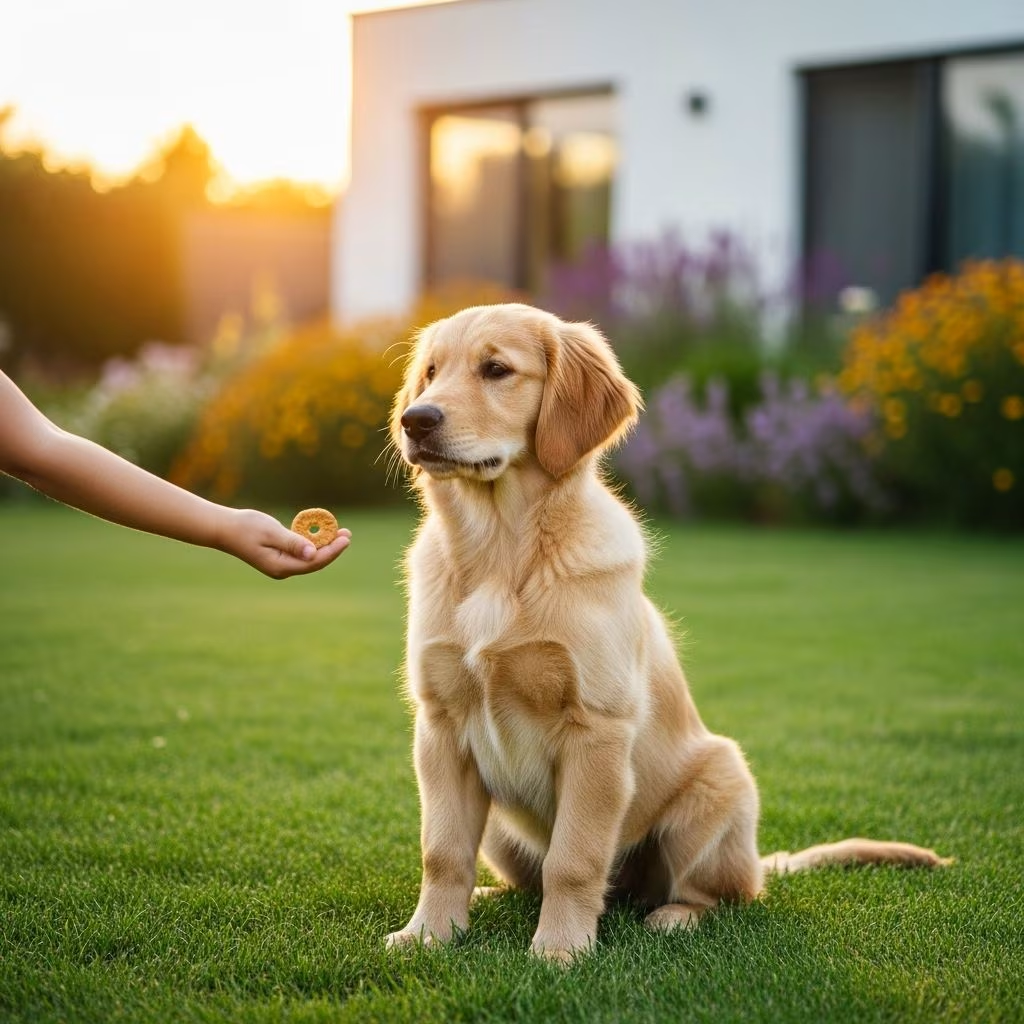
Reward-based dog training shifts the focus from issuing strict commands to encouraging desirable actions through positive outcomes. This approach leverages operant conditioning, where behaviors followed by appealing rewards become more frequent. Dogs trained this way develop enthusiasm for learning, strengthening the human-canine bond without fear or force.
Foundations of Reward-Driven Learning
At its core, reward-based training adds something pleasurable—like treats, toys, or affection—immediately after a wanted behavior to reinforce it. This differs from punishment-focused methods, which can create anxiety. Positive reinforcement means the dog associates the action with a benefit, making repetition likely.
Key principles include precise timing, where rewards follow the behavior within seconds to cement the connection. Consistency across family members ensures the dog receives uniform feedback, preventing confusion. Clear cues paired with upbeat tones guide the dog effectively.
Why Rewards Outperform Commands
Traditional command-heavy training often demands compliance through authority, but rewards invite voluntary participation. Dogs learn faster when motivated by what they love, rather than avoiding discomfort. This method teaches context-specific expectations, like sitting before door access to curb bolting.
Studies and experts endorse this for its science-backed efficacy. The American Kennel Club highlights how focusing on positive reinforcement and negative punishment—removing rewards for unwanted actions—avoids aversives. PetMD notes that true reinforcement shows in increased behavior frequency, not just occasional treats.
Essential Tools for Success
- Markers: Clickers or words like “yes” pinpoint the exact rewarded moment, bridging to the treat.
- High-Value Rewards: Select items your dog craves, varying them to maintain interest.
- Short Sessions: Limit to 5 minutes, ending on a high note for fun associations.
- Low-Distraction Starts: Begin in quiet spaces, progressing to busier environments.
Step-by-Step Training Techniques
Begin with basics like sit. Hold a treat above the dog’s nose, moving it back so the rear lowers. Mark and reward instantly. Repeat until reliable, then add the cue “sit” before the lure.
Shaping Complex Behaviors
For advanced skills, shape by rewarding approximations. Teaching “shake”: First reward paw lifts, then higher lifts, hand touches, holds, and finally shakes. This builds patience and precision gradually.
Addressing Everyday Challenges
| Issue | Reward Strategy | Expected Outcome |
|---|---|---|
| Jumping on guests | Reward four-paw stands or sits before attention | Calm greetings |
| Door darting | Cue sit, reward before opening | Patient waiting |
| Leash pulling | Stop walking, reward slack leash | Loose-leash walking |
| Begging at meals | Place on mat, reward calm stays | Relaxed mealtimes |
Track progress: If the behavior improves in speed or reliability, reinforcement works.
Common Pitfalls and Fixes
Avoid delaying rewards, as dogs link them to recent actions. Don’t reward inconsistently, which weakens learning. If progress stalls, check reward value—dogs choose reinforcers. Family alignment prevents mixed signals.
Myth: Rewards create dependence. Reality: Fade treats gradually, using praise or play as dogs master skills. Another: It ignores bad behavior. Pair with management, like negative punishment—withdrawing attention for jumps.
Advanced Applications
Once basics solidify, layer cues. Teach “stay” by rewarding longer holds, adding distance and distractions. For recall, reward returns enthusiastically in safe areas, never calling for negatives like baths.
Real-life integration: Use before meals for sits, promoting manners. Games like fetch reinforce engagement. This turns training into joyful interaction.
Science Behind the Method
Operant conditioning’s first quadrant—positive reinforcement—increases behaviors via additions. Combined with negative punishment (removals), it suffices without positives like leash jerks or negatives like yells. Humane Society affirms rewards shape behavior reliably.
Benefits for Dog and Owner
- Stronger bonds through positive associations.
- Reduced stress, eager learners.
- Mental stimulation prevents boredom.
- Versatile for all ages and breeds.
Frequently Asked Questions
What if my dog ignores rewards?
Hunger boosts motivation; use mealtime kibble. Ensure high value in distractions.
How long until results?
Basics in days with consistency; complex skills weeks. Patience key.
Works for rescues?
Yes, rebuilds trust gently. Start slow, consult pros if fearful.
Professional help needed?
For reactivity, seek certified trainers like CPDT-KA.
End food luring?
Phase out: Randomize rewards, mix with life rewards like walks.
Getting Started Today
Stock treats, grab a clicker, pick one behavior. Practice daily in brief bursts. Celebrate tiny wins. Your dog will thrive, loving every session.
References
- The Power of Positive Reinforcement: 5 Effective Dog Training Tips — 3 Dog Ranch. 2023. https://www.3dogranchmt.com/post/positive-reinforcement-tips
- How To Train a Dog With Positive Reinforcement — PetMD. 2024-05-15. https://www.petmd.com/dog/behavior/how-to-train-a-dog-with-positive-reinforcement
- Dog Training Methods: Positive Reinforcement vs. Dominance Training — Blackwood Canine. 2023. https://www.blackwoodcanine.com/blog/dog-training-methods-positive-reinforcement-vs-dominance-training
- Positive Reinforcement Dog Training: Understanding Operant Conditioning — American Kennel Club (AKC). 2024. https://www.akc.org/expert-advice/training/operant-conditioning-positive-reinforcement-dog-training/
- How to Reward Dogs With Positive Reinforcement Training — Humane World. 2023. https://www.humaneworld.org/en/resources/positive-reinforcement-training
- The Power of Positive Reinforcement: Training Your Pet with Kindness — WVC Vet. 2024-01-10. https://www.wvcvet.com/blog/the-power-of-positive-reinforcement-training-your-pet-with-kindness/



