

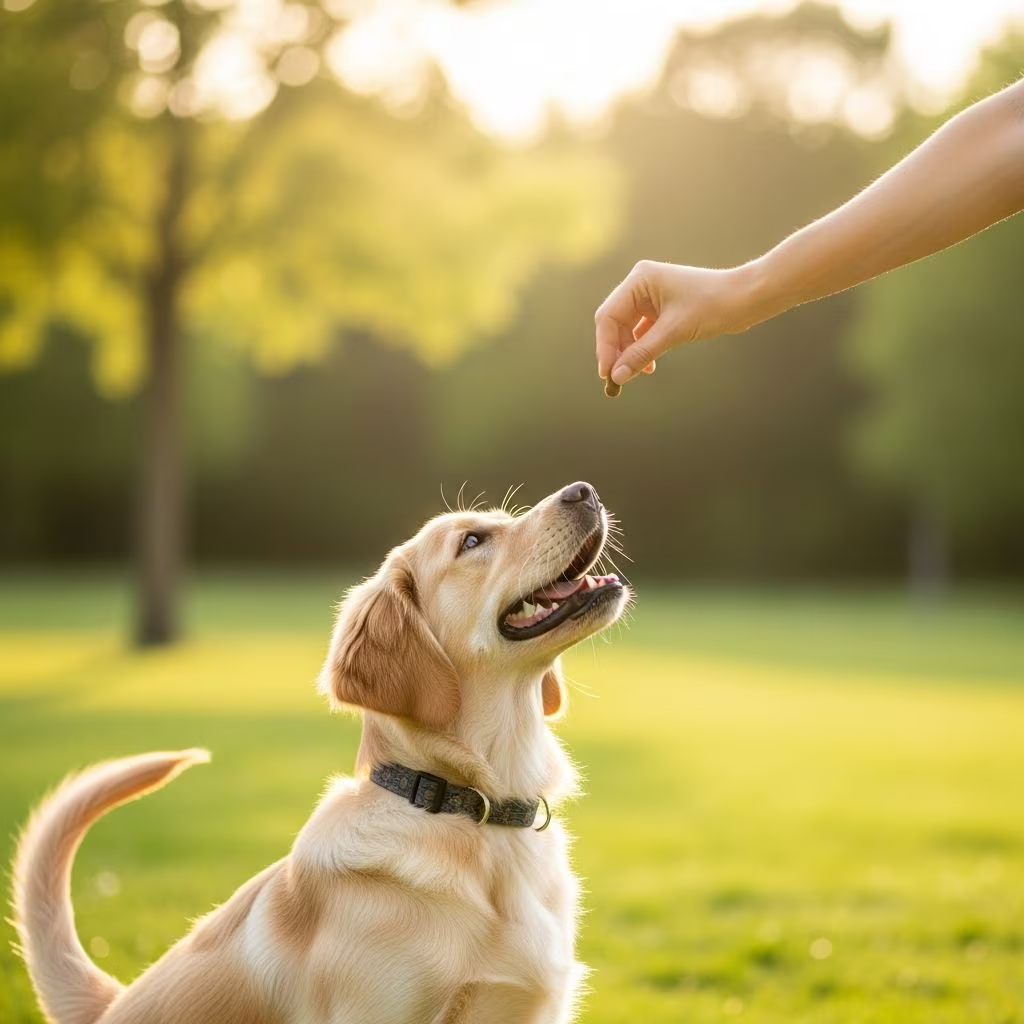
Reward-based dog training, also known as positive reinforcement, focuses on encouraging desired behaviors through treats, praise, toys, or play, rather than correcting mistakes with aversive methods. This approach not only proves more effective for long-term obedience but also promotes a healthier emotional state for dogs, as supported by multiple studies showing reduced stress and stronger human-animal bonds.
Understanding the Foundations of Modern Dog Training
Dog training revolves around operant conditioning, a learning principle where behaviors are shaped by their consequences. Positive reinforcement adds a rewarding stimulus—like a treat—after a good action, increasing the likelihood of repetition. In contrast, punishment-based methods introduce discomfort or removal of comfort to suppress unwanted behaviors, often leading to unintended side effects.
Research from the University of Milan demonstrates that dogs under positive methods exhibit more friendly interactions, such as tail wagging and seeking affection, while aversive training correlates with avoidance and fear responses. This foundational difference sets the stage for why rewards build cooperative learners rather than fearful ones.
Key Advantages of Choosing Rewards Over Corrections
- Lower Stress Levels: Dogs trained positively show significantly reduced cortisol (stress hormone) levels, creating a calm learning environment that enhances focus and retention.
- Faster Skill Acquisition: Rewarded behaviors are learned quicker, with studies in Applied Animal Behaviour Science confirming dogs master commands faster and remember them longer.
- Enhanced Safety: Without fear induction, risks of aggression or defensive biting drop, protecting both the dog and handlers.
How Positive Reinforcement Transforms Learning
At its core, positive reinforcement leverages a dog’s natural motivation. When a dog sits on cue and receives a treat, the brain releases dopamine, associating the action with pleasure. Over time, this creates eager performers who actively seek opportunities to ‘earn’ rewards, turning training into an engaging game.
Unlike punishment, which only teaches what not to do, rewards clarify expectations. Dogs experiment confidently, problem-solving in real-world scenarios like ignoring distractions during walks. A study highlighted in animal behavior journals notes this leads to adaptable, independent thinkers rather than rote followers.
Building an Unbreakable Bond Through Rewards
The relationship between dog and owner thrives under positive training. Dogs view their humans as providers of joy, fostering trust and loyalty. This mutual respect manifests in increased affection-seeking and compliance even without constant treats, as the emotional connection endures.
Professionals observe that positively trained dogs are more resilient to separation anxiety and novel situations, attributing this to the secure base formed during sessions. In essence, training becomes a shared adventure, deepening companionship.
| Training Method | Impact on Bond | Supported By |
|---|---|---|
| Positive Reinforcement | Stronger trust, more affection | University of Milan study |
| Punishment-Based | Avoidance, fear responses | Multiple behavior science papers |
Reducing Anxiety and Fear in Everyday Training
Aversive tools like shock collars or leash jerks elevate heart rates and anxiety, potentially generalizing fear to training cues, people, or environments. Positive methods counteract this by pairing cues with rewards, building positive anticipations.
Evidence from shelter studies shows rescued dogs with trauma histories respond best to rewards, shedding fearful habits without re-traumatization. Owners report calmer home dynamics, with fewer incidents of cowering or reactivity.
Long-Term Behavioral Success and Retention
Rewards promote durable change by encouraging voluntary compliance. Dogs internalize rules as beneficial, applying them across contexts—from home to park. Punishment often yields short-term suppression, with behaviors rebounding under stress.
Longitudinal data reveals positively trained dogs maintain obedience years later, reducing relapse needs. This efficiency saves time and frustration, making it ideal for busy families.
Practical Tips for Implementing Reward Training
Start small: Use high-value treats for basics like ‘sit’ or ‘stay.’ Time rewards precisely—within 2 seconds of the behavior. Gradually fade treats, relying on praise or play to maintain momentum.
- Choose motivators wisely: Food for food-driven breeds, toys for playful ones.
- Keep sessions short: 5-10 minutes to prevent fatigue.
- Ignore minor errors: Redirect gently to prevent frustration.
- Track progress: Note successes to build your confidence too.
Common Myths About Positive Reinforcement Debunked
Myth: “It doesn’t work for stubborn dogs.” Reality: All dogs respond to consistent rewards; patience is key.
Myth: “Dogs need discipline.” Reality: Clear guidance via rewards provides structure without harm.
Myth: “It’s bribery.” Reality: Rewards phase out, leaving intrinsic understanding.
Real-World Applications: From Puppies to Seniors
Puppies flourish with rewards, quickly housetraining and socializing. Adults overcome issues like leash pulling via counter-conditioning. Even seniors regain mobility commands, improving quality of life.
In multi-dog homes, rewards prevent resource guarding by associating others with positivity. Public settings benefit too, with reliable recalls averting dangers.
Health and Wellness Boost from Positive Methods
Training doubles as enrichment, combating boredom-induced issues like chewing. Mental workouts rival physical exercise, per Journal of Animal Physiology and Animal Nutrition, supporting cognitive health into old age.
Reduced stress translates to better immunity and digestion, lowering vet visits. Active lifestyles emerge, curbing obesity.
Comparing Training Outcomes: A Data-Driven View
| Metric | Positive Reinforcement | Punishment-Based |
|---|---|---|
| Learning Speed | Faster, better retention | Slower, prone to forgetting |
| Stress Levels | Low | High |
| Bond Quality | Trust-based, affectionate | Fear-based, avoidant |
| Longevity of Results | Years-long | Temporary |
Frequently Asked Questions (FAQs)
What exactly is positive reinforcement in dog training?
It’s rewarding desired behaviors immediately with something the dog values, increasing future occurrences.
Does positive training work for aggressive dogs?
Yes, by addressing root causes like fear without escalation, often yielding safer results than confrontation.
How do I transition from punishment methods?
Phase out corrections gradually, focusing on rewards. Consult a certified trainer for guidance.
Are treats always necessary?
No, vary with praise, play, or access to fun activities for balanced motivation.
Can kids participate in reward training?
Absolutely—simple, fun methods empower children to train safely and effectively.
References
- Scientific Benefits of Positive Reinforcement vs. Negative Reinforcement in Dog Training — Northwoods Animal Shelter. 2023. https://www.northwoodsanimalshelter.org/blog/scientific-benefits-of-positive-reinforcement-vs-negative-reinforcement-in-dog-training
- Positive Reinforcement Dog Training: Understanding Operant Conditioning — American Kennel Club (AKC). 2024-06-15. https://www.akc.org/expert-advice/training/operant-conditioning-positive-reinforcement-dog-training/
- 10 Science-Backed Benefits of Positive Dog Training — A Place for Paws. 2023. https://aplaceforpaws.com/blogs/news/10-science-backed-benefits-of-positive-dog-training
- Positive Reinforcement Dog Training — Animal Behavior College. 2024. https://www.animalbehaviorcollege.com/blog/pet-training/does-positive-reinforcement-really-work/
- The Power of Positive Reinforcement in Dog Training — Anything is Pawzible. 2023-08-20. https://anythingispawzible.com/the-power-of-positive-reinforcement-in-dog-training/



