

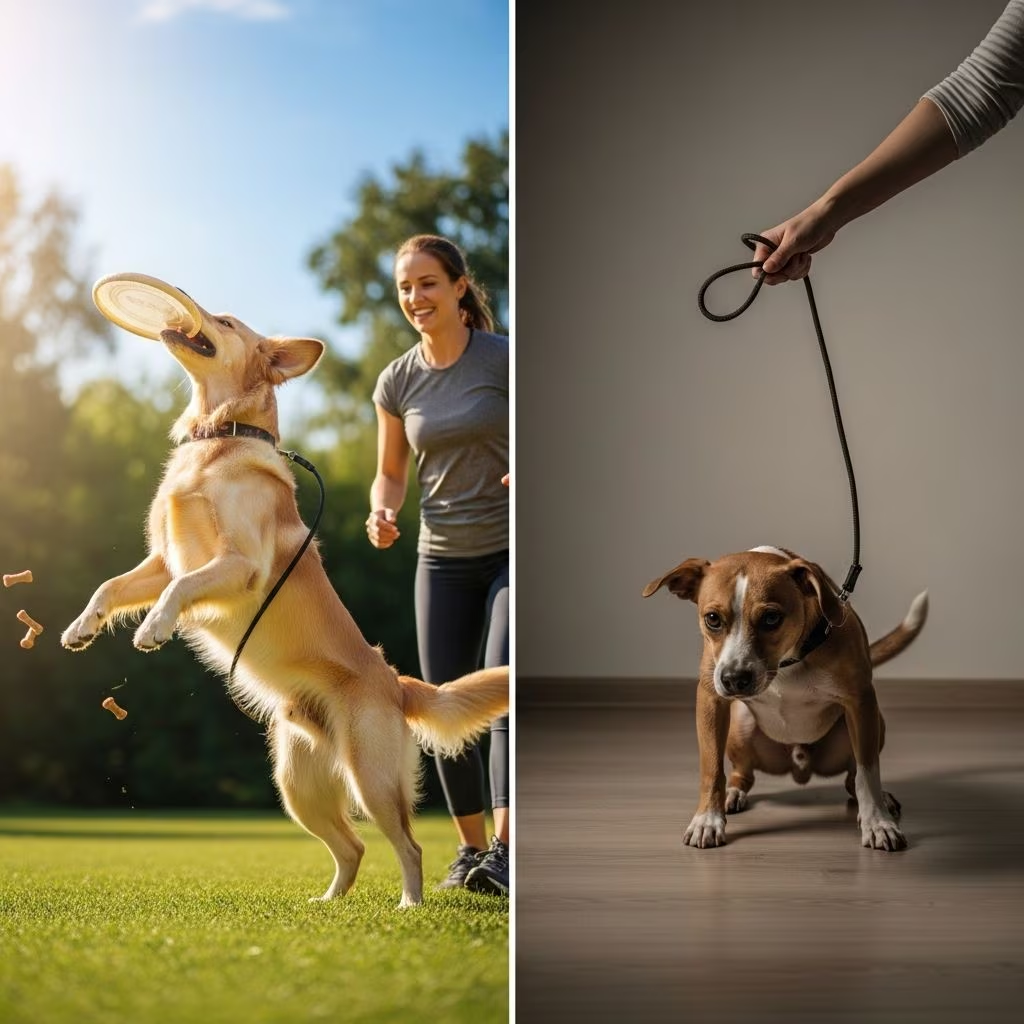
Reward-based dog training, centered on positive reinforcement, proves more effective and humane than punishment-driven approaches. By rewarding desired behaviors with treats, praise, or play, dogs learn faster, experience less stress, and form stronger bonds with owners, as supported by multiple studies comparing training methods.
The Science Behind Effective Dog Training
Understanding operant conditioning reveals why rewards trump punishment. Positive reinforcement adds something desirable after good behavior, increasing its likelihood, while punishment aims to suppress unwanted actions through discomfort. Research consistently shows rewards lead to quicker learning and retention without the fallout of fear or aggression.
For instance, dogs trained positively show lower cortisol levels, indicating reduced stress. A study from the University of Milan highlighted how these dogs displayed more friendly interactions, like tail wagging, versus avoidance in punishment-trained peers.
Core Advantages of Positive Reinforcement Training
Positive methods offer multifaceted benefits that enhance both dog welfare and training outcomes.
- Stress Reduction: Dogs avoid anxiety linked to aversive tools like shock collars, fostering a calm learning environment.
- Faster Skill Acquisition: Rewards motivate repetition, speeding up command mastery and long-term recall.
- Confidence Building: Success through rewards boosts self-esteem, turning timid dogs into bold problem-solvers.
These gains create a virtuous cycle where enjoyable sessions encourage participation, unlike punishment’s cycle of fear and compliance.
Building a Lasting Human-Canine Bond
Trust forms the cornerstone of successful training. When owners deliver rewards consistently, dogs associate them with positivity, viewing handlers as allies rather than threats. This mutual respect manifests in eager compliance and affectionate behaviors.
Studies confirm dogs in reward programs seek more owner interaction, deepening emotional connections. Punishment, conversely, erodes trust, potentially leading to avoidance or defensive aggression, complicating daily life.
Long-Term Behavioral Success and Retention
Rewards promote enduring change by teaching dogs to choose right actions independently. A Journal of Veterinary Behavior study found positively trained dogs retained behaviors longer, adapting better to novel situations without reverting under stress.
| Training Method | Learning Speed | Retention Rate | Stress Impact |
|---|---|---|---|
| Positive Reinforcement | High | High | Low |
| Punishment-Based | Moderate | Low | High |
This table summarizes key differences, underscoring rewards’ superiority for sustained results.
Mental and Physical Health Boost from Rewards
Training sessions double as enrichment, providing mental stimulation and exercise. Positive methods keep dogs engaged, preventing boredom-induced issues like chewing or barking. Research in the Journal of Animal Physiology and Animal Nutrition links such activities to overall vitality.
Owners benefit too, enjoying frustration-free interactions that reinforce their leadership without force.
Avoiding Pitfalls of Punishment Techniques
Punishment often backfires, suppressing symptoms rather than root causes. Dogs may comply out of fear but misunderstand expectations, leading to confusion. Aversives heighten aggression risks, with some studies noting increased biting in harshly trained dogs.
Stress from punishment lingers, associating owners with negativity and hindering bonding. Positive alternatives redirect unwanted behaviors humanely, teaching through example.
Practical Tips for Implementing Reward Training
Start small with high-value rewards tailored to your dog—soft treats for foodies, toys for playful pups. Time rewards precisely post-behavior to cement associations. Gradually fade treats, relying on verbal praise to maintain habits.
- Break commands into steps for success.
- Use clickers for clear markers.
- Keep sessions short, 5-10 minutes, for focus.
- End on positives to build enthusiasm.
Consistency across household members ensures uniform responses, accelerating progress.
Real-World Applications Across Scenarios
Reward training excels in recall during distractions, leash manners, and housebreaking. For reactive dogs, counter-conditioning with treats desensitizes triggers, outperforming confrontational shutdowns that amplify fears.
In multi-dog homes, positives minimize rivalry by rewarding calm coexistence, promoting harmony.
Addressing Common Misconceptions
Some believe rewards spoil dogs or fail with ‘stubborn’ breeds—myths debunked by evidence. All dogs respond to well-timed positives; perceived stubbornness often stems from unclear communication or owner inconsistency.
Punishment seems quicker but yields fragile results, prone to breakdown under pressure.
Choosing the Right Training Tools and Resources
Opt for force-free gear like harnesses over prongs. Apps and books on positive methods guide beginners. Professional trainers certified in reinforcement techniques provide personalized plans.
Frequently Asked Questions (FAQs)
What exactly is positive reinforcement in dog training?
It involves giving rewards immediately after desired behavior to encourage repetition, using treats, toys, or praise.
Does positive training work for aggressive dogs?
Yes, by addressing triggers calmly with rewards, it reduces reactivity more safely than punishment, which can escalate issues.
How long until I see results with reward-based methods?
Basic commands often emerge in days with consistency; complex behaviors take weeks, but retention is superior.
Can I use positive reinforcement with puppies and seniors?
Absolutely—gentle rewards suit all ages, adapting to energy levels for lifelong learning.
What if my dog ignores rewards?
Find higher-value motivators and ensure proper timing; consult pros for underlying health or motivation issues.
Steps to Transition from Punishment to Rewards
- Assess current behaviors and identify positives to reinforce.
- Gather varied rewards and practice timing.
- Ignore minor errors; redirect with cues.
- Track progress weekly to stay motivated.
- Seek group classes for socialization and feedback.
This roadmap smooths the shift, yielding a cooperative companion.
Expert Insights on Training Evolution
Modern veterinary behaviorists advocate rewards, citing ethical and efficacy grounds. Organizations like the AKC endorse operant conditioning’s positive quadrant for joyful learning.
Owners report fewer vet visits for stress-related ailments, plus enhanced life quality through shared adventures.
References
- Scientific Benefits of Positive Reinforcement vs. Negative Reinforcement in Dog Training — Northwoods Animal Shelter. 2023. https://www.northwoodsanimalshelter.org/blog/scientific-benefits-of-positive-reinforcement-vs-negative-reinforcement-in-dog-training
- Positive Reinforcement Dog Training: Understanding Operant Conditioning — American Kennel Club (AKC). 2024. https://www.akc.org/expert-advice/training/operant-conditioning-positive-reinforcement-dog-training/
- 10 Science-Backed Benefits of Positive Dog Training — A Place for Paws. 2023. https://aplaceforpaws.com/blogs/news/10-science-backed-benefits-of-positive-dog-training
- The Power of Positive Reinforcement in Dog Training — Anything is Pawzible. 2024. https://anythingispawzible.com/the-power-of-positive-reinforcement-in-dog-training/
- Positive Reinforcement Dog Training: Understanding Operant Conditioning — AKC (peer-reviewed reference via journal mentions). 2024. https://www.akc.org/expert-advice/training/operant-conditioning-positive-reinforcement-dog-training/



