

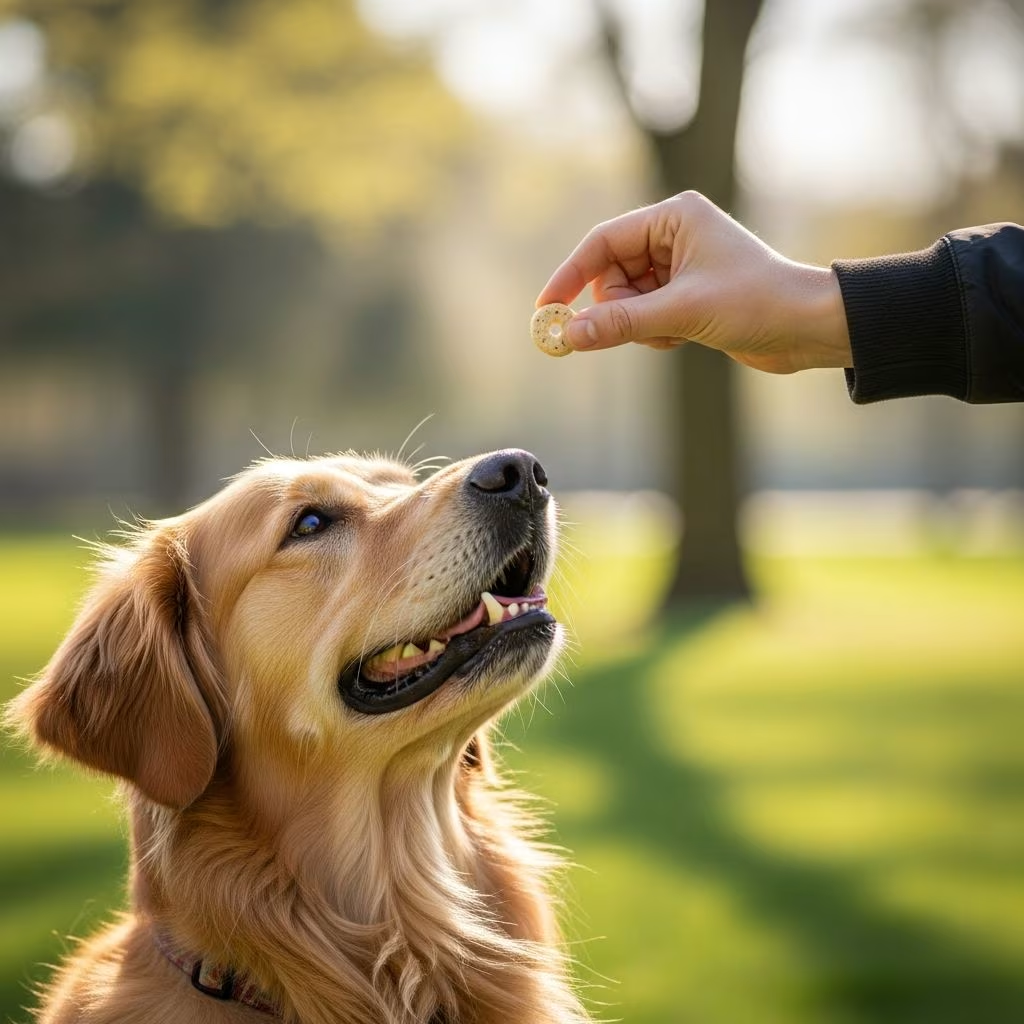
Positive reinforcement stands as the cornerstone of modern dog training, emphasizing rewards to encourage desired behaviors rather than relying on commands or corrections. This approach fosters a joyful learning environment where dogs associate good actions with positive outcomes, leading to faster learning and a stronger human-canine bond.
Why Rewards Outshine Traditional Commands
Conventional training often centers on issuing firm commands and using corrections for non-compliance, which can instill fear or confusion in dogs. In contrast, reward-based methods add something pleasurable—like treats, toys, or affection—immediately after a good behavior, making it more likely to repeat. This aligns with operant conditioning principles, where behaviors followed by rewards increase in frequency.
Dogs trained through rewards become eager participants, actively seeking ways to earn praise rather than avoiding mistakes out of fear. This shift not only improves obedience but also enhances mental stimulation and reduces stress, resulting in calmer, more confident pets.
Core Principles of Positive Reinforcement
To succeed with reward training, grasp these foundational elements:
- Timing Precision: Deliver the reward within seconds of the behavior to create a clear link. Delayed rewards weaken the association.
- Consistency Matters: Reward every correct response initially, then fade rewards gradually while keeping verbal praise.
- Clear Signals: Use consistent cues like “sit” paired with enthusiastic tones to guide your dog.
- Diverse Motivators: Rotate treats, play, or pets to maintain interest and prevent boredom.
- Patience Builds Success: Progress at your dog’s pace, celebrating small wins to avoid frustration.
These principles ensure training sessions remain fun and productive, turning everyday interactions into learning opportunities.
Operant Conditioning Explained for Dog Owners
Operant conditioning, pioneered by B.F. Skinner, categorizes learning into four quadrants: positive reinforcement (add reward to increase behavior), negative reinforcement (remove aversive to increase), positive punishment (add aversive to decrease), and negative punishment (remove reward to decrease). Reward-focused trainers prioritize the first quadrant—adding treats or praise for sits, stays, or recalls—while using negative punishment, like withholding attention for jumping, sparingly.
| Quadrant | Description | Example in Dog Training |
|---|---|---|
| Positive Reinforcement | Add desirable stimulus | Treat for sitting on cue |
| Negative Punishment | Remove desirable stimulus | Turn away if dog jumps |
| Positive Punishment | Add undesirable stimulus | Leash jerk (avoid) |
| Negative Reinforcement | Remove undesirable stimulus | Release pressure after compliance (avoid) |
Focusing on rewards avoids fear-based tactics, promoting long-term reliability without damaging trust.
Step-by-Step Guide to Rewarding Desired Behaviors
Implement these steps for effective sessions:
- Choose a Quiet Space: Start in low-distraction areas to build confidence.
- Select High-Value Rewards: Use what your dog loves most—soft treats for foodies, tug toys for players.
- Cue and Wait: Say “sit,” pause for response, then reward instantly.
- Mark the Moment: Use a clicker or “yes!” to pinpoint the exact behavior.
- Repeat and Fade: Practice 5-10 times per session, then reduce treats over time.
- End Positively: Stop while your dog is eager for more.
Short, frequent sessions (5 minutes) yield better results than marathon drills.
Practical Applications for Everyday Training
Housebreaking Success
For potty training, observe signs like sniffing, then lead outside quietly. Reward profusely upon completion. This builds a strong outdoor association without scolding accidents.
Leash Manners
Reward loose-leash walking with treats every few steps. If pulling occurs, stop moving and reward when slack returns—teaching patience over force.
Preventing Jumping
Ignore jumps by turning away, rewarding four-paw grounding with attention. Dogs quickly learn calm greetings pay off.
Recall in Distractions
Practice in safe areas: Call name, reward approach with play. Gradually add challenges, always making your recall the best choice.
Tools and Techniques to Enhance Rewards
Clicker Training: The click marks perfection; follow with a treat. Pair the sound with rewards over 20-30 trials for power.
Shaping Complex Skills: Break tricks like “shake” into steps: Reward paw lift, then hand touch, building to full shake.
Variable Scheduling: Randomize rewards like slot machines to boost persistence—dogs work harder for unpredictable jackpots.
Common Mistakes and Fixes
- Poor Timing: Reward too late? Dog links wrong action. Fix: Practice with a partner to observe.
- Inadequate Rewards: Low-value treats fail. Solution: Test preferences via “pick a treat” games.
- Inconsistency: Family members differ? Undermines progress. Hold group training meetings.
- Overfacing: High distractions too soon. Build gradually.
Benefits Beyond Obedience
Reward training reduces anxiety, improves problem-solving, and deepens bonds—dogs view handlers as reward sources. Studies from animal behaviorists confirm lower cortisol levels in positively trained dogs versus aversive methods.
Adapting for Puppies vs. Adults
Puppies thrive on frequent, tiny treats due to short attention spans. Adults may prefer play or access to sniff spots as rewards, especially rescues rebuilding trust.
| Life Stage | Best Rewards | Session Length |
|---|---|---|
| Puppy | Small treats, praise | 3-5 min |
| Adult | Toys, walks, pets | 5-10 min |
| Senior | Gentle pets, low-cal treats | Short bursts |
Addressing Challenges with Rewards
For reactive dogs, counter-condition by rewarding calm proximity to triggers. High-energy breeds benefit from reward-linked games like fetch for impulse control.
Long-Term Maintenance
Once proficient, proof behaviors in new environments, using praise over treats. Random rewards prevent extinction.
Frequently Asked Questions
Does positive reinforcement work for all dogs?
Yes, it’s science-backed for all breeds and ages, adaptable to individual motivators.
How long until results?
Basic cues in days with consistency; complex skills in weeks.
What if my dog ignores rewards?
Find higher value or reduce distractions; hunger boosts motivation.
Can I mix methods?
Stick to rewards and mild punishment like timeouts for best outcomes.
Is it bribe training?
No—rewards follow behavior, unlike luring where food precedes.
References
- The Power of Positive Reinforcement: 5 Effective Dog Training Tips — 3 Dog Ranch. 2023. https://www.3dogranchmt.com/post/positive-reinforcement-tips
- How To Train a Dog With Positive Reinforcement — PetMD (Erika Lessa, CBST, CDBT, CDBC, CPDT-KA). 2023-10-12. https://www.petmd.com/dog/behavior/how-to-train-a-dog-with-positive-reinforcement
- The Power of Positive Reinforcement in Training Your Dog — Cincinnati Family Vet (GeniusVets). 2024. https://www.cincinnatifamilyvet.com/services/dogs/blog/power-positive-reinforcement-training-your-dog
- Dog Training Methods: Positive Reinforcement vs. Dominance Training — Blackwood Canine. 2023. https://www.blackwoodcanine.com/blog/dog-training-methods-positive-reinforcement-vs-dominance-training
- Positive Reinforcement Dog Training: Understanding Operant Conditioning — American Kennel Club (AKC). 2024-01-15. https://www.akc.org/expert-advice/training/operant-conditioning-positive-reinforcement-dog-training/



