

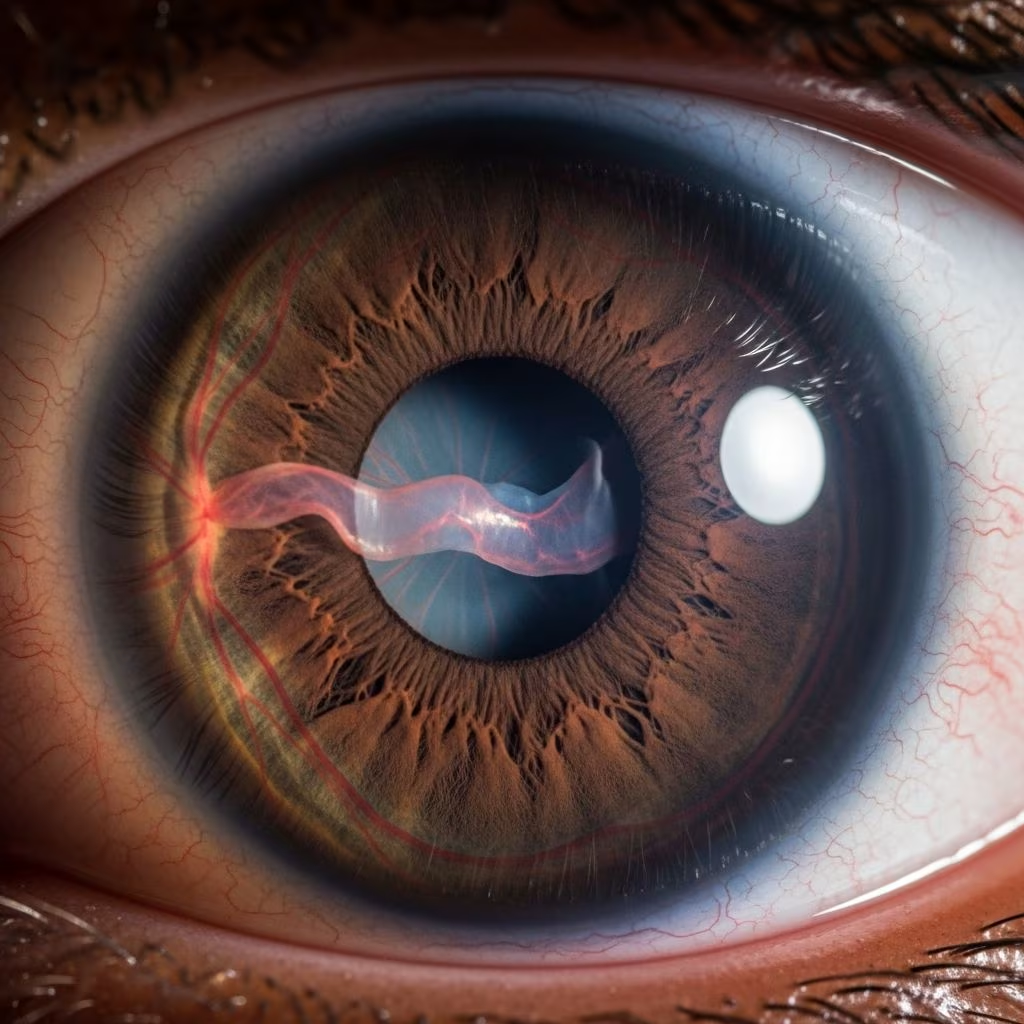
Retinal detachment represents a serious ophthalmic emergency that increasingly impacts companion animals. This condition occurs when the neurosensory retina separates from the underlying retinal pigment epithelium, disrupting the delicate anatomical relationship essential for vision. Early recognition and prompt intervention can significantly influence outcomes, making understanding this condition vital for pet owners and veterinary professionals alike.
The Anatomical Foundation of Retinal Integrity
The retina functions as a specialized neural tissue responsible for converting light into electrical signals that the brain interprets as vision. Within the eye, the neurosensory retina maintains contact with the retinal pigment epithelium through a combination of hydrostatic pressure and support from the vitreous body, a gel-like substance filling the eye’s interior. This architectural arrangement creates a potential space between these layers, and any disruption to the normal balance of forces can lead to fluid accumulation and subsequent detachment.
The vitreous, composed of approximately 99 percent water and containing insoluble protein fibrils, occupies nearly 80 percent of the eye’s volume. In normal canine eyes, the vitreous demonstrates a “nuclear type” organization with increased density in the central region. The structural integrity of the retina depends on the vitreal body’s ability to maintain proper tension and support. When liquefaction of the peripheral vitreous occurs, the collagen fibrillar insertions into the internal limiting membrane can become disrupted, initiating the detachment process.
Categorizing Retinal Detachment Mechanisms
Veterinary ophthalmologists recognize that retinal detachment develops through three fundamental pathogenic mechanisms, which may occur independently or in combination. Understanding these categories helps guide diagnostic and therapeutic approaches:
- Rhegmatogenous detachment: This occurs when tears or holes develop in the retina, allowing vitreous fluid to seep into the subretinal space. The separation progresses as fluid accumulates between the retinal layers.
- Tractional detachment: Fibrous tissue strands within the vitreous exert mechanical traction on the retinal surface, pulling the neurosensory retina away from the underlying epithelium.
- Exudative detachment: Disruption of the blood-ocular barrier leads to accumulation of inflammatory fluid and cells beneath the retina, creating separation without any physical break in the retinal tissue.
Exudative detachments often demonstrate more favorable prognoses compared to rhegmatogenous forms, as resolution of the underlying inflammatory or hemorrhagic process can lead to retinal reattachment and potential vision recovery.
Identifying Risk Factors and Predisposed Populations
Retinal detachment affects animals across various breeds and ages, though certain populations demonstrate increased susceptibility. Genetic predisposition plays a significant role in some cases, with hereditary retinal diseases creating vulnerability to detachment. Retinal dysplasia, collie eye anomaly, and persistent hyperplastic primary vitreous represent congenital conditions that may subsequently develop retinal detachments.
Clinical observations have revealed breed-specific overrepresentation patterns. Small companion breeds including shih-tzus, Lhasa apsos, and Italian greyhounds appear particularly susceptible to spontaneous rhegmatogenous retinal detachments. The physiological basis for this predisposition remains an area of ongoing investigation, though certain breeds may demonstrate inherent vitreous characteristics that increase detachment risk.
Beyond genetic factors, numerous acquired conditions elevate detachment risk. Systemic hypertension, particularly in feline patients, represents a major cause through its effects on ocular blood vessels. Inflammatory diseases, hemorrhagic disorders, malignancies, and traumatic injuries all increase vulnerability. Additionally, lens surgery complications constitute an important iatrogenic source of retinal detachment, emphasizing the need for careful postoperative monitoring following ophthalmic procedures.
Recognizing Clinical Manifestations
The presentation of retinal detachment varies considerably depending on detachment extent and underlying etiology. In partial detachments affecting peripheral retinal regions, an animal may appear clinically normal to casual observation despite significant pathology present. The severity of vision loss correlates directly with the detachment magnitude and location.
Total retinal detachment results in complete functional blindness of the affected eye, as the neurosensory retina cannot function when entirely separated from its supportive epithelium. Animals with bilateral detachment face profound visual disability. Pet owners frequently observe behavioral changes including increased hesitation when navigating familiar environments, collisions with obstacles on the affected side, and reluctance to traverse dark areas.
Physical examination findings may include:
- Dilated or unresponsive pupils in the affected eye
- Loss of the menace response despite intact pupillary light reflexes
- Visible floating membranes or sheets within the ocular media
- Whitish or pinkish discoloration visible behind the lens
- Hemorrhage within the eye
- Increased eyeshine from retinal reflection changes
Importantly, retinal detachment itself does not cause pain, distinguishing it from other serious ocular emergencies. However, secondary complications including uveitis and glaucoma can develop over time, potentially causing significant discomfort.
Diagnostic Approaches and Challenges
Establishing a diagnosis of retinal detachment requires visualization of the retina during comprehensive ophthalmologic examination. However, several factors can complicate diagnostic visualization. Corneal disease, developing cataracts, or peripheral detachments lying outside the central optical axis may prevent adequate retinal visualization using standard ophthalmoscopy.
The presence of a pupillary light reflex does not exclude retinal detachment, as this reflex may persist even with complete detachment of the neurosensory retina. Conversely, a negative menace response suggests significant visual dysfunction. Veterinary ophthalmologists may employ specialized diagnostic equipment to visualize areas inaccessible to conventional examination techniques, particularly when cataracts or other media opacities compromise visualization.
The diagnostic challenge becomes particularly acute when detachment remains unilateral, as animals often compensate effectively with the unaffected eye, delaying recognition until bilateral involvement occurs. This compensatory ability underscores the importance of thorough bilateral ocular examination in any patient presenting with suspected vision loss.
Treatment Paradigms and Medical Considerations
The fundamental principle guiding retinal detachment management involves preventing progressive retinal degeneration through rapid reattachment. Research demonstrates that cellular events associated with retinal degeneration can be arrested and even partially reversed when reattachment occurs within the first 24 hours. This temporal sensitivity creates clinical urgency regarding treatment decisions.
For exudative detachments secondary to inflammatory or hemorrhagic processes, medical management targeting the underlying etiology may prove sufficient. As the primary pathology resolves, the causative exudate may resorb, allowing spontaneous reattachment. Some vision loss typically accompanies this process, but functional vision may return if reattachment occurs before irreversible photoreceptor damage develops.
Oxygen therapy demonstrates predictable clinical benefits early in the detachment course by increasing oxygen diffusion to the detached retina. However, the practical implementation of sustained hyperoxic treatment remains limited in typical clinical settings.
Surgical Intervention: Techniques and Outcomes
Surgical reattachment represents the definitive treatment approach for many retinal detachments, particularly rhegmatogenous cases. Veterinary ophthalmic surgeons recommend surgical intervention within the first 1 to 4 weeks following detachment to optimize vision restoration potential. This timeline reflects the progressive nature of photoreceptor degeneration occurring in detached retinal regions.
Vitrectomy, the surgical removal or repositioning of vitreous material, forms the cornerstone of many reattachment procedures. This technique addresses tractional forces while facilitating access to posterior retinal regions. Barrier retinopexy using diode laser photocoagulation may successfully treat small holes or breaks, particularly those located in the ventral retina. This approach creates a scarred boundary around the lesion, preventing fluid passage through the defect.
Giant retinal tears, defined as lesions extending more than one-quarter of the retinal circumference, present particular surgical challenges. In these cases, the retina may drape across the optic disc with maximal separation over the tapetal region. Vitrectomy combined with surgical reattachment becomes the only viable treatment approach.
Surgical success rates demonstrate marked superiority compared to conservative management. Research comparing surgical intervention with no treatment and topical therapy alone revealed that successful surgical reattachment achieved functional vision restoration in multiple cases, while untreated detachments and topically managed cases showed minimal vision recovery and frequent development of secondary uveitis and glaucoma.
Understanding Photoreceptor Viability and Vision Recovery
A critical consideration in chronic retinal detachment involves assessing photoreceptor viability after prolonged separation. Naturally occurring detachment disease produces retinal degeneration patterns that may differ substantially from experimental models. In inherited canine bullous retinal detachment disease, photoreceptor inner segments demonstrate degeneration extending by 4 weeks, yet remnants of these structures may persist for years in focal detachments.
The timing of vision recovery following surgical reattachment varies considerably among individuals. Many dogs demonstrate slow vision return confirmed only several months after surgery during formal ophthalmic reassessment. Importantly, functional vision restoration in these cases should not be interpreted as normal vision but rather as meaningful improvement in light perception and navigation ability, which substantially enhances quality of life.
Even modest vision recovery holds significant value for companion animals. Dogs with functional vision traversing their environment in normal lighting conditions experience substantially improved quality of life compared to those with complete blindness complicated by secondary uveitis and glaucoma.
Secondary Complications and Long-Term Management
Chronic retinal detachments frequently develop secondary ocular complications that influence long-term outcomes. Uveitis, inflammation within the eye, and secondary glaucoma, elevated intraocular pressure, commonly emerge in untreated detachments. Research demonstrates that most eyes with chronic detachments develop nonresponsive uveitis and secondary glaucoma whether receiving topical medical therapy or not.
These secondary conditions may eventually necessitate more drastic interventions including enucleation or evisceration with prosthetic implantation when vision loss combines with chronic pain and uncontrollable pressure elevation. Histologic examination of affected globes often reveals significant uveitis and glaucoma-related changes to neural retinal layers despite potential viability of photoreceptor inner segments.
The successful surgical management of retinal detachments, particularly when contrasted with outcomes in untreated animals, warrants strong consideration for surgical referral whenever feasible. Veterinary retinal specialists possess the expertise and equipment necessary to optimize reattachment outcomes.
Special Considerations for Different Etiologies
Treatment approaches must account for underlying detachment mechanisms. Exudative detachments often respond favorably to medical management addressing the primary inflammatory or hypertensive process. Systemic hypertension control proves particularly important in feline patients, where blood pressure management may facilitate spontaneous reattachment.
Rhegmatogenous detachments with giant tears require surgical intervention, as medical management cannot address the mechanical defect allowing fluid passage. Tractional detachments similarly demand surgical management to address fibrous tissue constraining the retina.
Prognosis and Quality of Life Considerations
While retinal detachment represents a serious ophthalmic condition, the prognosis extends beyond simply vision restoration. Detached retinas themselves do not cause pain, allowing many pets to maintain acceptable quality of life with appropriate support and management. Environmental modification, maintaining consistent home arrangements, and careful supervision enable successful adaptation to vision loss.
However, the development of secondary uveitis and glaucoma can significantly impact comfort and quality of life. Early surgical intervention when feasible substantially reduces the likelihood of these devastating secondary complications while preserving the possibility of vision recovery.
Frequently Asked Questions
Is retinal detachment painful for pets?
Retinal detachment itself is not painful. However, secondary complications including uveitis and glaucoma that may develop over time can cause significant discomfort, emphasizing the importance of prompt treatment.
Can retinal detachment affect both eyes?
Yes, bilateral retinal detachment can occur, resulting in profound visual disability. Vision loss may be unilateral or bilateral depending on the underlying etiology and disease progression.
What is the success rate for surgical reattachment?
Surgical outcomes depend on numerous factors including detachment chronicity, underlying etiology, and surgical technique. Research demonstrates that surgical management substantially outperforms conservative approaches, with vision restoration achieved in multiple cases even with chronic detachments.
How quickly must treatment be initiated?
While rapid reattachment within 24 hours optimizes outcomes, surgical intervention within 1 to 4 weeks remains beneficial. Delaying beyond this window significantly reduces vision restoration potential due to progressive photoreceptor degeneration.
Will my pet be completely blind if detachment occurs?
Not necessarily. Partial detachments may not cause noticeable vision loss, and even complete detachments may result in some vision recovery following successful surgical reattachment, particularly when treated promptly.
References
- Canine Retinal Reattachment Surgery – Restoring Vision — Vet Times. 2024. https://www.vettimes.com/news/vets/small-animal-vets/canine-retinal-reattachment-surgery-restoring-vision
- Retinal Detachment in Small Animals — Merck Veterinary Manual. 2025. https://www.merckvetmanual.com/emergency-medicine-and-critical-care/ophthalmic-emergencies-in-small-animals/retinal-detachment-in-small-animals
- Chronic Retinal Detachment and Giant Retinal Tears in 34 Dogs — PubMed Central / Canadian Veterinary Journal. 2008. https://pmc.ncbi.nlm.nih.gov/articles/PMC1978290/
- Retinal Detachment in Dogs: Causes, Treatment and Prognosis — Vetster. 2025. https://vetster.com/en/conditions/dog/retinal-detachment
- Retinal Detachment in Cats — VCA Animal Hospitals. 2025. https://vcahospitals.com/sheridan/know-your-pet/retinal-detachment-in-cats
- Retinal Detachment Fact Sheet — Davies Veterinary Specialists. 2024. https://www.vetspecialists.co.uk/fact-sheets-post/retinal-detachment/



