

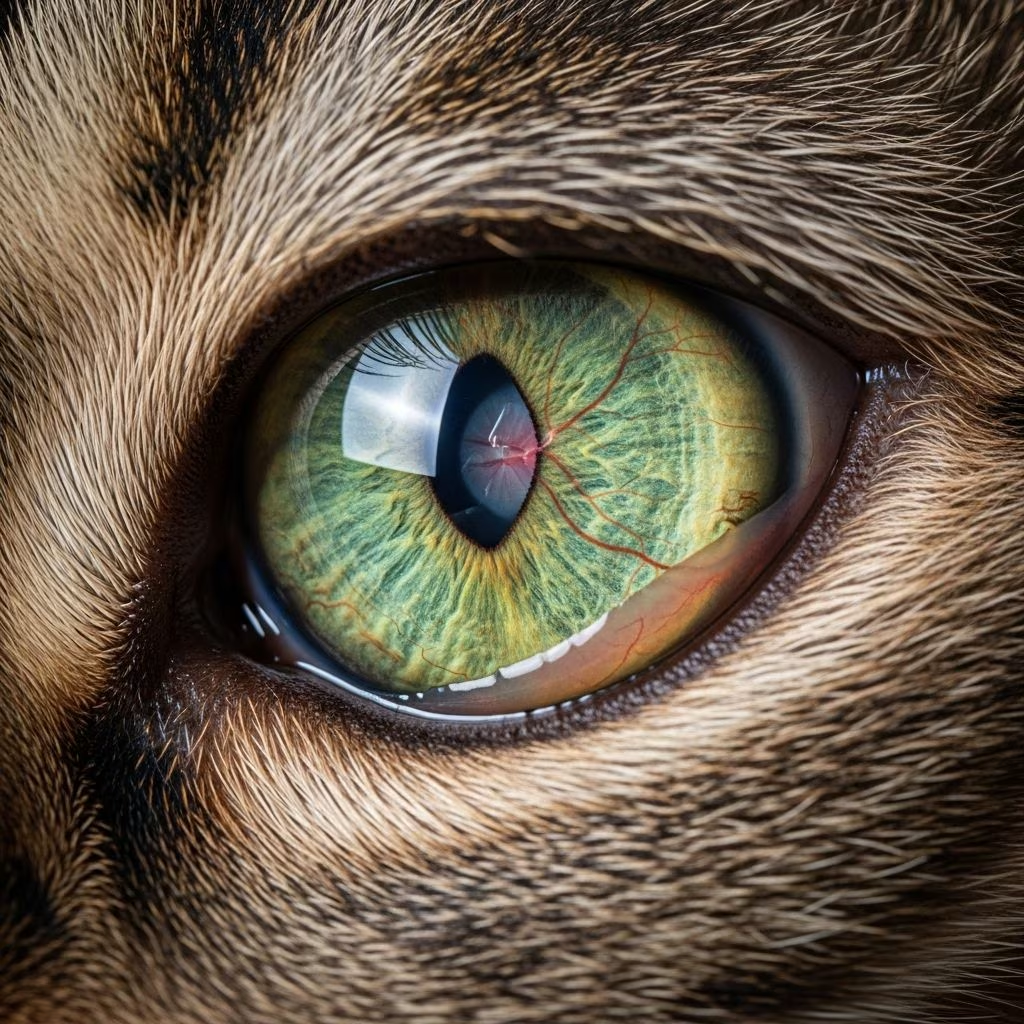
The retina is a vital layer at the back of a cat’s eye that captures light and sends visual signals to the brain. When it detaches, vision in the affected eye is compromised, often suddenly and completely. This condition demands immediate veterinary care, as timely intervention can sometimes restore sight, particularly if caught early.
Understanding the Anatomy and Function of the Feline Retina
In cats, the retina consists of light-sensitive cells called photoreceptors, including rods for low-light vision and cones for color and detail. It relies on a gel-like vitreous humor to stay adhered to the eye’s underlying tissue. Detachment occurs when fluid builds up behind it, separating these layers and cutting off oxygen and nutrients. Cats’ eyes also feature a tapetum lucidum, a reflective layer enhancing night vision, which can appear altered post-detachment.
This separation disrupts neural pathways, leading to blindness. Unlike partial human detachments, feline cases often affect the entire retina, making full recovery challenging without prompt action.
Primary Causes Behind Retinal Detachment
Several factors can trigger retinal detachment in cats. High blood pressure, or hypertension, is the most common, often linked to kidney disease or hyperthyroidism in older cats. Elevated pressure damages retinal blood vessels, causing leaks that lift the retina.
- Trauma: Blunt force from falls or fights can tear the retina directly.
- Inflammatory diseases: Uveitis or systemic infections like feline leukemia virus provoke swelling that pulls the retina away.
- Congenital issues: Rare genetic defects present from birth.
- Tumors or cancer: Intraocular growths erode retinal support.
- Infections: Bacterial, fungal, or viral pathogens inflame the eye.
Hypertension accounts for many cases, emphasizing routine senior cat screenings.
Recognizing the Warning Signs Early
Cats mask vision loss well, but observant owners spot clues. Key indicators include:
- Bumping into walls, furniture, or doorways, especially in dim light.
- Hesitation on stairs, jumps, or unfamiliar surfaces.
- Dilated pupils that fail to constrict in bright light or differ in size between eyes.
- Cloudy, reddish, or reflective eye appearance.
- Bleeding visible in the eye or head tilting.
- Disinterest in chasing toys or hunting behaviors.
One or both eyes may be affected; bilateral cases often signal systemic issues like hypertension. If noticed, seek emergency vet care—delays doom retinal cells.
Diagnostic Approaches for Accurate Assessment
Vets start with a full ophthalmic exam using an ophthalmoscope to visualize the detachment as a gray veil with visible vessels. Pupil dilation aids inspection. Indirect ophthalmoscopy or fundus photography provides detailed views.
Ultrasound detects detachments obscured by cataracts or hemorrhage. Blood pressure measurement is routine, as is bloodwork for kidney function, thyroid levels, and infections. In complex cases, referral to a veterinary ophthalmologist for electroretinography (ERG) confirms retinal viability.
| Diagnostic Tool | Purpose | Benefits |
|---|---|---|
| Ophthalmoscopy | Direct retina visualization | Quick, non-invasive |
| Ultrasound | Imaging obscured eyes | Detects fluid/masses |
| Blood Pressure Check | Identifies hypertension | Guides treatment |
| Blood Tests | Uncovers systemic causes | Comprehensive health scan |
Treatment Strategies: From Medical to Surgical
Treatment targets the root cause and reattachment feasibility. Success hinges on duration—cells die after days detached.
Addressing Hypertension
Amlodipine or telmisartan lowers pressure rapidly, often reattaching the retina if treated within 24-48 hours. Monitoring ensures control.
Anti-Inflammatory and Infection Control
Steroid drops, systemic meds, or NSAIDs reduce swelling. Antibiotics, antivirals, or antifungals combat infections.
Surgical Interventions
For tears or partial detachments:
- Laser photocoagulation: Seals tears with heat scars.
- Pneumatic retinopexy: Gas bubble pushes retina back.
- Scleral buckling: Band indents eye wall.
- Vitrectomy: Clears vitreous, refills with supportive fluid.
Specialists perform these; enucleation is last resort for tumors.
Supportive Measures
Environmental tweaks aid blind cats: consistent layouts, night lights, padded edges, scent markers.
Prognosis and Factors Influencing Recovery
Early hypertension cases regain vision in 50-70% of instances. Trauma or chronic detachments often yield permanent blindness.[10] Bilateral cases signal graver systemic disease. Post-treatment, monitor for degeneration like vessel narrowing.
Regular follow-ups track progress; some cats adapt superbly using whiskers, hearing, and memory.
Preventive Measures for Proactive Cat Owners
No sure prevention exists, but strategies reduce risk:
- Annual senior check-ups with blood pressure and eye exams.
- Manage chronic conditions like kidney disease or hyperthyroidism.
- Indoor living minimizes trauma.
- Avoid breeding cats with history.
Hypertension screening from age 7 is key.
FAQs on Retinal Detachment in Cats
Can my cat’s vision return after detachment?
Yes, if treated within days, especially for hypertension; otherwise, blindness is likely.
Is surgery always needed?
No, medical management suffices for many; surgery for tears or non-responsive cases.
How do I help a blind cat at home?
Keep routines stable, use verbal cues, provide safe navigation aids.
Is retinal detachment painful?
Often not directly, but underlying inflammation or pressure causes discomfort.
How common is this in cats?
Uncommon, but prevalent in seniors with hypertension.
Long-Term Management and Quality of Life
Even with vision loss, cats thrive. Owners report happy, active lives post-adaptation. Annual ophthalmology visits prevent recurrence. Nutrition supporting eye health, like omega-3s, may aid resilience, though evidence is anecdotal.
Understanding empowers owners to act swiftly, preserving their cat’s well-being.
References
- Retinal Detachment in Cats: 7 Essential Treatments to Know — ThePetVet.com. 2023. https://thepetvet.com/retinal-detachment-in-cats/
- Retinal Detachment in Cats – Causes, Treatment and… — Vetster. 2024. https://vetster.com/en/conditions/cat/retinal-detachment
- Retinal Detachment in Cats — VCA Animal Hospitals. 2024. https://vcahospitals.com/know-your-pet/retinal-detachment-in-cats
- Understanding Retinal Detachment in Pets — Veterinary Vision Center. 2023. https://veterinaryvisioncenter.com/comprehensive-eye-care-for-pets-understanding-retinal-detachment-at-veterinary-vision-center/
- Retinal Detachment — Clinician’s Brief. 2022. https://www.cliniciansbrief.com/article/retinal-detachment
- Retinal Detachment in Small Animals — Merck Veterinary Manual. 2024. https://www.merckvetmanual.com/emergency-medicine-and-critical-care/ophthalmic-emergencies-in-small-animals/retinal-detachment-in-small-animals



