

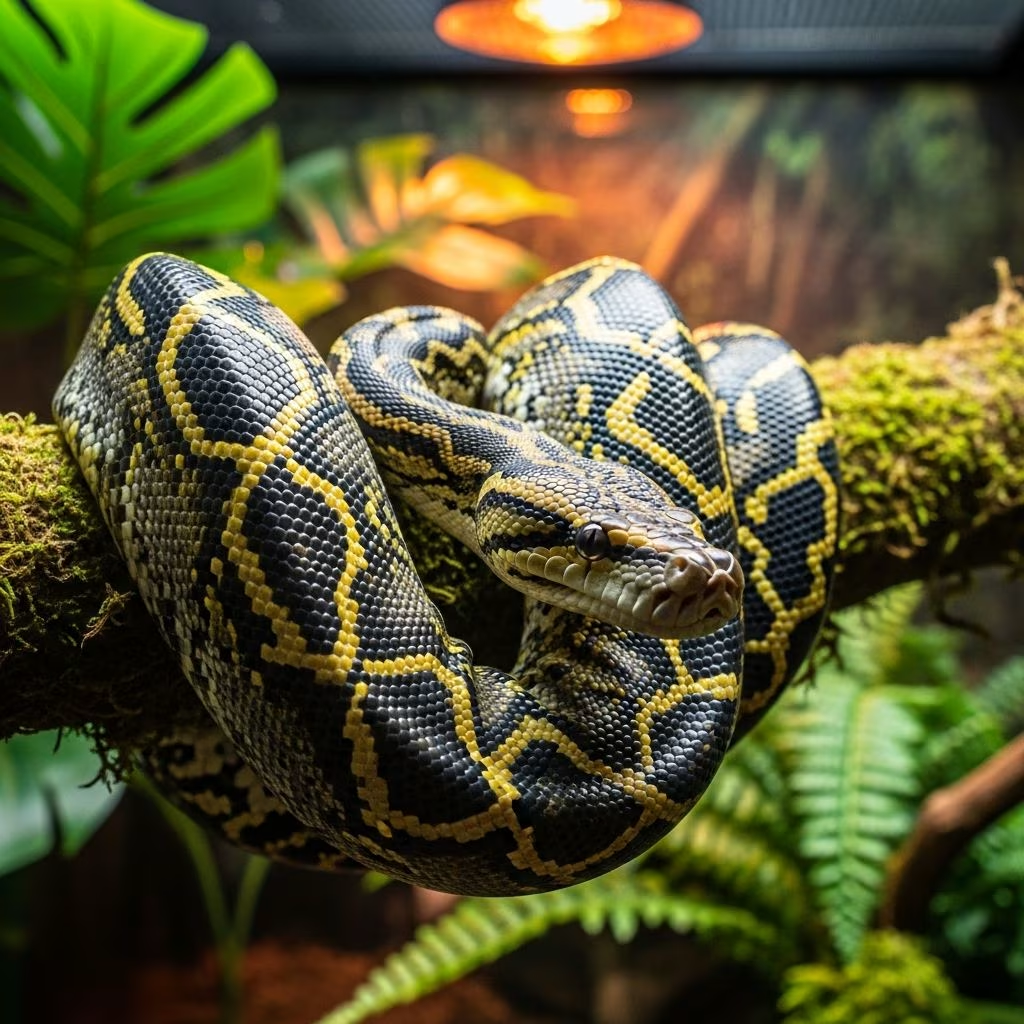
The reticulated python stands as the longest snake species in existence, capable of exceeding 20 feet in length and weighing over 300 pounds in the wild. Native to Southeast Asia’s tropical rainforests and grasslands, these powerful constrictors demand substantial space, precise environmental conditions, and committed husbandry to flourish in captivity. This guide draws on established reptile care protocols to outline everything from initial setup to long-term maintenance, emphasizing the needs of both standard and dwarf varieties.
Understanding Reticulated Pythons
Reticulated pythons (*Python reticulatus*) exhibit remarkable diversity in size, with full-grown specimens reaching lengths that challenge even dedicated enclosures. Dwarf morphs typically max out at 8-12 feet, making them more feasible for private keepers, while standard lineages can surpass 20 feet. Their net-like pattern provides camouflage in dense vegetation, and they are semi-arboreal in youth, transitioning to terrestrial habits as adults. In captivity, expect a lifespan of 20-30 years with proper care, though their rapid growth—often doubling in size annually during the first few years—requires planning ahead.
These snakes thrive in warm, humid environments mimicking their Indonesian and Malaysian habitats. They are ambush predators, relying on stealth and strength rather than speed. Potential owners must commit to handling animals that can overpower an adult human, underscoring the importance of experience before acquisition.
Selecting the Right Specimen
Choose captive-bred juveniles from reputable breeders to avoid wild-caught import risks like parasites or stress-related issues. Prioritize dwarf or super-dwarf lines if space is limited, as they grow slower and smaller. Inspect for clear eyes, smooth scales, and active behavior without signs of respiratory distress or mites. Quarantine new arrivals for 3-6 months in a separate setup to monitor for inclusion body disease or other pathogens common in large pythons.
Enclosure Design and Size
Housing a reticulated python necessitates custom-built enclosures due to their immense size. For juveniles under 8 feet, start with a temporary 8x4x4 feet (LWH) PVC or plywood unit, but plan for permanent adult housing at minimum 12x6x6 feet for dwarfs or 24x8x8 feet for standards—ideally larger with both floor space and climbing height.
Opt for secure, escape-proof construction with smooth walls to prevent injury. Include ample ventilation via mesh panels on top and sides, balanced to retain humidity without stagnation. Position the enclosure in a quiet, draft-free room away from direct sunlight or foot traffic.
- Floor space priority: Emphasize length and width for stretching and exploration.
- Height considerations: At least equal to snake length for partial arboreality.
- Materials: Non-toxic PVC panels or sealed wood with glass fronts for viewing.
Essential Enclosure Features
Equip the habitat with secure climbing branches, ledges, and half-logs rated for heavy weight. Provide multiple hides—one on the warm side, one cool, and a humid retreat. A large water tub or pool spanning the snake’s full length allows soaking, essential for hydration and shedding; connect to plumbing for easy changes or use a submersible pump.
| Snake Size | Minimum Dimensions (LxWxH) | Key Features |
|---|---|---|
| Hatchling/Juvenile (<4 ft) | 4x2x2 ft | 2 hides, small branch, water bowl |
| Subadult (4-8 ft) | 8x4x4 ft | Climbing logs, large soak tub, platforms |
| Adult Dwarf (8-12 ft) | 12x6x6 ft | Multiple branches, full-body pool, hides |
| Adult Standard (>12 ft) | 24x8x8 ft+ | Custom branches, deep substrate, auto-misters |
Temperature and Heating Strategies
Maintain a thermal gradient: hot side at 88-92°F (31-33°C), warm side 85-88°F (29-31°C), and cool side allowing drops to room temperature (75°F/24°C). Use ceiling-mounted ceramic heat emitters (CHEs) controlled by a pulse thermostat, guarded to prevent burns or contact. Avoid under-tank heaters for adults due to size; radiant panels supplement in massive setups.
Nighttime dips to 80°F (27°C) are tolerated. Monitor with multiple digital thermometers and infrared temp guns for accuracy across surfaces.
Humidity Control and Misting
Average 65-90% relative humidity, with spikes to 100% during sheds. Mist 2-3 times daily using a high-capacity pressure sprayer or automated MistKing system with nozzles every 2 feet. Place hygrometers mid-enclosure and in hides; ensure ventilation dries the substrate between cycles to prevent mold.
- Daily misting routine for baseline humidity.
- Humid hide: Damp moss in a sealed container.
- Soak tub: Refreshed weekly with reptile-safe disinfectant.
Optimal Substrate Choices
Select moisture-retaining, naturalistic substrates at 4-6 inches deep: coconut coir, cypress mulch, or sphagnum moss blends. Top with chemical-free leaf litter for cover and enrichment. Spot-clean waste daily, replacing soiled areas; full replacement every 3-4 months due to high waste output.
Avoid sand or cedar, which can cause impaction or respiratory issues. Bioactive setups with custodians (springtails/isopods) reduce maintenance but require monitoring.
Feeding Regimens and Nutrition
Feed appropriately sized rodents or rabbits: prey head width matching the widest part of the snake. Juveniles every 7-10 days, adults every 14-21 days. Use long tweezers or toss prey to avoid bites; train with enclosure taps to signal feeding time. Have assistance present for subadults and up.
Vary diet to prevent nutritional deficiencies; frozen-thawed preferred for safety. Fast adults periodically to mimic wild cycles and reduce obesity.
Lighting and UVB Considerations
Provide 12-hour day/night cycles with low-level UVB (5.0-6.0 bulbs) for potential vitamin D synthesis, though not strictly required. Position linear T5 HO tubes across the length for a gradient, highest at basking zones. Replace every 6-12 months; supplement with multivitamins if no UVB.
Health Monitoring and Common Issues
Observe for wheezing, stuck sheds, lethargy, or refusal to eat. Annual vet exams include fecal floats for parasites and body condition scoring. Support sheds with humid hides; incomplete sheds signal low humidity. Quarantine protocols prevent disease spread.
- Respiratory infections: Often humidity/temperature imbalances.
- Regurgitation: Overfeeding or handling too soon post-meal.
- Mites: Treat with fipronil dips under vet guidance.
Safe Handling Techniques
Never handle alone—require 2+ people for adults. Use hooks to initiate contact, support the full body, and prevent neck/throat coiling. Limit sessions to 15-30 minutes weekly; children prohibited without supervision. Sanitize post-handling.
Recognize stress: Hissing, striking, or tight coiling demands return to enclosure.
Maintenance Schedule
| Frequency | Tasks |
|---|---|
| Daily | Spot clean waste, check temps/humidity, mist |
| Weekly | Disinfect soak tub, fresh water, inspect snake |
| Monthly | Full wipe-down, substrate refresh if soiled |
| Quarterly | Deep clean, bulb replacements |
| Annually | Vet check-up, full substrate change |
FAQs
Can reticulated pythons be pets for beginners?
No, their size and strength suit experienced keepers only.
How often should I feed my adult retic?
Every 2-3 weeks with prey matching girth.
Do they need UVB lighting?
Recommended for gradient exposure, but not essential.
What if my python regurgitates food?
Wait 10-14 days before retrying; check husbandry.
Are dwarf retics easier to care for?
Yes, smaller enclosures suffice.
References
- Reticulated Python Care Sheet — ReptiFiles. 2023. https://reptifiles.com/reticulated-python-care-sheet/
- Reticulated Python Care Sheet — Northampton Reptile Centre. 2024. https://www.reptilecentre.com/pages/info-reticulated-python-care-sheet
- Reticulated Python Care Sheet — DubiaRoaches.com. 2024. https://dubiaroaches.com/blogs/snake-care/reticulated-python-care-sheet
- Reticulated Python Care Sheet — Reptiles Magazine. 2023-01-30. https://reptilesmagazine.com/reticulated-python-care-sheet/
- Vet Guide 2025: Reticulated Python Care & Conservation — AskAVet.com (Dr. Duncan Houston). 2025. https://askavet.com/blogs/news/vet-guide-2025-reticulated-python-care-conservation-by-dr-duncan-houston-vet-2025



