

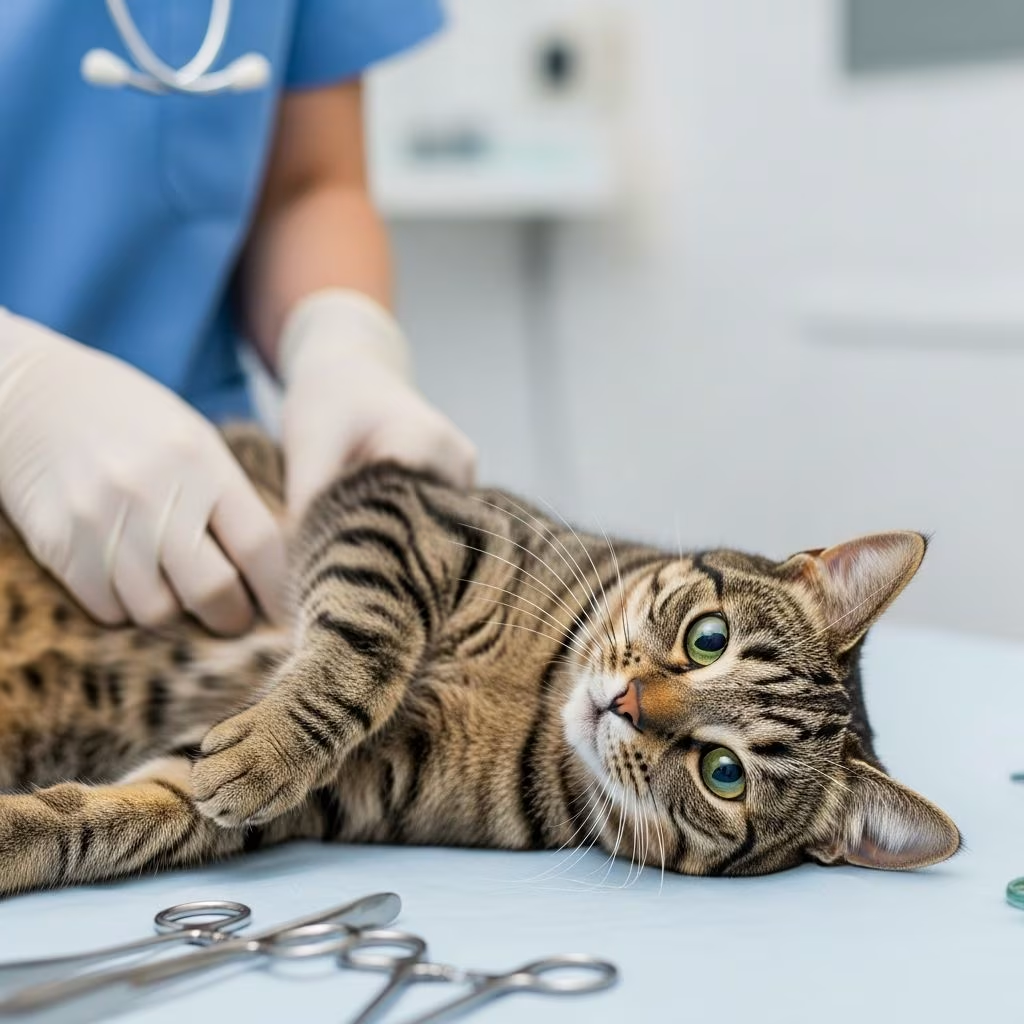
Understanding Retained Testicles (Cryptorchidism) in Cats
Cryptorchidism, commonly known as a retained testicle or undescended testicle, is a condition that affects male cats where one or both testicles fail to descend into the scrotal sac. This condition occurs during feline development, as testicles normally descend into the scrotum before birth or within the first few weeks of life. When this natural descent does not occur, the testicle remains in the inguinal canal or abdominal cavity, resulting in what veterinarians refer to as cryptorchidism. This condition can affect cats of any age and is relatively common in the feline population, with reported incidence rates ranging from 1 to 1.7 percent. Understanding this condition is crucial for cat owners, as it carries several health implications and requires proper veterinary management.
What Is Cryptorchidism?
Cryptorchidism is a developmental disorder characterized by the incomplete or nonexistent descent of the testicles. In normal feline development, both testicles should descend into the scrotum before birth or by 8 to 16 weeks of age. The testicles originate near the kidneys during fetal development and gradually migrate downward through the inguinal canal into the scrotal sac. When this process is interrupted or incomplete, one or both testicles may remain in their higher position.
The condition is classified into two main categories based on how many testicles are affected. Unilateral cryptorchidism occurs when only one testicle fails to descend, while bilateral cryptorchidism occurs when both testicles remain undescended. Unilateral cases are significantly more common than bilateral cases in cats. The location of the retained testicle also varies; it may be found in the inguinal canal (the passage through which the testicle normally descends), in the fold where the rear leg meets the abdomen, or somewhere within the abdominal cavity.
Causes and Risk Factors
The exact causes of cryptorchidism in cats are not fully understood, though several factors are believed to contribute to its development. Genetics plays a significant role, with some cat breeds thought to be more predisposed to the condition than others. The disorder is believed to have a hereditary component, though definitive hereditary patterns have not been conclusively documented in cats. Unlike dogs, where certain breeds show higher predisposition, comprehensive breed-specific data for cats remains limited and inconclusive.
Hormonal imbalances represent another contributing factor. Testosterone plays a crucial role in the descent of the testicles, and any disruption in the production or function of this hormone can interfere with normal testicular descent. Additionally, congenital abnormalities affecting the gubernaculum (the structure that guides testicle descent) or abnormal anatomical variations may prevent proper descent. While the condition may be inherited, no specific hereditary defect has been definitively identified in the cat population.
Clinical Signs and Symptoms
One of the notable characteristics of cryptorchidism is that it often produces minimal or no obvious clinical signs in the early stages. Many affected cats may appear completely normal to their owners. However, several indicators can suggest the presence of this condition.
Observable Physical Signs:
- Absence of one or both testicles in the scrotal sac—the most evident sign of cryptorchidism, typically noticeable by four months of age
- Small or shrunken testicles—in some cases, the testicle may be present but noticeably smaller than normal
- Abdominal swelling or discomfort—when undescended testicles are located in the abdomen, they may cause visible swelling or discomfort
Behavioral Signs:
Despite the absence of one or both testicles in their normal location, retained testicles continue to produce testosterone. This ongoing hormone production results in the persistence of male behavioral traits, even though the testicles are not in the scrotum. The most common behavioral signs include male marking behavior (spraying), strong male cat-associated odors, and increased aggression. These behavioral manifestations can be particularly problematic for indoor cats and their households.
Reproductive Implications:
Cryptorchidism can lead to infertility in affected cats. When both testicles are retained (bilateral cryptorchidism), the cat will typically be infertile because the heat of the abdomen inhibits sperm production, even though the testicles continue to produce testosterone. In unilateral cases where one testicle is retained and one is normal, fertility may be maintained, though the retained testicle will not contribute to sperm production.
Emergency Symptoms:
While cryptorchidism itself is not an emergency, complications can arise. Acute onset of abdominal pain may indicate testicular torsion, a condition where the spermatic cord becomes twisted, cutting off blood supply to the retained testicle. This is a serious and painful condition requiring immediate veterinary attention. Additionally, retained testicles have a significantly higher risk of developing tumors, which may produce additional clinical signs depending on the type of tumor that develops.
Diagnosis of Cryptorchidism
Diagnosing cryptorchidism involves a systematic approach combining physical examination and diagnostic imaging. The initial step is a thorough physical examination by a veterinarian. By four months of age, the absence of visible or palpable testicles in the scrotum is sufficient for a presumptive diagnosis of cryptorchidism. The veterinarian will carefully palpate (feel) the groin and scrotal area to assess whether testicles are present.
If one or both testicles cannot be detected in the scrotum, additional diagnostic methods become necessary to locate the retained testicle(s), as surgical removal is indicated. Ultrasound imaging is particularly helpful for locating abdominal testicles, as retained testicles in the abdomen often do not show up on standard radiographs (X-rays). The veterinarian may also examine the cat’s penis, as male cats with at least one functional testicle develop characteristic spines on the penile shaft. The presence of these spines indicates that testosterone is being produced, confirming the presence of at least one testicle even if it is not in the scrotum. In some cases, an undiluted urine odor about the cat is indicative of cryptorchidism, particularly in bilateral cases.
Health Risks and Complications
While cryptorchidism itself may not cause immediate problems, leaving a cryptorchid cat intact (unneutered) poses serious health risks. These complications underscore the importance of prompt veterinary intervention.
Testicular Cancer:
One of the most significant risks associated with retained testicles is the increased likelihood of testicular cancer development. Although the probability of metastasis (spreading) in cats is relatively low compared to dogs, the risk is still present and represents an unnecessary health concern. The retained testicle environment appears to create conditions favorable to tumor development.
Testicular Torsion:
Testicular torsion is another serious complication that can occur with retained testicles. Because a testicle retained in the belly is free-floating rather than being in the fixed position of the scrotum, it can twist on itself. This torsion is extremely painful and can be challenging to diagnose. Acute abdominal pain in a cryptorchid cat should raise suspicion for this condition.
Hormonal and Behavioral Issues:
The continued production of testosterone by retained testicles results in ongoing male behaviors such as spraying and aggression. These behavioral issues can significantly impact the cat’s quality of life and the owner’s ability to manage the pet effectively.
Treatment: Neutering and Surgical Considerations
Neutering (castration) is the recommended and standard treatment for cryptorchidism in cats and is even more critical for cryptorchid cats than for normal cats. The surgical procedure must remove both testicles to eliminate the risks of torsion, cancer, and to stop testosterone production and associated behaviors.
Neutering a cryptorchid cat is a more invasive and complex surgical procedure than a standard neutering operation on a cat with normally descended testicles. The complexity increases depending on the location of the retained testicle. If the testicle is located in the inguinal canal, the surgery may be relatively straightforward. However, if the testicle is located within the abdominal cavity, the procedure becomes more involved, requiring abdominal exploration to locate and remove the retained testicle. Due to this increased complexity, cryptorchid neutering is typically more expensive than a standard feline neuter procedure.
The veterinary surgeon must take care to locate and remove both testicles, even though only one may be retained. During surgery, the veterinarian will make appropriate incisions to access the retained testicle(s) and perform the castration. Post-operative care and recovery instructions should be carefully followed to ensure proper healing and prevent complications.
Why Feline Cryptorchidism Is Often Less Severe Than Canine Cryptorchidism
Interestingly, cats appear to have fewer incidences of testicular cancer and complications associated with cryptorchidism compared to dogs. This difference in disease manifestation between species may relate to differences in testicular physiology or immune response, though the exact mechanisms are not fully understood. Nevertheless, this does not diminish the importance of treating cryptorchidism in cats, as individual cases can still develop serious complications.
FAQ: Frequently Asked Questions About Cryptorchidism in Cats
Q: At what age should cryptorchidism be diagnosed in kittens?
A: If one or both testicles cannot be detected in the scrotum by four months of age, a diagnosis of cryptorchidism should be suspected and veterinary evaluation is recommended.
Q: Can a cat with bilateral cryptorchidism still reproduce?
A: No, bilateral cryptorchidism (both testicles undescended) typically results in infertility because the heat of the abdomen inhibits sperm production, though testosterone production continues.
Q: Will my cryptorchid cat still display male behaviors even with undescended testicles?
A: Yes, retained testicles continue to produce testosterone, so male behaviors such as spraying, strong odors, and aggression typically persist until the cat is neutered.
Q: Is cryptorchidism an emergency condition?
A: Cryptorchidism itself is not an emergency; however, complications such as testicular torsion (which causes severe abdominal pain) constitute a medical emergency and require immediate veterinary attention.
Q: How is ultrasound used to diagnose cryptorchidism?
A: Ultrasound imaging helps locate retained testicles within the abdomen, as retained testicles often do not appear on standard X-rays.
Q: Why is neutering a cryptorchid cat more expensive than a standard neuter?
A: The surgery is more complex and invasive because the veterinarian must locate and remove both testicles, which may require abdominal exploration if the retained testicle is located inside the abdomen.
Q: What should I do if I suspect my cat has cryptorchidism?
A: Contact your veterinarian for a physical examination. They can determine if cryptorchidism is present and recommend appropriate diagnostic imaging and treatment options.
Prevention and Long-term Management
While cryptorchidism cannot be prevented in individual cats (as it is a developmental condition often with hereditary components), responsible breeding practices that minimize hereditary predisposition are important for breed populations. For individual cat owners, early detection and prompt neutering are the best approaches to preventing complications associated with the condition.
If you own a male cat and notice that one or both testicles are not visible in the scrotum by four months of age, or if your cat displays persistent male behaviors combined with strong odors and aggression, consult your veterinarian for evaluation. Early diagnosis and surgical intervention can prevent serious complications and significantly improve your cat’s health and quality of life.
References
- Cryptorchidism in Cats: Causes, Symptoms, and Treatment — PetCareRx. 2024. https://www.petcarerx.com/article/cryptorchidism-in-cats-causes-symptoms-and-treatment/6543
- Retained Testicles: Cats and Kittens — Pet Health Network. 2024. https://www.pethealthnetwork.com/cat-health/cat-diseases-conditions-a-z/retained-testicles-cats-and-kittens
- Cryptorchidism in Cats — Kingsbrook Animal Hospital. 2024. https://kingsbrookvet.com/pdf/Cryptorchidism%20in%20Cats.pdf
- Retained Testicle in Cats (Cryptorchidism) — PetMD. 2024. https://www.petmd.com/cat/conditions/reproductive/c_ct_cryptorchidism
- Understanding Cryptorchid Cats: Causes and Treatments — PetsCare. 2024. https://www.petscare.com/news/post/cryptorchid-cats-causes-treatments
- Undescended Testicle(s) (Cryptorchidism) in Cats — Vetster. 2024. https://vetster.com/en/symptoms/cat/undescended-testicles-cryptorchidism-in-cats



