

Retained Testicle (Cryptorchidism) in Dogs
Cryptorchidism is a medical condition found in male dogs where one or both testicles fail to descend into the scrotum (testicular sac) during development. This condition affects a significant number of dogs and can lead to serious health complications if left untreated. Understanding this condition is crucial for dog owners, as early diagnosis and appropriate treatment can prevent painful and potentially life-threatening complications.
What is Cryptorchidism?
Cryptorchidism, also known as a retained testicle, occurs when the testicles do not descend into the scrotum as they should during a puppy’s development. In healthy male puppies, the testicles typically descend from their initial position near the kidneys into the scrotum through a passage called the inguinal canal, guided by a cord-like tissue structure known as the gubernaculum. This process is usually completed by six to eight weeks of age.
When cryptorchidism occurs, one or both testicles may remain either in the abdomen or in the groin (inguinal) region. If only one testicle fails to descend, the condition is called unilateral cryptorchidism. When both testicles remain undescended, it is termed bilateral cryptorchidism. The inguinal canal closes around six months of age, and if the testicles have not descended into the scrotum by this time, the puppy is officially considered cryptorchid. Right-sided inguinal cryptorchidism is the most common presentation of this condition.
Causes and Hereditary Factors
Cryptorchidism is a heritable condition, although the exact pattern of inheritance is not fully understood. The condition results from a developmental issue where the gubernaculum fails to develop properly, preventing the testicles from descending as they should.
Certain dog breeds are more commonly affected by cryptorchidism than others. These include:
- German Shepherds
- Siberian Huskies
- Bulldogs and other brachycephalic (flat-faced) breeds
- Chihuahuas
- Yorkshire Terriers
- Other small breed dogs
Because this is a hereditary condition, affected dogs should not be bred. Breeders should maintain careful records and screening to reduce the incidence of cryptorchidism in their breeding lines.
Health Risks Associated with Cryptorchidism
Dogs with retained testicles face several serious health complications. Understanding these risks emphasizes the importance of prompt diagnosis and treatment.
Testicular Cancer
One of the most significant risks associated with cryptorchidism is testicular cancer. Dogs with retained testicles are significantly more likely to develop testicular tumors compared to dogs with normally descended testicles. Various types of testicular tumors can occur, each with their own clinical manifestations.
A particularly notable tumor type is the Sertoli cell tumor, which can produce hormones leading to a condition called hyperestrogenism. This hormonal imbalance can cause feminization and symmetrical hair loss in affected dogs. Other testicular cancers may result in prostate problems or enlargement of the retained testicle. Most testicular cancers rarely spread to other parts of the body, and surgical removal of the affected testicle usually cures the condition.
Testicular Torsion
Another serious complication is testicular torsion, a painful emergency condition. Testicular torsion occurs when the retained testicle twists on itself, cutting off its blood supply. This condition causes sudden and severe abdominal pain and requires immediate veterinary attention and emergency neutering. Without prompt treatment, testicular torsion can be life-threatening.
Behavioral Issues
Even though a retained abdominal testicle will not produce viable sperm because the core body temperature is too warm, it still produces testosterone. This means dogs with cryptorchidism can still exhibit hormonally driven behaviors, such as urine marking, roaming, and aggression. These behaviors are undesirable and contribute to the importance of neutering.
Clinical Signs and Symptoms
Most dogs with cryptorchidism appear completely normal aside from the obvious physical finding of missing testicle(s) in the scrotum. Many owners may not realize their dog has this condition until a veterinarian discovers it during a routine physical examination.
However, if complications develop, clinical signs may include:
- Sudden and severe abdominal pain (indicating testicular torsion)
- Symmetrical hair loss and feminization (from hormone-producing tumors)
- Prostate problems
- Enlargement of the retained testicle
- Urine marking and aggression (hormonally driven behaviors)
- Roaming behaviors
It is important to note that pain is rarely associated with undescended testicles unless complications such as testicular torsion occur. Any signs of sudden distress or severe abdominal pain warrant immediate veterinary evaluation.
Diagnosis of Cryptorchidism
A veterinarian may suspect cryptorchidism if one or both testicles are not palpable in the scrotum during a physical examination. The diagnosis process typically involves several steps:
Physical Examination
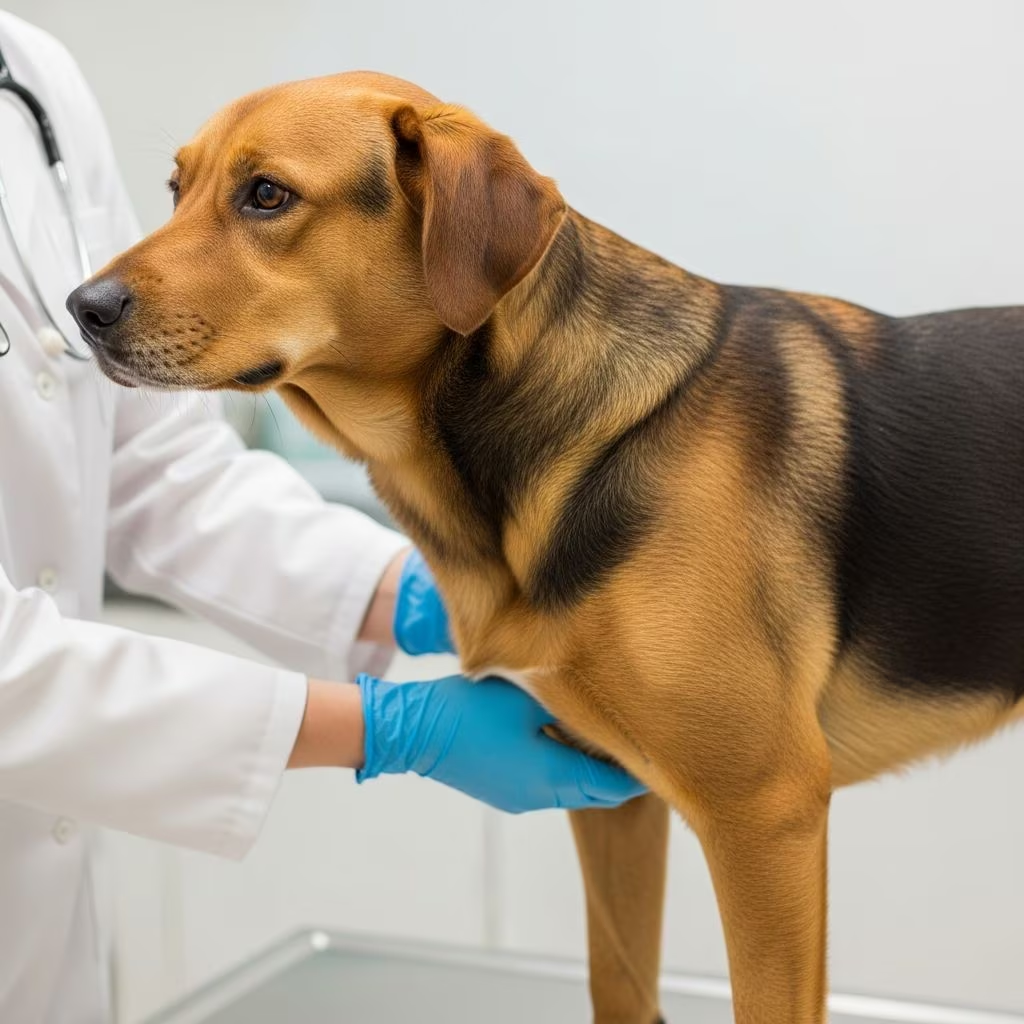
Your veterinarian will examine the scrotal sac to check for the presence of both testicles and assess for any swellings. If one or both testicles are not found in the scrotum, the veterinarian will carefully palpate (feel) the groin area and abdomen to determine if a retained testicle can be felt under the skin. If a testicle can be felt under the skin in the groin, an inguinal cryptorchid is diagnosed. If no testicle can be felt, the testicle is likely within the abdomen. The veterinarian may also examine the penis for penile spines, which disappear after neutering.
Imaging and Additional Tests
If the retained testicle cannot be felt during physical examination, an abdominal ultrasound may be recommended to locate it before surgery. This helps the surgeon plan the appropriate surgical approach.
In dogs with no palpable testicles or when there is uncertainty about whether a dog has been neutered previously, blood tests measuring specific hormones can confirm whether testicles are still present. Additional testing may include GnRH (gonadotrophin-releasing hormone) response tests or hCG (human chorionic gonadotrophin) tests to evaluate castration status. The GnRH test is typically preferred when possible because there is a decreased risk of allergic reaction.
Diagnosis Timeline
While your veterinarian may suspect cryptorchidism if testicles are not in the scrotum by eight weeks of age, the diagnosis is officially confirmed at six months of age if the testicles still have not descended.
Treatment Options
The only effective treatment for cryptorchidism is surgical removal of both testicles through a procedure called neutering or castration. This surgery is essential to prevent serious health complications and ensure that the hereditary condition is not passed on to future generations.
Surgical Approaches
The surgical approach varies depending on the location of the retained testicle:
- Inguinal Cryptorchidism: If the retained testicle is in the groin, a small incision can usually be made directly over it for removal.
- Abdominal Cryptorchidism: If the retained testicle is in the abdomen, surgery is performed through an abdominal incision, sometimes called exploratory surgery. During this procedure, the surgeon inspects various areas of the abdomen to locate the retained testicle, minimizing surgical time and complications.
Surgical Challenges
The retained testicle is often smaller than normal, which can make it more difficult to locate during surgery. The undescended testicle may be hidden in other tissue or located anywhere in the area between the scrotum and the kidney. Dogs with bilateral cryptorchidism typically have multiple surgical sites to remove and locate both testicles. If a testicle cannot be located during surgery, follow-up hormonal blood tests may be recommended to check for the presence of testicular tissue.
Surgery Timing
For puppies diagnosed with cryptorchidism, delaying neutering until one year of age is typically recommended to give the testicle(s) additional time to descend into the scrotum. Even if both testicles eventually descend, it is still recommended to neuter a dog with cryptorchidism since it is a hereditary defect of the gubernaculum.
Recovery and Post-Operative Care
After neutering surgery for cryptorchidism, recovery is typically two weeks total. However, it is beneficial to limit activity during this period to reduce swelling as much as possible. Your veterinarian may recommend an Elizabethan collar or another comparable cone to prevent your dog from licking and causing irritation to the surgical site.
Daily care during recovery includes:
- Checking the surgical site daily for swelling and redness
- Keeping the site clean and dry
- Limiting strenuous activity and exercise
- Monitoring for signs of infection or complications
- Following all post-operative medication instructions if prescribed
Discuss surgical aftercare with your veterinarian prior to surgery and when picking up your dog after surgery to establish a follow-up timeline and ensure that surgical recovery is properly outlined.
Surgical Costs and Considerations
Surgery for cryptorchidism typically costs more than a routine neuter due to additional testing needed to locate the testicles and confirm their presence. Several factors influence the overall cost:
- Increased surgical time caused by attempting to locate the undescended testicle
- Additional surgical sites and materials used during the procedure
- Additional surgeries that may be needed to correct the issue
- Referral to a specialist if necessary
- Pre-operative imaging such as ultrasound
It is important to speak with your veterinarian about the surgical treatment plan to get an accurate cost range for your specific situation.
Prognosis and Outcome
The prognosis for dogs with cryptorchidism after surgical removal of both testicles is excellent. Surgery eliminates the risk of testicular cancer and torsion, significantly improving your dog’s quality of life and longevity. Recovery is similar to that of a routine neuter or abdominal surgery, and most dogs return to normal activity within a few weeks.
Without surgery, dogs remain at a higher risk of developing testicular cancer or experiencing testicular torsion. Most testicular cancers rarely spread to other parts of the body, and surgical removal of the affected testicle usually cures the condition when detected early.
Frequently Asked Questions
Q: Is cryptorchidism in dogs fatal?
A: The condition of cryptorchidism itself is not fatal. However, it can lead to complications such as testicular cancer, which can potentially be fatal if not treated promptly. This is why early diagnosis and surgical treatment are so important.
Q: Can a dog with cryptorchidism still reproduce?
A: If only one testicle is retained in the abdomen, reproduction is possible since the descended testicle can still produce viable sperm. However, if both testicles are retained in the abdomen, the dog will likely be infertile because body temperature prevents sperm production. Regardless, dogs with cryptorchidism should not be bred due to the hereditary nature of this condition.
Q: What are the common surgical complications?
A: The most common complications from surgery can include hemorrhage, pain, swelling, surgical site splitting, discharging fluid, hypoglycemia, and hypothermia. These complications are generally manageable with proper post-operative care and veterinary monitoring.
Q: Can cryptorchidism resolve on its own?
A: While there is a possibility that testicles may descend by one year of age, cryptorchidism requires surgical intervention to prevent serious health complications. Delaying treatment increases the risk of testicular cancer and other complications.
Q: Will my dog’s behavior change after neutering?
A: Yes, after neutering, hormonally driven behaviors such as urine marking, roaming, and aggression should diminish or disappear. Your dog will still be his same loving companion but will be healthier and safer.
Q: How can I prevent cryptorchidism in puppies?
A: Since cryptorchidism is hereditary, responsible breeders should screen their breeding dogs and avoid breeding dogs with a history of cryptorchidism. If you are considering a puppy from a breed prone to this condition, inquire about the breeder’s screening practices.
References
- Cryptorchidism in dogs (retained testicle) — Cornell University College of Veterinary Medicine, Riney Canine Health Center. https://www.vet.cornell.edu/departments-centers-and-institutes/riney-canine-health-center/canine-health-information/cryptorchidism-dogs-retained-testicle
- Cryptorchidism in Dogs — PetMD. https://www.petmd.com/dog/conditions/reproductive/c_multi_cryptorchidism
- Retained Testicle (Cryptorchidism) in Dogs — VCA Animal Hospitals. https://vcahospitals.com/know-your-pet/retained-testicle-cryptorchidism-in-dogs
- Cryptorchidism | Animal Health Topics — School of Veterinary Medicine, University of California Davis. https://healthtopics.vetmed.ucdavis.edu/health-topics/canine/what-you-need-know-about-cryptorchidism
- Cryptorchidism/undescended testicles in dogs — People’s Dispensary for Sick Animals (PDSA). https://www.pdsa.org.uk/pet-help-and-advice/pet-health-hub/conditions/cryptorchidism-undescended-testicles-in-dogs



