

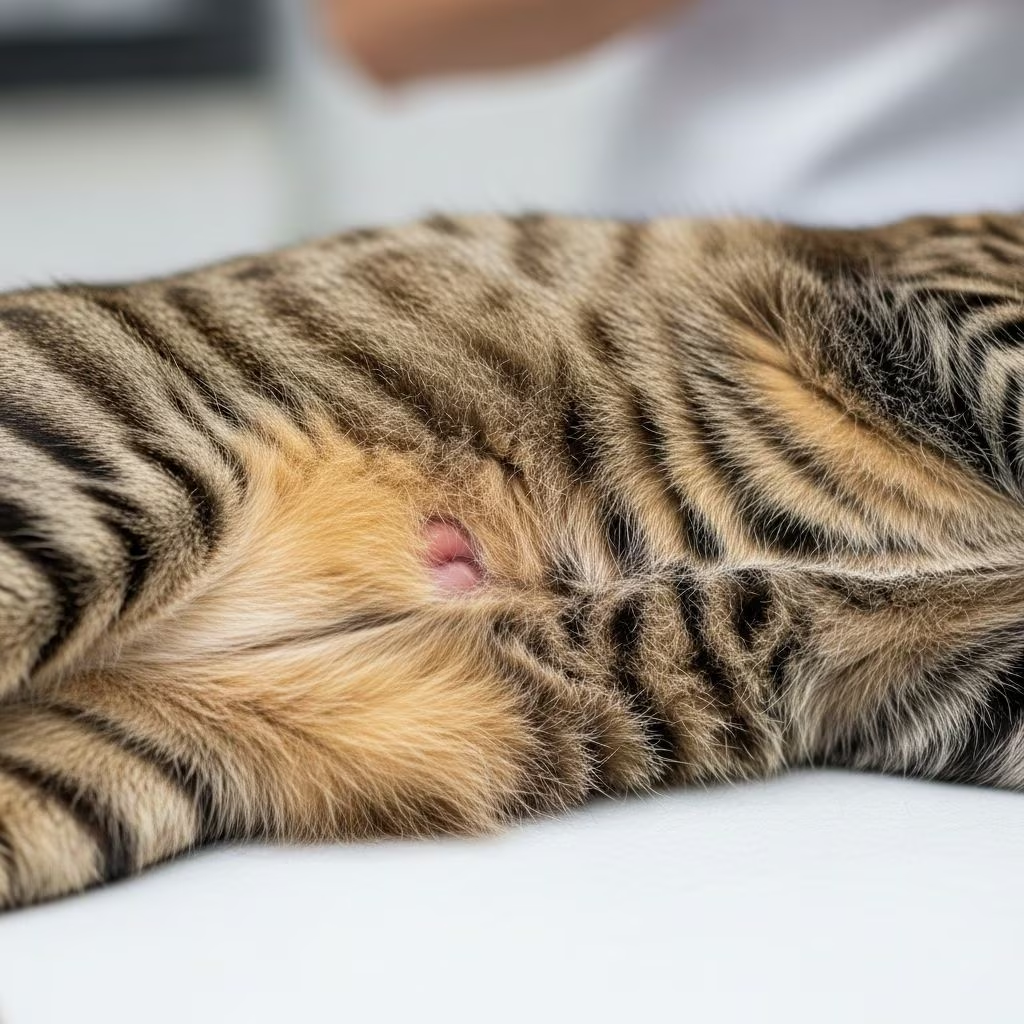
Understanding Retained Testicles in Cats
Cryptorchidism, commonly known as retained testicles or undescended testicles, is a condition affecting male cats where one or both testicles fail to descend into the scrotal sac as they should during normal development. This condition occurs in approximately 1 to 1.7 percent of the cat population and can affect cats of any breed, though some breeds may be more predisposed than others. While cryptorchidism can occur in both kittens and adult cats, early detection and appropriate management are essential to prevent serious health complications.
In healthy male kittens, both testicles should descend into the scrotum before birth or within the first 8 to 16 weeks of life. When one or both testicles fail to complete this descent, they remain either in the inguinal canal or within the abdominal cavity. Understanding this condition is important for cat owners because retained testicles can lead to serious health risks if left untreated.
Types of Cryptorchidism
Veterinarians classify cryptorchidism into two main categories based on which testicles are affected:
– Unilateral Cryptorchidism: This occurs when only one testicle fails to descend into the scrotum. This is the more common presentation in cats, as one-sided failure to descend is more frequent than bilateral involvement. With unilateral cryptorchidism, the cat typically has one normally descended testicle and one retained testicle.- Bilateral Cryptorchidism: This occurs when both testicles remain undescended. Although less common than unilateral cases, bilateral cryptorchidism is more serious because it typically results in complete infertility, as the heat of the abdomen prevents sperm production in both retained testicles.
Additionally, veterinarians may describe cryptorchidism by the location of the retained testicle. The undescended testicle may be located in the inguinal canal (the passage through which testicles normally descend) or retained within the abdominal cavity. The location of the retained testicle affects both the diagnostic approach and the complexity of surgical removal.
Causes of Cryptorchidism in Cats
While the exact cause of cryptorchidism in cats remains not fully understood, several factors may contribute to this condition:
– Genetic Predisposition: Cryptorchidism is believed to have a hereditary component, with some cat breeds thought to be more predisposed to the condition than others. The condition may be inherited, though specific hereditary defects have not been conclusively documented in cats.- Hormonal Imbalances: Testosterone plays a crucial role in the normal descent of testicles during fetal development and early kitten life. Any disruption in testosterone production or hormonal signaling can prevent proper descent of the testicles.- Anatomical Abnormalities: Physical abnormalities in the structures involved in testicular descent may prevent the testicles from reaching the scrotum normally.
It’s important to note that cryptorchidism is not caused by trauma, nutrition, or environmental factors that occur after birth. The condition is determined during fetal development.
Recognizing the Symptoms
Cryptorchidism often produces no obvious symptoms, especially in the early stages, which is why regular veterinary examinations are important for early detection. However, several signs may indicate the presence of this condition:
– Absence of Testicles in the Scrotum: The most obvious sign of cryptorchidism is the inability to feel or visualize one or both testicles in the normal scrotal location. By four months of age, if one or both testicles cannot be detected in the scrotum, cryptorchidism should be suspected.- Small or Shrunken Testicles: In some cases, one testicle may be present but noticeably smaller or shrunken compared to the other. A single retained testicle is often significantly smaller than the normally descended testicle.- Behavioral Changes: Because retained testicles continue to produce testosterone, cats with cryptorchidism often display typical male behaviors including urine marking (spraying), persistent male-associated odors, and increased aggression. These behaviors persist until the cat is neutered.- Abdominal Swelling or Discomfort: If the undescended testicles are located in the abdomen, the cat may experience abdominal swelling or mild discomfort.- Acute Abdominal Pain: A sudden onset of severe abdominal pain may indicate testicular torsion, a serious complication where the spermatic cord twists on itself, cutting off blood supply to the retained testicle. This is a medical emergency requiring immediate veterinary attention.
Many cats with cryptorchidism show no external signs until complications develop, making regular veterinary check-ups essential for early detection.
How Cryptorchidism is Diagnosed
Diagnosing cryptorchidism involves a thorough veterinary examination using multiple approaches:
– Physical Examination: Your veterinarian will carefully palpate (feel) the scrotum and surrounding groin area to determine if testicles are present in their normal location. The absence of visible or palpable testicles in the scrotum is sufficient for an initial diagnosis.- Ultrasound Imaging: When a testicle cannot be felt during physical examination, ultrasound is often used to locate the retained testicle, particularly if it is suspected to be in the abdomen. Abdominal testicles often do not show up on X-rays, but ultrasound is frequently helpful for localization.- Hormonal Testing: In some cases, hormonal testing may be performed to confirm the presence of functional testicular tissue.- Penile Examination: Examining the cat’s penis can help determine if an abdominal testicle is present, as male cats with at least one functional testicle develop spines on the penis shaft, even if the testicle is not visible in the scrotum.
Diagnosis is typically made when testicles cannot be detected in the scrotum by four months of age. In some cases, a cat may have both testes undescended, and there may be a noticeable odor of urine about the cat.
Potential Complications of Untreated Cryptorchidism
Leaving a cryptorchid cat intact (not neutered) can lead to serious health complications that may threaten the cat’s life and well-being:
– Testicular Cancer: Retained testicles have a significantly higher risk of developing cancerous tumors compared to normally descended testicles. While cats appear to have fewer incidences of testicular cancer compared to dogs, the risk is still substantially elevated in cryptorchid cats. Many tumors produce clinical signs through the production of estrogen or other hormones.- Testicular Torsion: A testicle retained in the belly is free-floating instead of being fixed in position in the scrotum, and it can twist on itself (testicular torsion). This torsion cuts off the blood supply to the testicle and causes severe abdominal pain. Testicular torsion is a medical emergency requiring immediate surgical intervention. This condition can be tricky to diagnose due to its similarity to other abdominal conditions.- Infertility: Bilateral cryptorchidism typically results in complete infertility, as the heat of the abdomen prevents sperm production in both retained testicles. Even with unilateral cryptorchidism, the undescended testicle may not produce viable sperm.- Persistent Behavioral Issues: Retained testicles continue to produce testosterone, so undesirable behaviors like urine marking and aggression persist until the cat is neutered.
Treatment Options
The recommended treatment for cryptorchidism in cats is surgical removal of both testicles (castration), even if only one testicle is retained. This is more important for cryptorchid cats than for normal cats because retained testicles pose serious health risks.
Why Surgery is Necessary
Surgical intervention eliminates the risk of testicular cancer and torsion while also preventing the continued production of testosterone that drives undesirable male behaviors. Neutering a cryptorchid cat is a more invasive and complex procedure than standard neutering of an anatomically normal cat. This is because the veterinarian must locate and remove the retained testicle, which may require abdominal surgery if the testicle is located inside the abdomen rather than in the inguinal canal.
Surgical Considerations
Because cryptorchid neutering involves more extensive surgery than routine neutering, the procedure is often more expensive and may require a longer recovery period. Your veterinarian will discuss the specific surgical approach needed based on where the retained testicle is located. Post-operative care is important to ensure proper healing and to monitor for any complications.
Frequently Asked Questions
Q: At what age should cryptorchidism be detected?
A: Cryptorchidism should be suspected if one or both testicles cannot be felt in the scrotum by four months of age. In healthy kittens, both testicles should descend by 8 to 16 weeks of life. If they haven’t descended by four months, veterinary evaluation is recommended.
Q: Is cryptorchidism common in cats?
A: Cryptorchidism occurs in approximately 1 to 1.7 percent of the cat population, making it relatively uncommon but not rare. It can affect cats of any breed, though some breeds may be more predisposed.
Q: Can cryptorchidism resolve on its own?
A: No, cryptorchidism does not resolve on its own. If testicles have not descended by four months of age, they will not descend naturally. Surgical intervention is necessary to prevent serious health complications.
Q: Will my cryptorchid cat still display male behaviors?
A: Yes, retained testicles continue to produce testosterone, so cryptorchid cats will continue to display male behaviors including urine marking, spraying, and aggression until they are neutered. These behaviors will resolve after surgical castration.
Q: Is cryptorchidism hereditary?
A: Cryptorchidism is believed to have a hereditary component, and some cat breeds are thought to be more predisposed than others. However, specific hereditary defects have not been conclusively documented in cats.
Q: What should I expect during recovery from cryptorchid neutering surgery?
A: Recovery from cryptorchid neutering may take longer than standard neutering because the surgery is more invasive, particularly if abdominal surgery was required. Your veterinarian will provide specific post-operative care instructions, including activity restrictions and wound care.
Q: How much more expensive is cryptorchid neutering compared to routine neutering?
A: Neutering a cryptorchid cat is often significantly more expensive than routine neutering due to the increased surgical complexity and time required to locate and remove the retained testicle. The exact cost will depend on your veterinarian and the location of the retained testicle.
When to Contact Your Veterinarian
Contact your veterinarian if you notice any of the following:
– You cannot feel both testicles in the scrotum of your male kitten by four months of age- Your cat displays persistent male behaviors such as urine marking despite being intact- Your cat shows signs of acute abdominal pain, which may indicate testicular torsion- You notice abdominal swelling or discomfort in your male cat
Conclusion
Cryptorchidism is a condition that requires veterinary attention and surgical management to prevent serious health complications. While some cats with retained testicles may show no obvious symptoms, the risks of testicular cancer and torsion make prophylactic castration the recommended treatment. If you suspect your cat has cryptorchidism, schedule an appointment with your veterinarian for proper diagnosis and discussion of treatment options. Early detection and treatment can help ensure your cat’s long-term health and well-being.
References
- Cryptorchidism in Cats: Causes, Symptoms, and Treatment — PetCareRx. https://www.petcarerx.com/article/cryptorchidism-in-cats-causes-symptoms-and-treatment/6543
- Retained Testicles in Cats and Kittens — Pet Health Network. https://www.pethealthnetwork.com/cat-health/cat-diseases-conditions-a-z/retained-testicles-cats-and-kittens
- Cryptorchidism in Cats — Kingsbrook Animal Hospital. https://kingsbrookvet.com/pdf/Cryptorchidism%20in%20Cats.pdf
- Retained Testicle in Cats — PetMD. https://www.petmd.com/cat/conditions/reproductive/c_ct_cryptorchidism
- Understanding Cryptorchid Cats: Causes and Treatments — PetsCare. https://www.petscare.com/news/post/cryptorchid-cats-causes-treatments
- Undescended Testicle(s) (Cryptorchidism) in Cats — Vetster. https://vetster.com/en/symptoms/cat/undescended-testicles-cryptorchidism-in-cats



