
Retained Placenta In Sows: Causes, Signs, And Treatment
Comprehensive guide to understanding, managing, and preventing retained fetal membranes in swine production for optimal herd health.
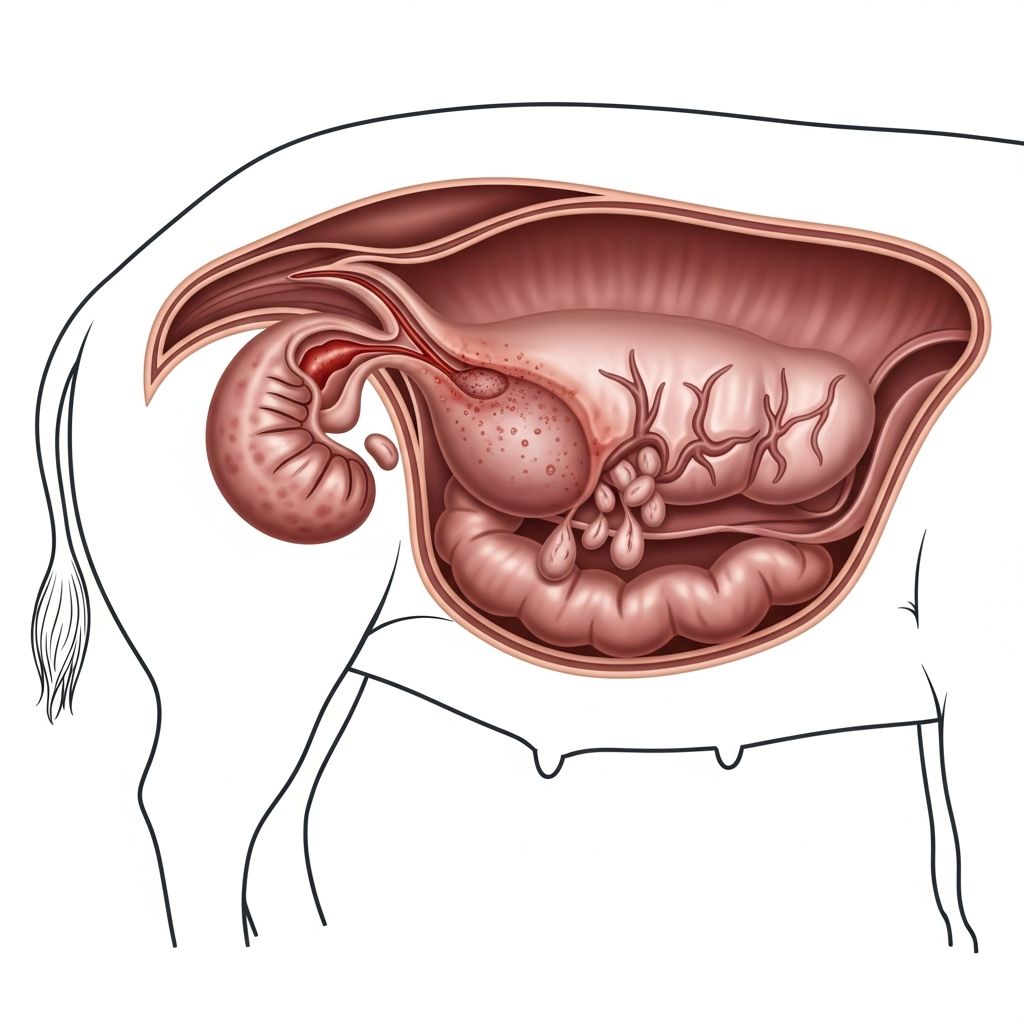
Retained placenta, also known as retained fetal membranes, represents a significant postpartum issue in sows that can disrupt farrowing processes and compromise herd productivity. This condition arises when all or part of the placenta fails to be expelled after piglet delivery, potentially leading to infections and delayed recovery. Understanding its mechanisms is crucial for timely intervention in modern swine operations.
Understanding the Physiology of Normal Placental Expulsion
In healthy sows, the placenta detaches and is expelled shortly after the last piglet is born, typically within hours of farrowing completion. This process relies on coordinated uterine contractions and enzymatic breakdown at the maternal-fetal interface. Hormonal signals, including prostaglandins and oxytocin, trigger these contractions, facilitating separation without complications.
Failure in this sequence often stems from disruptions in uterine tone or immunological responses at the placental attachment sites. Unlike ruminants where cotyledon-caruncle separation is key, porcine placentas involve diffuse epitheliochorial attachment, making retention patterns unique to swine.
Primary Causes and Risk Factors
Several factors predispose sows to retained placenta. High parity sows, those experiencing prolonged farrowing, or litters with stillborns face elevated risks. Nutritional deficiencies, particularly in selenium and vitamin E, impair uterine function and antioxidant defenses, hindering normal expulsion.
- Large litters: Overstretching the uterus delays recovery and contractions.
- Dystocia: Assisted births or malpresentations exhaust uterine musculature.
- Infections: Pre-farrowing bacterial or viral loads weaken placental detachment.
- Hormonal imbalances: Insufficient progesterone decline or oxytocin release.
- Environmental stress: Heat, overcrowding, or poor hygiene in farrowing crates.
Breeds like Landrace or Yorkshire may show higher incidence due to genetic predispositions toward larger litters. Management practices, such as early weaning or abrupt diet changes, further exacerbate vulnerability.
Recognizing Clinical Signs Early
Sows with retained placenta often exhibit subtle initial signs that progress if untreated. Visible placental tissue protruding from the vulva is a hallmark, accompanied by foul-smelling vaginal discharge indicating bacterial overgrowth. Affected sows may show reduced appetite, lethargy, and fever above 40°C.
| Stage | Symptoms | Duration Post-Farrowing |
|---|---|---|
| Early (0-24 hours) | Placenta visible, mild discharge | Immediate |
| Intermediate (24-72 hours) | Foul odor, inappetence, fever | 1-3 days |
| Advanced (>72 hours) | Sepsis signs, toxemia, metritis |
Monitoring during the first 48 hours post-farrowing is essential, as retention beyond 12 hours warrants attention. Piglet nursing behavior can also decline, signaling maternal distress.
Diagnostic Approaches in Practice
Diagnosis begins with a thorough history of the farrowing event, including litter size and any interventions. Visual inspection of the vulva confirms retention, while rectal palpation assesses uterine tone. Ultrasonography reveals retained fluid or tissue masses, aiding differentiation from metritis alone.
Vaginal examination, though risky for iatrogenic infection, provides direct confirmation. Bloodwork for elevated white cell counts or inflammatory markers supports systemic involvement. Differential diagnoses include uterine prolapse or pyometra, necessitating precise evaluation.
Effective Treatment Strategies
Treatment prioritizes gentle expulsion and infection control without forceful manipulation, which risks endometrial damage. Expectant management suits uncomplicated cases, as autolysis often resolves retention within 3-7 days.
- Oxytocin administration: 10-20 IU intramuscularly every 4-6 hours to enhance contractions.
- Prostaglandins: PGF2α (10-25 mg IM) promotes luteolysis and uterine involution.
- Antibiotics: Systemic ceftiofur or procaine penicillin for feverish sows; avoid intrauterine if membranes persist to prevent delayed expulsion.
- Supportive care: IV fluids, calcium gluconate for hypocalcemia, and NSAIDs for inflammation.
Manual removal is contraindicated unless membranes detach freely, as trauma predisposes to chronic endometritis. Emerging therapies like collagenase infusions target proteolytic deficiencies but require veterinary oversight.
Potential Complications and Their Management
Untreated retention invites metritis, with purulent discharge and toxemia threatening sow survival. Delayed uterine involution extends the weaning-to-estrus interval by 10-20 days, slashing conception rates. Chronic cases evolve into pyometra or abscesses, necessitating culling.
Laminitis from endotoxins and mastitis from immune diversion compound losses. Economic impacts include 15-30% milk yield drops in subsequent lactations and heightened cull rates.
Prevention Tactics for Swine Herds
Proactive herd management curtails incidence to under 5%. Key measures include:
- Balanced rations with 0.3 ppm selenium and 50 IU/kg vitamin E.
- Induction avoidance unless dystocia impends.
- Hygiene protocols: Clean farrowing areas, footbaths.
- Genetic selection for easy-farrowing lines.
- Pre-farrowing exams to identify at-risk sows.
Vaccination against parvovirus and erysipelas bolsters immunity. Farrowing assistance training for staff minimizes dystocia.
Impact on Herd Productivity and Economics
Retained placenta inflates costs by $50-150 per case via vet fees, antibiotics, and lost piglets. Herd-level incidence above 10% correlates with 0.5 fewer weaned pigs per litter annually. Fertility rebounds quickly with prompt care, but recurrent cases signal nutritional or genetic flaws warranting overhaul.
FAQs on Retained Placenta in Sows
What is the normal time for placental expulsion in sows?
Typically within 2-4 hours post-last piglet, though up to 12 hours may be physiological.
Is manual removal safe?
No; it often causes uterine tears and infections. Use hormones first.
How does nutrition prevent retention?
Selenium-vitamin E sufficiency supports collagenase activity for detachment.
What if the sow develops fever?
Initiate systemic antibiotics and monitor for metritis immediately.
Does retention recur in future parities?
Yes, at 20-40% risk; cull chronic offenders.
Case Studies: Real-World Management
In a 500-sow unit, selenium supplementation halved retention rates from 12% to 6% over six months. Another farm using oxytocin protocols post-farrowing saw metritis drop by 70%. These underscore integrated approaches’ value.
References
- Physiology and treatment of retained fetal membranes in cattle — PubMed/NCBI. 2010-02-01. https://pubmed.ncbi.nlm.nih.gov/20136715/
- Retained Fetal Membranes in Cattle — Evolution Farm Vets. 2023. https://www.evolutionfarmvets.co.uk/retained-fetal-membranes-cattle
- Retained Fetal Membrane in a Dairy Cow and its Management Option — Ecronicon. 2020. https://ecronicon.net/assets/eccmc/pdf/ECCMC-03-00309.pdf
- Propaedeutic and Therapeutic Practices Used for Retained Fetal Membranes — ORBi ULiege. 2024. https://orbi.uliege.be/bitstream/2268/320355/1/2024%20Hanzen%20Survey%20on%20placental%20retention.pdf
- Swine retained placenta: what is it, causes, symptoms, prevention — Vetagro. 2023. https://www.vetagro.com/swine-retained-placenta-causes-symptoms-prevention/
Similar Articles








Read full bio of Sneha Tete


