
Restrictive Cardiomyopathy in Companion Animals
Understanding the stiffened heart condition affecting dogs and cats
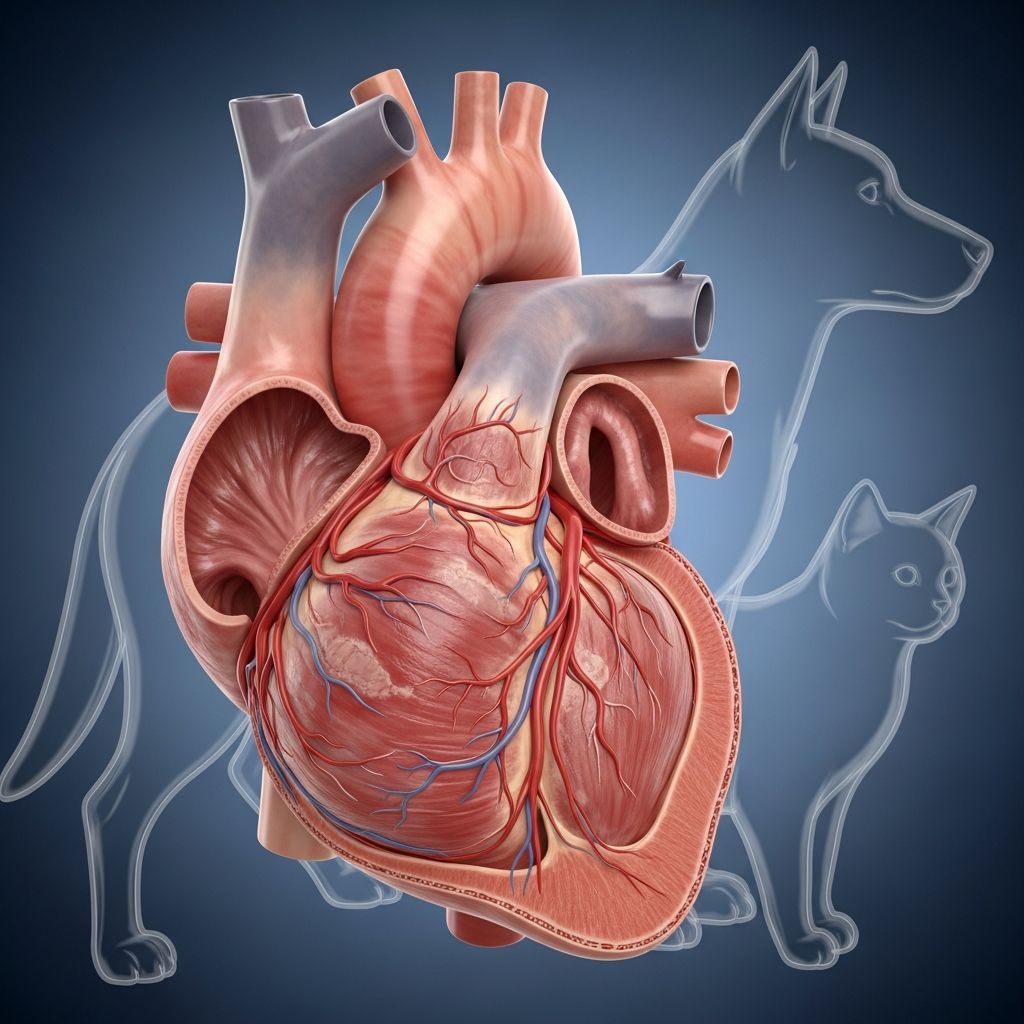
Restrictive cardiomyopathy represents a significant cardiac pathology in companion animals, particularly affecting feline populations. This condition fundamentally alters the mechanical properties of the heart muscle, preventing normal blood filling and circulation. Understanding this disease is essential for pet owners, veterinary professionals, and anyone involved in companion animal care, as early recognition can substantially impact treatment outcomes and quality of life.
What Is Restrictive Cardiomyopathy and How Does It Develop?
Restrictive cardiomyopathy is the second most prevalent form of cardiomyopathy encountered in cats, characterized by a stiffened, non-compliant left ventricle. The fundamental problem lies in excessive collagen accumulation and scar tissue formation within the ventricular wall, reducing the heart’s capacity to relax and expand normally. This pathological process creates a heart that becomes progressively more rigid, similar to a balloon that has lost its elasticity.
The condition manifests through several distinct forms, including endomyocarditis with endocardial fibrosis, endomyocardial fibrosis, and isolated myocardial fibrosis. Each variant represents different patterns of scar tissue deposition, though all share the common feature of ventricular stiffness. As the left ventricle loses its compliance, the pressure required to fill the chamber increases significantly. This hemodynamic alteration triggers a cascade of secondary changes throughout the cardiac system.
The increased diastolic pressure—the pressure during the filling phase of the cardiac cycle—leads to enlargement of the left atrium as blood backs up behind the stiffened ventricle. The enlarged atrium faces elevated pressures, which transmit backward into the pulmonary circulation. This mechanism ultimately results in pulmonary edema (fluid accumulation in the lungs) and pleural effusion (fluid around the lungs), both hallmarks of left-sided heart failure.
Recognizing Clinical Manifestations and Symptoms
Restrictive cardiomyopathy often progresses silently, with many affected cats showing no observable signs in early disease stages. However, once clinical disease develops, several characteristic symptoms emerge that warrant immediate veterinary evaluation:
- Respiratory changes: Rapid or labored breathing, elevated resting respiratory rates exceeding 35 breaths per minute, and open-mouth breathing patterns indicate pulmonary involvement
- Constitutional symptoms: Lethargy, poor appetite, and progressive weight loss reflect systemic disease progression
- Cardiovascular signs: Fainting episodes (syncope) may occur due to inadequate cardiac output to the brain
- Neurological complications: Impaired movement or hind limb paralysis can develop suddenly when blood clots lodge in critical arteries
- Physical examination findings: Pale mucous membranes indicate poor tissue perfusion, while abdominal distention suggests fluid accumulation
In canine patients, restrictive cardiomyopathy—though less common—produces similar clinical manifestations including shortness of breath, fainting episodes, and fluid buildup in pulmonary tissues. Dogs with this condition experience decreased blood flow to the heart muscle itself, creating a progressive weakening cycle that enlarges the cardiac chambers.
Thromboembolic Complications: A Life-Threatening Consequence
One of the most serious complications of restrictive cardiomyopathy involves blood clot formation within the enlarged left atrium. The stasis of blood flow in the dilated, non-contractile atrial chambers creates ideal conditions for thrombogenesis. If these thrombi dislodge and travel through the arterial circulation, they can lodge in distant vessels, blocking blood flow to vital tissues.
The most common location for arterial embolization is the aortic bifurcation, resulting in what veterinarians call a “saddle thrombus”. Cats affected by this complication experience sudden-onset hind limb lameness or complete paralysis, frequently accompanied by severe pain and tissue ischemia. This represents a medical emergency requiring immediate veterinary intervention. Animals experiencing sudden paralysis or unexplained hind limb dysfunction require urgent evaluation, as prompt treatment may preserve limb viability.
Diagnostic Approach and Imaging Modalities
Definitive diagnosis of restrictive cardiomyopathy requires a multimodal diagnostic approach combining clinical evaluation with specialized imaging and electrical assessment:
Initial Evaluation: Veterinarians begin with comprehensive physical examination followed by laboratory assessments including complete blood count, blood chemistry profile, electrolyte panel, and urinalysis. These tests help exclude other conditions that might mimic cardiac disease. A thorough history documenting symptom onset, progression, and any preceding events provides essential context for diagnosis.
Electrocardiography: Electrocardiographic recording evaluates the electrical conductivity of cardiac contraction, identifying abnormalities in rhythm generation and conduction pathways. This test is particularly valuable for detecting arrhythmias and assessing electrical abnormalities secondary to structural remodeling.
Radiographic Assessment: Thoracic radiographs reveal pulmonary edema and pleural effusion patterns characteristic of heart failure. Chest X-rays provide essential information about the extent of pulmonary involvement and guide treatment decisions regarding diuretic therapy.
Echocardiography: Two-dimensional echocardiography remains the gold standard for visualizing cardiac structure and function. In cases with obvious endocardial thickening or partial cavity obliteration, diagnosis can be readily established through conventional echocardiographic imaging. However, in less obvious presentations, advanced Doppler techniques become essential.
Specialized echocardiographic techniques, including pulsed-wave Doppler assessment of mitral inflow patterns and tissue Doppler imaging, allow evaluation of diastolic function and may be necessary to confirm diagnosis in borderline cases. Color flow Doppler echocardiography frequently demonstrates mitral regurgitation secondary to atrial and ventricular remodeling. The presence of left atrial thrombi, most commonly in the left auricle, can be identified on echocardiographic evaluation.
Understanding the Pathophysiology and Functional Consequences
The fundamental derangement in restrictive cardiomyopathy involves diastolic dysfunction—impaired ventricular relaxation and filling. Unlike dilated cardiomyopathy where systolic (contraction) function fails, restrictive cardiomyopathy typically preserves systolic function, meaning the ventricle can still generate adequate contractile force. The problem instead resides in the filling phase of the cardiac cycle.
The stiffened ventricular wall requires abnormally elevated filling pressures to achieve adequate volume for ejection. This paradoxically leads to better-preserved ejection fractions but at the cost of elevated atrial pressures. The increased afterload on the left atrium perpetuates progressive atrial dilation, creating favorable conditions for blood stasis and thrombus formation.
Etiology: Current Understanding and Suspected Mechanisms
Despite decades of veterinary research, the underlying etiology of restrictive cardiomyopathy remains largely unknown. This frustrating gap in understanding limits preventive strategies and genetic counseling recommendations. However, several suspected mechanisms have been proposed based on pathological findings and clinical associations:
- Myocardial inflammation (myocarditis) with subsequent fibrotic replacement
- Combined inflammation of the myocardium and endocardium (endomyocarditis)
- Parasitic infections affecting myocardial tissue
- Myocardial infarction and subsequent scar tissue formation
- Diffuse coronary microvascular disease resulting in chronic myocardial ischemia
- Systemic hypertension and its chronic effects on ventricular structure
- Hyperthyroidism in feline patients, which can stimulate pathological cardiac remodeling
The fact that multiple potential mechanisms may lead to similar pathological endpoints suggests restrictive cardiomyopathy may represent a final common pathway of diverse etiologies rather than a single disease entity.
Prognosis and Long-Term Outcomes
The prognosis for animals diagnosed with restrictive cardiomyopathy is considerably more guarded than for other cardiomyopathic forms. Cats diagnosed with restrictive cardiomyopathy without evidence of congestive heart failure at diagnosis demonstrate a median survival time of 1 to 2 years. This emphasizes the progressive nature of the underlying pathology even in asymptomatic or minimally symptomatic cases.
Once congestive heart failure develops, the prognosis deteriorates significantly. Animals with any form of cardiomyopathy presenting with overt heart failure carry expected median survival times ranging from 2 to 12 months, depending on treatment responsiveness and individual variation. Animals experiencing thromboembolic complications face particularly poor outcomes, with guarded to poor prognosis regardless of the underlying cardiomyopathic form.
The worse prognosis associated with restrictive cardiomyopathy compared to hypertrophic forms likely reflects the progressive nature of fibrosis and the limited regenerative capacity of fibrotic tissue. Treatment focuses on managing secondary complications rather than addressing the primary pathology.
Management Strategies and Therapeutic Considerations
Clinical management of restrictive cardiomyopathy mirrors that used for hypertrophic cardiomyopathy, though the underlying pathophysiology differs. Treatment remains largely palliative, aimed at managing heart failure symptoms and preventing thromboembolic complications:
Diuretic Therapy: Loop diuretics reduce pulmonary edema and pleural effusion by promoting sodium and water excretion, rapidly improving respiratory symptoms. Careful dosing maintains optimal preload balance without compromising renal perfusion.
Afterload Reduction: ACE inhibitors and other vasodilators reduce ventricular afterload, potentially improving diastolic function and reducing atrial pressure elevation.
Anticoagulation: Antiplatelet or anticoagulant therapy may be considered to reduce thromboembolic risk, though evidence for efficacy in veterinary medicine remains limited.
Dietary Management: Sodium restriction may complement diuretic therapy in heart failure management, while maintaining adequate taurine supplementation supports myocardial function.
Frequently Asked Questions
Is restrictive cardiomyopathy hereditary?
The genetic basis of restrictive cardiomyopathy remains unclear. While genetic predisposition is suspected in some cases, no definitive hereditary patterns have been established, making breed-specific screening recommendations impossible at this time.
Can restrictive cardiomyopathy be cured?
Currently, no cure exists for restrictive cardiomyopathy. Treatment focuses on managing symptoms and complications rather than reversing the underlying fibrotic process. Research into potential therapeutic targets for myocardial fibrosis continues.
How quickly does restrictive cardiomyopathy progress?
Progression rates vary considerably among affected individuals. Some animals remain asymptomatic for extended periods, while others deteriorate rapidly. Factors influencing progression remain incompletely understood.
Are certain breeds predisposed to restrictive cardiomyopathy?
While restrictive cardiomyopathy affects cats of various backgrounds, definitive breed predisposition has not been consistently established, unlike hypertrophic cardiomyopathy which affects certain purebred lines more frequently.
References
- Heart Disease Caused by Scarring of the Heart Muscles in Cats — PetMD. https://www.petmd.com/cat/conditions/cardiovascular/c_ct_restrictive_cardiomyopathy
- Restrictive Cardiomyopathy in Dogs and Cats – Circulatory System — Merck Veterinary Manual. https://www.merckvetmanual.com/circulatory-system/cardiomyopathy-in-dogs-and-cats/restrictive-cardiomyopathy-in-dogs-and-cats
- Cardiomyopathy — Cornell University College of Veterinary Medicine. March 2024. https://www.vet.cornell.edu/departments/cornell-feline-health-center/health-information/feline-health-topics/cardiomyopathy
- Canine Restrictive Cardiomyopathy — PetCareRx. https://www.petcarerx.com/article/canine-restrictive-cardiomyopathy/6348
- Common Causes & Symptoms of Cardiomyopathies in Dogs & Cats — American Emergency and Referral Centers for Cats and Dogs. https://aercmn.com/common-causes-and-symptoms-of-cardiomyopathies-in-dogs-and-cats/
- The Feline Cardiomyopathies: 1. General concepts — National Center for Biotechnology Information/PubMed Central. https://pmc.ncbi.nlm.nih.gov/articles/PMC8723176/
Similar Articles








Read full bio of Sneha Tete


