

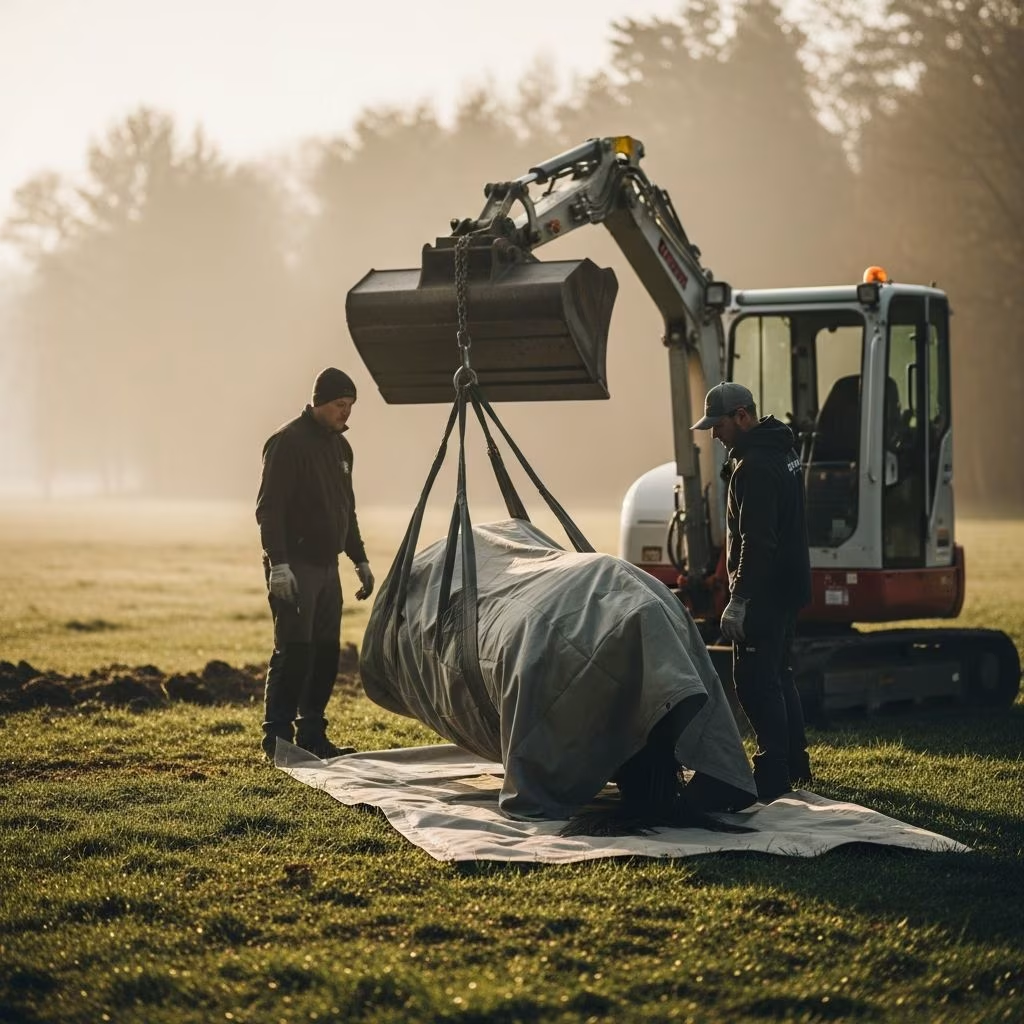
Handling the remains of a beloved horse requires sensitivity, adherence to local laws, and consideration of environmental impacts. Horse owners must choose from several disposal methods, each with specific regulations, costs, and logistical needs. This guide outlines key options, helping you make informed decisions during a difficult time.
Understanding Legal Frameworks for Equine Carcass Disposal
Regulations for disposing of large animal remains like horses vary widely by state, county, and even municipality. Most jurisdictions mandate removal within 24 to 72 hours to prevent health risks from decomposition. Key factors include euthanasia method, disease status, and groundwater protection. Always consult your local department of agriculture, environmental agency, or veterinarian first.
- Federal oversight: Limited, but USDA guidelines influence state rules for livestock.
- State variations: Some allow on-site burial; others prohibit it near water sources.
- Local permits: Landfills or incinerators often require pre-approval.
Chemical euthanasia, particularly with barbiturates like pentobarbital, restricts options due to toxicity risks to scavengers and groundwater. Alternatives such as potassium chloride or gunshot reduce these concerns.
On-Site Burial: Practical Considerations and Restrictions
Burial on private property is a traditional choice but heavily regulated. Sites must be at least 100 yards from wells or streams to avoid contamination. Depth requirements typically range from 3 to 6 feet of soil cover, with some states mandating lime for odor control (except for anthrax cases).
| Method Detail | Requirements | Pros | Cons |
|---|---|---|---|
| Depth | 3-6 feet soil over carcass | Private, low cost | Heavy equipment needed; erosion risk |
| Location | 100+ yards from water | Emotional closure | Not allowed in many urban areas |
| Preparation | Puncture abdomen for gases | Simple if legal | Scavenger attraction |
Prior approval from state veterinarians is often required, especially for diseased animals. Illinois rules specify no lime to allow natural decomposition and a 6-inch soil cap.
Cremation and Incineration: Clean and Controlled Options
Incineration reduces remains to ash, minimizing environmental impact. Approved facilities or mobile units ensure complete combustion. Open burning is rarely permitted due to air quality laws.
- Individual cremation: Returns ashes; costs $600-$2,000.
- Communal cremation: More affordable, no ashes returned.
- Regulations: Must comply with EPA standards; no chemical-euthanized horses in some cases.
Veterinary clinics and universities offer these services, providing sterile, hazard-free results.
Composting: Eco-Friendly On-Site Solution
Composting transforms remains into nutrient-rich soil using wood chips or straw. Microbes generate heat (104-140°F) to break down tissue in 6-12 months. It’s ideal for rural properties and deters scavengers when properly built.
- Select well-drained site.
- Lay 24-inch carbon base (e.g., woodchips).
- Place carcass centered; lance abdomen.
- Cover with 24-inch material; monitor temperature.
Barbiturates degrade during process, yielding safe fertilizer. Cornell Waste Management Institute endorses this for horses.
Rendering and Biodigestion: Industrial Processing
Rendering facilities process carcasses into byproducts like fertilizer or biofuel, often at low or no cost. Pickup services handle transport, but availability has declined.
Biodigesters use alkaline hydrolysis for sterile liquid effluent, popular in vet schools (e.g., University of Florida, Texas A&M). Remains are landfill-safe or fertilizable.
| Option | Cost Range | Availability | Environmental Benefit |
|---|---|---|---|
| Rendering | $0-$500 | Regional | Recycles into products |
| Biodigestion | Varies | Vet facilities | Sterile, no emissions |
Landfill Disposal: Convenient but Limited
Some landfills accept equine remains for $80-$150, requiring transport and approval. Chemical euthanasia often disqualifies due to leaching risks. Confirm with waste authorities.
Navigating Euthanasia Impacts on Disposal
Euthanasia method dictates options. Barbiturates persist, harming wildlife; opt for AAEP-approved alternatives like IV salts post-anesthesia. Necropsy may be needed for insurance or diagnosis, further limiting choices.
Cost Comparison Across Methods
| Method | Estimated Cost | Transport Needed |
|---|---|---|
| Burial | $200-$1,000 (equipment) | No |
| Cremation | $600-$2,000 | Yes |
| Composting | $100-$500 (materials) | No |
| Rendering | Free-$500 | Yes |
| Landfill | $80-$150 | Yes |
Costs fluctuate by location and services.
Environmental and Public Health Priorities
Improper disposal risks disease spread, water pollution, and scavenger poisoning. Composting and biodigestion excel in sustainability.
Frequently Asked Questions (FAQs)
Can I bury my horse on my property?
Yes, if local laws allow and site meets depth/distance rules. Check with authorities.
What if my horse was chemically euthanized?
Avoid burial/landfill; choose cremation or composting where barbiturates degrade.
How soon must I dispose of remains?
Typically 24-72 hours.
Are there low-cost options?
Rendering or university programs; inquire locally.
Is composting safe for pets/wildlife?
Yes, with proper construction reaching kill temperatures.
Steps for Responsible Decision-Making
1. Contact vet for euthanasia advice.
2. Research local regs via agriculture dept.
3. Get quotes from services.
4. Plan transport/equipment.
5. Document compliance.
References
- Humane World: Resources for Humane Horse Remains Disposal — Humane World Org. 2023. https://www.humaneworld.org/en/resources/humane-horse-remains-disposal
- Saying Goodbye: Understanding Equine Disposal Options — United Horse Coalition. 2023. https://unitedhorsecoalition.org/saying-goodbye-understanding-equine-disposal-options-and-responsible-aftercare/
- Horse Mortality: Euthanasia, Necropsy, and Carcass Disposal — Mad Barn. 2024. https://madbarn.com/horse-euthanasia-and-carcass-disposal/
- Horse Mortality: Carcass Disposal Alternatives — Cornell Waste Management Institute. 2012. https://cwmi.css.cornell.edu/horsefs.pdf
- Disposal of Carcasses and Disinfection of Premises — Merck Veterinary Manual. 2023. https://www.merckvetmanual.com/public-health/disposal-of-carcasses-and-disinfection-of-premises/disposal-of-carcasses-and-disinfection-of-premises



