Resolving Crate Confinement Issues in Dogs
Effective strategies to help your dog overcome crate anxiety and build positive associations
Resolving Crate Confinement Issues in Dogs: A Comprehensive Guide
Many dog owners struggle with a common behavioral challenge: their canine companion exhibits extreme distress when placed in a crate. This phenomenon, known as crate anxiety or confinement distress, affects countless households and creates stress for both pets and their owners. Understanding the root causes and implementing appropriate solutions can transform the crate from a source of panic into a sanctuary your dog actually enjoys.
Distinguishing Confinement Anxiety from Separation Anxiety
Before implementing solutions, it’s crucial to identify whether your dog is experiencing confinement anxiety, separation anxiety, or a combination of both. These conditions, while similar in appearance, require different approaches for effective treatment.
Confinement anxiety occurs when a dog becomes distressed specifically due to being enclosed in a small space, regardless of whether you’re present in the home. A dog experiencing confinement anxiety may show signs of panic immediately upon entering the crate, even if you remain nearby. The anxiety stems from the physical restriction itself, not from your absence.
Separation anxiety, by contrast, emerges when a dog experiences distress related to being away from their owner or primary caregiver. A dog with pure separation anxiety may be perfectly comfortable in a crate while you’re home but display significant panic when confined and left alone. The trigger isn’t the crate but rather the separation.
Many dogs experience both conditions simultaneously, which creates a compounded stress response. When these conditions overlap, the crate becomes a double bind: the dog experiences both the terror of confinement and the anxiety of separation, amplifying distress significantly beyond what either condition would produce independently.
Identifying Which Condition Your Dog Has
- Observe your dog’s comfort level in the crate when you’re present in the home
- Monitor whether distress appears immediately upon confinement or only after you leave
- Note the timing of panic onset relative to door closure
- Document your dog’s behavior in confined spaces outside the crate context
- Assess whether your dog avoids the crate entrance during normal routines
Recognizing the Signs of Crate-Related Distress
Crate anxiety manifests through a range of behavioral and physiological indicators. Understanding these warning signs helps you determine whether your current approach is working or potentially causing harm.
Behavioral Indicators
Dogs experiencing crate distress typically display vocalization patterns such as continuous barking, howling, or whining that doesn’t cease when you leave the room. These vocalizations often intensify over time rather than decrease. Escape attempts represent another critical sign—your dog may scratch frantically at the crate bars, bite the cage, or pull at the door with increasing intensity.
Physical resistance to entering the crate signals growing anxiety about confinement. Your dog may back away when you approach the crate, freeze in place, or require excessive coaxing or physical guidance to enter. Over time, this resistance may develop even before you attempt to crate your dog, appearing when you pick up keys or put on shoes.
Physiological Responses
When dogs experience crate panic, their bodies undergo significant physiological changes. Rapid, shallow breathing develops as the nervous system activates the fight-or-flight response. Excessive drooling and panting indicate elevated stress hormones flooding the system. Some dogs eliminate waste despite being housetrained, a stress response that overrides normal bathroom control.
Physical damage to the crate, your dog’s body, or both provides concrete evidence of severe distress. Bent or broken crate bars, broken teeth or nails, and bloody paws or muzzles indicate your dog has been engaging in desperate escape attempts.
Long-Term Behavioral Shifts
Perhaps most concerning is the development of learned dread, where your dog begins showing anxiety well before actual crating occurs. The anticipation alone becomes sufficient to trigger fear responses. Additionally, some dogs eventually enter a shutdown state where they cease displaying obvious distress but remain hyper-vigilant internally, with rigid posture and wide, watchful eyes rather than genuine relaxation.
Root Causes of Crate Anxiety Development
Crate anxiety rarely develops spontaneously; specific factors contribute to its emergence. Identifying these causes helps prevent future issues and informs your resolution strategy.
Improper introduction represents a primary cause of crate-related problems. When dogs aren’t gradually acclimated to the crate environment, they fail to develop positive associations. Rushing the process or forcing a dog into a crate without preparation creates negative memories that compound with each subsequent experience.
Overcrating—keeping a dog confined for excessive durations—contributes significantly to anxiety development. Dogs confined for longer periods than appropriate for their age and needs develop resentment toward the crate. Young puppies require frequent potty breaks, and adult dogs typically shouldn’t remain crated for extended periods during waking hours.
Traumatic experiences while crated can create lasting psychological damage. If your dog experiences frightening events in the crate—loud noises, aggressive incidents, or accidental confinement during stimulating situations—they develop strong negative associations. A single traumatic event can establish crate anxiety that persists for months or years.
Underlying separation or confinement anxiety may exist before crating begins. Dogs predisposed to anxiety disorders struggle more intensely with crate confinement than others. Understanding your dog’s baseline anxiety level helps determine whether crating is appropriate.
Establishing Alternative Confinement Solutions
If your dog exhibits severe crate anxiety, continuing to force them into the crate perpetuates stress and damages your relationship. Strategic alternatives can manage your dog’s freedom while reducing anxiety triggers.
Exercise pens provide a larger confined space that many dogs tolerate better than crates. These collapsible barriers allow your dog to move around, lie down comfortably, and shift positions without the claustrophobic sensation of a crate. Exercise pens work particularly well for temporary confinement while you’re nearby.
Designated rooms offer another effective alternative, especially for managing separation anxiety. A single room with minimal hazards allows your dog freedom of movement while containing them safely. Many dogs develop comfort in a specific room, particularly if they have positive associations with that space.
Garage or basement containment using chain-link kennels provides a middle ground between crate and open-space freedom. These larger structures give your dog significantly more space than a crate while maintaining safe containment. The increased space often reduces anxiety compared to crate confinement.
Each alternative reduces stress while maintaining basic containment. Testing different options helps identify which environment your dog tolerates best.
Implementing Gradual Desensitization
For dogs whose anxiety isn’t severe enough to warrant abandoning the crate entirely, gradual desensitization can rebuild positive associations. This process requires patience and consistency but often produces lasting results.
Phase One: Environmental Familiarity
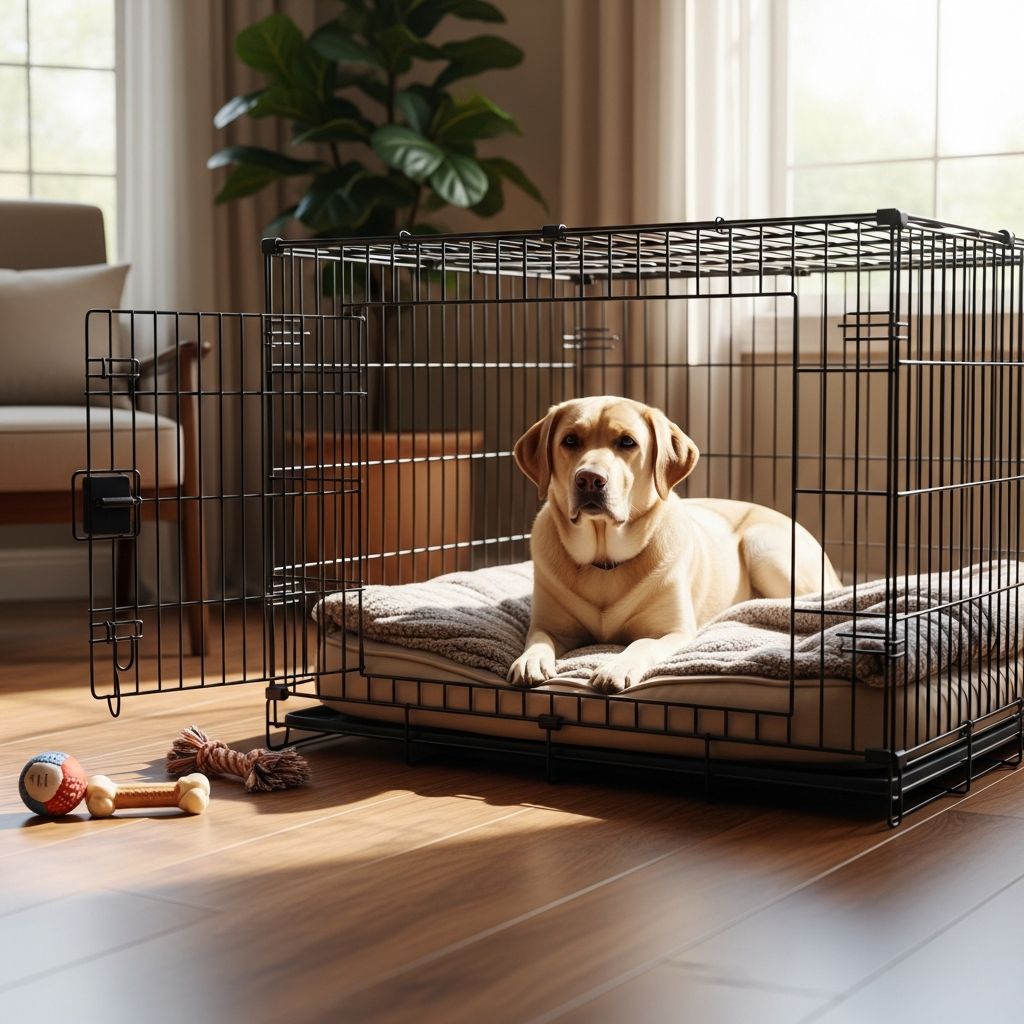
Begin by placing the crate in a common living area where your dog naturally spends time. Leave the door open consistently, allowing your dog to investigate at their own pace. Place treats, toys, or bedding inside to create positive associations without any pressure to enter. Your dog should perceive the crate as just another piece of furniture in their environment.
Phase Two: Voluntary Entry
Once your dog shows casual interest in the crate, encourage voluntary entry through positive reinforcement. Toss treats inside and allow your dog to retrieve them independently. Praise enthusiastically when your dog enters on their own. Never force or lure your dog into the crate; the entry must be their choice.
Phase Three: Extended Comfort
Gradually increase the time your dog spends voluntarily in the crate. Place high-value treats or a filled Kong inside to encourage longer durations. Initially, keep the door open during these sessions. Reward calm behavior inside the crate with verbal praise and occasional treats.
Phase Four: Controlled Door Closure
Once your dog remains calm in the crate with the door open for extended periods, begin closing the door briefly while you remain in the room. Close the door for just seconds initially, then immediately open it and reward your dog for remaining calm. Gradually extend these durations over many sessions.
Phase Five: Absence Practice
Only after your dog demonstrates comfort with the door closed should you begin leaving the room briefly. Start with absences of mere seconds, returning before any anxiety manifests. Praise calm behavior and reward with treats. Gradually extend your absence duration only when your dog remains consistently calm.
Environmental Modifications and Support Strategies
Beyond desensitization, specific environmental changes can reduce crate anxiety triggers and support your dog’s emotional regulation.
Sensory Considerations
Cover portions of the crate with blankets to create a den-like environment that feels safer and reduces visual stimulation. However, ensure adequate ventilation and visibility. Some dogs find partially covered crates less intimidating than fully exposed ones.
Minimize auditory triggers by locating the crate away from doorbells, vacuum cleaners, or other startling sounds. If external stimuli like fireworks or thunderstorms trigger anxiety, positioning the crate in a quieter interior room reduces exposure to these stressors.
Comfort Elements
Provide appropriate bedding that your dog finds comfortable and that absorbs accidents without promoting elimination in the crate. Some dogs benefit from specific fabrics or orthopedic supports.
Consider incorporating calming aids such as pheromone diffusers designed for dogs. These products mimic natural calming pheromones and may reduce anxiety levels. While not universally effective, they benefit many dogs without side effects or medication concerns.
Exercise and Mental Stimulation
A well-exercised dog typically experiences lower anxiety levels. Providing adequate physical activity and mental enrichment before crating helps your dog enter the crate in a calmer state. A tired dog is more likely to rest peacefully during confinement.
When Professional Help Becomes Necessary
Severe crate anxiety often benefits from professional intervention. Certified applied animal behaviorists or trainers specializing in anxiety disorders can assess your specific situation and create tailored treatment plans.
Professional guidance becomes particularly important when anxiety is severe or escalating. A behaviorist can determine whether your dog requires medication in addition to behavioral modification. Veterinary behaviorists may prescribe anti-anxiety medications that reduce your dog’s stress response while you implement behavioral interventions.
Additionally, professionals can rule out medical conditions that might mimic or exacerbate anxiety symptoms, ensuring your approach addresses actual anxiety rather than masking underlying health issues.
Understanding the Neuroscience of Panic
Comprehending how your dog’s brain processes the crate experience helps explain why forced confinement can be genuinely harmful. When dogs experience anxiety, their amygdala—the brain’s fear center—activates the hypothalamic-pituitary-adrenal (HPA) axis, triggering the release of stress hormones like cortisol and adrenaline. The dog’s entire system prepares for survival, creating genuine panic rather than obstinacy.
This physiological reality underscores why punishment or forced prolonged exposure rarely resolves crate anxiety. Your dog isn’t misbehaving; their nervous system is genuinely perceiving threat. Recovery requires resetting these associations rather than pushing through resistance.
Building Long-Term Success
Resolving crate anxiety takes time but yields significant benefits for your dog’s wellbeing and your household peace. Success requires:
- Patience with gradual progress rather than expecting rapid transformation
- Consistency in maintaining positive associations without regression-inducing incidents
- Flexibility to adjust approaches based on your individual dog’s response
- Realistic expectations about whether crating remains appropriate for your dog
- Commitment to addressing underlying separation or confinement anxiety
Some dogs genuinely aren’t suited for crating, and that’s acceptable. Alternative management strategies can maintain household safety while respecting your dog’s psychological needs. The goal isn’t forcing your dog into a crate but creating an environment where your dog can thrive.
Frequently Asked Questions
How long does it typically take to resolve crate anxiety?
Resolution timelines vary significantly based on anxiety severity, your dog’s history, and consistency of implementation. Mild cases may show improvement within weeks, while severe cases may require months of gradual desensitization. Patience and consistency matter more than speed.
Can crate anxiety develop suddenly in a previously comfortable dog?
Yes. Traumatic experiences, changes in routine, or development of separation anxiety can trigger crate anxiety in dogs previously comfortable with crates. Identifying the triggering incident helps prevent future occurrences.
Is medication necessary for treating crate anxiety?
Medication isn’t always necessary but may help in severe cases. A veterinary behaviorist can determine whether medication combined with behavioral modification offers the best outcome for your specific situation.
Should I ignore my dog’s distress while crating them?
Ignoring genuine panic doesn’t resolve the underlying anxiety; it often intensifies it. Instead, focus on preventing panic through gradual desensitization and ensuring your dog never reaches panic states during training.
References
- Crate Anxiety – A Behaviorist’s Guide to Improving Your Dog’s Crate Anxiety — Bevill Dog Behavior. https://www.bevilldogbehavior.com/blogs/news/crate-anxiety-a-behaviorists-guide-to-improving-your-dog-s-crate-anxiety
- Is Your Dog Panicking in Their Crate? Understanding Separation Anxiety — Head Over Heels Reno. https://www.headoverheelsreno.com/post/dog-panic-in-crate
- Why Is My Dog Destroying Their Crate When Left Alone? — Rock Creek Crates. https://rockcreekcrates.com/blogs/news/why-is-my-dog-destroying-their-crate-when-left-alone
- Comforting Your Dogs: Understanding Confinement Anxiety — TPL Pet Info. https://tploinfo.com/blog/understanding-confinement-anxiety/
- Dog Crate Anxiety – What to Do When Your Dog Hates His Crate — Whole Dog Journal. https://www.whole-dog-journal.com/training/crates/what-to-do-when-your-dog-hates-his-crate/
- Separation Anxiety, Confinement Anxiety Or Incomplete Crate Training — A Canine Affinity. https://www.acanineaffinity.com/blog/wzsyt3unxybz217q6foad9dpddbx14
- Dog Anxiety: Symptoms, Causes, and Treatment Options — GoodRx. https://www.goodrx.com/pet-health/dog/anxiety-symptoms
- Dog Anxiety: Signs, Causes, and Treatment — PetMD. https://www.petmd.com/dog/conditions/behavioral/dog-anxiety
Similar Articles





Read full bio of medha deb