

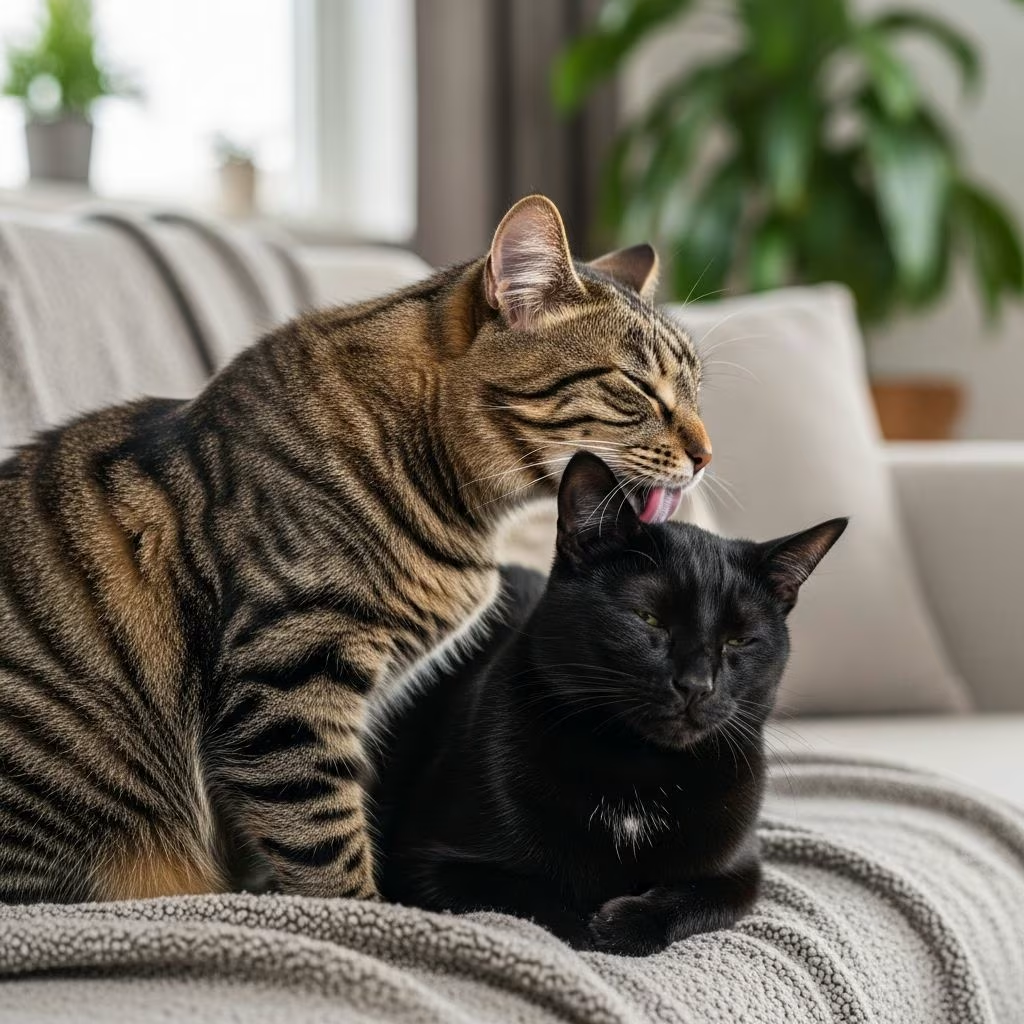
Cat fights can turn a harmonious home into a battleground, but with targeted strategies, you can restore tranquility. This guide draws from animal behavior principles to address aggression between household cats, emphasizing prevention, intervention, and long-term coexistence.
Understanding the Roots of Feline Aggression
Aggression among cats often stems from territorial instincts, fear, or resource competition. Unlike dogs, cats are solitary hunters by nature, leading to tension in shared spaces. Common triggers include new introductions, unspayed status, or limited access to essentials like food and litter. Recognizing these helps tailor solutions.
Types of aggression vary: redirected aggression occurs when a cat lashes out at a housemate after spotting an outdoor threat; status-related fights arise from dominance displays; and play that escalates into real conflict. Observing body language—such as twitching tails, flattened ears, or arched backs—provides early warnings.
Immediate Steps to Halt a Fight
When claws fly, prioritize safety without escalating fear. Never physically intervene, as bites can transmit bacteria leading to abscesses. Instead, create distractions: clap hands, use a loud hiss from an aerosol can, or toss a soft toy to redirect attention.
- Separate swiftly: Use a barrier like a pet gate or closed door to isolate combatants instantly.
- Avoid punishment: Scolding increases anxiety, worsening future incidents.
- Calm the scene: Dim lights and play soothing sounds to de-escalate tension post-fight.
Post-intervention, check for injuries: superficial scratches heal quickly, but deep wounds require veterinary attention.
Environmental Adjustments for Reduced Tension
A “house of abundance” minimizes competition. Cats fight over scarce resources, so multiply them: follow the n+1 rule, where n is the number of cats—one extra litter box, food station, and perch per cat.
| Resource | Recommended Quantity | Placement Tips |
|---|---|---|
| Litter Boxes | One per cat +1 | Quiet, spaced apart; avoid high-traffic areas |
| Food/Water Bowls | One per cat +1 | Elevated or separated to prevent guarding |
| Perches/Scratching Posts | Multiple vertical spaces | Near windows but with escape routes |
| Toys/Hiding Spots | Variety for each cat |
Vertical territory is key—cat trees and shelves let cats oversee their domain without confrontation. Block outdoor views with privacy film if external stimuli provoke fights.
Medical and Sterilization Considerations
Unneutered cats, especially males, exhibit heightened aggression due to hormones. Spaying or neutering reduces fighting by up to 90% in many cases, alongside preventing litters.
Rule out health issues: pain from arthritis or dental disease can mimic aggression. Schedule a vet check-up, including bloodwork for thyroid problems, which spur irritability.
Training Techniques to Promote Calm
Teach recall commands to preempt fights. Practice daily: say the cue, reward with treats or play upon approach. During tension, call cats to you individually for rewards, diverting energy positively.
Reinforce incompatible behaviors—praise calm co-existence with tossed treats. Use pheromone diffusers mimicking facial rubbing to signal safety.
Step-by-Step Reintroduction Protocol
After separation (ideally 1-2 weeks), rebuild trust gradually. Start with scent swapping: exchange bedding to familiarize odors without visual stress.
- Scent familiarization (Days 1-3): Rub cloths on each cat, swap them daily.
- Visual barriers (Days 4-7): Allow under-door sniffing with a barrier; feed meals nearby.
- Controlled visuals (Week 2): Use carriers at opposite room ends; pair with play or treats.
- Supervised proximity (Week 3+): Short sessions with leashes or gates; interrupt stares with toys.
- Free roam (Ongoing): Monitor closely, expanding access as tolerance grows.
Progress at the fearful cat’s pace—rushing leads to setbacks. Sessions should end positively.
Advanced Counter-Conditioning Methods
Pair rivals’ presence with positives: during controlled exposures, offer favorite foods or laser play. Interrupt growls with air puffs, then reward calm. This rewires associations over weeks or months.
For persistent cases, consult certified behaviorists. Tools like microchip-activated doors give the victim exclusive safe zones.
Common Pitfalls and How to Avoid Them
- Over-attention to aggressor: It reinforces bullying; redirect both equally.
- Ignoring exercise needs: Bored cats play-fight excessively; daily interactive sessions prevent this.
- Forced interactions: Always provide escape options.
- Neglecting resident cat: New arrivals shouldn’t displace established routines.
Long-Term Strategies for Multi-Cat Bliss
Schedule individual playtime to burn energy separately. Rotate toys to maintain novelty. Monitor dynamics quarterly, adjusting resources as needed.
Foster group positives: scatter feeds encourage cooperative hunting instincts without competition. Patience yields results—many households achieve peace within 4-6 weeks.
Frequently Asked Questions
Why do my cats suddenly fight after years of peace?
Often due to illness, environmental changes, or redirected stress from outside. Vet check first.
Is it okay to let cats ‘work it out’?
No—fights escalate injuries and learned hatred. Intervene humanely.
How many litter boxes for three cats?
Four, placed strategically.
What if reintroduction fails?
Seek professional behaviorist; permanent separation may be kindest.
Do pheromones really work?
Yes, for mild cases by promoting calm.
References
- Cat Fight: 10 Tips for Stopping & Preventing Cat Aggression — Amy Shojai. Accessed 2026. https://amyshojai.com/cat-fight-what-to-do/
- Cat Aggression Toward Other Cats: Causes and Prevention — Best Friends Animal Society. Accessed 2026. https://bestfriends.org/pet-care-resources/cat-aggression-toward-other-cats-causes-and-prevention
- How to Manage Fighting and Aggression Between Cats — WebMD. Accessed 2026. https://www.webmd.com/pets/cats/aggression-between-cats-in-your-household
- Stop Feline Aggression to Keep Cats — Humane World. Accessed 2026. https://www.humaneworld.org/en/resources/stop-feline-aggression-keep-cats
- Resolving Dog-Cat Fighting: Tips for Peaceful Coexistence — Boulder Vet. Accessed 2026. https://bouldervet.com/blog/dog-cat-coexistence/
- Cats and Fighting — Cats Protection. Accessed 2026. https://www.cats.org.uk/help-and-advice/cat-behaviour/cats-and-fighting



