Reptile Pet Care: Essential Guide For Beginners
Master the art of reptile ownership with proven tips on habitats, feeding, health, and more for a thriving scaly companion.
Bringing a reptile into your home offers a unique pet ownership experience, marked by their fascinating behaviors and relatively low daily interaction needs. Success hinges on understanding their specific environmental, dietary, and health requirements. This guide equips beginners with practical knowledge to create a thriving habitat and foster a strong bond with their new companion.
Selecting Your Ideal First Reptile
Choosing the right species sets the foundation for enjoyable ownership. Opt for docile, hardy varieties that tolerate handling and have straightforward care routines. Popular choices include bearded dragons, leopard geckos, and corn snakes, which adapt well to captivity and suit novice keepers.
Bearded dragons thrive on a mix of insects and vegetables, requiring spacious enclosures with basking spots. Leopard geckos prefer nocturnal setups with live insects, needing minimal space but precise temperature gradients. Corn snakes, being escape artists, demand secure lids and rodent-based diets. Avoid advanced species like chameleons or green iguanas initially, as they demand complex misting systems, live prey, and larger spaces.
Research local availability and consult breeders or rescues for healthy, captive-bred specimens. Verify the seller’s reputation to minimize risks of parasites or genetic issues.
Building the Perfect Reptile Habitat
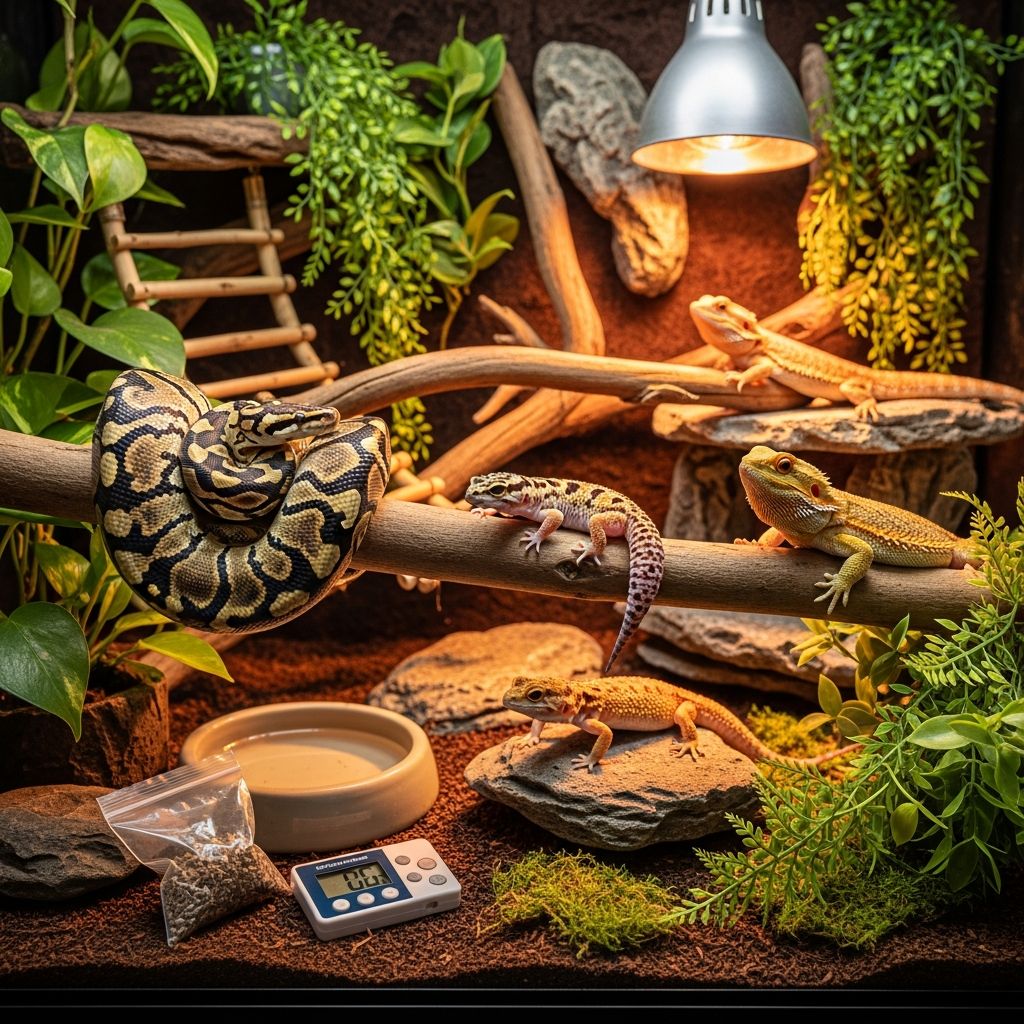
A reptile’s enclosure mimics their wild environment, providing warmth, light, humidity, and security. Size matters: juveniles may start smaller for security, but adults need room to roam—minimum 40 gallons for most lizards, larger for snakes.
Key components include:
- Substrate: Natural options like coconut fiber or reptile carpet prevent impaction; avoid loose sands for insectivores.
- Heating: Use under-tank heaters and basking lamps for a gradient (warm side 95-110°F/35-43°C, cool side 75-85°F/24-29°C).
- UVB Lighting: Essential for vitamin D synthesis; replace bulbs every 6-12 months.
- Humidity: Monitor with gauges; desert species need 30-40%, tropical ones 60-80%. Employ misters or foggers as required.
- Hides and Enrichment: Multiple hides, branches, and rocks promote natural behaviors and reduce stress.
Bioactive enclosures with live plants and cleanup crews like isopods simplify maintenance while boosting welfare. Thermometers, hygrometers, and timers ensure consistency.
Nutrition Strategies for Healthy Reptiles
Diet varies by species: insectivores (geckos) eat crickets and dubia roaches; omnivores (bearded dragons) combine greens, veggies, and protein; carnivores (snakes) consume rodents.
- Dust insects with calcium and multivitamin powders 2-3 times weekly to prevent metabolic bone disease.
- Offer variety: rotate feeders, include leafy greens like collards for herbivores.
- Feed juveniles daily, adults every 2-3 days; use tongs to mimic hunting.
Provide fresh water daily via bowls or drippers. Overfeeding leads to obesity, so monitor portions based on age and activity.
Mastering Enclosure Maintenance Routines
Cleanliness prevents bacterial growth and respiratory issues. Follow this schedule:
| Frequency | Tasks | Tips |
|---|---|---|
| Daily | Spot clean waste, uneaten food; refresh water | Use rubber-tipped tongs; wear nitrile gloves |
| Weekly | Partial substrate change; wash dishes | Disinfect hides with reptile-safe cleaners like diluted vinegar |
| Bi-weekly/Monthly | Full deep clean; replace substrate | Relocate pet; scrub with Dawn dish soap, rinse thoroughly |
For bioactive setups, natural custodians handle much of the work, requiring less intervention.
Safe Handling and Bonding Techniques
Reptiles aren’t cuddly like mammals but can learn to tolerate handling. Acclimate new pets for 1-2 weeks before interacting.
- Support the entire body to avoid tail drops or spinal injury.
- Handle 10-15 minutes daily post-settlement; evenings suit nocturnal species.
- Warm soaks build positive associations.
- Watch body language: hissing or flattening signals distress—stop immediately.
Start with juveniles for better socialization, but juveniles are fragile—gentle touches only.
Recognizing and Preventing Health Problems
Proactive care averts most issues. Schedule annual vet visits with a reptile specialist pre-purchase. Common concerns:
- Respiratory Infections: Wheezing from low temps/humidity; raise gradient.
- Shedding Issues (Dysecdysis): Dull skin, retained eye caps; boost humidity, provide rough surfaces—never pull.
- Parasites/Mites: Quarantine new arrivals 30+ days; inspect regularly.
- Metabolic Bone Disease: From poor UVB/diet; supplement promptly.
Assemble a first-aid kit: styptic powder for tails, electrolyte solution, mite spray, wound dressings. Signs of trouble: lethargy, anorexia, swollen eyes—seek vet care fast.
Seasonal Care: Managing Brumation
Temperate species like certain turtles or snakes enter brumation (reptile hibernation). Prep with vet check for parasites, then gradually cool (50-60°F/10-15°C) for 1-4 months with water access.
- Reduce light/photoperiod over weeks.
- Fast 1-2 weeks prior.
- Warm slowly post-brumation; resume feeding when active.
Juvenile vs. Adult Care Differences
Young reptiles grow rapidly, needing frequent feeds (daily insects) and monitoring for proper sheds. Smaller enclosures aid hunting but must meet gradients. Adults require larger spaces and less frequent meals.
Frequently Asked Questions
What’s the easiest reptile for beginners?
Leopard geckos or corn snakes—simple diets, small footprints, hardy.
How often should I replace UVB bulbs?
Every 6-12 months, even if glowing, as UVB output fades.
Can reptiles live with other pets?
Quarantine strictly; supervise interactions to prevent bites or stress.
Do all reptiles need live food?
No—many accept pre-killed or commercial alternatives safely.
How do I know if my reptile is stressed?
Refusal to eat, glass surfing, hiding excessively; adjust habitat.
Long-Term Commitment to Reptile Wellness
Reptiles live 10-30+ years with proper care. Invest in quality equipment, commit to routines, and join communities for support. Regular vet partnerships ensure longevity.
References
- Reptiles 101: A Beginner’s Guide to Care & Maintenance — Small Pet Select. 2023. https://shop.smallpetselect.com/blogs/care-resources/reptiles-101-a-beginners-guide-to-reptile-care-maintenance
- Guide to Reptile Care — Brookhaven Animal Hospital. 2022-12-06. https://www.brookhavenanimalhosp.com/site/blog/2022/12/06/guide-to-reptile-care
- Reptile Care for Beginners: A Helpful Guide — Vetericyn. 2023. https://vetericyn.com/blogs/vetericyn/reptile-care-for-beginners-a-helpful-guide
- Reptile Care Tips from Aloha Animal Hospital in Las Vegas, NV — Aloha Vegas Vets. 2025-04-15. https://alohavegasvets.com/2025/04/15/reptile-care-tips-from-aloha-animal-hospital-in-las-vegas-nv/
- Reptile Care for Beginners: Simple Tips — Sumter Pet Sitters. 2023. https://sumterpetsitters.com/reptile-care-for-beginners-simple-tips/
- Tips for Choosing Your First Reptile — Flamingo Pet Clinic. 2025. https://flamingopetclinic.com/tips-for-choosing-your-first-reptile/
Similar Articles








Read full bio of medha deb